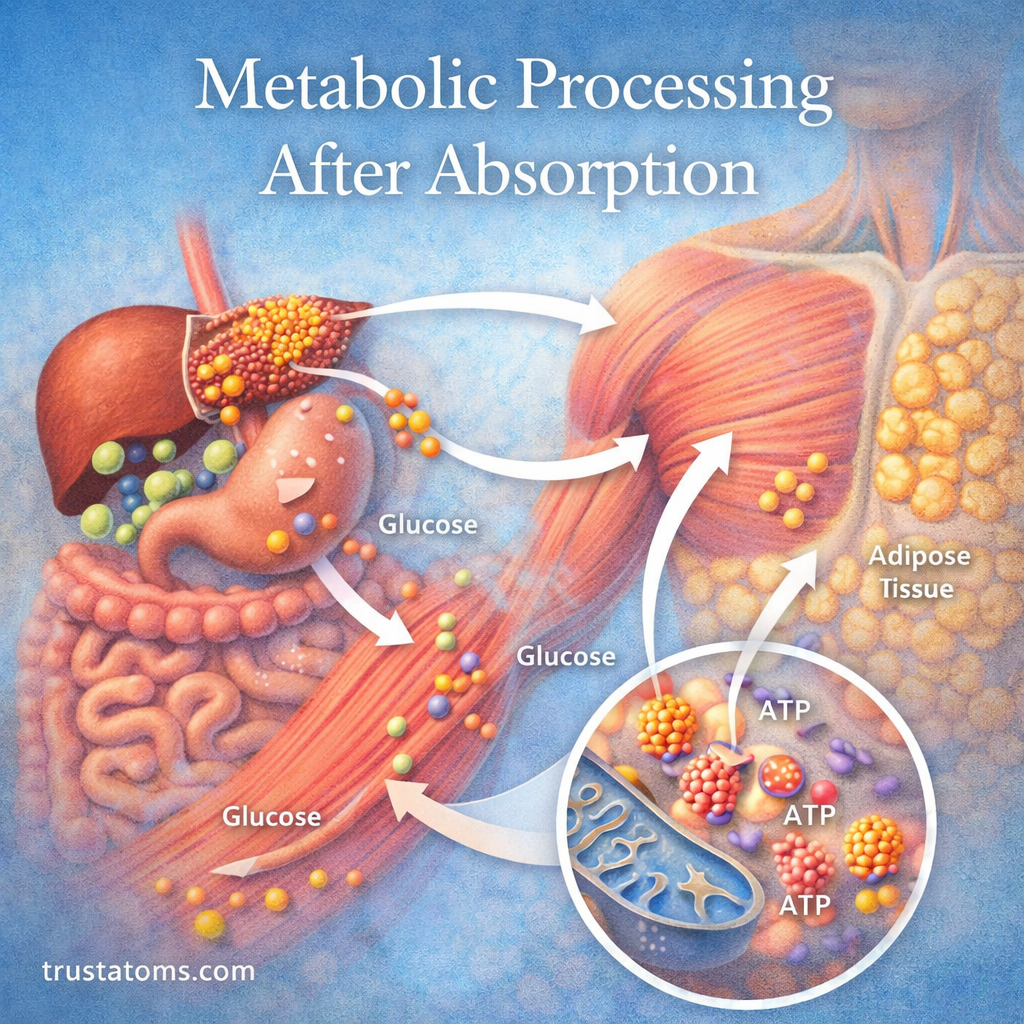
Metabolic processing after absorption is the series of chemical reactions that converts absorbed nutrients into usable energy, building materials, or stored reserves. The liver, muscles, adipose tissue, and other cells coordinate these reactions to maintain blood glucose, support tissue repair, and meet the body’s changing energy needs.
Digestion breaks food into absorbable components, but absorption is only the beginning of nutrient use. Understanding how organs process and distribute these substances connects nutrition with human anatomy and the physiology of energy balance.
What Is Metabolic Processing?
Metabolic processing includes the chemical pathways that transform nutrients after they enter the body’s circulation. These pathways fall into two broad categories:
- Catabolism: Breaking down larger molecules into smaller ones, often releasing energy that cells can capture.
- Anabolism: Using energy and smaller molecules to build proteins, glycogen, fats, and other cellular structures.
Both processes occur continuously, but their relative activity changes with food intake, exercise, fasting, and hormonal signals. The pancreas helps coordinate these changes by releasing insulin and glucagon. Their broader functions are explained in Pancreatic Hormones in Homeostasis.
Where Nutrients Are Processed After Absorption
Metabolism occurs throughout the body rather than in one organ. Different tissues specialize in particular tasks:
- Liver: Regulates nutrient distribution, stores glycogen, processes amino acids, and modifies many substances.
- Skeletal muscles: Use glucose and fatty acids for contraction and store glycogen for their own energy needs.
- Adipose tissue: Stores energy mainly as triglycerides and releases fatty acids when energy demand increases.
- Other body cells: Use nutrients to produce ATP, maintain cellular structures, and synthesize necessary molecules.
The Role of the Liver After Absorption
Most water-soluble nutrients absorbed from the small intestine travel through the hepatic portal vein to the liver before reaching general circulation. This route allows the liver to process nutrients and regulate their availability to other tissues.
The pathway is explained in Portal Circulation in Digestive Absorption, while Liver Function in Metabolism examines the liver’s broader digestive and metabolic activities.
After a meal, the liver can convert glucose into glycogen, use amino acids to synthesize proteins, and process certain nutrients into other compounds. Between meals, it can release glucose through glycogen breakdown or glucose production from noncarbohydrate sources.
Most dietary long-chain fats follow a different initial route. They are packaged into chylomicrons within intestinal cells, enter lymphatic vessels, and reach the bloodstream before being distributed to tissues.
Carbohydrate Metabolism and Blood Glucose
Digestible carbohydrates are broken down into simple sugars, including glucose. After absorption, glucose can be used immediately, stored as glycogen, or contribute to fat synthesis when energy intake exceeds requirements.
Two pancreatic hormones help regulate glucose availability:
- Insulin lowers blood glucose by promoting uptake into cells, particularly muscle and adipose cells, and encouraging glucose storage.
- Glucagon raises blood glucose by stimulating glycogen breakdown in the liver and supporting glucose production.
These opposing actions help keep glucose available to tissues, especially the brain, which depends heavily on glucose under ordinary feeding conditions.
Protein Metabolism: Building and Repairing Tissues
Digested proteins provide amino acids that enter circulation and become available for protein synthesis throughout the body. Cells use them to build structural proteins, enzymes, transport proteins, and certain hormones.
Unlike glucose and fat, amino acids do not have a specialized long-term storage reserve. When amino acids exceed immediate protein-building needs, their nitrogen groups can be removed and their remaining carbon structures used for energy or converted into other molecules.
The liver converts much of the resulting toxic ammonia into urea, which the kidneys remove in urine. This process allows the body to use amino acid carbon structures while safely disposing of excess nitrogen.
Fat Metabolism: Transport, Storage, and Energy
Dietary fats are digested mainly into fatty acids and monoglycerides. Inside intestinal cells, most long-chain fatty acids are reassembled into triglycerides and packaged into chylomicrons for transport.
Enzymes near blood vessels release fatty acids from circulating triglycerides. Muscles can use these fatty acids for energy, while adipose tissue can store them as triglycerides.
During fasting or prolonged activity, stored triglycerides can be broken down to release fatty acids. Cells then use fatty acid oxidation to generate energy. Fats also supply components for cell membranes and serve as precursors for certain signaling molecules.
How Cells Produce ATP From Nutrients
Adenosine triphosphate (ATP) is the molecule cells use to transfer energy to activities such as muscle contraction, active transport, and chemical synthesis.
Glucose breakdown begins with glycolysis in the cytoplasm. Further oxidation of its products can occur in mitochondria, where the citric acid cycle and oxidative phosphorylation generate additional ATP when oxygen is available.
Fatty acids can also be broken down through mitochondrial pathways to support ATP production. Amino acids contribute to energy metabolism after appropriate processing. The mixture of fuels used depends on tissue type, oxygen availability, hormonal conditions, and activity level.
Storage Versus Immediate Energy Use
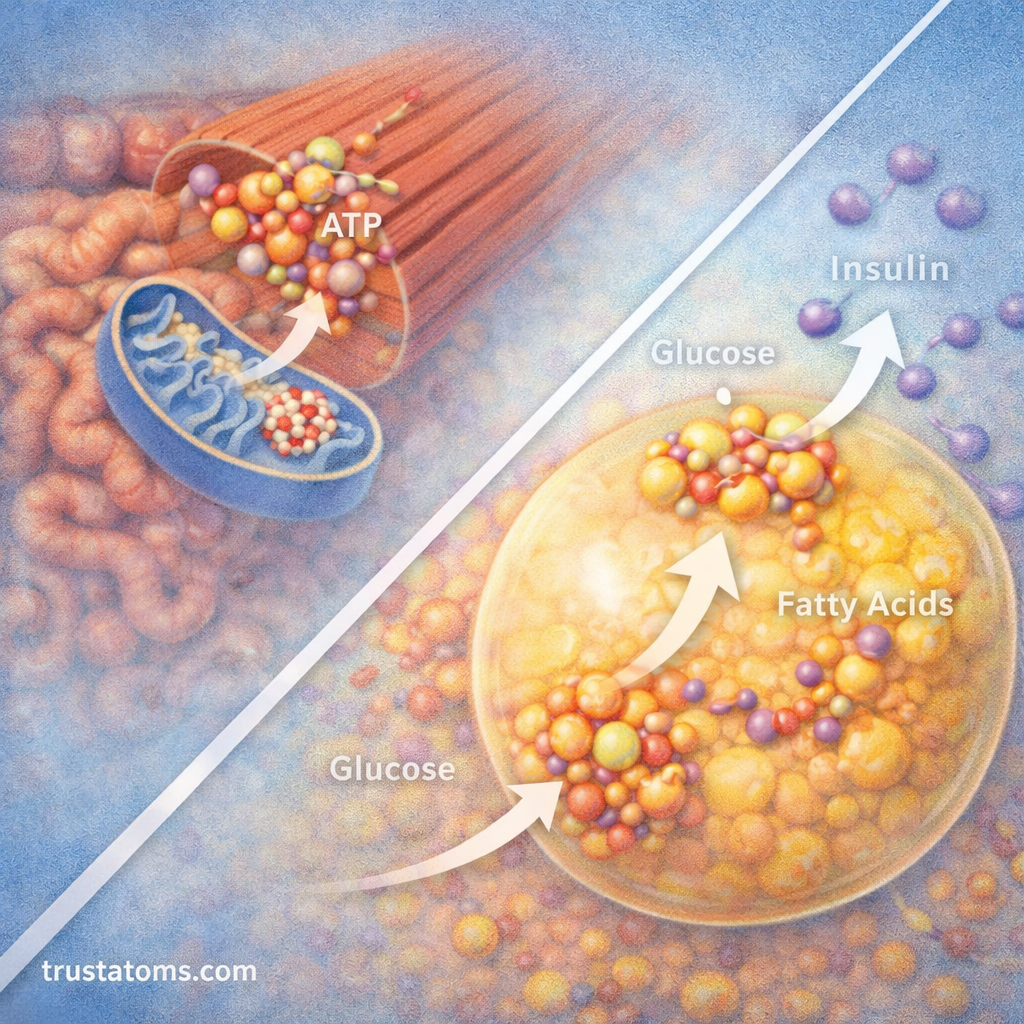
After eating, nutrient availability increases and insulin generally favors glucose uptake, glycogen synthesis, and energy storage. Between meals, lower insulin and increased glucagon signaling help the liver maintain circulating glucose.
Example: What Happens After Eating a Bowl of Rice?
Imagine eating a meal containing rice, vegetables, and a source of protein. Digestive enzymes break rice starch into absorbable sugars, while dietary proteins provide amino acids and fats supply fatty acids and related digestion products.
As glucose enters the bloodstream, insulin secretion increases. Muscle cells can use some glucose for ATP production, while the liver and muscles replenish glycogen stores. Amino acids support ongoing protein synthesis, and absorbed fats are transported for use or storage.
Several hours later, as absorbed nutrients decline, the liver helps maintain blood glucose by releasing stored glucose or producing new glucose. The body shifts its fuel use without completely switching off either storage or breakdown pathways.
Hormones That Adjust Metabolic Activity
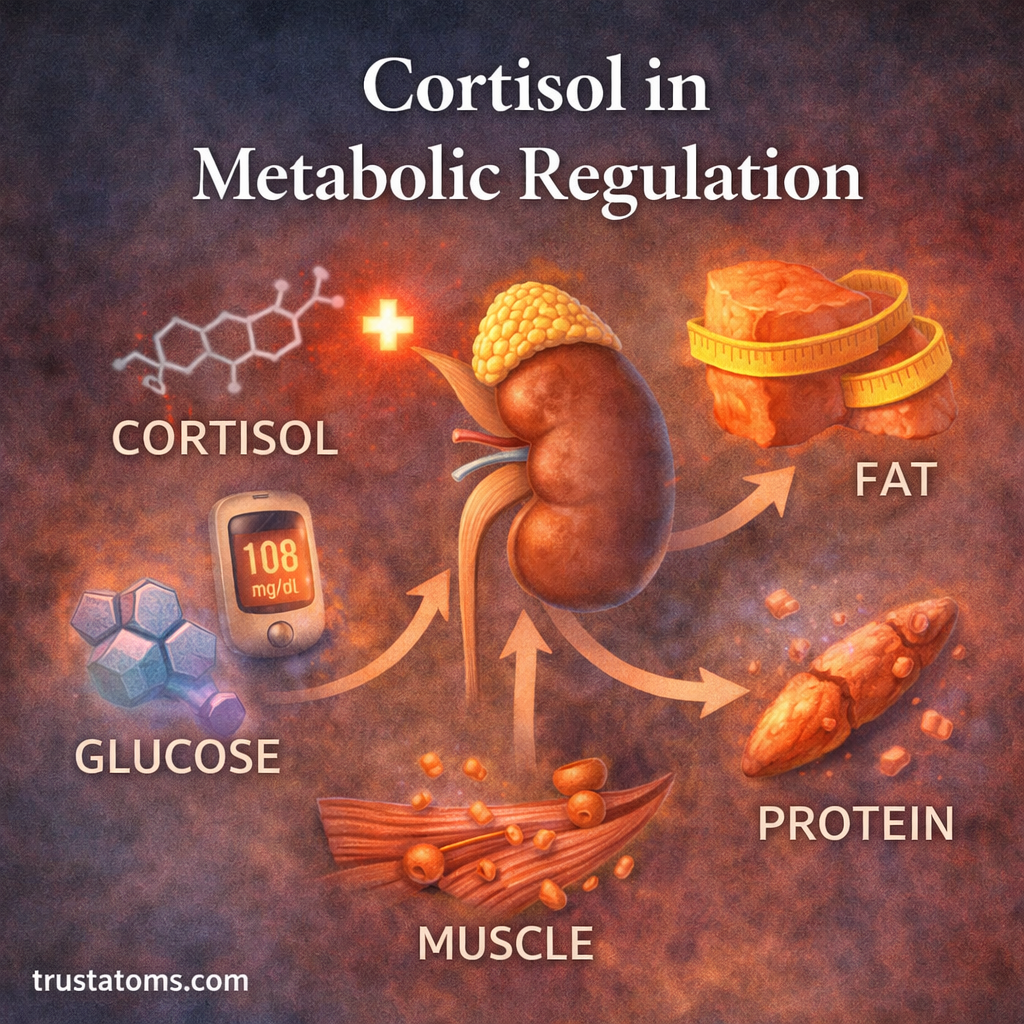
Insulin and glucagon are central regulators, but other hormones also influence metabolism. Cortisol can increase the availability of energy substrates during stress, while thyroid hormones influence basal metabolic rate and energy expenditure.
Adrenaline supports rapid fuel mobilization during physical activity or acute stress. These signals work together rather than independently, allowing tissues to respond to changing demands.
Metabolic Waste and Factors Affecting Nutrient Use
Metabolism produces carbon dioxide, nitrogen-containing waste, and heat. Carbon dioxide travels to the lungs for exhalation, while the kidneys excrete urea and other waste products. Heat generated by metabolism contributes to body temperature regulation.
Metabolic activity also varies with age, body composition, physical activity, hormone levels, illness, and nutrient availability. Regular movement, adequate sleep, sufficient hydration, and a varied diet help support normal metabolic functions.
Frequently Asked Questions
Do all absorbed nutrients go directly to the liver?
No. Most absorbed sugars and amino acids reach the liver through portal blood, but most dietary long-chain fats initially travel through the lymphatic system as chylomicrons before entering the bloodstream.
What happens to glucose that is not immediately needed?
Some glucose is stored as glycogen in the liver and muscles. When energy intake remains greater than energy expenditure, carbohydrate can also contribute to fat synthesis and storage.
Does metabolism stop when a person is sleeping?
No. Cells continue producing ATP, maintaining tissues, and regulating essential functions during sleep. Energy expenditure generally decreases compared with many waking activities, but metabolic reactions continue.
Metabolic processing connects intestinal absorption with the body’s continuous need for energy and cellular materials. The liver regulates nutrient availability, muscles use and store fuels, and adipose tissue maintains longer-term energy reserves. Together, these pathways allow the body to respond to meals, fasting, and physical activity while maintaining internal stability.
This article is for general education and is not medical advice. Talk to a qualified health professional about any medical concern.
Sources: OpenStax, Anatomy and Physiology 2e; National Institute of Diabetes and Digestive and Kidney Diseases (NIDDK); Guyton and Hall Textbook of Medical Physiology.