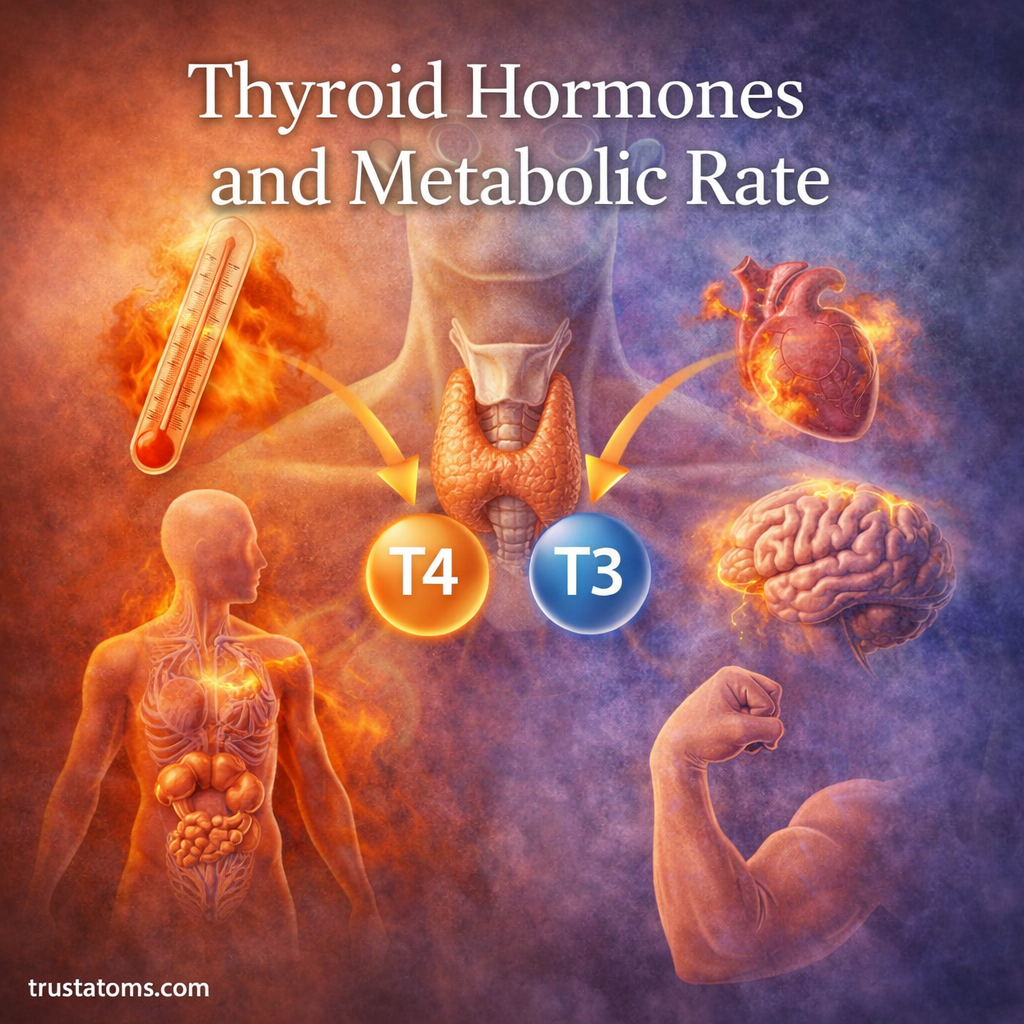
Thyroid hormones play a central role in regulating the body’s metabolic rate—the speed at which your body uses energy. Produced by the thyroid gland, these hormones influence nearly every cell, controlling how efficiently your body converts food into energy.
From maintaining body temperature to supporting heart function and brain activity, thyroid hormones are essential for keeping your metabolism balanced.
What Is the Thyroid Gland?
The thyroid gland is a butterfly-shaped organ located in the front of the neck, just below the Adam’s apple. It is part of the endocrine system and is responsible for producing hormones that regulate metabolism.
Key Features of the Thyroid Gland
- Located at the base of the neck
- Produces hormones that control energy use
- Influences multiple organ systems
- Works closely with the pituitary gland
What Are Thyroid Hormones?
The thyroid gland produces two primary hormones:
Thyroxine (T4)
- The most abundant thyroid hormone
- Acts as a precursor to the more active hormone T3
- Circulates in the bloodstream in larger quantities
Triiodothyronine (T3)
- The active form of thyroid hormone
- More potent than T4
- Directly influences cellular metabolism
Most T3 is created when T4 is converted into T3 in tissues such as the liver and kidneys.
How Thyroid Hormones Regulate Metabolic Rate
Metabolic rate refers to how quickly the body uses energy to perform essential functions like breathing, circulation, and cell repair.
Effects of Thyroid Hormones on Metabolism
- Increase the rate of energy production in cells
- Stimulate oxygen consumption
- Enhance the breakdown of carbohydrates, fats, and proteins
- Generate heat (thermogenesis)
- Support normal growth and development
When thyroid hormone levels are balanced, the body maintains a steady and efficient metabolism.
The Role of TSH in Thyroid Regulation
The pituitary gland controls thyroid hormone production through thyroid-stimulating hormone (TSH).
How the Process Works
- The hypothalamus releases signals to the pituitary gland
- The pituitary releases TSH
- TSH stimulates the thyroid gland to produce T3 and T4
- Rising hormone levels signal the system to reduce TSH production
This feedback loop ensures that hormone levels remain stable.
Effects of High and Low Thyroid Hormone Levels
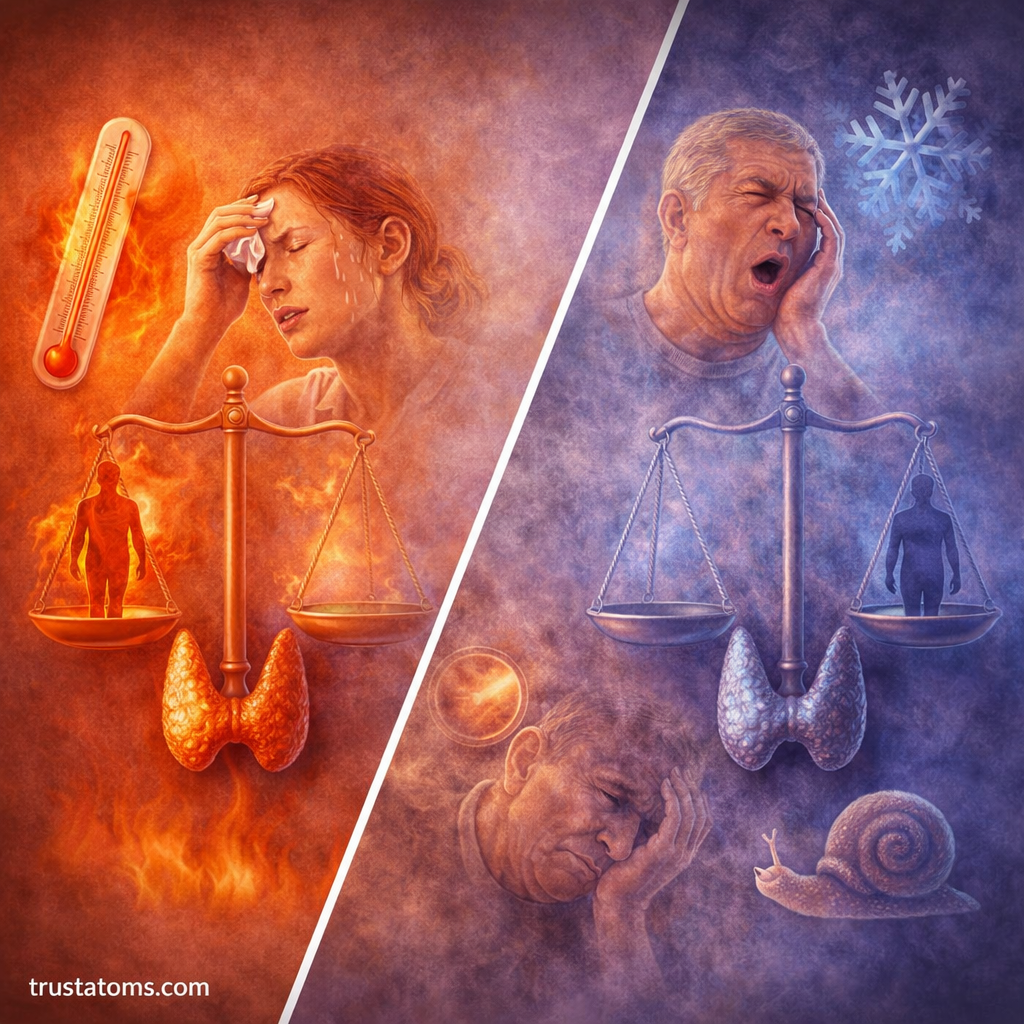
Even small changes in thyroid hormone levels can significantly impact metabolism.
Hyperthyroidism (Too Much Hormone)
- Increased metabolic rate
- Weight loss despite normal or increased appetite
- Rapid heart rate
- Heat intolerance
- Nervousness or anxiety
Hypothyroidism (Too Little Hormone)
- Slowed metabolic rate
- Weight gain
- Fatigue and low energy
- Cold sensitivity
- Slower heart rate
Maintaining proper hormone levels is essential for overall health and energy balance.
How Thyroid Hormones Affect the Body
Thyroid hormones influence multiple systems throughout the body.
Key Areas Affected
- Cardiovascular system – regulates heart rate and blood flow
- Digestive system – influences how quickly food is processed
- Nervous system – affects mood, focus, and cognitive function
- Muscles – supports strength and energy use
- Body temperature – helps maintain heat production
Because of this widespread influence, thyroid imbalances can produce a wide range of symptoms.
Factors That Influence Thyroid Function
Several factors can affect how well the thyroid gland functions.
Common Influences
- Iodine intake (essential for hormone production)
- Autoimmune conditions (e.g., Hashimoto’s disease, Graves’ disease)
- Stress and hormonal imbalances
- Medications
- Aging
A healthy thyroid depends on proper nutrition and overall endocrine balance.
Everyday Example of Metabolic Regulation
After eating a meal:
- Nutrients enter the bloodstream
- Thyroid hormones help regulate how quickly energy is used
- Cells increase activity to process and store nutrients
This process ensures that energy is efficiently distributed and used throughout the body.
Why Thyroid Hormones Matter
Thyroid hormones are essential for maintaining a stable metabolic rate. They help ensure that the body:
- Uses energy efficiently
- Maintains a healthy weight
- Supports normal organ function
- Adapts to changes in environment and activity
Without proper thyroid function, the body’s energy balance can become disrupted.
Final Thoughts
Thyroid hormones are key regulators of metabolism, influencing how the body produces and uses energy. Through a tightly controlled feedback system involving the hypothalamus and pituitary gland, the thyroid ensures that metabolic processes remain balanced.
Understanding how these hormones work provides valuable insight into energy levels, body weight, and overall health.