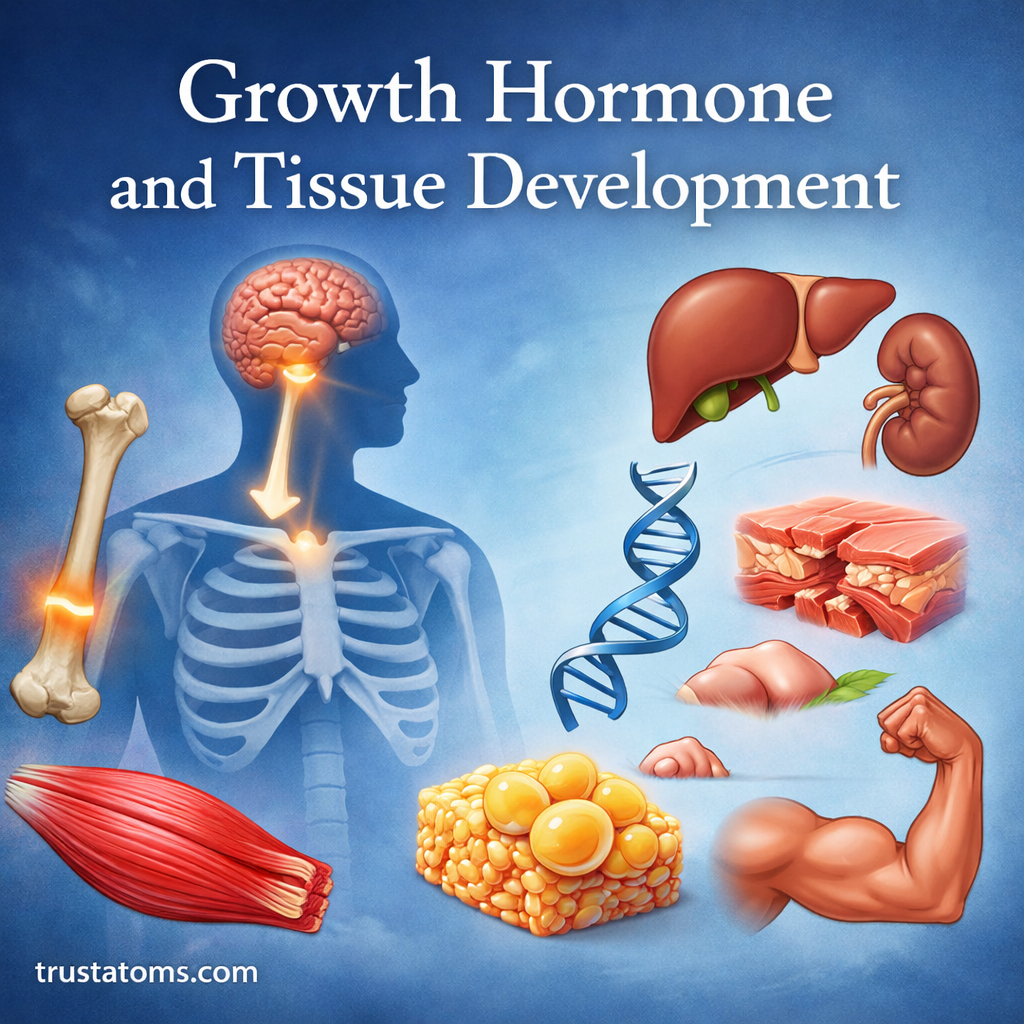
Growth hormone (GH) supports tissue development by stimulating bone growth, influencing protein production, and regulating how the body uses nutrients for energy. It acts directly on tissues and indirectly through insulin-like growth factor 1 (IGF-1), helping coordinate physical growth during childhood and tissue maintenance throughout adulthood.
Although commonly associated with height, growth hormone also affects muscles, connective tissues, and metabolism. Its actions illustrate how the endocrine system connects with human anatomy to regulate development and maintain healthy body structures.
What Is Growth Hormone?
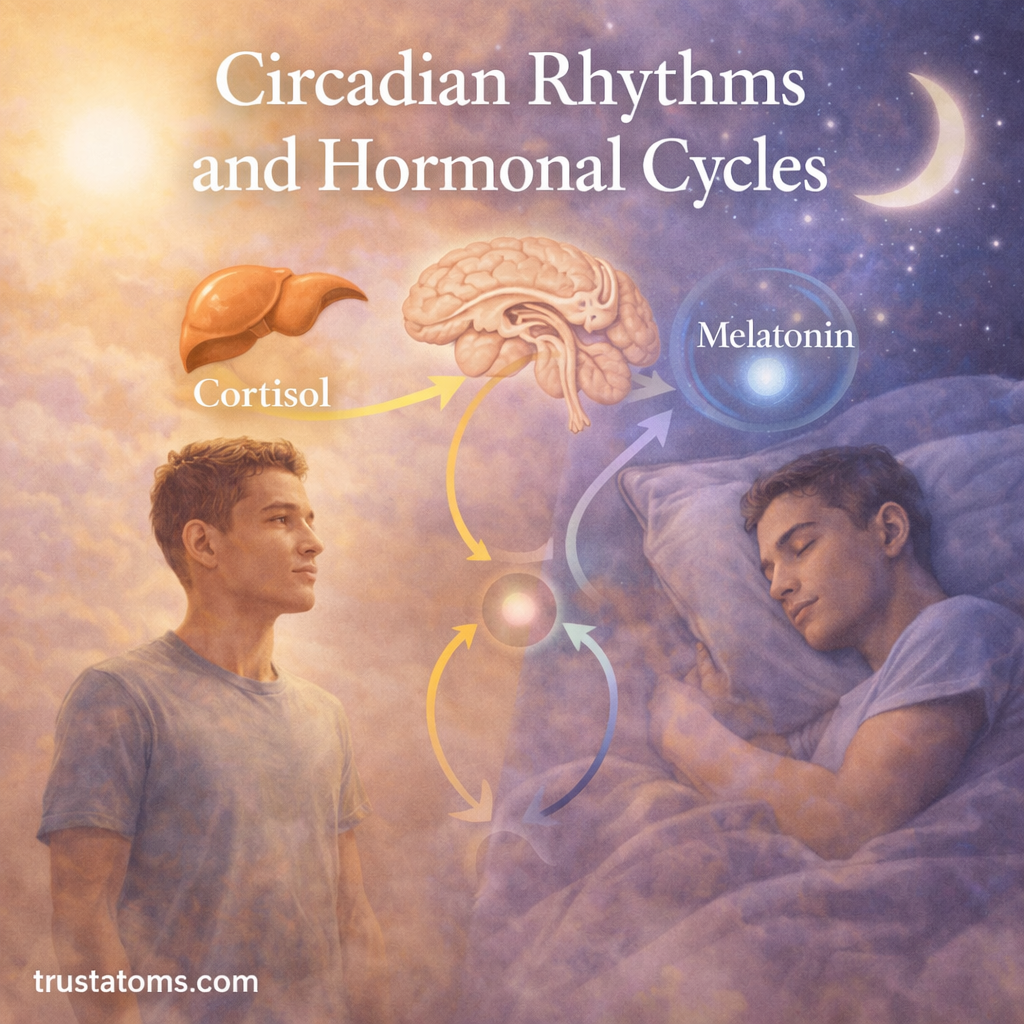
Growth hormone is a peptide hormone produced by the pituitary gland, a small structure located at the base of the brain. It is released in pulses, with substantial secretion often occurring during the first periods of deep sleep.
More specifically, GH is secreted by somatotroph cells in the anterior pituitary. Its release changes with age, sleep, nutritional status, physical activity, and signals from the hypothalamus.
Growth hormone works with other hormones during childhood and adolescence. Endocrine Control of Growth and Puberty explains how these signals coordinate developmental changes.
GH also influences bone remodeling after height growth ends. The relationship between skeletal composition and strength is explored in Bone Mineral Density.
How Growth Hormone and IGF-1 Work Together
Many growth-promoting effects of GH occur through insulin-like growth factor 1 (IGF-1). Growth hormone stimulates IGF-1 production in the liver and other tissues, where IGF-1 acts on nearby or distant cells.
IGF-1 promotes cell growth, protein synthesis, and tissue development. GH also has direct metabolic effects, including increasing fat breakdown and reducing glucose uptake in some tissues.
- The anterior pituitary releases growth hormone into the bloodstream.
- GH binds to receptors in the liver and other tissues.
- These tissues produce IGF-1 in response to GH signaling.
- IGF-1 stimulates growth-related processes in bones, muscles, and other tissues.
- Rising GH and IGF-1 levels help regulate further hormone secretion through negative feedback.
How Growth Hormone Affects Tissue Development
Bone Growth and Skeletal Development
During childhood and adolescence, GH and IGF-1 stimulate growth at the epiphyseal plates near the ends of long bones. These cartilage regions allow bones to lengthen before the plates eventually close.
After growth plate closure, GH can still influence bone remodeling and mineral metabolism, but it no longer produces normal increases in height. The stages of this process are described in Skeletal Growth and Development.
Muscle Growth and Protein Metabolism
Growth hormone supports protein synthesis and helps regulate the balance between tissue building and breakdown. IGF-1 also contributes to muscle growth and maintenance through cellular signaling pathways.
However, increasing GH does not automatically produce greater strength. Muscle performance depends on training, nutrition, neural adaptations, and other factors, and GH treatment has not consistently improved strength in healthy adults.
Connective Tissue and Organ Development
GH and IGF-1 influence the growth and maintenance of connective tissues, including cartilage and collagen-containing structures. During normal development, they also contribute to the growth of internal organs.
These effects must remain appropriately regulated. Excessive GH exposure can cause abnormal enlargement of tissues rather than healthier development.
Growth Hormone and Energy Metabolism
Growth hormone affects how the body uses fats, carbohydrates, and proteins. Its metabolic actions differ from its growth-promoting effects mediated through IGF-1.
- Fat metabolism: GH stimulates lipolysis, releasing fatty acids from stored triglycerides.
- Protein metabolism: GH supports protein synthesis and nitrogen retention.
- Glucose metabolism: GH can reduce insulin sensitivity and increase glucose production, particularly when levels are excessive.
These actions help explain why GH influences body composition but can also affect blood glucose regulation. Normal hormone balance is necessary for coordinated metabolism.
How Growth Hormone Changes Throughout Life
| Life Stage | Growth Hormone Activity | Main Effects |
|---|---|---|
| Childhood | Supports normal linear growth | Bone lengthening and tissue development |
| Adolescence | Secretion generally increases during puberty | Growth spurts and changes in body composition |
| Adulthood | Continues in pulses | Metabolism and tissue maintenance |
| Older adulthood | Average secretion declines | Reduced GH activity as part of normal aging |
Declining GH secretion with age does not automatically indicate a medical deficiency. Age-related changes in muscle and bone also reflect physical activity, nutrition, sex hormones, and other physiological factors.
What Controls Growth Hormone Release?
The hypothalamus regulates GH secretion through stimulating and inhibiting signals sent to the anterior pituitary.
- Growth hormone-releasing hormone (GHRH): Stimulates GH secretion.
- Somatostatin: Inhibits GH release.
- Ghrelin: Can stimulate GH secretion and also participates in appetite regulation.
- IGF-1 feedback: Helps suppress excessive GH secretion.
Deep sleep, exercise, fasting, and nutritional conditions can change GH secretion. Because release is pulsatile, a single random GH blood measurement generally cannot establish whether hormone production is normal.
A Practical Example: Growth During Puberty
Consider a teenager experiencing a growth spurt. During puberty, changes in sex hormones increase activity within the GH–IGF-1 system, helping stimulate growth at the long bones’ growth plates.
Cartilage cells in these plates multiply and mature, and bone tissue gradually replaces the cartilage as the bones lengthen. Adequate nutrition and overall health support this process.
Once the growth plates close near the end of adolescence, additional GH cannot restart normal lengthwise bone growth. This explains why the same hormone has different structural effects before and after skeletal maturity.
How Growth Hormone Supports Tissue Repair
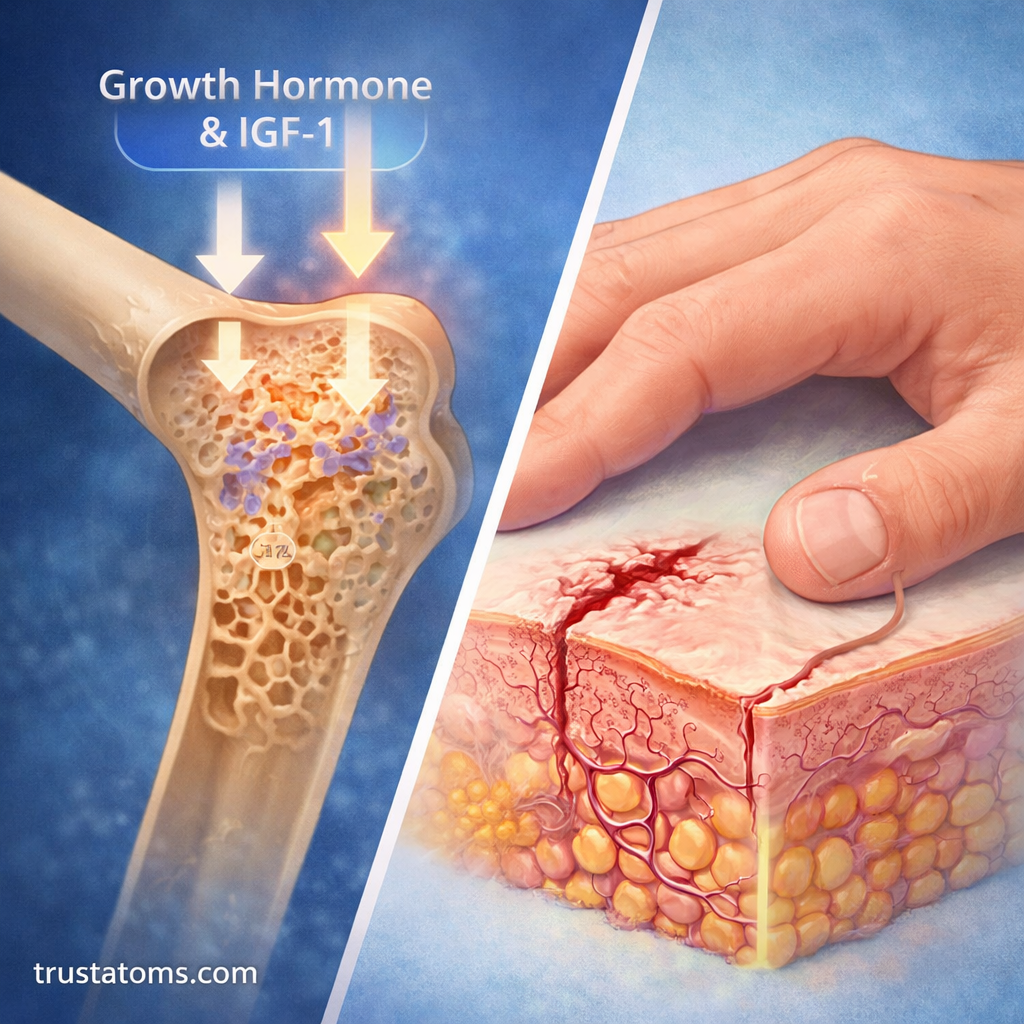
GH and IGF-1 participate in tissue maintenance by influencing protein synthesis, collagen metabolism, and cellular growth. These processes are relevant to the body’s response to injury.
However, normal wound healing depends on many factors, including blood supply, immune responses, nutrition, and the type of injury. Higher GH levels do not necessarily mean faster recovery, and GH is not a routine treatment for ordinary wounds or exercise-related soreness.
The broader processes involved in exercise recovery are explained in Muscle Fatigue and Recovery Mechanisms.
Disorders Caused by Too Little or Too Much Growth Hormone
Abnormal GH secretion can affect growth, metabolism, and tissue structure.
- Childhood GH deficiency: May cause unusually slow growth and short stature, depending on severity and other factors.
- Adult GH deficiency: Can affect body composition, bone health, and quality of life, particularly in people with pituitary disorders.
- Gigantism: Excessive GH before growth plate closure can cause abnormal height growth.
- Acromegaly: Excessive GH after growth plate closure can enlarge the hands, feet, jaw, and soft tissues and cause metabolic complications.
Doctors evaluate suspected GH disorders using medical history, growth patterns, IGF-1 testing, and specialized hormone tests when appropriate. Treatment depends on the underlying diagnosis.
Frequently Asked Questions
Does growth hormone make adults taller?
No. Once the growth plates have closed, growth hormone cannot produce normal lengthwise growth of long bones. Excess GH in adulthood can instead cause abnormal thickening of bones and enlargement of soft tissues.
Why is growth hormone released during sleep?
GH secretion is linked to sleep regulation, with prominent pulses often occurring during deep sleep. The timing reflects interactions between hypothalamic signals, sleep stages, and the body’s hormonal rhythms.
Is more growth hormone always better for muscle growth?
No. Although GH influences protein metabolism and body composition, excessive levels can cause harmful effects, including fluid retention and impaired glucose regulation. Healthy muscle development depends on appropriate training, nutrition, and normal hormonal function.
Growth hormone coordinates tissue development through direct metabolic actions and IGF-1 signaling, with especially visible effects on bone growth during childhood and puberty. After skeletal maturity, it continues to influence metabolism and tissue maintenance without increasing normal adult height. Both insufficient and excessive GH activity can disrupt these processes, making balanced hormonal regulation more important than simply increasing hormone levels.
This article is for general education and is not medical advice. Talk to a qualified health professional about any medical concern.
Sources: Williams Textbook of Endocrinology; Guyton and Hall Textbook of Medical Physiology; Endocrine Society clinical practice guidelines on growth hormone disorders.