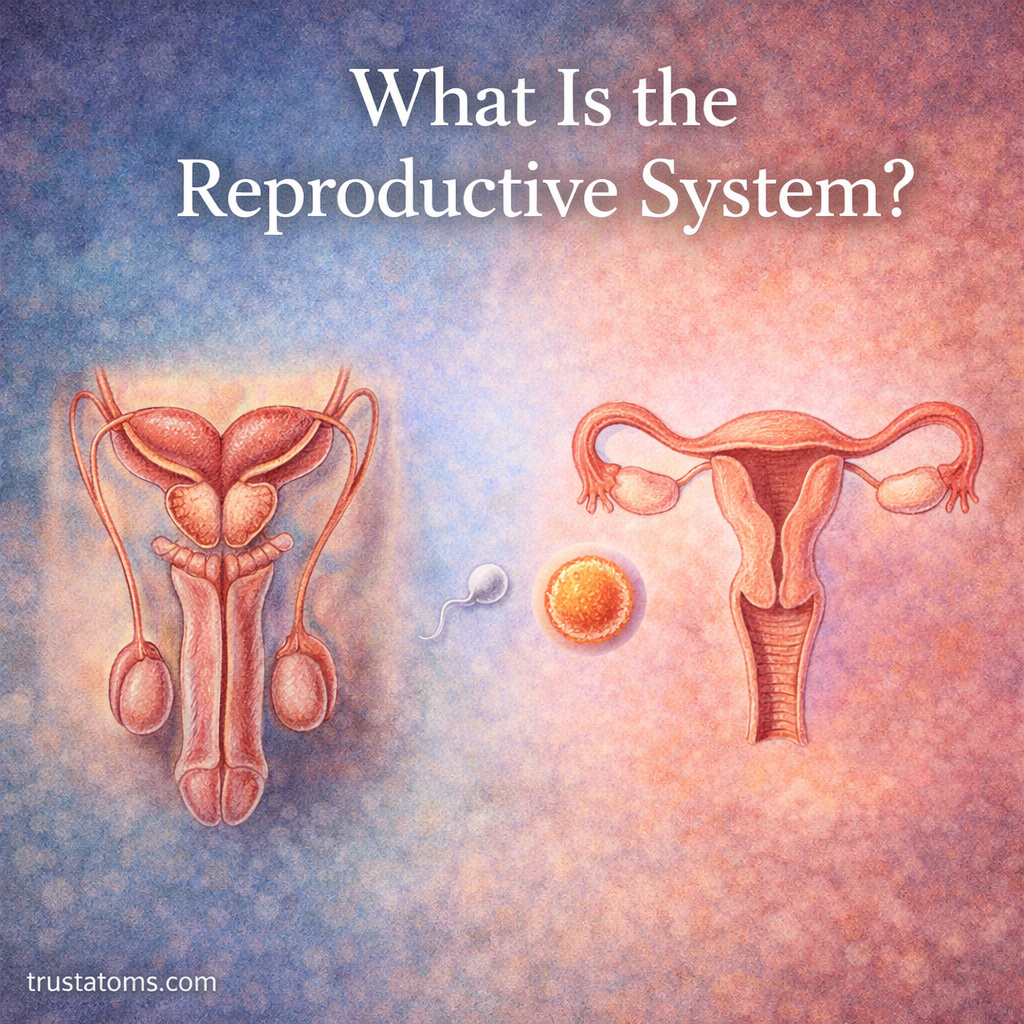
The reproductive system is a group of organs and structures responsible for producing offspring. It enables the creation of new life through the production of reproductive cells (gametes), fertilization, and, in females, the development of a fetus.
Beyond reproduction, this system also plays a major role in hormone production, sexual development, and overall health.
Overview of the Reproductive System
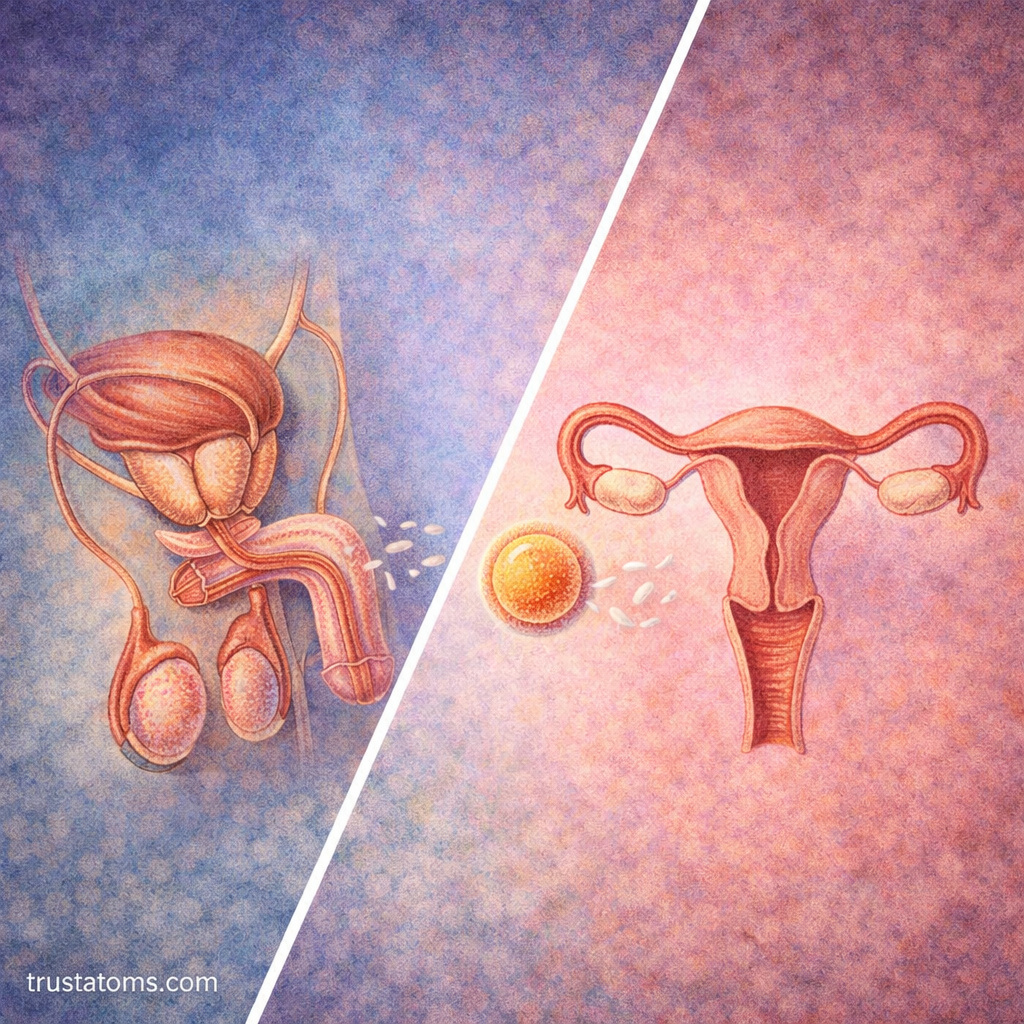
The human reproductive system is divided into two main types:
Male Reproductive System
Produces and delivers sperm.
Female Reproductive System
Produces eggs, supports fertilization, and allows for pregnancy and childbirth.
Although they function differently, both systems work together in reproduction.
Main Functions of the Reproductive System
The reproductive system performs several essential roles:
- Produces gametes (sperm and eggs)
- Facilitates fertilization
- Supports fetal development (in females)
- Produces sex hormones (e.g., testosterone, estrogen, progesterone)
- Enables sexual reproduction
These functions are necessary for the continuation of the species.
The Male Reproductive System
The male reproductive system is responsible for producing, storing, and delivering sperm.
Key Organs and Their Functions
Testes
- Produce sperm cells
- Secrete testosterone
Epididymis
- Stores and matures sperm
Vas Deferens
- Transports sperm from the epididymis
Seminal Vesicles and Prostate Gland
- Produce fluids that nourish and protect sperm
- Form semen
Penis
- Delivers sperm into the female reproductive tract
Together, these structures ensure that sperm are produced and delivered effectively.
The Female Reproductive System
The female reproductive system is more complex due to its role in fertilization and pregnancy.
Key Organs and Their Functions
Ovaries
- Produce eggs (ova)
- Secrete estrogen and progesterone
Fallopian Tubes
- Transport eggs from ovaries to uterus
- Site of fertilization
Uterus
- Supports and nourishes a developing fetus
Cervix
- Connects the uterus to the vagina
- Regulates passage between them
Vagina
- Receives sperm
- Serves as the birth canal
These organs work together to support reproduction and fetal development.
How Fertilization Occurs
Fertilization is the process where a sperm cell combines with an egg cell.
Basic Steps
- Sperm enters the female reproductive tract
- Sperm travels through the uterus to the fallopian tube
- One sperm fertilizes the egg
- A zygote (fertilized egg) forms
- The zygote begins to divide and develop
This marks the beginning of a new organism.
Hormones and Reproductive Function
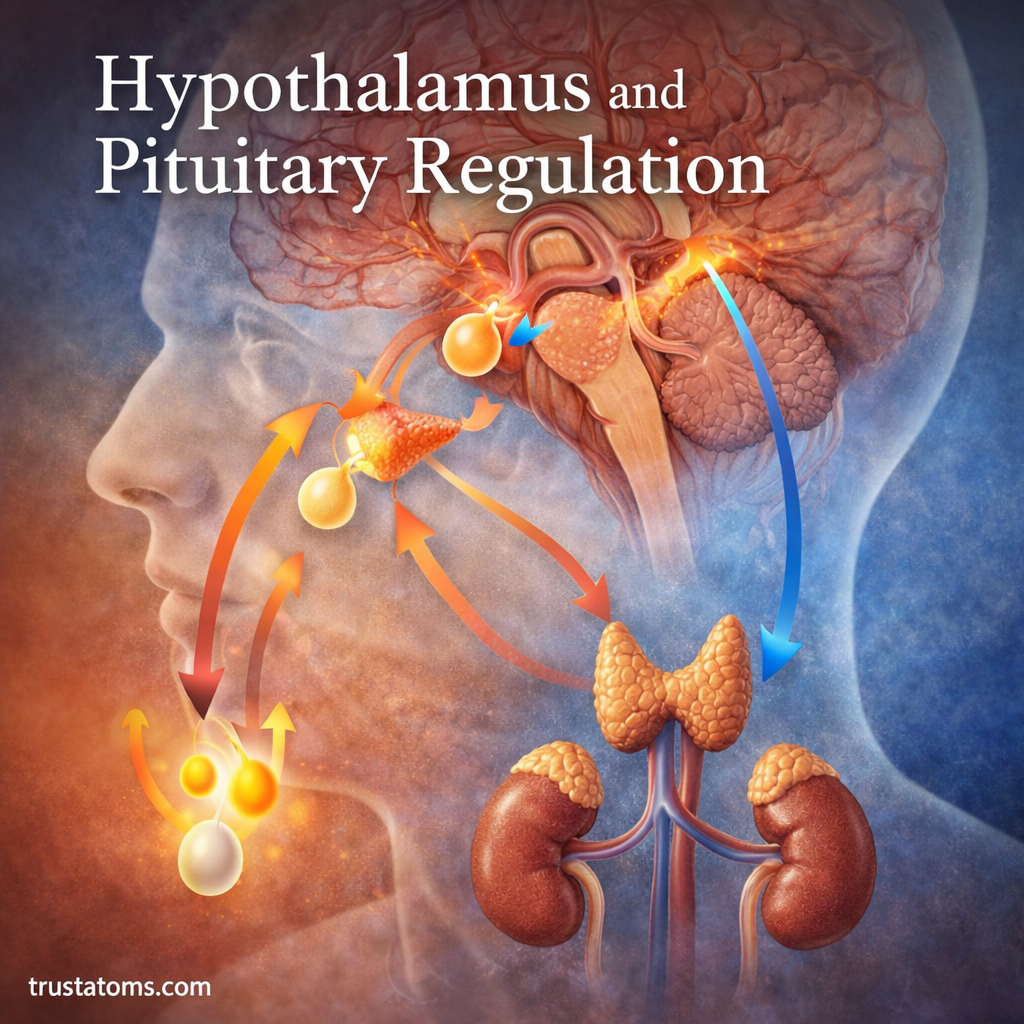
Hormones regulate the reproductive system and control processes such as puberty and the reproductive cycle.
Key Hormones
- Testosterone: Drives male reproductive development
- Estrogen: Regulates female reproductive functions
- Progesterone: Supports pregnancy
- Follicle-stimulating hormone (FSH): Stimulates gamete production
- Luteinizing hormone (LH): Triggers ovulation and hormone release
These hormones ensure proper timing and coordination of reproductive processes.
The Menstrual Cycle
In females, the reproductive system follows a regular cycle that prepares the body for potential pregnancy.
Phases of the Cycle
- Menstrual Phase: Shedding of the uterine lining
- Follicular Phase: Egg development begins
- Ovulation: Release of a mature egg
- Luteal Phase: Preparation for possible pregnancy
If fertilization does not occur, the cycle repeats.
The Role of the Reproductive System in Development
The reproductive system is also responsible for sexual maturation.
During Puberty
- Development of reproductive organs
- Onset of sperm production in males
- Beginning of menstrual cycles in females
- Appearance of secondary sexual characteristics
These changes prepare the body for reproductive capability.
Maintaining Reproductive Health
Keeping the reproductive system healthy is important for overall well-being.
Key Factors
- Proper hygiene
- Balanced nutrition
- Regular medical checkups
- Safe practices to prevent infections
Healthy habits support normal reproductive function and reduce risks.
Final Thoughts
The reproductive system is essential for creating new life and supporting human development. It involves a complex interaction of organs, hormones, and biological processes that must work in harmony.
By understanding how the reproductive system functions, it becomes easier to appreciate its role not only in reproduction but also in overall health and human biology.