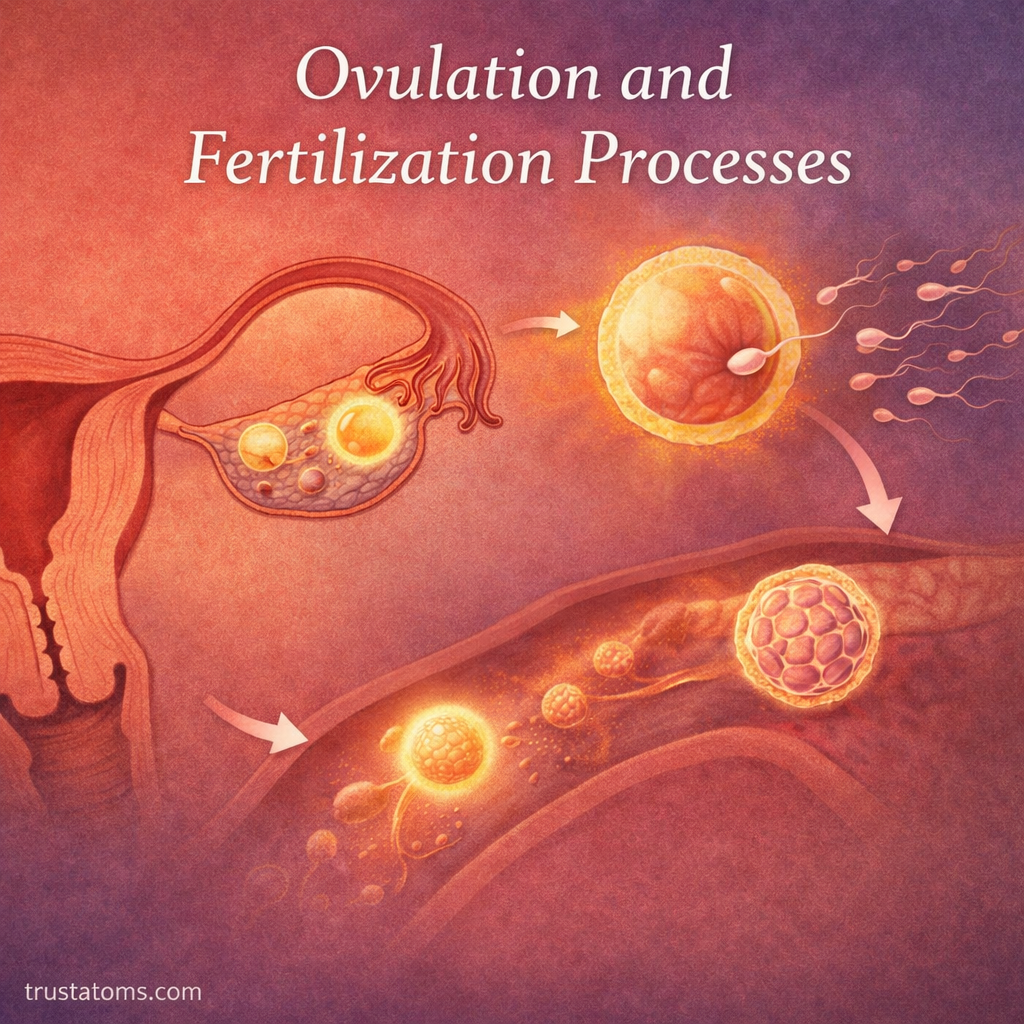
Ovulation and fertilization are central events in human reproduction. These processes involve the release of an egg from the ovary and its potential union with sperm, leading to the formation of a new life.
Understanding how ovulation and fertilization work provides insight into fertility, reproductive health, and the biological timing required for conception.
What Is Ovulation?
Ovulation is the process in which a mature egg (ovum) is released from the ovary into the fallopian tube.
When Ovulation Occurs
- Typically around day 14 of a 28-day menstrual cycle
- Can vary depending on cycle length
- Occurs once per cycle in most individuals
What Happens During Ovulation
- A dominant follicle in the ovary matures
- A surge in luteinizing hormone (LH) triggers the release of the egg
- The egg enters the fallopian tube
Key Point
The egg remains viable for fertilization for about 12–24 hours after release.
Hormonal Control of Ovulation
Ovulation is regulated by hormonal signals between the brain and ovaries.
Key Hormones Involved
- Follicle-stimulating hormone (FSH): Stimulates follicle development
- Estrogen: Builds up before ovulation and triggers LH surge
- Luteinizing hormone (LH): Causes the release of the egg
Hormonal Sequence
- FSH stimulates follicle growth
- Estrogen levels rise as the follicle matures
- A peak in estrogen triggers the LH surge
- LH surge causes ovulation
Key Point
The LH surge is the direct trigger for ovulation and marks peak fertility.
The Fertile Window
The fertile window is the time during which pregnancy is most likely to occur.
Duration
- About 5–6 days total
- Includes the 5 days before ovulation and the day of ovulation
Why Timing Matters
- Sperm can survive in the female reproductive tract for up to 5 days
- The egg survives only 12–24 hours
Key Point
Pregnancy is most likely when intercourse occurs in the days leading up to ovulation.
What Is Fertilization?
Fertilization is the process where a sperm cell merges with an egg cell to form a zygote.
Where Fertilization Occurs
- Typically in the fallopian tube
- Most often in the ampulla (middle section of the tube)
Steps of Fertilization
- Sperm travel through the cervix and uterus into the fallopian tube
- One sperm penetrates the outer layer of the egg
- The egg prevents entry of additional sperm
- The genetic material from sperm and egg combines
Key Point
Fertilization results in a single cell (zygote) with a complete set of chromosomes.
Sperm Journey and Survival
For fertilization to occur, sperm must successfully travel through the female reproductive system.
Challenges Sperm Face
- Acidic environment of the vagina
- Cervical mucus barriers
- Immune defenses
Factors That Improve Success
- Healthy sperm count and motility
- Timing relative to ovulation
- Favorable cervical mucus during the fertile window
Key Point
Only a small fraction of sperm reach the fallopian tube, and typically only one fertilizes the egg.
From Zygote to Implantation
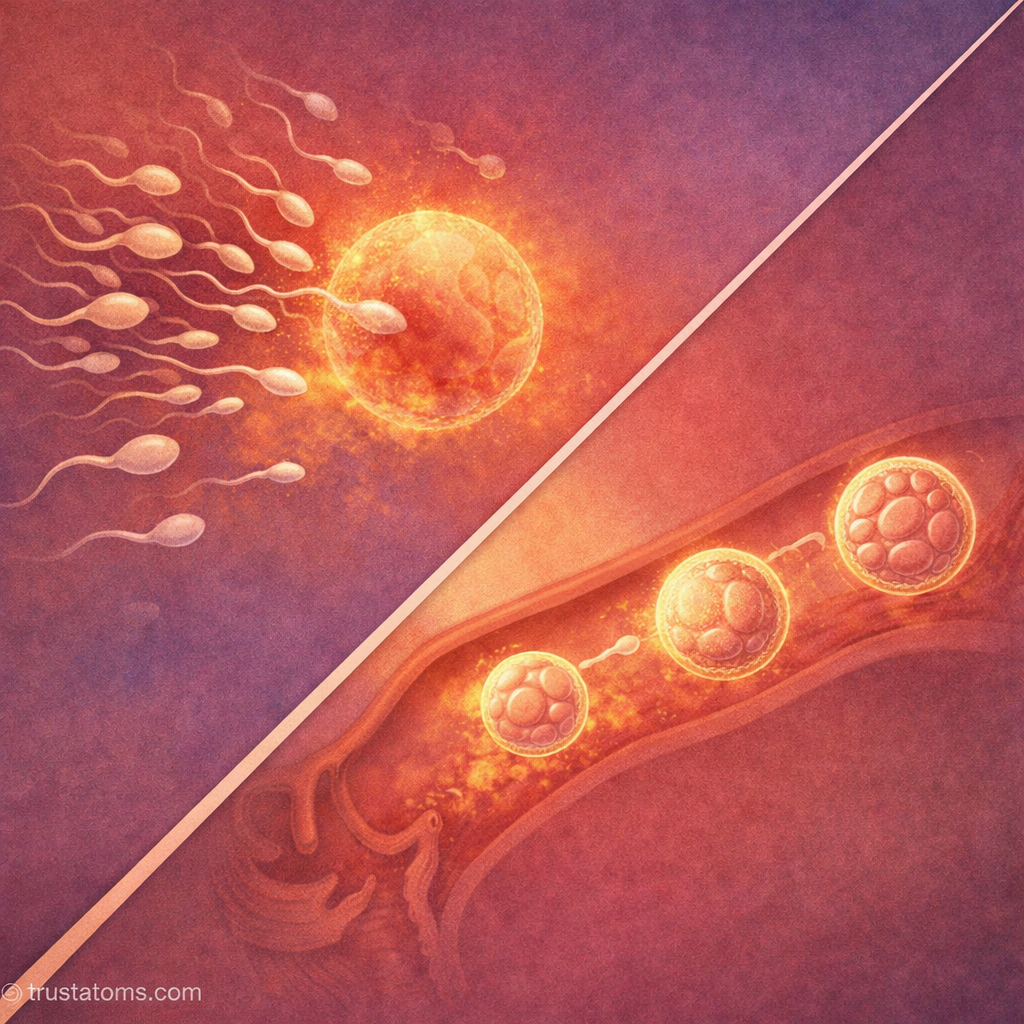
After fertilization, the zygote begins a journey toward the uterus.
Early Development Stages
- Zygote begins dividing (cleavage)
- Forms a multicellular structure called a blastocyst
- Travels through the fallopian tube to the uterus
Implantation
- Occurs about 6–10 days after fertilization
- The blastocyst attaches to the uterine lining (endometrium)
- Marks the beginning of pregnancy
Key Point
Successful implantation is required for pregnancy to continue.
What Happens If Fertilization Does Not Occur?
If the egg is not fertilized:
- The egg disintegrates within 24 hours
- Hormone levels (especially progesterone) decline
- The uterine lining sheds during menstruation
Key Point
The cycle resets, preparing the body for another opportunity for ovulation.
Factors That Affect Ovulation and Fertilization
Several biological and lifestyle factors can influence these processes.
Biological Factors
- Hormonal imbalances
- Age-related changes in fertility
- Reproductive health conditions
Lifestyle Factors
- Stress levels
- Nutrition and body weight
- Smoking or substance use
Key Point
Both ovulation and fertilization depend on a balance of internal and external conditions.
Why Understanding These Processes Matters
Knowledge of ovulation and fertilization helps individuals:
- Track fertility and plan or prevent pregnancy
- Recognize normal reproductive patterns
- Identify potential fertility issues
- Make informed health decisions
Final Thoughts
Ovulation and fertilization are carefully timed biological processes that depend on hormonal signals, reproductive anatomy, and precise coordination between sperm and egg.
While ovulation creates the opportunity for conception, fertilization and successful implantation are necessary for pregnancy to occur. Understanding these processes provides a clear foundation for reproductive health awareness.