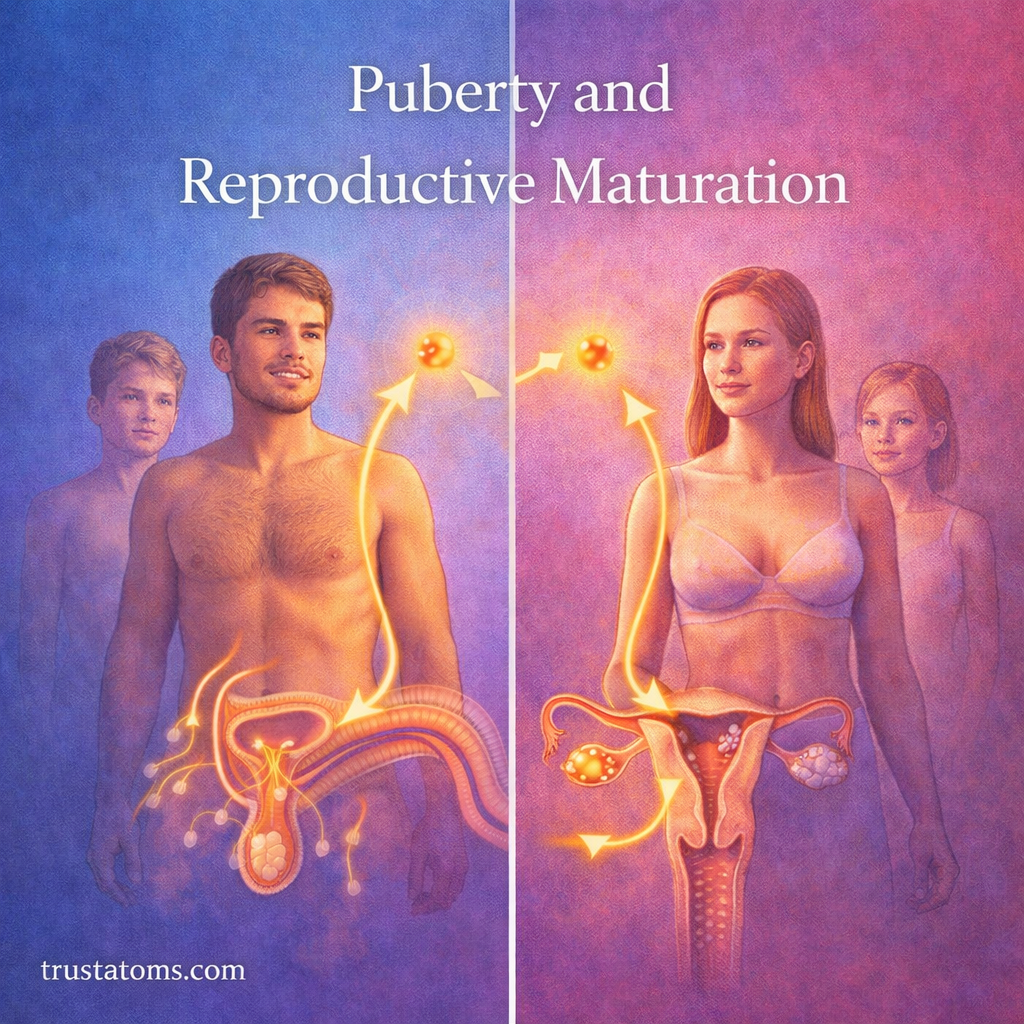
Puberty is a critical stage of human development during which the body transitions from childhood to reproductive maturity. This process involves a series of hormonal, physical, and emotional changes that prepare the body for reproduction. Understanding puberty helps explain how the reproductive system develops and becomes fully functional.
What Is Puberty?
Puberty is the period when the body undergoes biological changes that lead to sexual maturity and the ability to reproduce.
Key Characteristics of Puberty
- Activation of reproductive organs
- Development of secondary sexual characteristics
- Growth spurts and body composition changes
- Hormonal shifts that regulate physical and emotional development
Puberty typically begins between ages 8–13 in females and 9–14 in males, though timing can vary.
Hormonal Control of Puberty
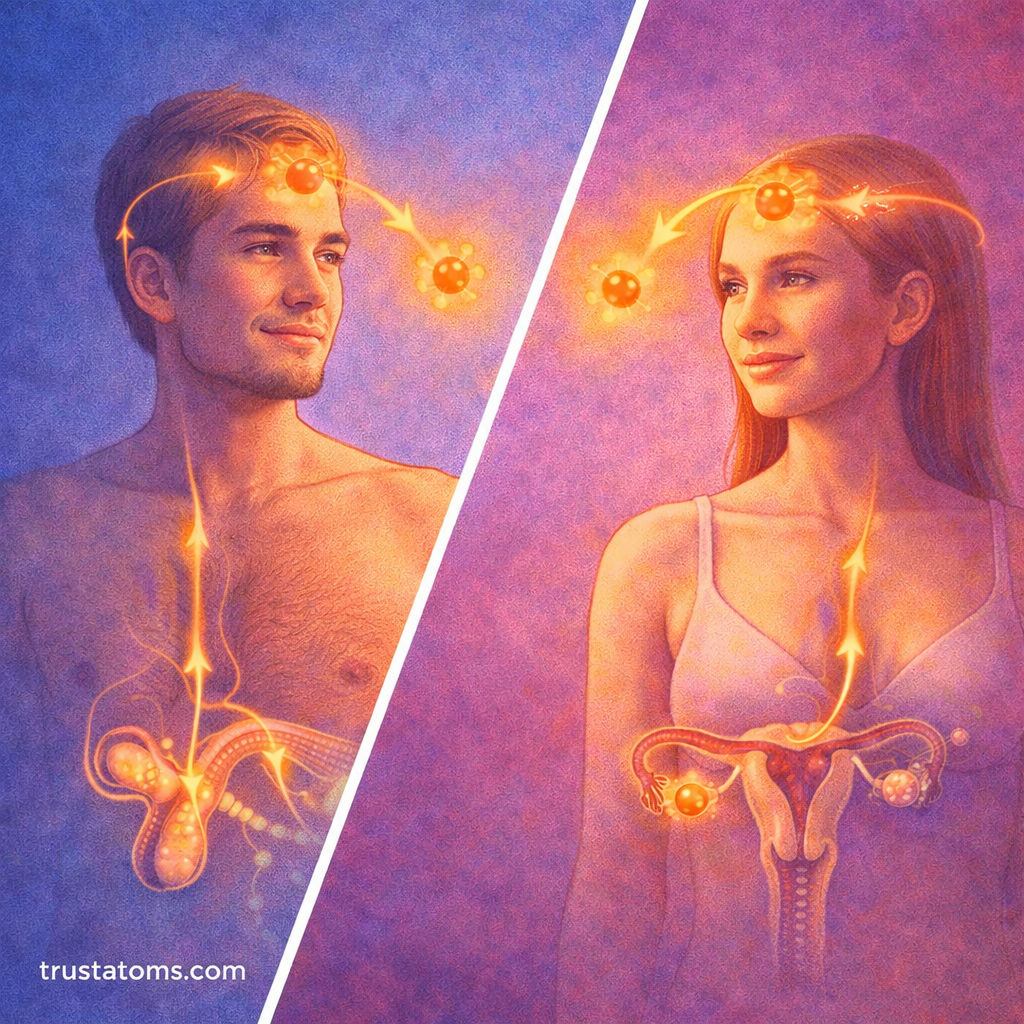
Puberty is triggered by the activation of the hypothalamic-pituitary-gonadal (HPG) axis.
How the Process Begins
- The hypothalamus releases gonadotropin-releasing hormone (GnRH)
- The pituitary gland releases luteinizing hormone (LH) and follicle-stimulating hormone (FSH)
- The gonads (ovaries or testes) produce sex hormones
- In females: estrogen and progesterone
- In males: testosterone
These hormones drive the physical and reproductive changes of puberty.
Physical Changes in Females
Female puberty involves the maturation of the reproductive system and visible physical changes.
Key Developments
- Breast development
- Widening of hips
- Growth of pubic and underarm hair
- Onset of menstruation (menarche)
- Maturation of ovaries and egg release
Ovulation begins as hormonal cycles become established, allowing for reproductive capability.
Physical Changes in Males
Male puberty focuses on the development of reproductive organs and increased muscle mass.
Key Developments
- Enlargement of the testes and penis
- Production of sperm
- Deepening of the voice
- Growth of facial and body hair
- Increased muscle mass and height
Sperm production marks the beginning of male reproductive capability.
Growth and Development During Puberty
Puberty is also associated with rapid physical growth.
Growth Spurts
- Increased height and weight
- Changes in body proportions
- Development of bone density and muscle
Differences Between Sexes
- Females typically experience growth spurts earlier
- Males often have a longer growth period and greater increase in muscle mass
Emotional and Cognitive Changes
Hormonal changes during puberty also affect emotional and mental development.
Common Changes
- Increased self-awareness
- Mood fluctuations
- Development of identity
- Greater independence
These changes are a normal part of maturation and brain development.
Reproductive Maturation
Reproductive maturity means the body can produce viable gametes and support fertilization.
In Females
- Regular menstrual cycles develop
- Ovulation becomes consistent
- The uterus is capable of supporting pregnancy
In Males
- Continuous sperm production begins
- Hormone levels stabilize
- Reproductive organs reach full function
This stage marks full reproductive capability.
Factors That Influence Puberty
The timing and progression of puberty can vary due to several factors:
- Genetics
- Nutrition
- Physical health
- Hormonal balance
- Environmental influences
Variations in timing are normal, but significant delays or early onset may require medical evaluation.
Key Takeaways
- Puberty is the transition to reproductive maturity
- It is controlled by hormonal signals from the brain and gonads
- Females develop menstrual cycles and ovulation
- Males begin sperm production and increased testosterone levels
- Physical, emotional, and cognitive changes occur simultaneously
- Timing of puberty varies between individuals
Final Thoughts
Puberty and reproductive maturation represent one of the most important stages of human development. Through hormonal regulation and coordinated physical changes, the body becomes capable of reproduction. Understanding this process provides valuable insight into how the human body grows, adapts, and prepares for adult life.