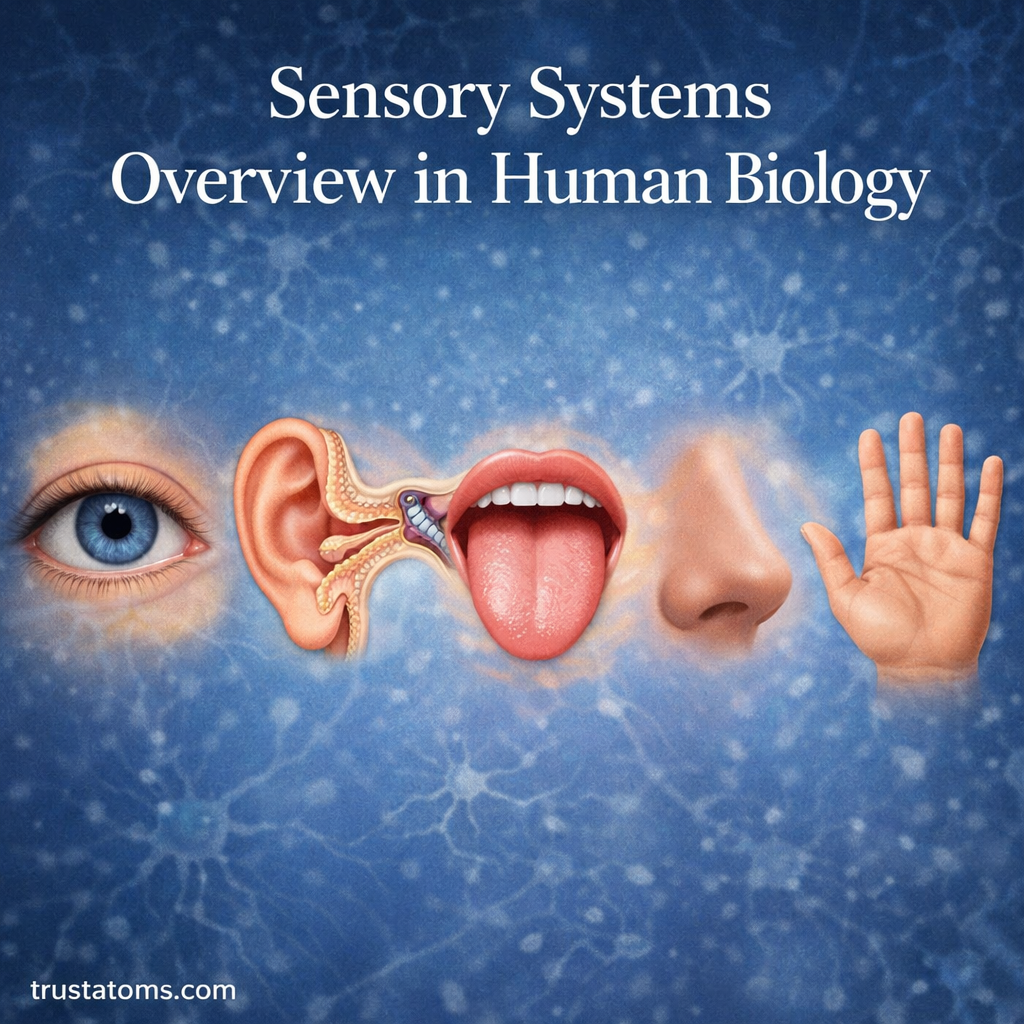
The human sensory systems are networks of specialized receptors, nerves, and brain regions that detect changes inside and outside the body. They allow people to see, hear, smell, taste, feel touch, maintain balance, and sense body position by converting stimuli into signals the nervous system can process.
These systems connect sensory organs with the brain and spinal cord, making them an important part of human anatomy. Although the traditional five senses are the most familiar, the body also monitors movement, temperature, pain, and internal conditions through additional sensory pathways.
What Are Sensory Systems?
Sensory systems are organized networks that detect specific forms of physical or chemical stimulation and transmit information to the central nervous system. Each system contains receptors suited to particular stimuli and neural circuits that process the resulting signals.
Some receptors are specialized nerve endings, while others are separate cells that communicate with neurons. Sensory Neurons and Signal Detection explains how sensory information enters neural pathways.
The nervous system must also represent the type, intensity, location, and timing of stimulation. Neural Coding in Sensory Systems describes how patterns of neural activity carry these details.
Signals from different senses frequently interact. Sensory Integration in the Central Nervous System examines how the brain combines information to guide perception, movement, and attention.
How Sensory Systems Detect and Process Stimuli
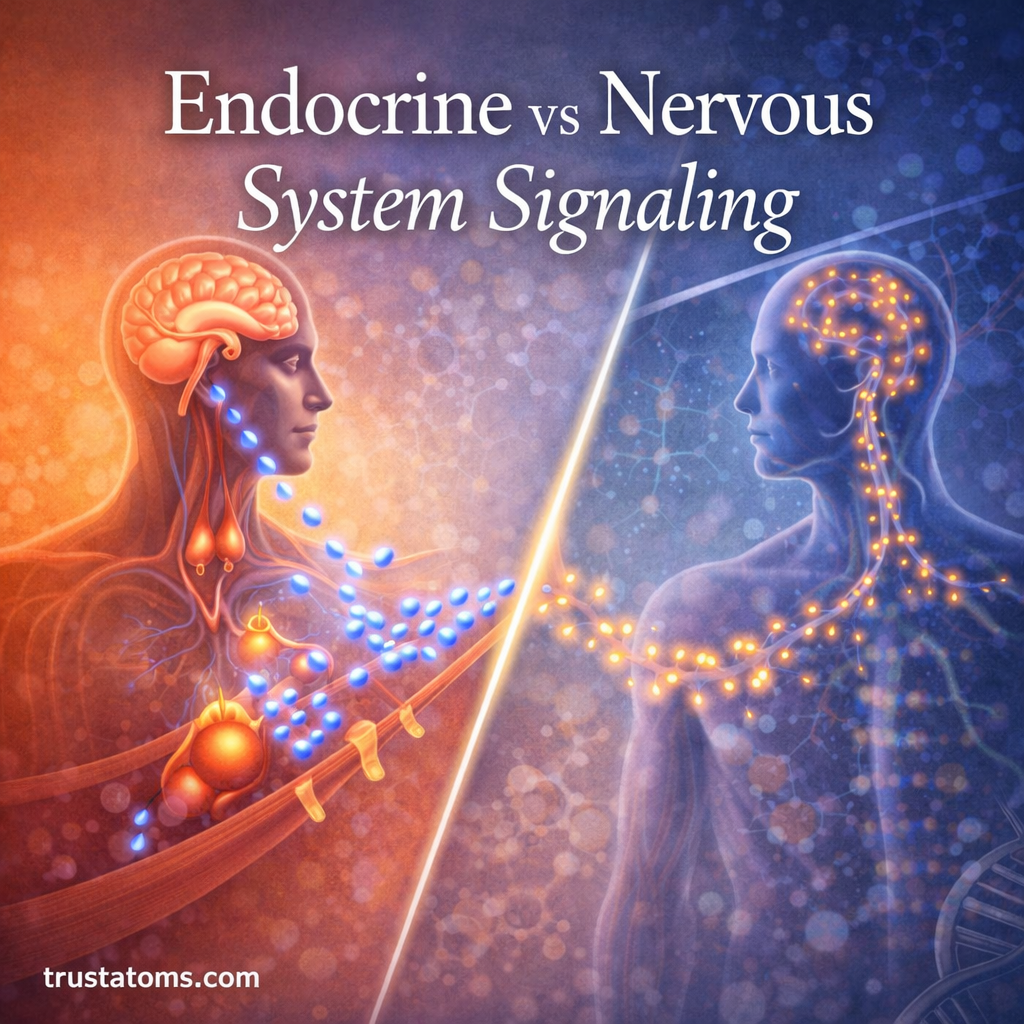
Although sensory pathways differ, most follow a general sequence from detecting a stimulus to producing a response.
- Stimulus detection: A specialized receptor responds to light, pressure, sound, chemicals, or another change.
- Sensory transduction: The receptor converts stimulation into an electrical change in its membrane.
- Signal transmission: Sensory neurons carry information toward the spinal cord or brain through appropriate neural pathways.
- Neural processing: Circuits analyze the information and may produce conscious perception, a reflex, or an automatic physiological adjustment.
Not every sensory signal becomes a conscious experience. Information about blood pressure, muscle stretch, and internal chemistry can regulate bodily functions without entering awareness.
Types of Sensory Receptors
Receptors are commonly classified by the kind of stimulus they detect. The main categories include:
| Receptor Type | Stimulus Detected | Example |
|---|---|---|
| Mechanoreceptors | Pressure, vibration, stretch, and movement | Skin touch receptors and inner ear hair cells |
| Thermoreceptors | Temperature changes | Warm- and cold-sensitive nerve endings |
| Photoreceptors | Light | Rods and cones in the retina |
| Chemoreceptors | Chemical substances or concentrations | Taste receptors and olfactory neurons |
| Nociceptors | Potentially tissue-damaging conditions | Free nerve endings responding to harmful heat or pressure |
| Proprioceptors | Muscle stretch and tension | Muscle spindles and Golgi tendon organs |
Different receptor types use different molecular processes to convert stimulation into electrical activity. Sensory Receptors and Transduction Mechanisms explains how these conversions occur.
Skin mechanoreceptors are particularly specialized, with different endings responding to pressure, vibration, and movement. Touch Receptors and Somatosensation explores how these receptors contribute to tactile perception.
The Five Traditional Human Senses
Vision: Detecting Light
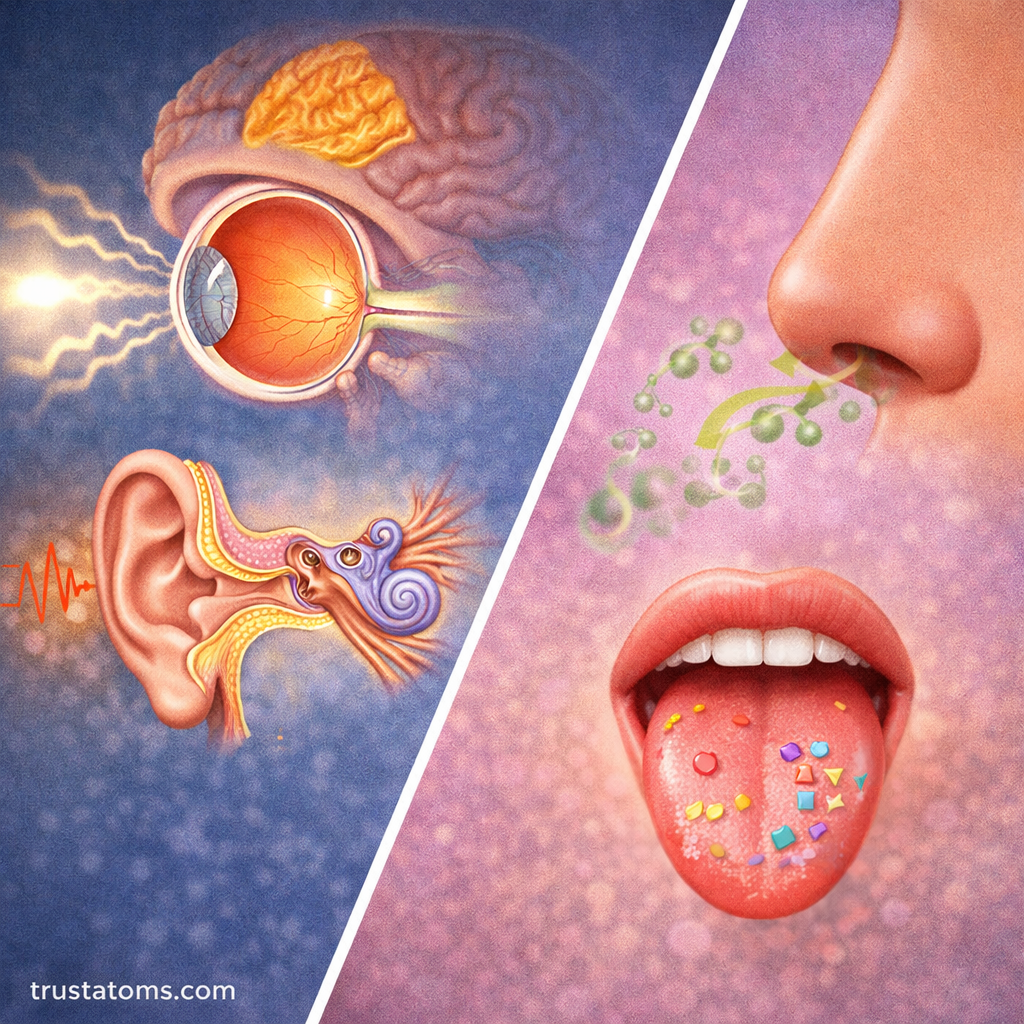
Vision begins when light enters the eye and reaches the retina. Rods support vision in dim conditions, while cones contribute to color perception and fine detail.
Retinal circuits process visual information before signals travel through the optic nerve toward the brain. Visual cortical networks analyze features such as shape, color, movement, and spatial relationships.
Hearing: Detecting Sound Vibrations
Sound waves vibrate the eardrum and middle ear bones, transferring mechanical energy into the fluid-filled cochlea. Movement within the cochlea bends specialized hair cells, changing their electrical activity.
These cells communicate with auditory nerve fibers. Brain circuits then process sound frequency, intensity, timing, and location, supporting speech understanding and environmental awareness.
Taste: Detecting Dissolved Chemicals
Taste receptor cells are located mainly within taste buds on the tongue and other parts of the mouth and throat. They respond to dissolved substances associated with sweet, sour, salty, bitter, and umami tastes.
Taste helps evaluate food and contributes to feeding behavior. What people commonly call flavor also depends strongly on smell, texture, and temperature.
Smell: Detecting Airborne Molecules
Olfactory receptor neurons in the upper nasal cavity detect odor molecules that dissolve in nasal mucus. Their signals reach the olfactory bulb and then travel to brain regions involved in odor recognition.
Smell has strong connections with memory and emotion. It also helps detect environmental substances, although odor alone cannot reliably determine whether something is safe.
Touch: Detecting Contact and Skin Conditions
The somatosensory system processes touch, pressure, vibration, temperature, and signals associated with tissue injury. Different receptor endings detect these properties and send information through specialized pathways.
Touch allows people to recognize textures, adjust grip strength, and locate contact on the body. Temperature and nociceptive pathways also help identify potentially harmful conditions.
Additional Sensory Systems Beyond the Five Senses
Proprioception: Sensing Body Position
Proprioception provides information about limb position and movement. Muscle spindles and Golgi tendon organs contribute signals about muscle length and tension.
This information helps coordinate movements even when a person cannot see their limbs. For example, you can usually bring a finger toward your nose with your eyes closed.
Vestibular Sensing: Maintaining Balance
The vestibular system is located in the inner ear. Its semicircular canals detect head rotation, while the otolith organs respond to linear acceleration and head orientation relative to gravity.
Vestibular information contributes to balance, posture, and stabilizing the eyes during head movement. It works alongside visual and proprioceptive signals.
Interoception: Monitoring Internal Conditions
Interoception involves sensing the body’s internal state. Signals from internal organs and tissues contribute to experiences such as hunger, fullness, thirst, and the awareness of breathing or heartbeat.
Many internal sensory signals also regulate physiological functions automatically, including circulation, digestion, and breathing.
How Multiple Senses Work Together
The brain often combines signals from several sensory systems to guide a single activity. Consider walking down a staircase while carrying a cup of water.
Vision helps identify the edges and heights of the steps. Proprioceptors provide information about leg position, vestibular receptors detect head movement, and touch receptors help maintain a secure grip on the cup.
These signals are continually compared and used to adjust posture and movement. If the lighting becomes dim, the nervous system may rely more heavily on touch, proprioception, and vestibular information.
This coordination is not controlled by one brain region. Interconnected networks involving the brainstem, cerebellum, thalamus, and cerebral cortex contribute different aspects of sensory processing.
Sensory Adaptation and Detection Thresholds
Sensory systems do not respond equally to every stimulus. Their sensitivity depends on receptor properties, stimulus intensity, attention, and surrounding conditions.
A detection threshold is the stimulus intensity at which detection becomes possible under specified conditions. Thresholds vary between people and can change with fatigue, age, background stimulation, or sensory disorders.
Sensory adaptation occurs when receptor responses change during sustained stimulation. For example, some touch receptors respond strongly when clothing first contacts the skin but become less active when the pressure remains constant.
Changes in attention and central processing can also reduce awareness of repeated stimulation. This is one reason familiar background sounds may become less noticeable over time.
Conditions That Can Affect Sensory Function
Sensory problems can develop when receptors, peripheral nerves, or central processing pathways are damaged or function differently.
- Vision impairment: Disorders affecting the eye, optic nerve, or visual pathways may reduce sight.
- Hearing loss: Damage to cochlear structures or auditory pathways can interfere with sound detection.
- Peripheral neuropathy: Nerve damage may cause numbness, tingling, pain, or reduced sensitivity.
- Vestibular disorders: Inner ear or neurological problems may cause dizziness, imbalance, or abnormal perceptions of movement.
- Smell or taste disturbances: Infections, injuries, medications, and other conditions may alter chemical sensation.
Sudden sensory changes can sometimes indicate urgent neurological or medical problems. Persistent or unexplained changes should be evaluated by an appropriate health professional.
Frequently Asked Questions
What are the main sensory systems in humans?
The traditional five senses are vision, hearing, taste, smell, and touch. Human sensory function also includes proprioception, vestibular sensing, temperature detection, nociception, and interoception.
How do sensory receptors send information to the brain?
Receptors convert stimuli into electrical changes. These changes either initiate action potentials in sensory neurons or alter communication with connected neurons, allowing signals to travel through neural pathways toward the central nervous system.
Why is balance considered a separate sensory system?
Balance depends partly on specialized vestibular receptors in the inner ear that detect head rotation and acceleration. Their information works with vision and proprioception to stabilize posture and coordinate movement.
Human sensory systems extend beyond the familiar five senses to monitor body position, movement, internal conditions, and potential threats. By converting different stimuli into neural signals and combining information across pathways, the nervous system supports perception, coordinated movement, and the regulation of everyday bodily functions.
This article is for general education and is not medical advice. Talk to a qualified health professional about any medical concern.
Sources: Principles of Neural Science by Kandel and colleagues; Neuroscience by Purves and colleagues; Guyton and Hall Textbook of Medical Physiology.