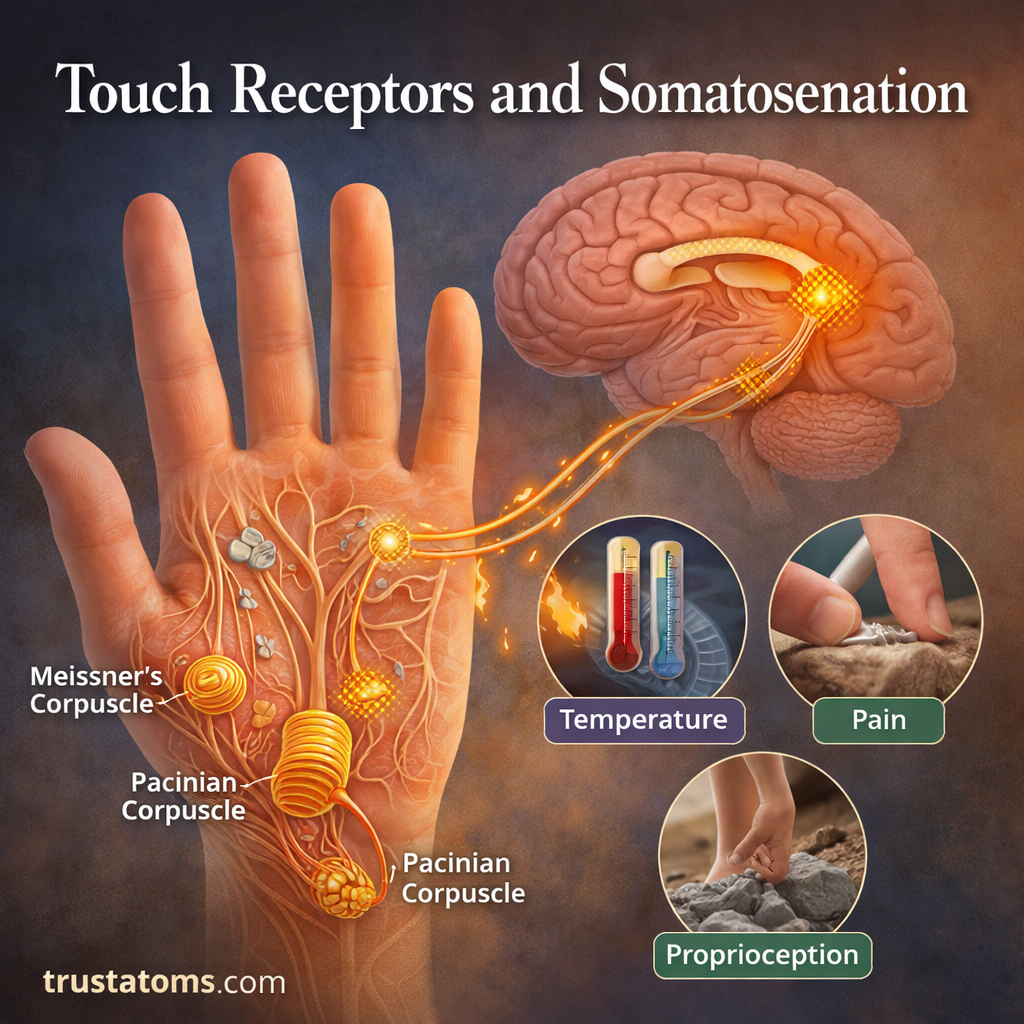
Touch is one of the most essential and complex sensory systems in the human body. Known scientifically as somatosensation, it allows us to perceive pressure, temperature, pain, vibration, and body position. From feeling a gentle breeze to reacting to a hot surface, touch receptors constantly gather information that helps us interact safely and effectively with our environment.
What Is Somatosensation?
Somatosensation refers to the body’s ability to detect and interpret physical sensations through the skin, muscles, joints, and internal tissues.
It includes several types of sensory input:
- Touch (mechanoreception) – pressure, vibration, texture
- Temperature (thermoreception) – heat and cold
- Pain (nociception) – tissue damage or potential harm
- Proprioception – body position and movement awareness
Together, these systems provide a detailed map of what’s happening both on and within the body.
Structure of the Somatosensory System
The somatosensory system involves specialized receptors, nerves, and brain regions working together.
1. Skin Receptors
The skin contains multiple types of receptors that detect different stimuli:
- Mechanoreceptors – respond to touch and pressure
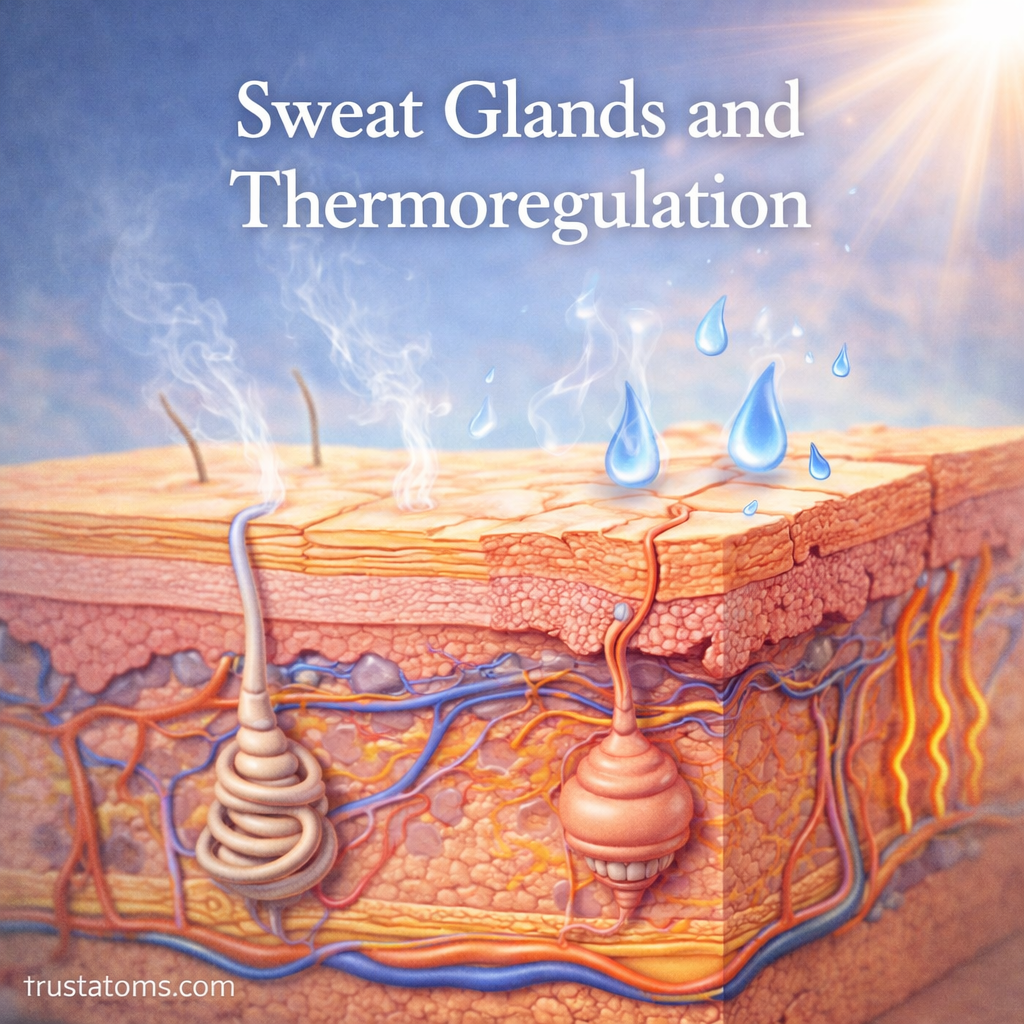
- Thermoreceptors – detect temperature changes
- Nociceptors – sense pain and potential damage
These receptors are located at different depths in the skin, allowing for a wide range of sensitivity.
2. Peripheral Nerves
Once receptors detect a stimulus:
- Signals travel through sensory neurons
- These neurons form part of the peripheral nervous system
- Information is carried toward the spinal cord
3. Spinal Cord Pathways
The spinal cord acts as a relay center:
- Signals are transmitted upward to the brain
- Some reflex responses occur here without brain involvement
- Pathways help organize different types of sensory information
4. Somatosensory Cortex
Located in the parietal lobe of the brain, the somatosensory cortex:
- Interprets sensory signals
- Identifies location and intensity of stimuli
- Creates a “map” of the body (sensory homunculus)
Types of Touch Receptors
Different receptors specialize in detecting specific kinds of touch.
Mechanoreceptors
These receptors respond to physical deformation of the skin.
Common types include:
- Meissner’s corpuscles
- Detect light touch and texture
- Found in fingertips and lips
- Pacinian corpuscles
- Detect deep pressure and vibration
- Located deeper in the skin
- Merkel cells
- Detect sustained pressure and fine detail
- Important for reading Braille
- Ruffini endings
- Detect skin stretch and sustained pressure
Thermoreceptors
- Detect hot and cold stimuli
- Help regulate body temperature
- Respond to environmental changes
Nociceptors
- Detect painful or damaging stimuli
- Trigger protective responses
- Can respond to mechanical, thermal, or chemical signals
How Touch Signals Are Processed
Somatosensory processing follows a structured pathway from the skin to the brain.
Step-by-Step Process
- Stimulus Detection
- A physical or thermal stimulus activates receptors
- Signal Conversion
- Receptors convert the stimulus into electrical signals
- Transmission
- Signals travel through sensory neurons to the spinal cord
- Relay to the Brain
- Signals ascend through pathways to the brain
- Interpretation
- The somatosensory cortex processes and identifies the sensation
The Role of the Somatosensory Cortex
The somatosensory cortex is organized in a unique way known as the sensory homunculus.
Key Features
- Different body parts are mapped to specific brain regions
- Areas with more sensitivity (like hands and lips) take up more space
- The brain integrates signals to determine:
- Location
- Intensity
- Type of sensation
This organization allows for precise perception of touch.
Proprioception: Body Awareness
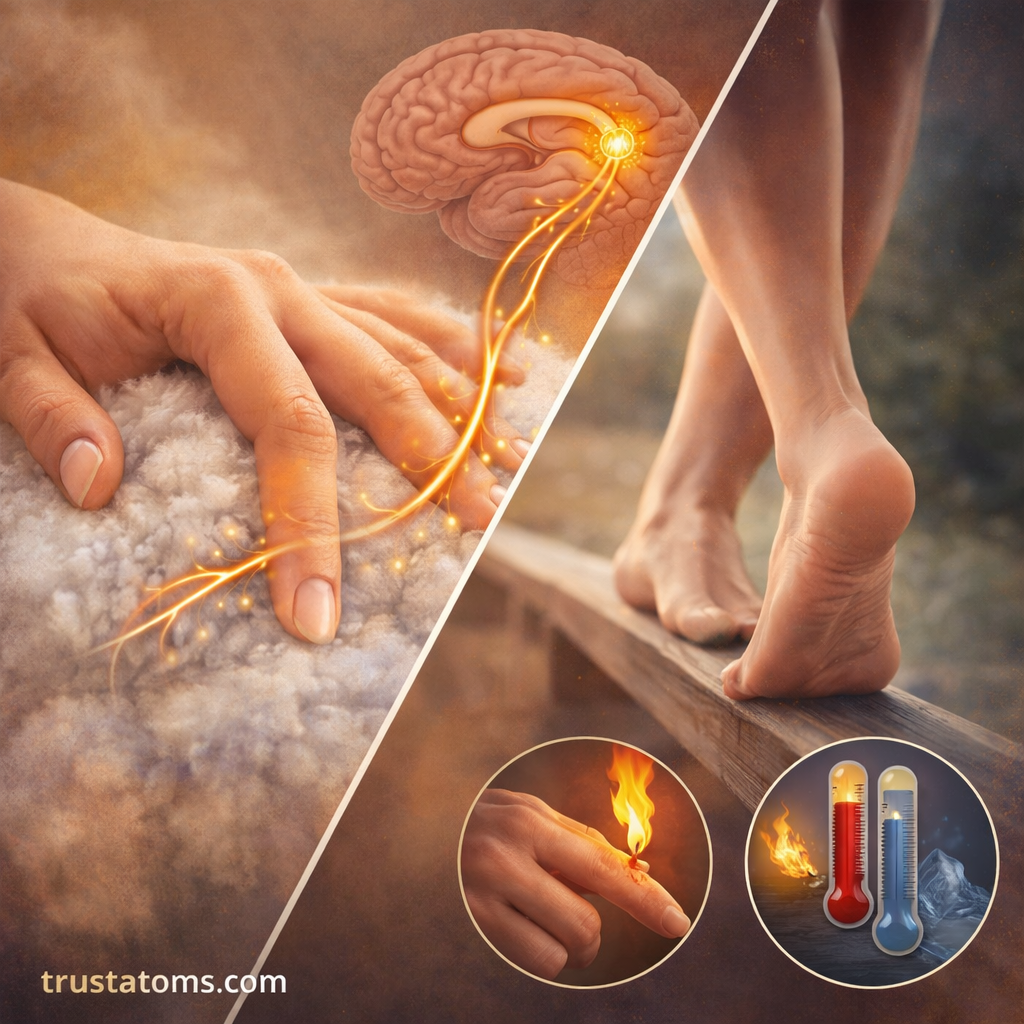
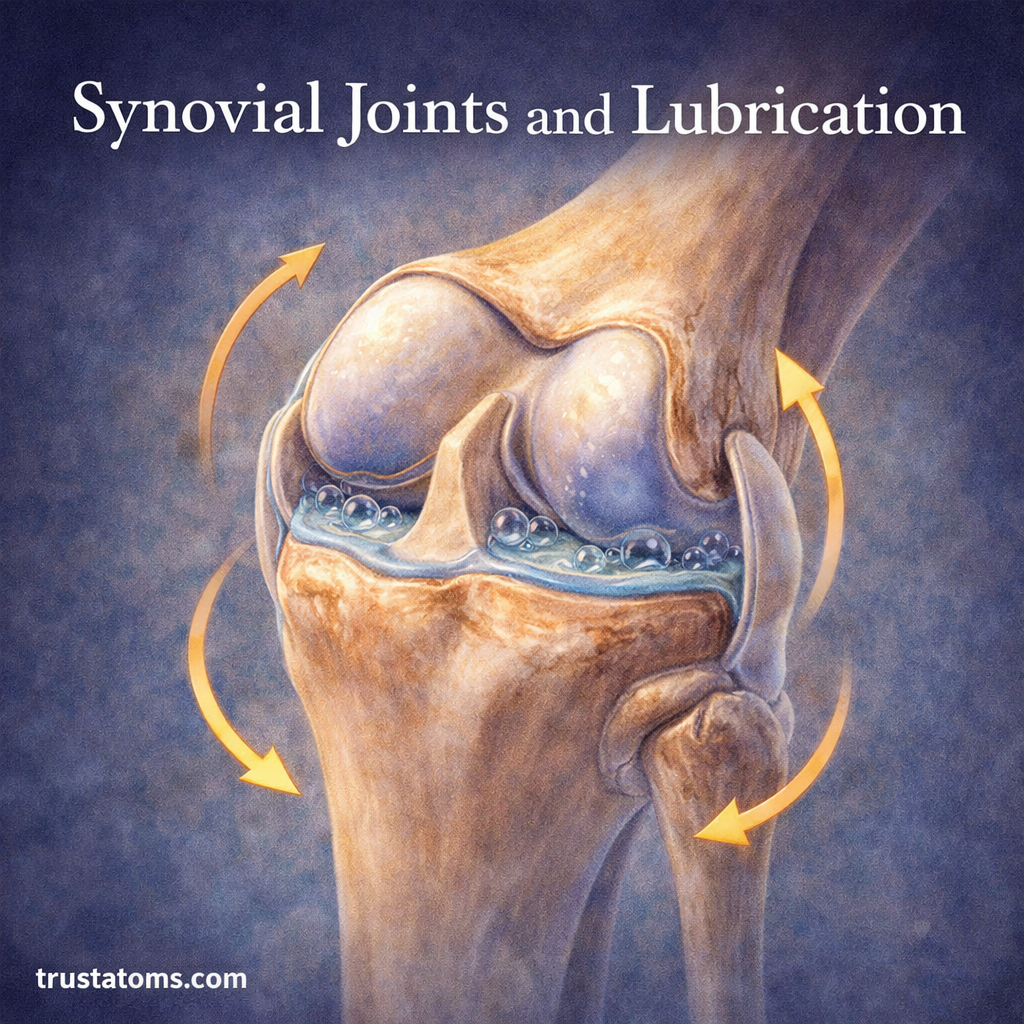
Proprioception is the ability to sense the position and movement of your body without looking.
How It Works
- Receptors in muscles and joints detect stretch and tension
- Signals are sent to the brain continuously
- The brain updates your sense of body position in real time
Why It Matters
- Helps maintain balance
- Allows coordinated movement
- Enables tasks like walking, typing, or reaching
Touch and Pain: Protective Functions
Touch and pain systems play a critical role in protecting the body.
Protective Responses
- Quick withdrawal from harmful stimuli
- Awareness of injury or inflammation
- Behavioral changes to avoid danger
Pain as a Warning System
Pain is not just discomfort—it is essential for survival.
- Alerts the body to damage
- Encourages rest and healing
- Helps prevent further injury
Factors Affecting Touch Sensitivity
Sensitivity to touch varies depending on several factors.
Biological Factors
- Age (sensitivity may decline over time)
- Skin thickness
- Nerve health
Environmental Factors
- Temperature
- Repeated exposure (adaptation)
- Injury or damage
Neurological Factors
- Brain processing efficiency
- Nervous system disorders
Disorders of Somatosensation
When the somatosensory system is disrupted, it can lead to altered or impaired sensations.
Common Conditions
- Neuropathy – nerve damage causing numbness or tingling
- Allodynia – pain from normally non-painful stimuli
- Hyperalgesia – increased sensitivity to pain
- Loss of proprioception – difficulty with coordination and balance
Causes
- Diabetes
- Injury
- Infections
- Neurological diseases
Importance of Touch in Daily Life
Touch is essential for both physical function and emotional well-being.
Key Roles
- Safety – detecting harmful stimuli
- Coordination – enabling movement and balance
- Communication – social bonding through physical contact
- Learning – exploring textures and environments
Touch also plays a role in emotional health, as physical contact can reduce stress and promote comfort.
Final Thoughts
Touch receptors and somatosensation form a highly sophisticated system that allows us to experience and respond to the world around us. By detecting pressure, temperature, pain, and movement, this system helps protect the body, guide actions, and support everyday functioning. Its integration with the brain ensures that even the smallest sensations are interpreted with precision and meaning.