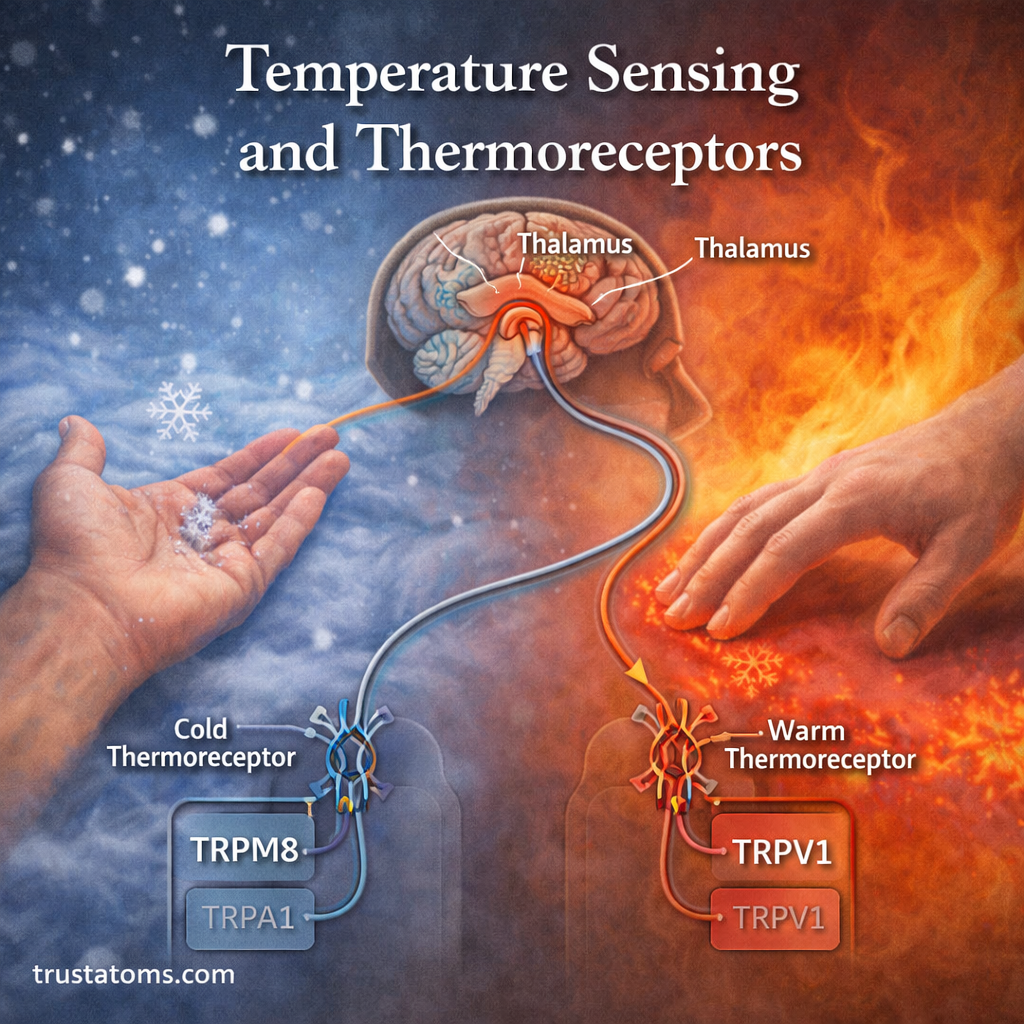
Temperature sensing, or thermosensation, is the process by which specialized nerve endings called thermoreceptors detect warming and cooling in the body and its surroundings. These receptors convert temperature changes into electrical signals that travel through the nervous system, allowing the brain to recognize heat and cold and coordinate protective responses.
Within human anatomy, temperature sensing connects the skin, sensory nerves, spinal cord, and brain. It helps us avoid harmful temperatures while supporting the regulation of internal body temperature.
What Is Temperature Sensing?
Temperature sensing allows the nervous system to detect thermal conditions and changes in temperature. Receptors in the skin monitor the external environment, while temperature-sensitive structures inside the body help monitor internal conditions.
This system serves two related functions: conscious temperature perception and automatic temperature regulation. Feeling a cold object is a sensory experience, while shivering in response to cooling is part of the body’s regulatory response.
Temperature detection belongs to the somatosensory system, which also processes pressure, vibration, and other bodily sensations. These relationships are explained further in Touch Receptors and Somatosensation.
What Are Thermoreceptors?
Thermoreceptors are specialized sensory receptors that detect temperature changes. They are primarily located in the skin but are also found in deeper tissues and the hypothalamus.
In the skin, thermoreceptors are generally free nerve endings rather than large, encapsulated sensory structures. Their membranes contain temperature-sensitive proteins that respond when the surrounding tissue becomes warmer or cooler.
Different thermoreceptors respond over different temperature ranges. Their activity also depends on how rapidly temperature changes, helping explain why a sudden temperature shift often feels more noticeable than a constant temperature.
Types of Thermoreceptors: Cold, Warm, and Pain-Sensitive
Cold Thermoreceptors
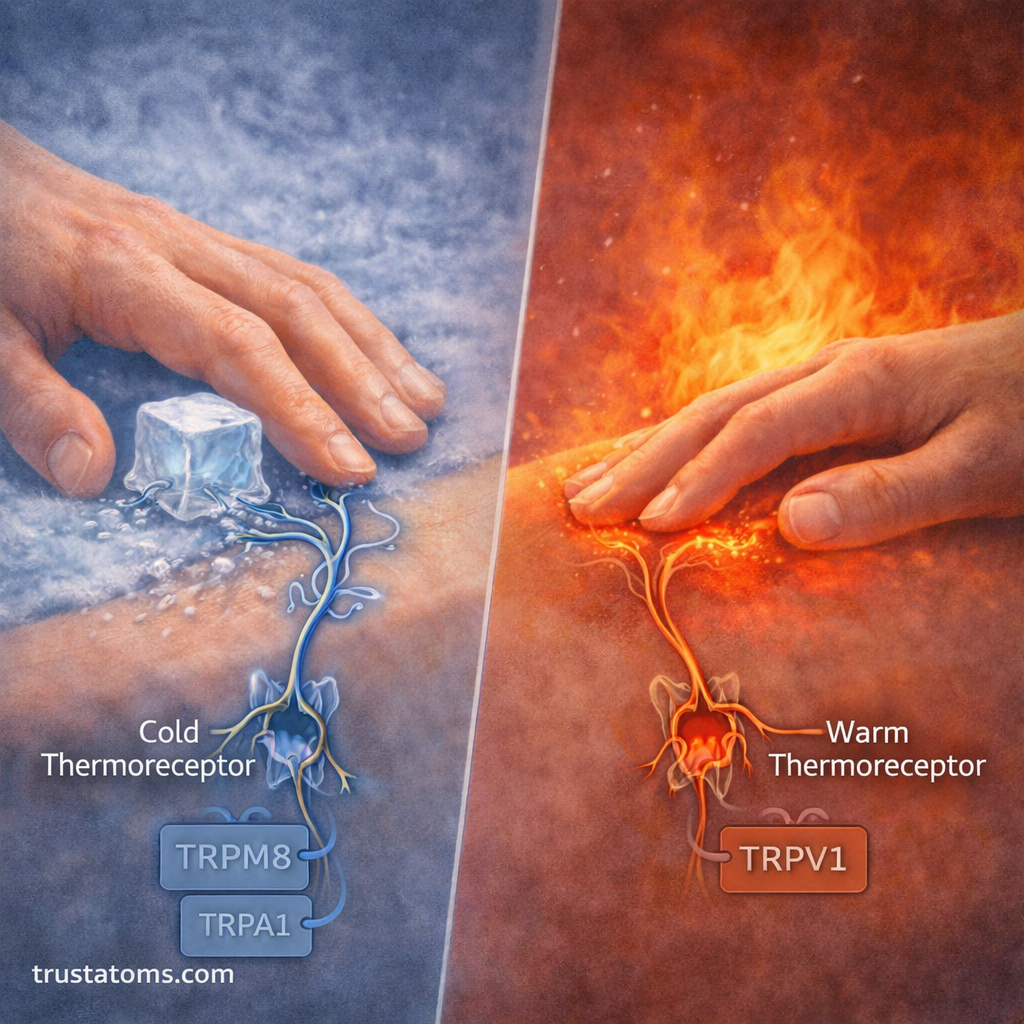
Cold-sensitive nerve endings increase their activity when skin temperature decreases within their responsive range. Many respond to ordinary cool temperatures, with sensitivity influenced by the starting temperature and rate of cooling.
Cold-sensitive endings are generally more numerous than warm-sensitive endings in human skin. They help detect cool air, cold water, and objects that draw heat away from the body.
Warm Thermoreceptors
Warm-sensitive nerve endings respond when skin temperature rises within a nonpainful range. Their activity contributes to sensations such as warm sunlight or comfortably heated water.
Warmth receptors respond to temperature changes rather than simply measuring an object’s temperature. The resulting sensation depends partly on the skin’s previous thermal condition.
Temperature-Sensitive Nociceptors
Extreme temperatures can activate nociceptors, sensory nerve endings that detect potentially damaging stimuli. Painful heat commonly begins around 43–45°C (109–113°F), although thresholds vary with exposure conditions and individual sensitivity.
Intense cold can also become painful. Unlike ordinary thermoreception, nociceptor activation signals a possible threat to tissue integrity.
How Thermoreceptors Convert Temperature Into Electrical Signals
Thermoreceptors use temperature-sensitive ion channels to convert thermal energy into changes in electrical activity. Several belong to the transient receptor potential (TRP) family.
- TRPM8: Responds to cooling and can also be activated by menthol, producing a cooling sensation.
- TRPV1: Responds to noxious heat, capsaicin from chili peppers, and certain chemical conditions.
- TRPA1: Detects various chemical irritants; its contribution to cold sensing in humans remains under investigation.
When appropriate channels open, charged particles move across the nerve membrane. This changes its electrical potential and may generate nerve impulses. Different channels and cellular mechanisms contribute to the detection of warming, cooling, and extreme temperatures.
How Temperature Signals Travel to the Brain
Temperature information follows a series of neural connections from peripheral receptors to the central nervous system.
- Detection: Thermoreceptors respond to a change in skin temperature. Ion channels trigger electrical signals in sensory neurons.
- Spinal entry: Nerve impulses travel along peripheral sensory fibers and enter the spinal cord through its dorsal roots.
- Ascending transmission: Second-order neurons generally cross to the opposite side of the spinal cord and ascend through the anterolateral system, including spinothalamic pathways.
- Brain processing: Signals reach the thalamus and cortical regions, including the insula and somatosensory cortex, where temperature information contributes to conscious perception.
These pathways allow the brain to determine where a temperature change occurs and how intense it feels. Other neural connections support automatic responses to thermal conditions.
Temperature vs. Pain: What’s the Difference?
Ordinary temperature sensation and pain are related but distinct. Thermoreceptors detect nonpainful warming and cooling, while nociceptors respond when temperatures become potentially damaging.
For example, comfortably warm bathwater activates warmth-sensitive pathways. Touching a very hot metal pan can activate heat-sensitive nociceptors, producing pain and triggering a rapid withdrawal reflex through spinal circuits.
The relationship between thermal injury and protective signaling is covered in Pain Perception and Nociceptor Pathways. The transmission of these warning signals through the nervous system is examined in Pain Pathways and Nociception.
How the Hypothalamus Regulates Body Temperature
The hypothalamus integrates information about internal and external temperatures to help regulate body heat. Normal core temperature is often described as approximately 37°C (98.6°F), although it varies among individuals and throughout the day.
When the body becomes too warm, regulatory responses include sweating and increased blood flow to the skin through vasodilation. Evaporation of sweat removes heat, while greater skin blood flow can increase heat transfer to cooler surroundings.
During cooling, the hypothalamus can promote vasoconstriction, reducing heat loss through the skin. Shivering generates additional heat through involuntary muscle contractions.
These automatic responses help maintain a relatively stable internal temperature despite changes in the environment.
Why Temperature Sensations Change Over Time
Thermoreceptors can adapt during continued exposure to a stable temperature. Their initial response to a change may be stronger than their activity after the temperature remains constant.
Consider entering a swimming pool that feels cold. The first contact produces a strong cooling sensation, but the feeling may become less intense after several minutes as sensory responses adapt. This does not necessarily mean the water has warmed or that continued exposure is safe.
Temperature perception also depends on skin temperature, blood circulation, contact duration, attention, and nerve function. Metal often feels colder than wood at the same room temperature because it transfers heat away from the skin more rapidly.
Temperature Sensing and Health Conditions
Changes in thermal sensitivity can affect everyday safety. Peripheral neuropathy, including some forms associated with diabetes, may reduce the ability to recognize dangerously hot or cold surfaces.
Burns can damage skin and sensory nerve endings, while certain spinal cord or neurological injuries can interrupt temperature pathways. Hypothermia and heat-related illness involve disturbances in body temperature regulation rather than simply abnormal receptor activity.
Fever is another distinct process: inflammatory signals temporarily raise the hypothalamus’s regulated temperature level, often producing chills while the body generates and conserves heat.
Frequently Asked Questions
Are thermoreceptors found only in the skin?
No. Thermoreceptors occur in the skin and certain deeper tissues, while temperature-sensitive neurons in the brain, particularly the hypothalamus, help monitor internal temperature and regulate body heat.
Why does menthol make the skin feel cold?
Menthol activates TRPM8 channels associated with cold detection. This stimulates cooling-related sensory pathways even when the skin’s actual temperature has not decreased significantly.
Can thermoreceptors detect exact temperatures?
Thermoreceptors do not function like numerical thermometers. Their activity reflects temperature ranges and changes, which the nervous system interprets together with information about the skin’s previous condition and surrounding environment.
Temperature sensing depends on specialized nerve endings, temperature-sensitive ion channels, and pathways connecting the skin to the brain. These mechanisms explain how we distinguish warmth from cold, recognize potentially damaging temperatures, and adjust our behavior while the hypothalamus coordinates internal temperature regulation.
This article is for general education and is not medical advice. Talk to a qualified health professional about any medical concern.
Sources: Guyton and Hall Textbook of Medical Physiology; Principles of Neural Science, Kandel and colleagues; National Institute of Neurological Disorders and Stroke (NINDS).