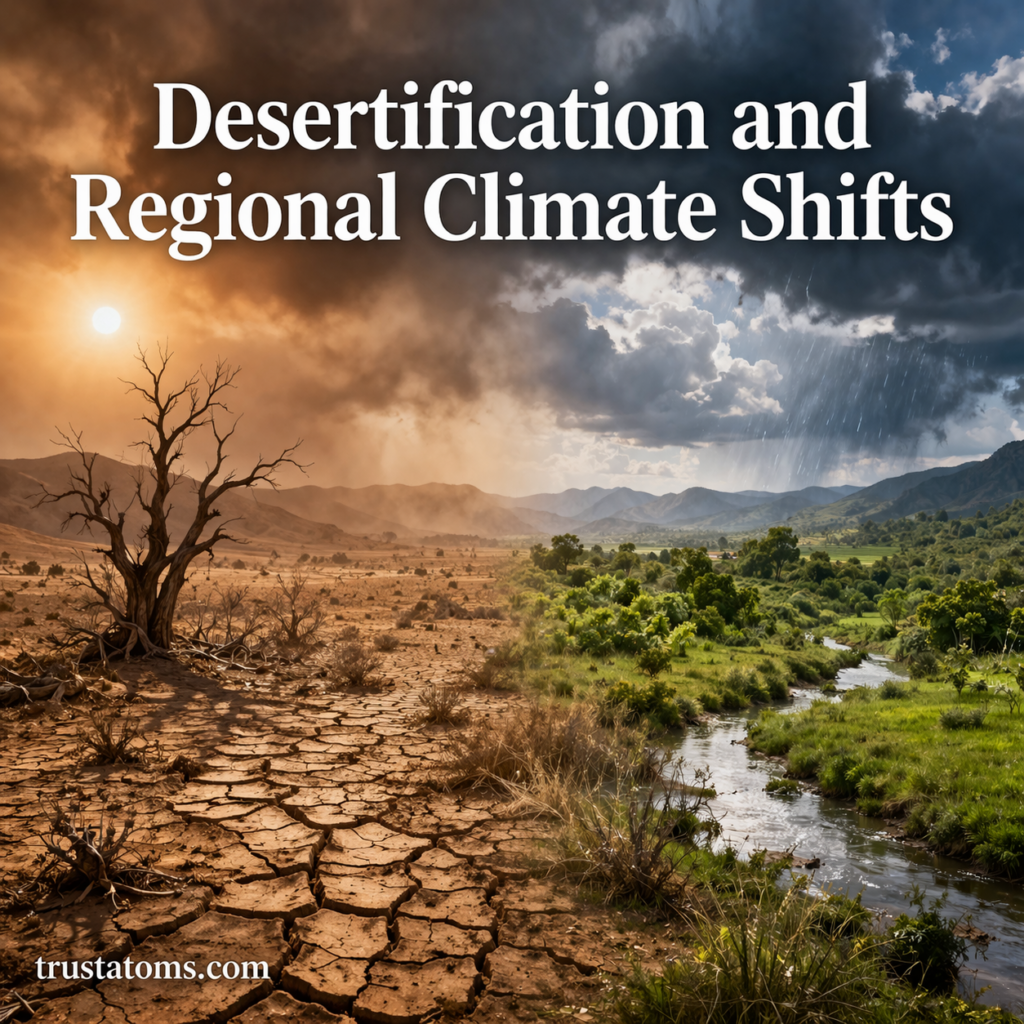
Desertification is one of the most significant environmental challenges affecting dryland regions around the world. It involves the gradual degradation of fertile land into arid, unproductive landscapes.
While often associated with expanding deserts, desertification is not simply the spread of sand dunes. It is a complex process driven by climate variability, human activity, and ecological imbalance.
Understanding how desertification interacts with regional climate shifts is essential for managing land resources, protecting ecosystems, and sustaining human livelihoods.
What Is Desertification?
Desertification refers to land degradation in arid, semi-arid, and dry sub-humid regions. It reduces the land’s ability to support vegetation, agriculture, and wildlife.
Key Characteristics
- Loss of soil fertility
- Reduced vegetation cover
- Increased soil erosion
- Declining water availability
- Expansion of dry, barren land
Desertification can occur gradually over time or accelerate due to extreme environmental stress.
Primary Causes of Desertification
Desertification is driven by a combination of natural and human factors.
Climate-Related Causes
- Prolonged droughts
- Rising temperatures
- Changes in rainfall patterns
- Increased evaporation rates
These factors reduce soil moisture and make it harder for vegetation to survive.
Human Activities
Human land use often accelerates desertification:
- Overgrazing by livestock
- Deforestation
- Unsustainable farming practices
- Poor irrigation management (leading to soil salinization)
- Urban expansion
When vegetation is removed, soil becomes exposed and vulnerable to erosion.
The Role of Soil and Vegetation
Healthy soil and plant life are critical for maintaining land stability.
Soil Degradation
As soil loses nutrients and organic matter:
- Its ability to retain water declines
- Wind and water erosion increase
- Crop productivity drops
Vegetation Loss
Plants play a key role in:
- Anchoring soil with roots
- Retaining moisture
- Regulating local temperature
Without vegetation, land becomes more susceptible to desert-like conditions.
How Desertification Influences Regional Climate
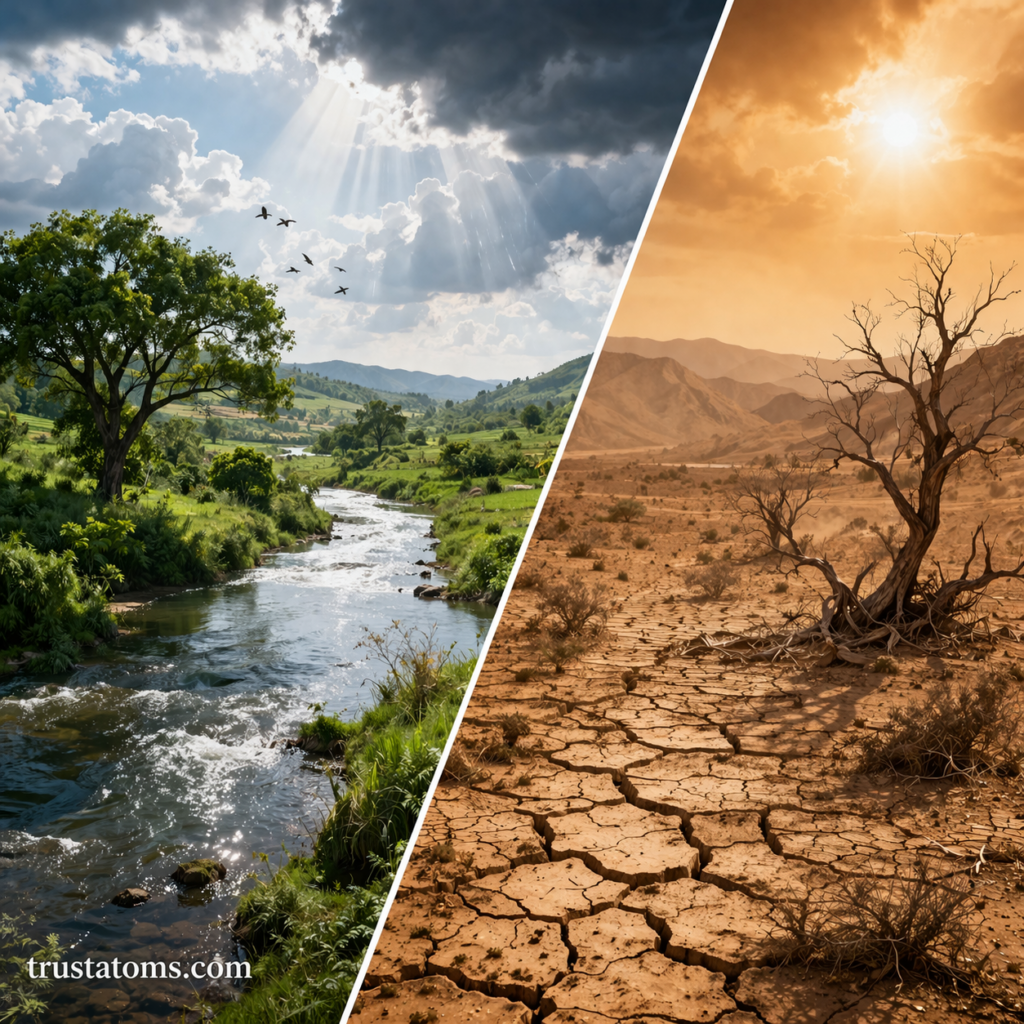
Desertification doesn’t just respond to climate—it also changes it.
Reduced Moisture Recycling
Vegetation helps recycle moisture through a process known as Evapotranspiration.
- Plants release water vapor into the atmosphere
- This contributes to cloud formation and rainfall
When vegetation declines:
- Less moisture enters the atmosphere
- Rainfall may decrease further
This creates a feedback loop that reinforces dryness.
Changes in Surface Reflectivity
Bare soil reflects more sunlight than vegetated land.
- This increases surface temperatures
- Alters local atmospheric circulation
- Can suppress cloud formation
Increased Heat and Dryness
Dry, degraded land heats up more quickly:
- Leads to higher local temperatures
- Intensifies drought conditions
- Extends dry seasons
Regional Climate Shifts Linked to Desertification
Desertification can reshape climate patterns across entire regions.
Expansion of Arid Zones
Drylands may spread into previously fertile areas:
- Grasslands transition into semi-desert
- Agricultural zones become less productive
Altered Rainfall Patterns
- Rain becomes less frequent but more intense
- Increased risk of flash flooding
- Longer dry periods between storms
Dust and Atmospheric Effects
Degraded land produces more dust:
- Dust particles can travel long distances
- Affect air quality and human health
- Influence cloud formation and weather patterns
Real-World Examples
The Sahel Region (Africa)
- Located south of the Sahara Desert
- Experiences recurring drought and land degradation
- Desertification has contributed to food insecurity and migration
Northern China
- Overgrazing and deforestation have accelerated land degradation
- Frequent dust storms impact cities and agriculture
Southwestern United States
- Increasing drought conditions and rising temperatures
- Pressure on water resources and ecosystems
Human and Environmental Impacts
Desertification has far-reaching consequences.
Environmental Effects
- Loss of biodiversity
- Degradation of ecosystems
- Reduced carbon storage capacity
Societal Impacts
- Declining agricultural productivity
- Water scarcity
- Economic instability
- Increased migration and displacement
These impacts often disproportionately affect vulnerable communities.
Combating Desertification
Efforts to combat desertification focus on restoring land and improving sustainability.
Land Management Strategies
- Reforestation and afforestation
- Controlled grazing practices
- Soil conservation techniques
- Sustainable agriculture methods
Water Management
- Efficient irrigation systems
- Rainwater harvesting
- Restoration of natural water cycles
Policy and Community Action
- Land-use regulations
- Education and awareness programs
- International cooperation and climate initiatives
Why Desertification Matters
Desertification affects more than just local landscapes—it influences global systems.
- Impacts food security worldwide
- Contributes to climate change feedback loops
- Affects millions of people living in vulnerable regions
Addressing desertification is critical for building climate resilience and ensuring long-term sustainability.
Final Thoughts
Desertification and regional climate shifts are closely interconnected. As land degrades, climate conditions often worsen, creating a cycle that is difficult to reverse.
However, with proper land management, sustainable practices, and global cooperation, it is possible to slow and even reverse some of these effects.
Understanding these processes is the first step toward protecting ecosystems, supporting communities, and maintaining the balance of Earth’s climate system.