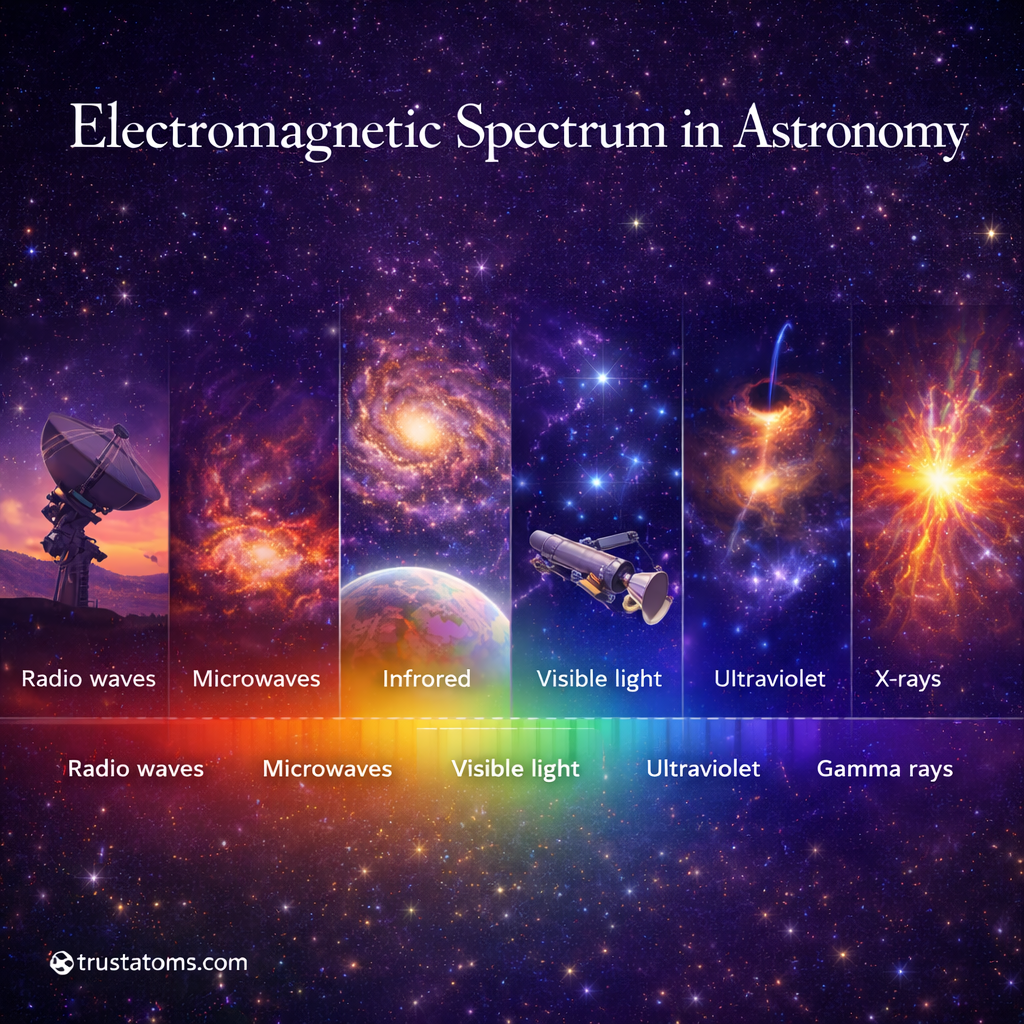
When you look up at the night sky, you’re only seeing a small portion of what’s actually out there. The human eye detects visible light, but the universe emits energy across a much broader range called the electromagnetic spectrum.
Astronomers use this full spectrum to study everything from nearby planets to distant galaxies. This guide explains what the electromagnetic spectrum is and how it helps us understand the universe in greater detail.
What Is the Electromagnetic Spectrum?
The electromagnetic spectrum is the complete range of all types of electromagnetic radiation.
It includes:
- Radio waves
- Microwaves
- Infrared
- Visible light
- Ultraviolet
- X-rays
- Gamma rays
Each type differs in wavelength, frequency, and energy—but they all travel at the speed of light.
Why the Electromagnetic Spectrum Matters in Astronomy
Different objects in space emit different types of radiation. By observing multiple wavelengths, astronomers can gather more complete information.
Key Benefits:
- Reveals objects invisible in visible light
- Helps determine temperature, composition, and motion
- Allows observation through dust and gas clouds
- Provides insights into extreme cosmic events
Without the full spectrum, our understanding of the universe would be very limited.
The Major Types of Electromagnetic Radiation
Radio Waves
Radio waves have the longest wavelengths and lowest energy.
Used for:
- Studying cold gas clouds
- Detecting pulsars
- Mapping large-scale galaxy structures
Radio telescopes can even observe signals through thick cosmic dust.
Microwaves
Microwaves are slightly shorter than radio waves and are crucial in studying the early universe.
Used for:
- Observing the cosmic microwave background (CMB)
- Understanding the universe’s origin and evolution
Infrared Radiation
Infrared radiation detects heat and is ideal for observing cooler objects.
Used for:
- Studying star-forming regions
- Observing planets and dust clouds
- Seeing through interstellar dust
Infrared astronomy reveals areas that visible light cannot penetrate.
Visible Light
This is the only part of the spectrum humans can see.
Used for:
- Observing stars and galaxies
- Studying brightness and color
- Identifying basic structure of celestial objects
While important, visible light provides only a small fraction of the full picture.
Ultraviolet (UV)
Ultraviolet radiation has higher energy than visible light.
Used for:
- Studying hot, young stars
- Observing active galaxies
- Analyzing chemical compositions
Earth’s atmosphere blocks most UV radiation, so space telescopes are required.
X-Rays
X-rays come from extremely energetic environments.
Used for:
- Observing black holes
- Studying neutron stars
- Detecting supernova remnants
These observations help scientists understand high-energy processes in space.
Gamma Rays
Gamma rays have the shortest wavelengths and highest energy.
Used for:
- Studying gamma-ray bursts
- Observing extreme cosmic explosions
- Investigating particle interactions in space
Gamma-ray astronomy reveals some of the most powerful events in the universe.
How Astronomers Use the Full Spectrum
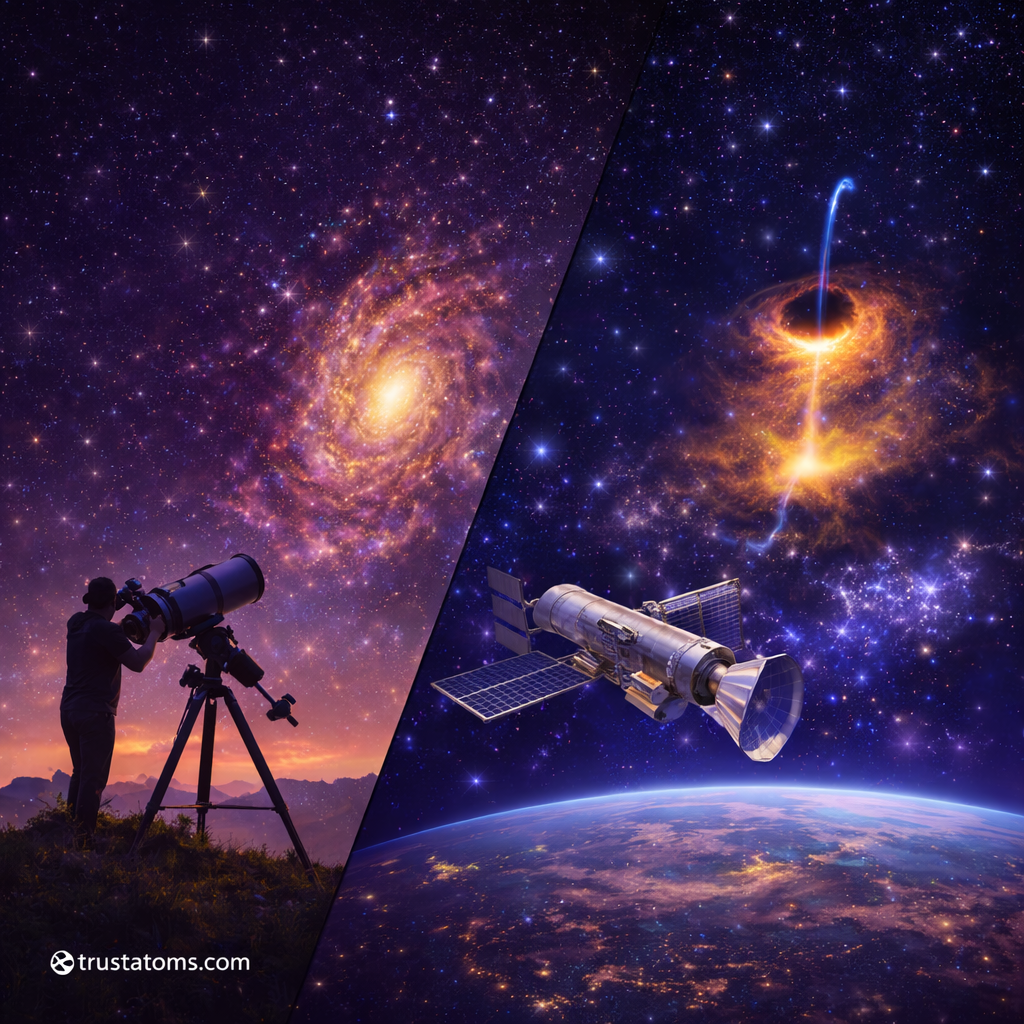
Astronomers combine data from multiple wavelengths to build a complete picture of celestial objects.
Example:
A galaxy observed in different wavelengths may show:
- Radio → gas structure
- Infrared → dust and star formation
- Visible → stars
- X-rays → black hole activity
This multi-wavelength approach is essential for modern astronomy.
Telescopes and the Electromagnetic Spectrum
Different types of telescopes are designed to detect specific wavelengths.
Examples:
- Radio telescopes → detect radio waves
- Infrared telescopes → observe heat signatures
- Optical telescopes → capture visible light
- Space telescopes → detect UV, X-rays, and gamma rays
Because Earth’s atmosphere blocks some radiation, many telescopes are placed in space.
Real-World Applications
Understanding the electromagnetic spectrum has practical and scientific importance.
Astronomy Research
- Helps discover new planets and galaxies
- Provides data on cosmic evolution
Space Exploration
- Assists in navigation and communication
- Improves imaging of distant objects
Technology and Innovation
- Advances imaging systems and sensors
- Contributes to medical and communication technologies
Common Misconceptions
Here are a few misunderstandings to avoid:
- Thinking visible light shows everything in space
- Assuming all radiation is harmful (many forms are harmless)
- Believing telescopes only use visible light
- Underestimating how different wavelengths reveal different information
Final Thoughts
The electromagnetic spectrum is one of the most powerful tools in astronomy. It allows scientists to explore the universe far beyond what the human eye can see.
By studying different wavelengths:
- We uncover hidden structures in space
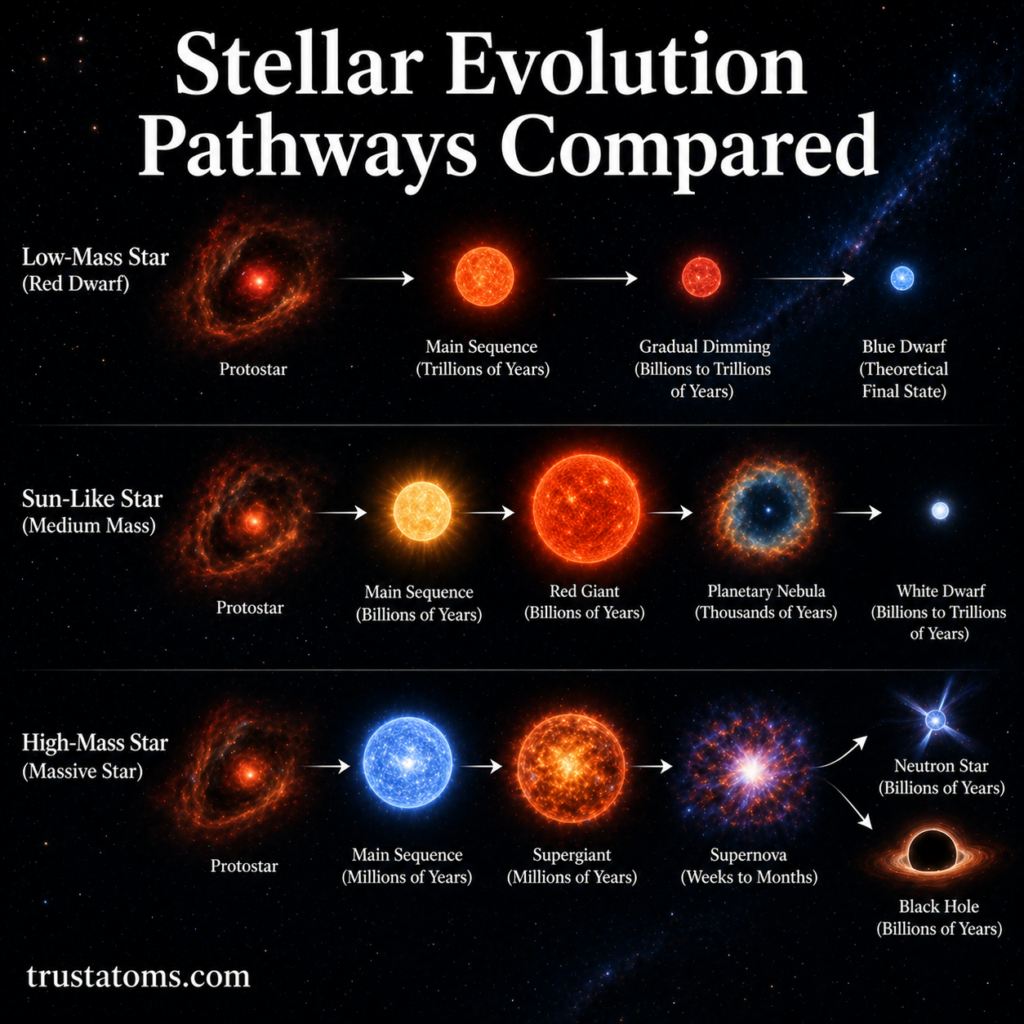
- We understand the life cycles of stars
- We observe the most energetic events in the cosmos
The universe is far richer and more complex than it appears—and the electromagnetic spectrum is the key to unlocking its secrets.