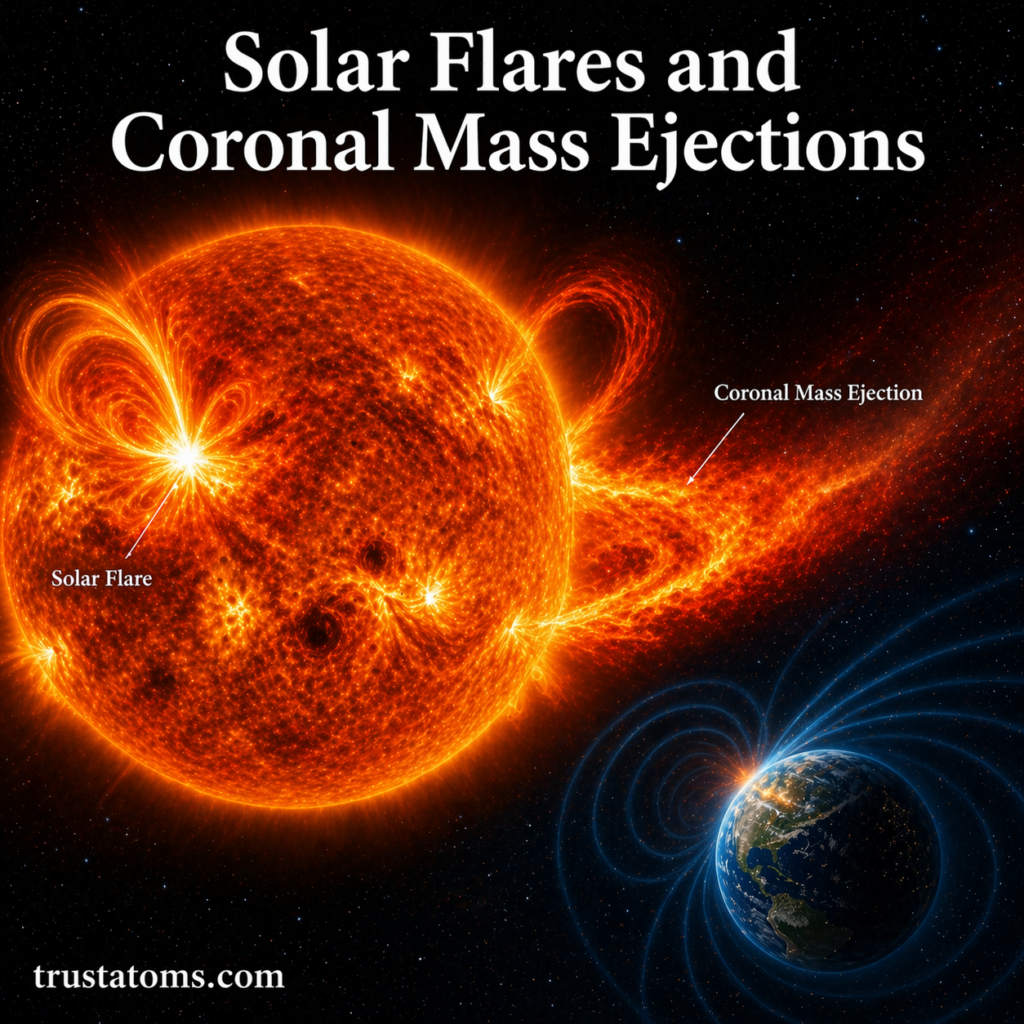
The Sun is not a calm, unchanging star—it is highly active and capable of releasing enormous bursts of energy. Two of the most powerful solar events are solar flares and coronal mass ejections (CMEs).
These phenomena can affect space near Earth, disrupt technology, and even influence our planet’s magnetic environment. Understanding them is essential for both astronomy and modern infrastructure.
What Are Solar Flares?
Solar flares are sudden, intense bursts of energy released from the Sun’s surface.
They occur when magnetic energy built up in the Sun’s atmosphere is suddenly released.
Key Features of Solar Flares
- Extremely bright flashes of light
- Release of X-rays and ultraviolet radiation
- Last from minutes to hours
- Travel at the speed of light
Solar flares are often associated with sunspots, which are regions of strong magnetic activity.
What Are Coronal Mass Ejections (CMEs)?
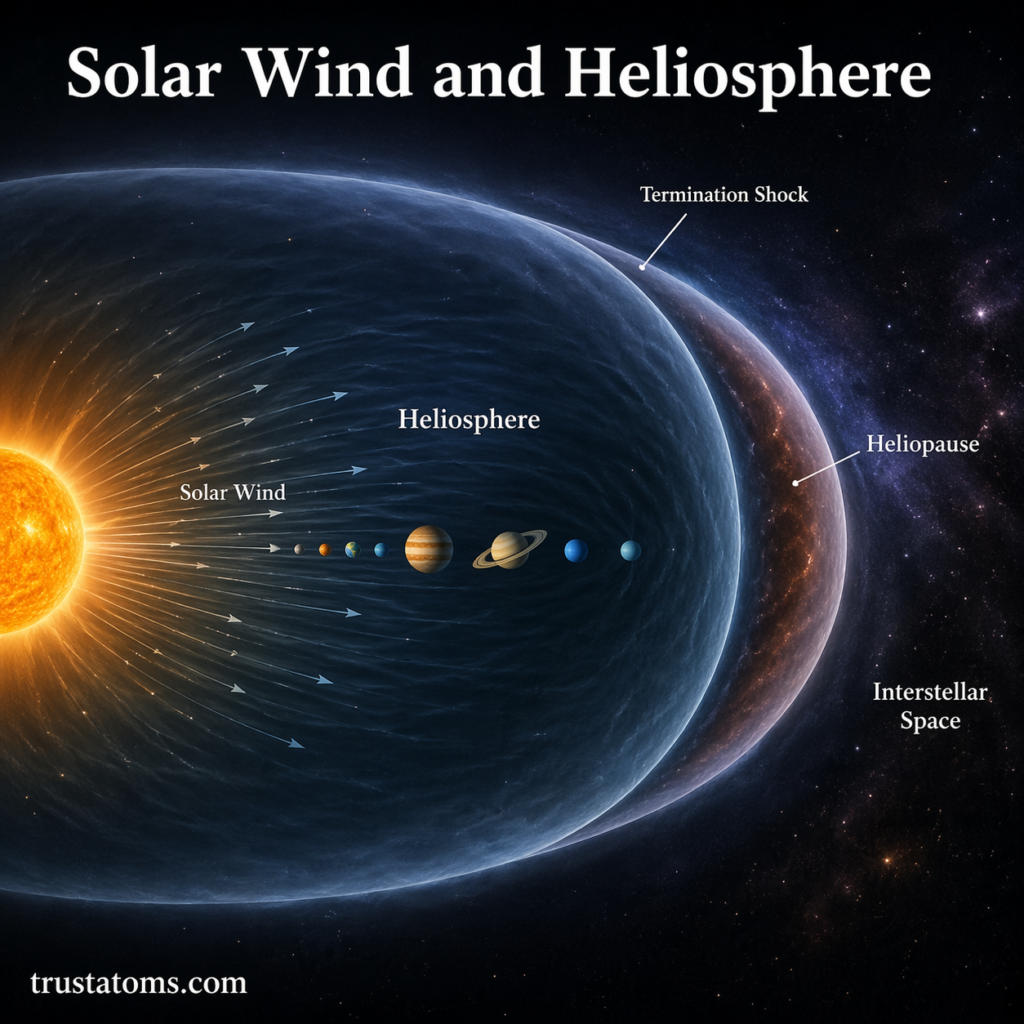
Coronal mass ejections are massive clouds of charged particles ejected from the Sun’s outer atmosphere, known as the corona.
Unlike solar flares, CMEs involve the actual movement of matter through space.
Key Features of CMEs
- Billions of tons of plasma released
- Travel at speeds up to millions of kilometers per hour
- Can take 1–3 days to reach Earth
- Carry strong magnetic fields
CMEs are often, but not always, linked to solar flares.
Solar Flares vs CMEs: What’s the Difference?
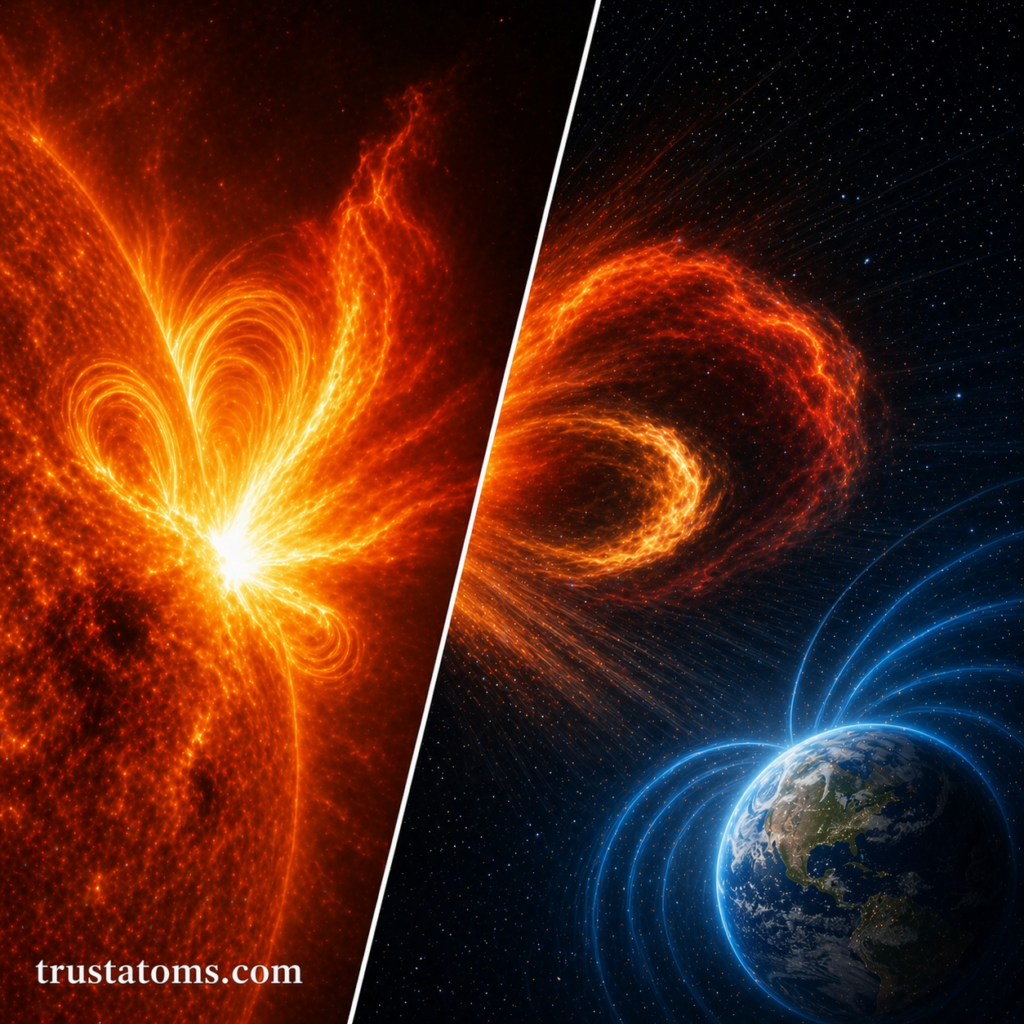
Although they often occur together, solar flares and CMEs are different phenomena.
Main Differences
- Solar flares:
- Energy release (radiation)
- Immediate impact on Earth
- Travel at light speed
- CMEs:
- Physical ejection of particles
- Delayed impact (hours to days)
- Can cause geomagnetic storms
Understanding this difference is crucial when studying space weather.
What Causes These Solar Events?
Both solar flares and CMEs are driven by the Sun’s magnetic field.
Magnetic Reconnection
The main process behind these events is called magnetic reconnection.
- Magnetic field lines twist and store energy
- They suddenly snap and reconnect
- This releases massive amounts of energy
This process powers both the radiation of flares and the particle ejections of CMEs.
The Solar Cycle and Activity Levels
The Sun goes through an approximately 11-year solar cycle, during which activity rises and falls.
Solar Maximum vs Solar Minimum
- Solar Maximum:
- Increased sunspots
- More flares and CMEs
- Greater space weather activity
- Solar Minimum:
- Fewer sunspots
- Reduced solar activity
Most solar flares and CMEs occur during solar maximum.
Effects on Earth
When solar flares and CMEs reach Earth, they interact with our planet’s magnetic field.
Immediate Effects of Solar Flares
- Disruption of radio communications
- Interference with GPS signals
- Increased radiation in space
These effects happen quickly because radiation travels at light speed.
Effects of CMEs
- Geomagnetic storms
- Power grid disruptions
- Satellite damage
- Navigation system interference
CMEs can also pose risks to astronauts and spacecraft.
Auroras: A Beautiful Side Effect
One positive effect of solar activity is the creation of auroras (Northern and Southern Lights).
- Caused by charged particles interacting with Earth’s atmosphere
- Produce colorful displays in polar regions
- More intense during strong solar storms
Why Space Weather Matters
Solar flares and CMEs are key components of space weather, which can impact modern technology.
Systems Affected by Space Weather
- Satellites and spacecraft
- Communication systems
- Power grids
- Aviation routes
- GPS and navigation
As our reliance on technology grows, monitoring solar activity becomes increasingly important.
How Scientists Monitor Solar Activity
Space agencies and observatories constantly track the Sun.
Tools and Methods
- Solar telescopes (ground and space-based)
- Satellites like NASA’s Solar Dynamics Observatory
- Magnetic field measurements
- Real-time space weather forecasting systems
These tools help provide early warnings for potential disruptions.
Can We Predict Solar Flares and CMEs?
Prediction is possible—but not perfect.
Current Capabilities
- Scientists can identify active regions on the Sun
- Increased likelihood of flares can be forecasted
- Exact timing and intensity remain difficult to predict
Research continues to improve forecasting accuracy.
Final Thoughts
Solar flares and coronal mass ejections are powerful reminders that the Sun is a dynamic and sometimes unpredictable star.
While they can disrupt modern technology, they also provide valuable insights into stellar physics and magnetic processes.
By studying and monitoring these events, scientists can better protect Earth’s systems and deepen our understanding of the universe.