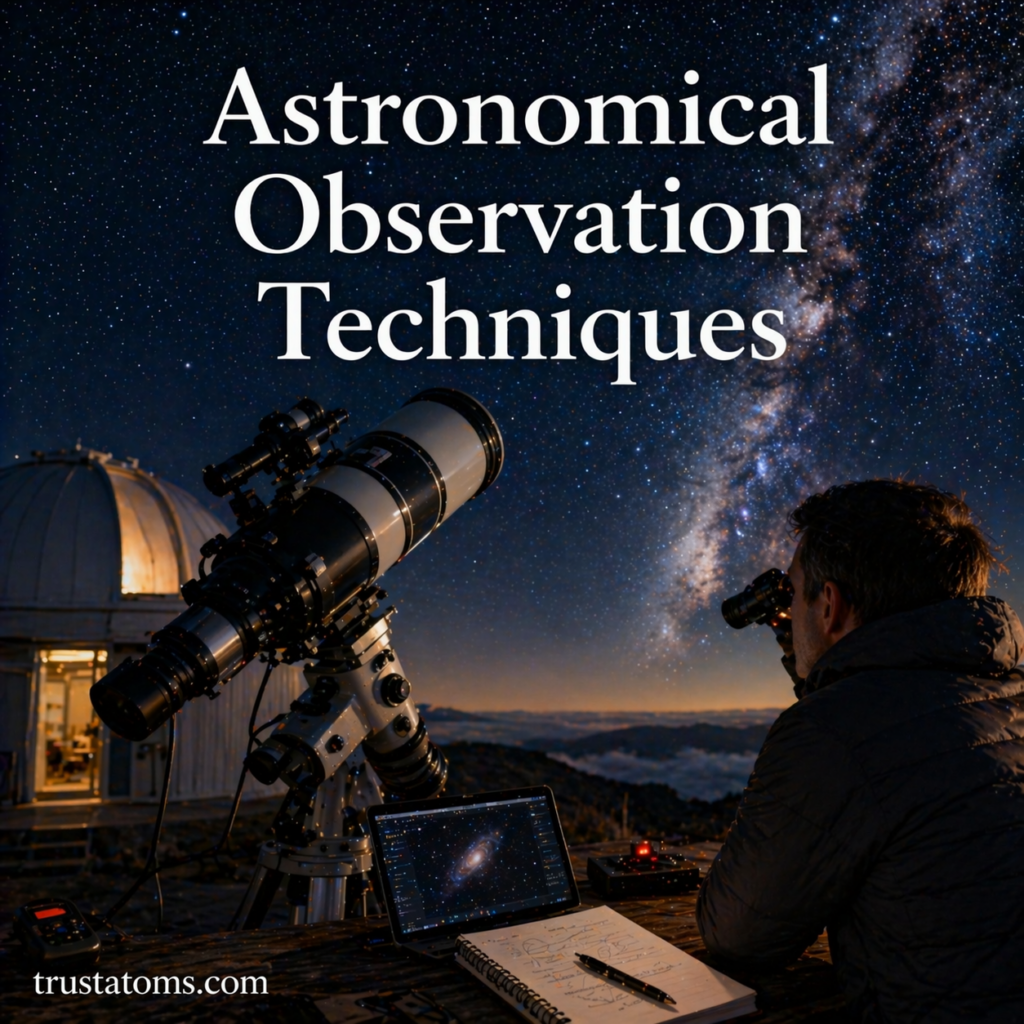
Astronomy is built on observation. From ancient stargazers mapping constellations to modern scientists studying distant galaxies, our understanding of the universe depends on how we observe it.
Astronomical observation techniques have evolved dramatically over time, combining human curiosity with advanced technology to reveal objects billions of light-years away.
What Is Astronomical Observation?
Astronomical observation is the process of collecting data about celestial objects such as stars, planets, galaxies, and cosmic phenomena.
These observations can involve:
- Visible light (what we can see with our eyes)
- Invisible wavelengths like radio, infrared, and X-rays
- Measurements of motion, brightness, and composition
The goal is to gather accurate information that helps explain how the universe works.
Types of Astronomical Observation
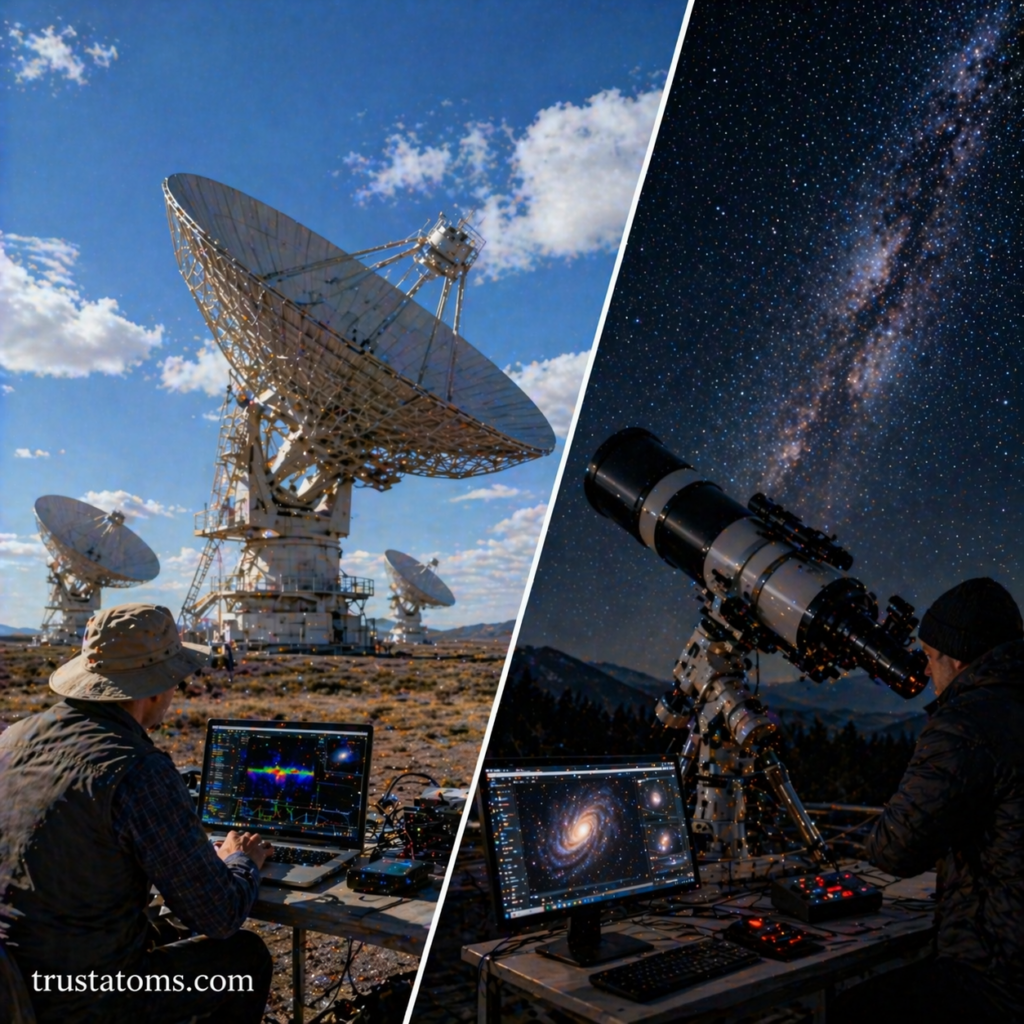
Astronomers use different observation methods depending on what they are studying.
Optical Observation
This is the most traditional form of astronomy.
- Uses visible light
- Performed with telescopes or the naked eye
- Ideal for observing planets, stars, and galaxies
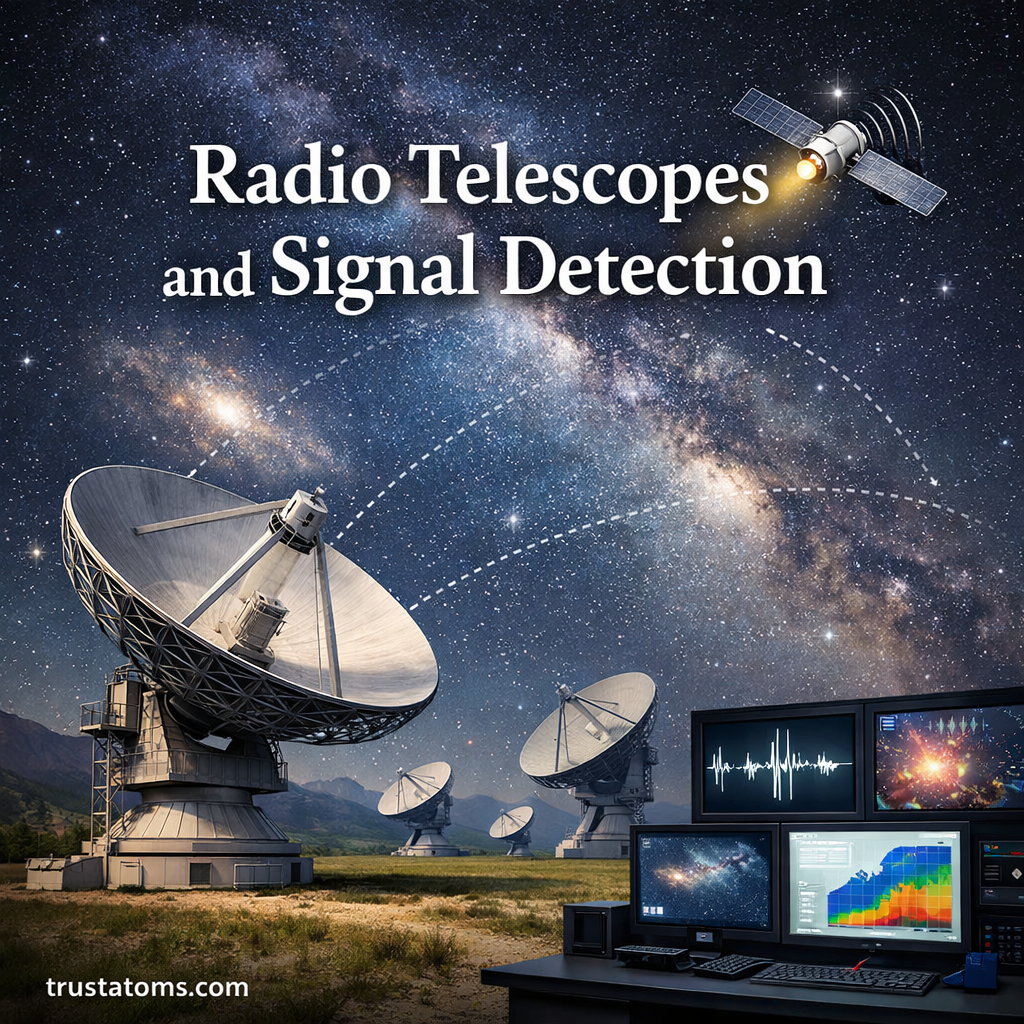
Radio Astronomy
Radio telescopes detect radio waves from space.
- Can observe objects hidden by dust
- Useful for studying gas clouds and pulsars
- Works day and night
Infrared Observation
Infrared detects heat emitted by objects.
- Helps study cooler objects like dust clouds
- Reveals star-forming regions
- Can penetrate areas blocked by visible light
X-ray and Gamma-ray Observation
These high-energy observations reveal extreme environments.
- Black holes
- Neutron stars
- Supernova explosions
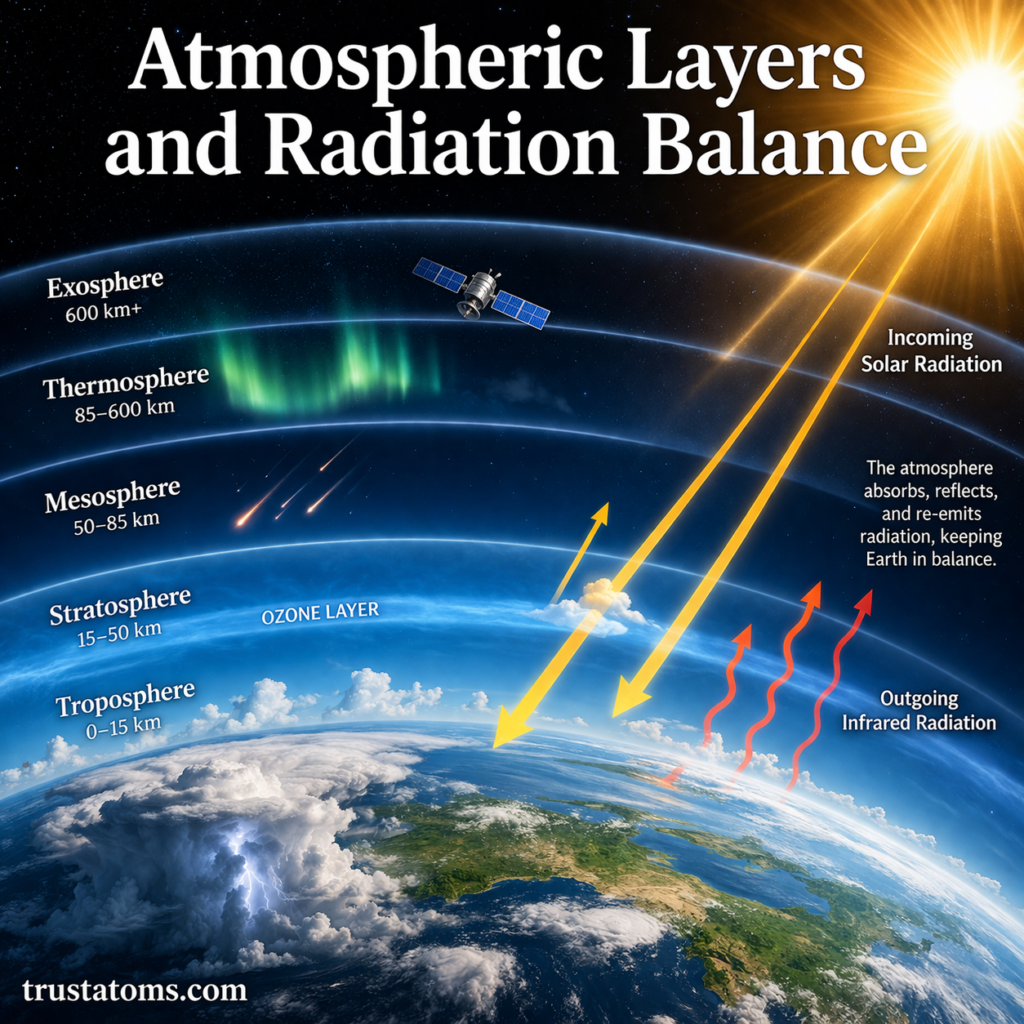
Because Earth’s atmosphere blocks these rays, observations are usually done from space.
Ground-Based vs Space-Based Observations
Astronomers observe the universe from both Earth and space.
Ground-Based Observatories
- Located on mountains or remote areas
- Easier to maintain and upgrade
- Affected by weather and atmospheric distortion
Space-Based Observatories
- Operate above Earth’s atmosphere
- Provide clearer, more detailed images
- Can detect wavelengths blocked by the atmosphere
Both approaches are essential and often work together.
Tools Used in Astronomical Observation
Modern astronomy relies on specialized instruments.
Telescopes
- Refracting telescopes use lenses
- Reflecting telescopes use mirrors
- Radio telescopes detect radio waves
Detectors and Sensors
- Capture light and convert it into data
- Include digital imaging sensors and spectrometers
Spectroscopes
- Break light into its component colors
- Reveal chemical composition and motion
Imaging Systems
- Produce detailed images of celestial objects
- Often combine multiple exposures for clarity
Imaging Techniques in Astronomy
Capturing images of space requires advanced techniques.
Long Exposure Imaging
- Collects light over extended periods
- Reveals faint objects not visible to the eye
Stacking Images
- Combines multiple images
- Reduces noise and enhances detail
Filtering
- Uses special filters to isolate wavelengths
- Helps highlight specific features
Spectroscopy: Understanding Light
Spectroscopy is one of the most powerful tools in astronomy.
What It Does
- Splits light into a spectrum
- Identifies elements based on spectral lines
- Measures motion through Doppler shifts
Why It Matters
- Reveals composition of stars and galaxies
- Determines temperature and density
- Helps measure velocity and distance
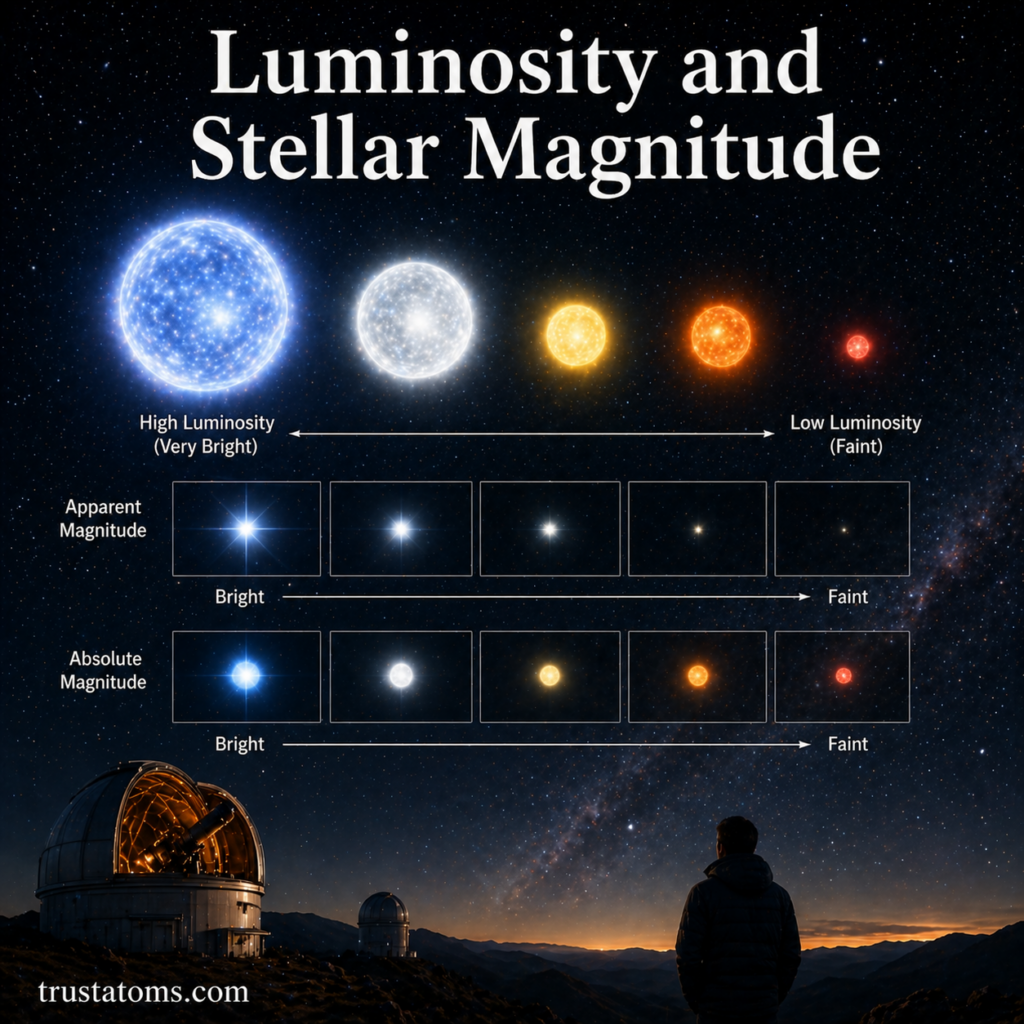
Photometry: Measuring Brightness
Photometry focuses on measuring the brightness of celestial objects.
Applications
- Detecting variable stars
- Discovering exoplanets through light dips
- Studying supernovae and stellar changes
Precise brightness measurements provide insight into how objects evolve over time.
Astrometry: Measuring Positions and Motion
Astrometry involves precise measurements of positions and movements of celestial objects.
Key Uses
- Tracking star movement
- Measuring distances using parallax
- Mapping the structure of the galaxy
This technique is essential for understanding how objects move through space.
Challenges in Astronomical Observation
Observing space is not without difficulties.
Common Challenges
- Atmospheric distortion (blurring images)
- Light pollution from cities
- Limited observation time
- Instrument sensitivity limits
Astronomers use advanced technology and remote locations to overcome these issues.
The Role of Technology in Modern Astronomy
Technology has transformed how we observe the universe.
Key Advancements
- Digital imaging replacing photographic plates
- Space telescopes providing clearer views
- Automated surveys scanning large areas of the sky
- Artificial intelligence analyzing vast datasets
These innovations allow astronomers to study more objects with greater precision.
Why Astronomical Observation Matters
Observation is the foundation of all astronomical knowledge.
It helps scientists:
- Discover new planets and galaxies
- Understand how stars are formed and evolve
- Study the origins of the universe
- Test scientific theories
Without observation, astronomy would remain purely theoretical.
Tips for Beginner Astronomers
You don’t need advanced equipment to start observing the sky.
Getting Started
- Begin with the naked eye and learn constellations
- Use binoculars for a closer look
- Try a beginner telescope
- Use star chart apps to identify objects
With practice, anyone can develop observation skills.
Final Thoughts
Astronomical observation techniques have come a long way—from simple stargazing to advanced space-based instruments. Each method reveals a different aspect of the universe, helping us piece together a larger cosmic picture.
As technology continues to improve, our ability to observe and understand the universe will only grow—bringing us closer to answering some of humanity’s biggest questions.