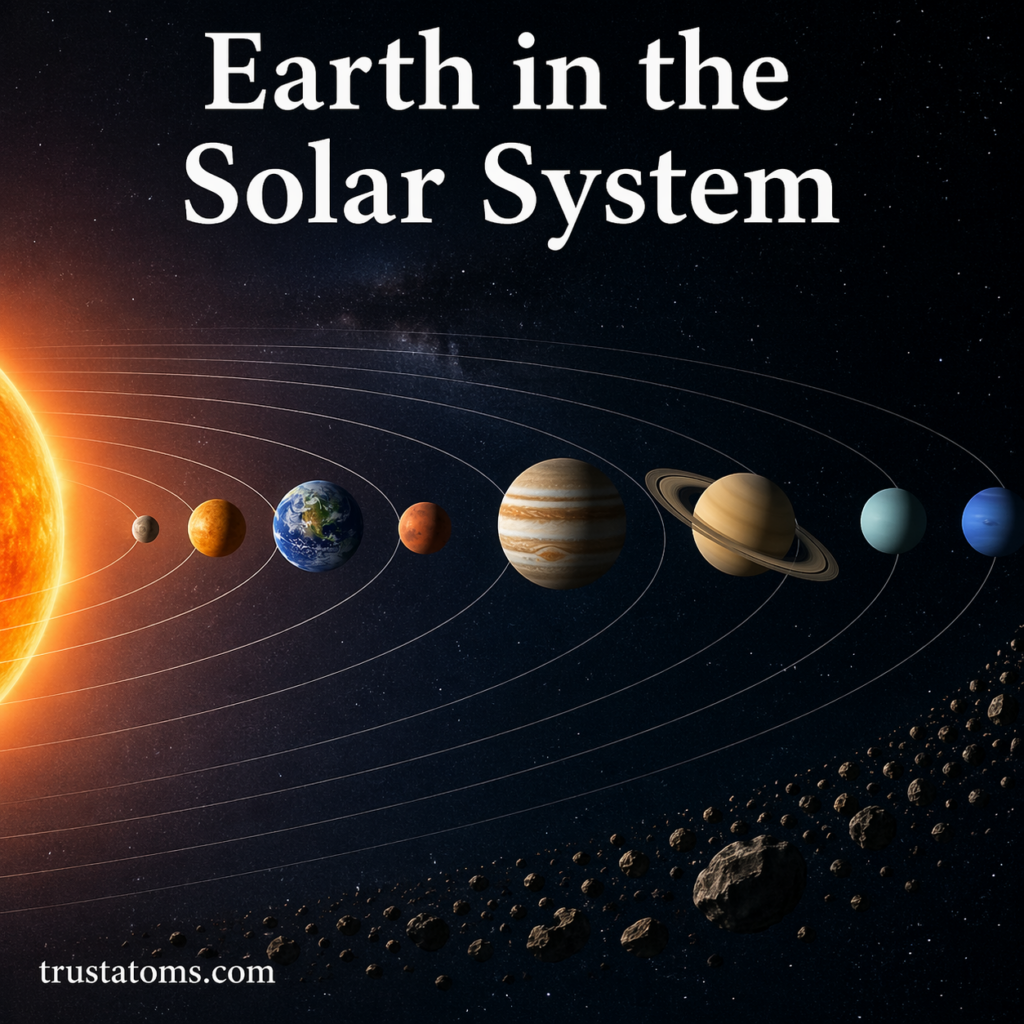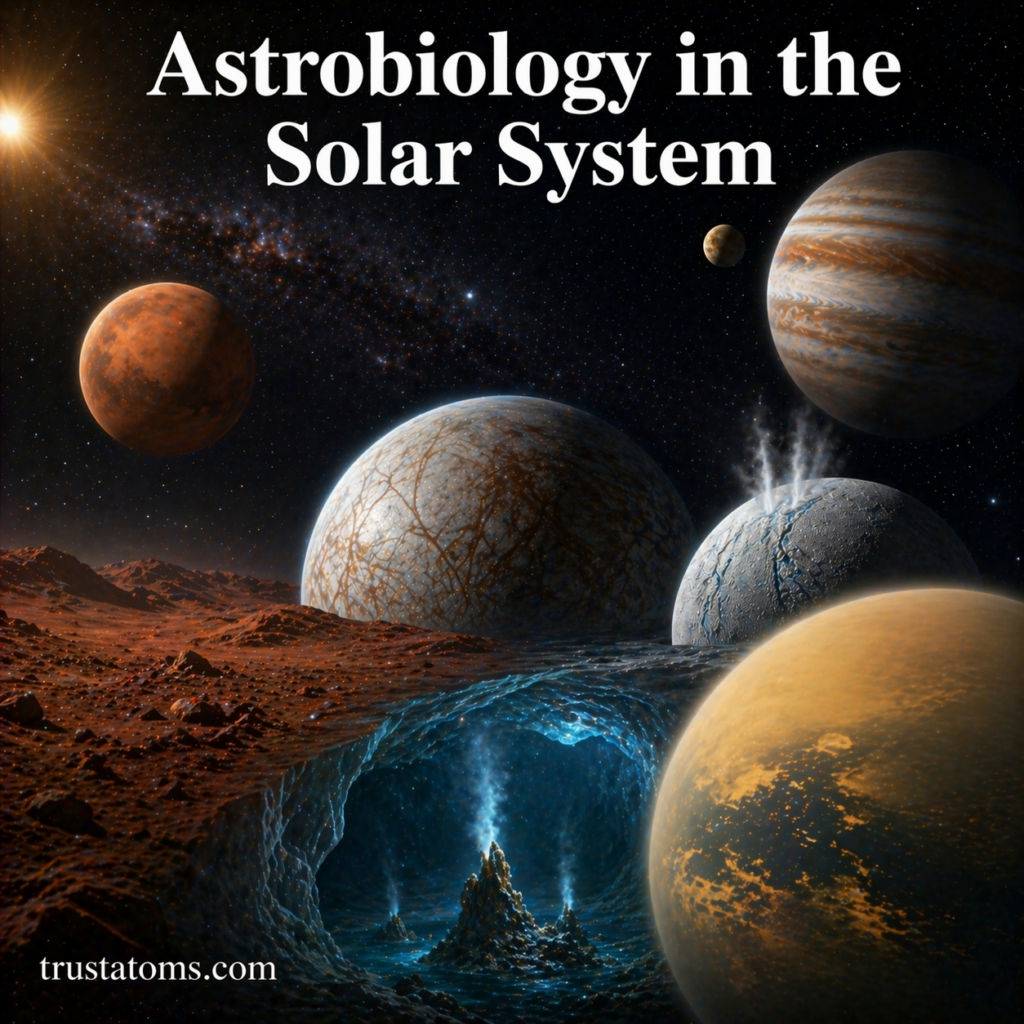
Astrobiology is the scientific study of life in the universe—where it might exist, how it forms, and how it survives in extreme environments. Within our own solar system, scientists are actively searching for signs of life beyond Earth.
From icy moons to ancient Martian landscapes, several worlds show promising conditions that could support microbial life, either now or in the past.
What Is Astrobiology?
Astrobiology combines multiple scientific disciplines, including:
- Biology
- Chemistry
- Geology
- Astronomy
Its goal is to answer fundamental questions:
- How did life begin?
- Does life exist elsewhere?
- What conditions are necessary for life?
By studying extreme environments on Earth, scientists develop models for where life might exist elsewhere in the solar system.
Key Ingredients for Life
To search for life, scientists look for certain essential conditions.
Basic Requirements
- Liquid water
- Energy source (sunlight or chemical energy)
- Organic molecules (carbon-based compounds)
- Stable environment over time
These factors guide the search for habitable environments beyond Earth.
Mars: A Once Habitable World?
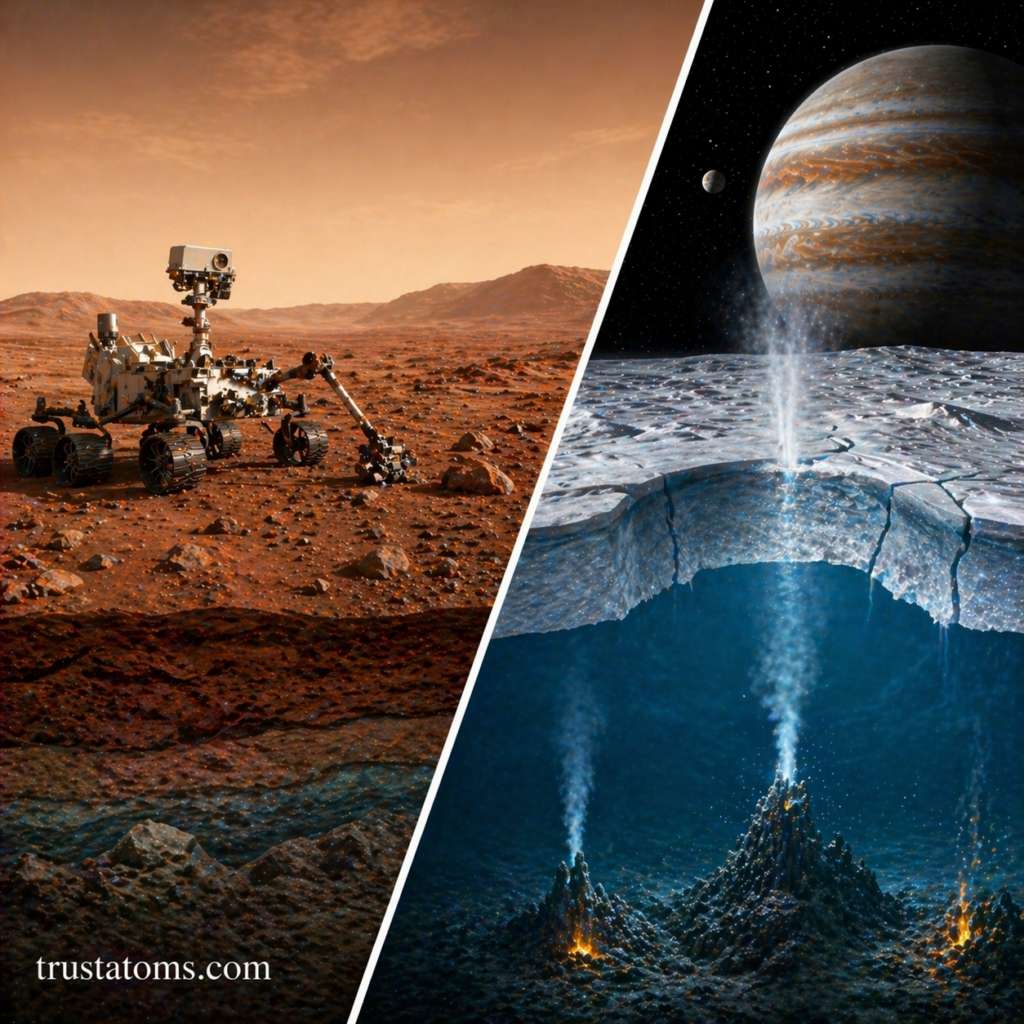
Mars is one of the most studied targets in the search for life.
Evidence of Past Habitability
- Ancient riverbeds and lakebeds
- Minerals that form in water
- Evidence of a thicker past atmosphere
Current Missions
Rovers like Perseverance Rover are:
- Collecting rock samples
- Searching for biosignatures
- Investigating past environments
While no direct evidence of life has been found, Mars remains a key focus for astrobiology.
Europa: An Ocean Beneath Ice
Europa is one of the most promising places to search for life.
Why Europa Is Important
- Covered in a thick layer of ice
- Likely has a global ocean beneath the surface
- Tidal heating from Jupiter may provide energy
Potential for Life
- Hydrothermal vents may exist on the ocean floor
- Similar environments on Earth support life
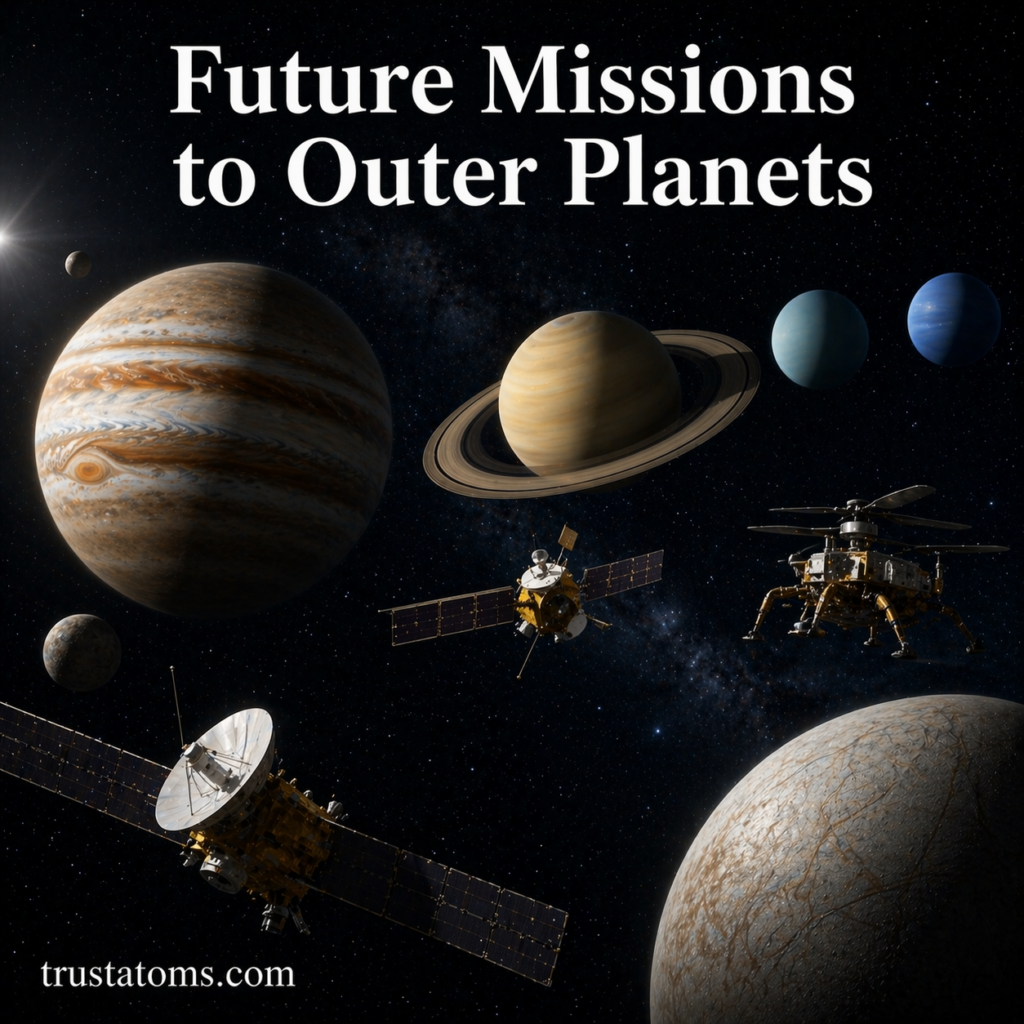
Future missions aim to study Europa’s surface and subsurface ocean more closely.
Enceladus: Water Plumes and Organic Molecules
Enceladus has surprised scientists with its activity.
Key Discoveries
- Jets of water vapor erupting into space
- Presence of organic compounds
- Evidence of a subsurface ocean
Why It Matters
- Plumes allow direct sampling without landing
- Conditions may support microbial life
Enceladus is considered one of the most accessible places to search for life.
Titan: A Different Kind of Habitability
Titan is unique in the solar system.
Distinct Features
- Thick atmosphere rich in nitrogen
- Lakes and rivers of methane and ethane
- Complex organic chemistry
Could Life Exist?
- Life may exist in non-water-based environments
- Titan expands the definition of habitability
Future missions aim to explore Titan’s surface and chemistry in detail.
Other Potentially Habitable Locations
Beyond the major candidates, other worlds may also hold clues.
Additional Targets
- Ganymede – possible subsurface ocean
- Callisto – stable environment
- Venus – possible cloud-layer habitability
These locations expand the search for life across diverse environments.
How Scientists Search for Life
Astrobiologists use a variety of tools and techniques.
Methods of Detection
- Analyzing chemical signatures (biosignatures)
- Studying atmospheric gases
- Examining rock and soil samples
- Using remote sensing instruments
What Are Biosignatures?
Biosignatures are signs that life may exist or once existed, such as:
- Organic molecules
- Specific gas combinations (like oxygen and methane)
- Microfossils
Challenges in Finding Life
Searching for life beyond Earth is extremely difficult.
Major Challenges
- Contamination from Earth microbes
- Harsh environments
- Limited access to subsurface oceans
- Ambiguous data interpretation
Scientists must carefully design missions to avoid false positives.
The Future of Astrobiology
New missions and technologies are expanding the search for life.
Upcoming Exploration Goals
- Missions to Europa and Titan
- Sample return missions from Mars
- Advanced instruments for detecting biosignatures
Astrobiology will continue to evolve as we explore more of the solar system.
Why Astrobiology Matters
The search for life beyond Earth has profound implications.
Key Impacts
- Helps us understand the origin of life
- Expands our knowledge of biology
- Answers one of humanity’s biggest questions
Are we alone in the universe?
Final Thoughts
Astrobiology in the solar system is a rapidly advancing field, with exciting discoveries and missions on the horizon. From the icy oceans of Europa to the methane lakes of Titan, the potential for life exists in places once thought impossible.
As exploration continues, we move closer to discovering whether life exists beyond Earth—and what that means for our understanding of the universe.