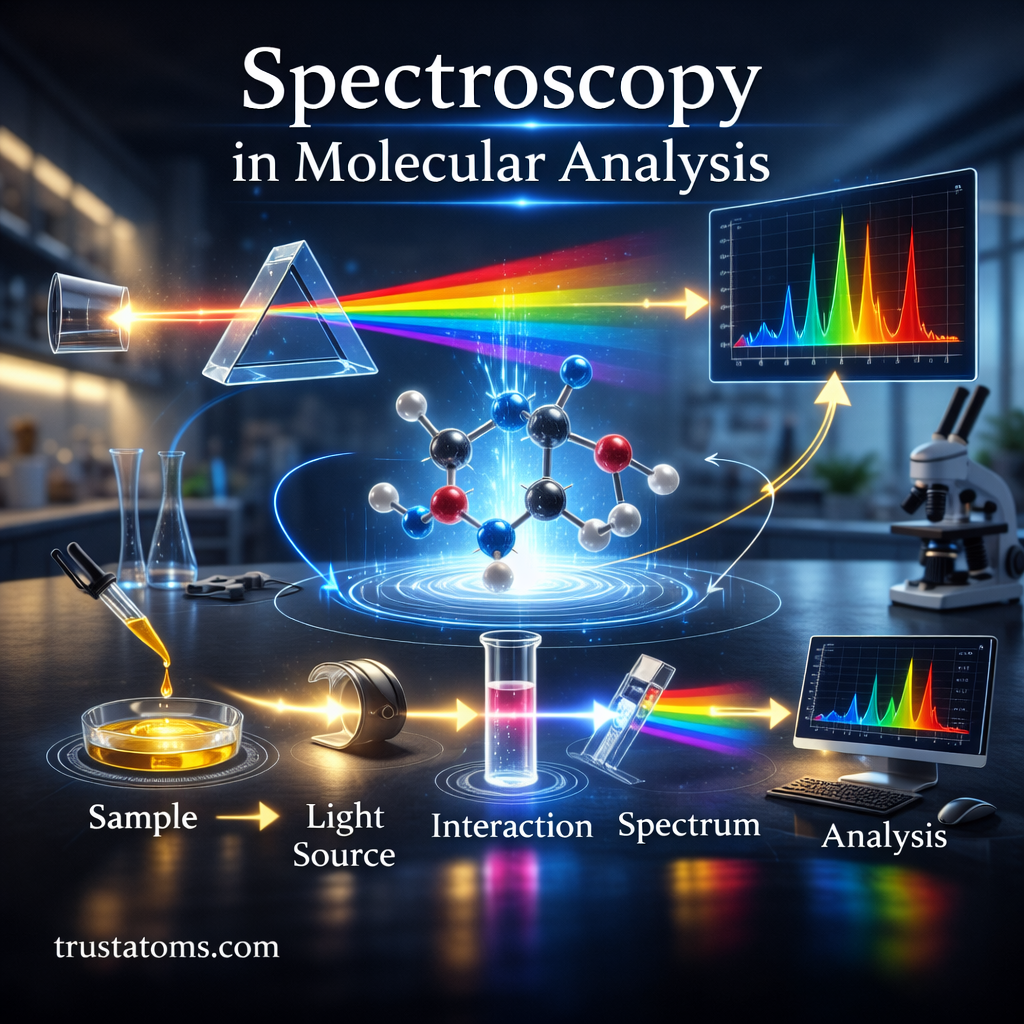
Spectroscopy is one of the most powerful tools scientists use to understand the structure and composition of molecules. By studying how matter interacts with light and other electromagnetic radiation, researchers can identify substances, analyze chemical bonds, and determine molecular structures with remarkable precision.
From pharmaceutical research to environmental monitoring, spectroscopy plays a critical role in modern chemistry. It allows scientists to detect molecules that are invisible to the naked eye and reveal how atoms are arranged within compounds.
This guide explains how spectroscopy works, why it is important in molecular analysis, and the most common types used in chemical research.
Continue reading “Spectroscopy in Molecular Analysis”