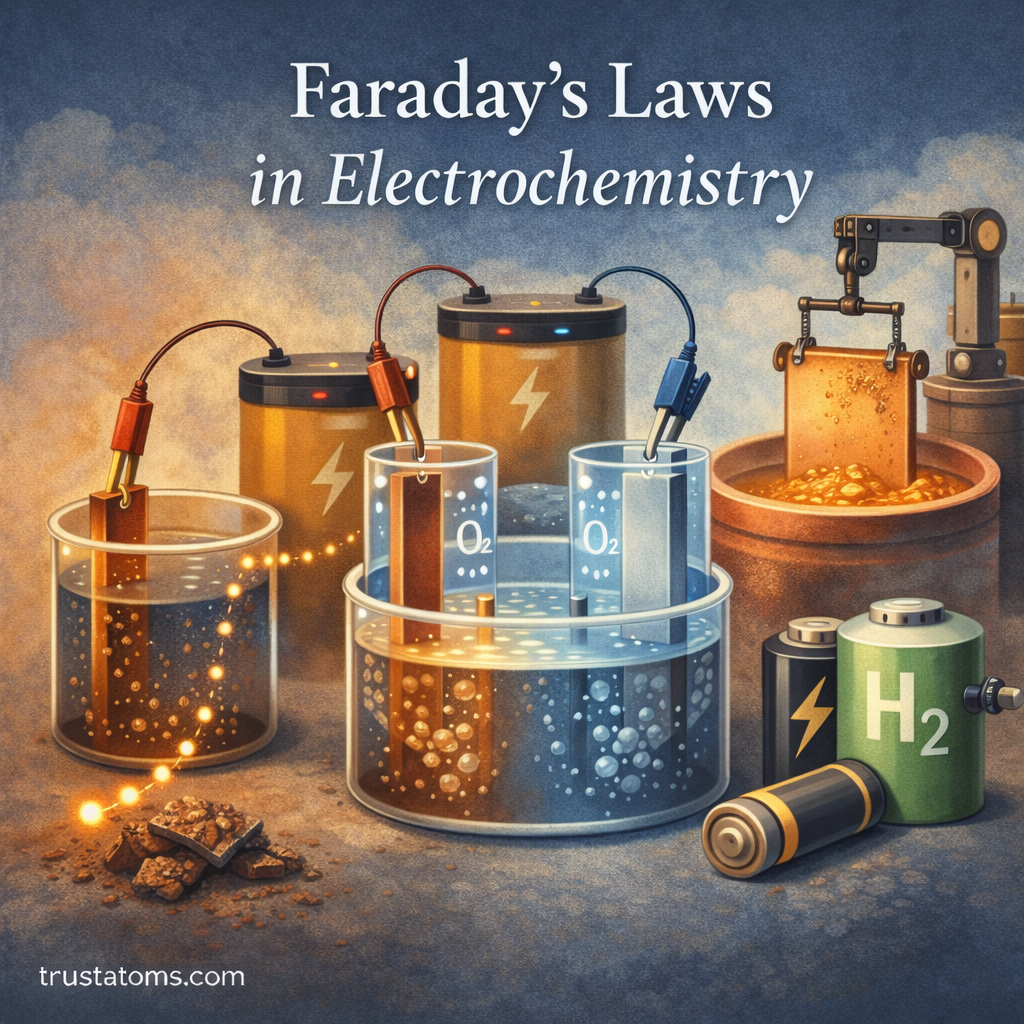
Faraday’s Laws of Electrolysis are foundational principles in electrochemistry that describe how electrical energy drives chemical reactions. These laws explain the relationship between the amount of electric charge passing through a substance and the amount of chemical change that occurs.
First formulated by the scientist Michael Faraday in the 19th century, these laws remain essential for understanding processes such as electroplating, metal refining, battery charging, and hydrogen production.
By linking electricity and chemical reactions quantitatively, Faraday’s work helped establish electrochemistry as a major scientific field and continues to influence modern energy technologies.
Continue reading “Faraday’s Laws in Electrochemistry”