Gene regulatory networks play a central role in biological development. From the earliest stages of embryonic growth, cells must decide when to divide, differentiate, migrate, or form specialized tissues. These complex decisions are guided by networks of genes that interact with one another through regulatory signals.
Rather than acting independently, genes operate in coordinated systems called gene regulatory networks (GRNs). These networks determine which genes are turned on or off at specific times and locations within a developing organism.
Through carefully timed patterns of gene activation, regulatory networks guide the formation of tissues, organs, and body structures.
What Are Gene Regulatory Networks?
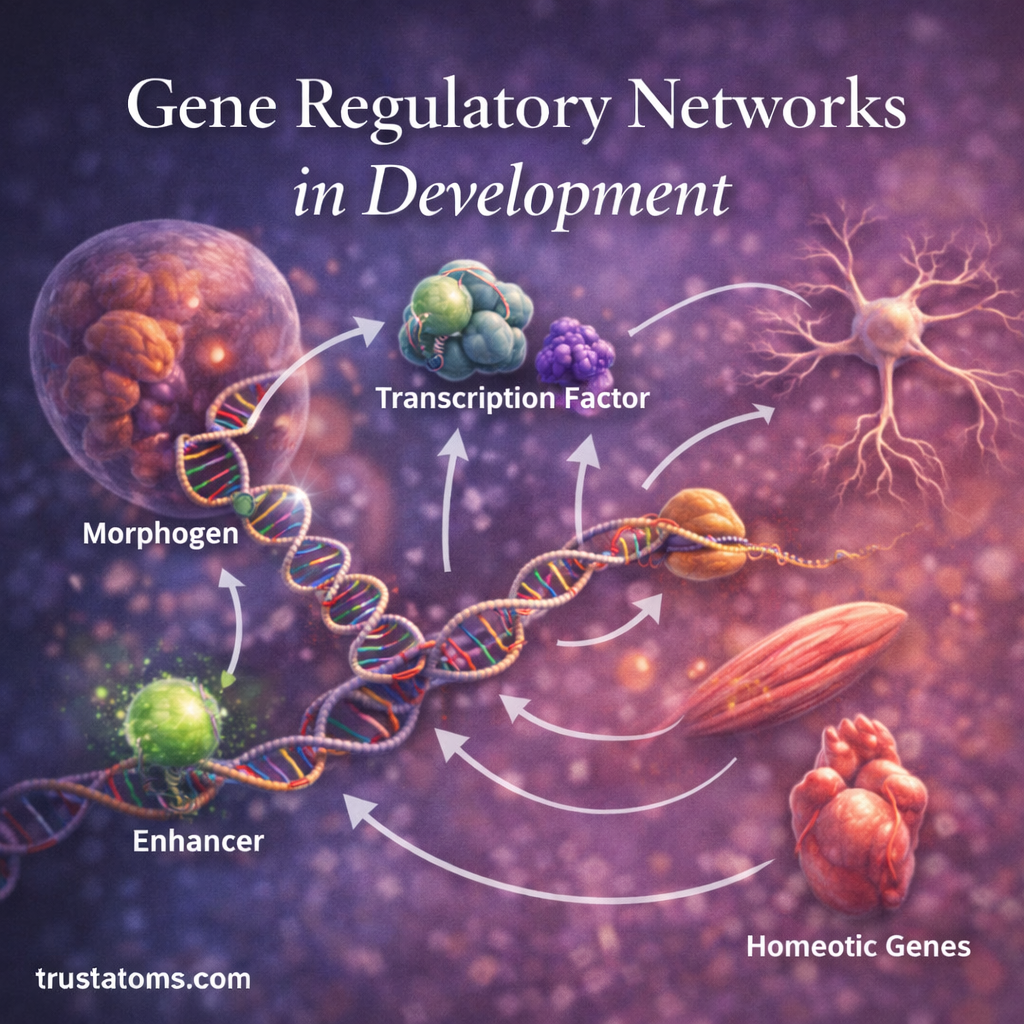
Gene regulatory networks are systems of interacting genes, transcription factors, and regulatory DNA sequences that control gene expression.
In these networks:
- Some genes encode regulatory proteins.
- These proteins influence the activity of other genes.
- Signals pass through interconnected pathways to coordinate gene behavior.
Instead of a linear chain of events, gene regulation resembles a network with many nodes and connections. This allows biological systems to integrate multiple signals and respond in precise ways during development.
Key components of these networks include:
- Regulatory genes
- Transcription factors
- Promoters
- Enhancers
- Signaling molecules
Together, these components form the control system that guides developmental processes.
Why Gene Regulation Is Essential for Development
All cells in a multicellular organism contain essentially the same DNA. However, different cell types perform specialized functions because they express different sets of genes.
For example:
- Muscle cells express genes related to contraction.
- Neurons express genes involved in electrical signaling.
- Skin cells activate genes responsible for protective barriers.
Gene regulatory networks determine which genes become active in each cell type.
This selective gene expression allows a single fertilized egg to develop into a complex organism containing many specialized tissues.
Early Embryonic Gene Regulation
Development begins immediately after fertilization, when regulatory networks start directing the earliest stages of embryonic growth.
Early developmental gene regulation includes:
- Activation of maternal genes already present in the egg
- Gradual activation of the embryo’s own genome
- Establishment of body axes and spatial patterns
These early regulatory signals help determine the basic layout of the organism.
For example, certain genes become active in specific regions of the embryo, helping define areas that will eventually form the head, tail, or internal structures.
Pattern Formation and Body Organization
Gene regulatory networks are responsible for organizing spatial patterns within developing organisms. This process is often referred to as pattern formation.
Pattern formation involves the coordinated activation of genes that determine the arrangement of tissues and organs.
Several types of regulatory genes contribute to this process:
Morphogen Genes
Morphogens are signaling molecules that form concentration gradients across developing tissues.
Cells detect these gradients and activate different genes depending on morphogen levels.
This allows cells to determine their position within the developing organism.
Segmentation Genes
Segmentation genes help divide the developing embryo into repeating structural units.
These genes are especially important in organisms such as insects, where body segments form in precise patterns.
Homeotic (Hox) Genes
Hox genes control the identity of body regions.
They determine which structures form in particular segments of the body.
For example, Hox genes influence whether a segment becomes part of the thorax, abdomen, or other anatomical regions.
These genes are highly conserved across many animal species.
Hierarchical Structure of Developmental Networks
Developmental gene regulatory networks are often organized hierarchically. This means that some genes act as master regulators, controlling the activity of many downstream genes.
A typical hierarchy may include:
- Master regulatory genes
- Intermediate regulatory genes
- Structural genes responsible for building tissues
Master regulators initiate developmental programs by activating large sets of genes that guide cell fate decisions.
Because of this structure, small changes in regulatory genes can have large effects on development.
Cell Differentiation and Gene Regulation
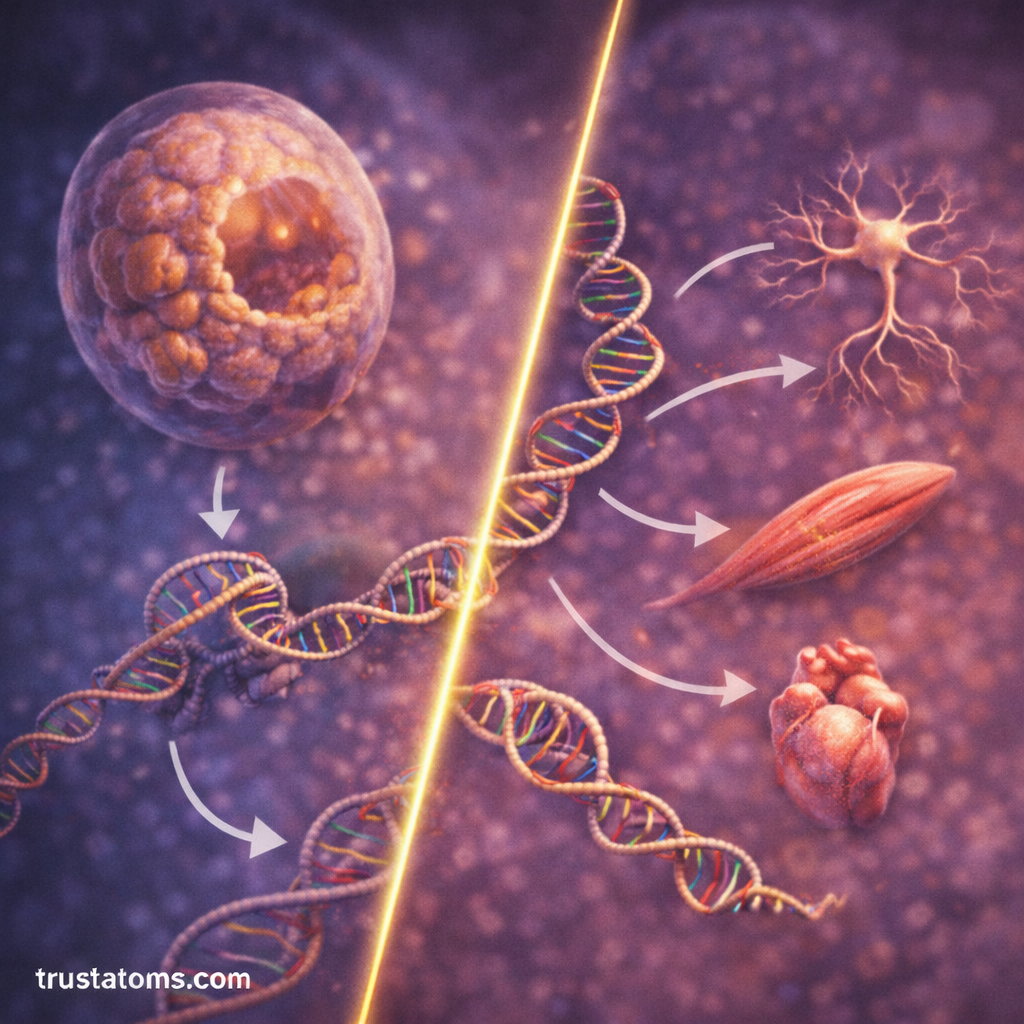
Cell differentiation occurs when cells become specialized for specific biological functions.
Gene regulatory networks drive this process by activating genes necessary for particular cell types while suppressing others.
For example:
- Neurons activate genes involved in neurotransmitter production.
- Muscle cells activate genes related to contractile proteins.
- Immune cells activate genes involved in pathogen defense.
Once a cell commits to a specific identity, regulatory networks help maintain stable gene expression patterns.
This ensures that cells retain their specialized functions throughout the organism’s life.
Feedback Loops in Developmental Regulation
Gene regulatory networks frequently include feedback mechanisms that stabilize developmental processes.
Two common types of feedback loops are:
Positive Feedback
Positive feedback reinforces gene activity.
Once a developmental pathway begins, positive feedback can strengthen gene expression and lock in a cell’s identity.
This helps ensure that differentiation decisions remain stable.
Negative Feedback
Negative feedback helps control and limit gene expression.
These loops prevent excessive activation of developmental genes and maintain balance within regulatory systems.
Together, positive and negative feedback loops help maintain stability during complex developmental transitions.
Environmental Influence on Developmental Networks
Although development is strongly guided by genetic instructions, environmental factors can also influence regulatory networks.
External signals may affect gene expression through:
- Temperature changes
- Nutrient availability
- Hormonal signals
- Chemical exposure
Environmental signals can activate signaling pathways that interact with gene regulatory networks, altering developmental outcomes.
This interaction between genes and the environment contributes to the diversity seen in biological traits.
Gene Regulatory Networks and Evolution
Changes in gene regulatory networks play an important role in evolution.
Rather than altering entire genes, evolutionary changes often occur in regulatory elements that control gene expression.
Small adjustments in regulatory networks can produce significant differences in:
- Body structure
- Organ development
- Timing of developmental processes
Because of this, evolutionary biologists study regulatory networks to understand how species diversify over time.
Studying Developmental Regulatory Networks
Scientists use a variety of molecular techniques to study gene regulatory networks during development.
Common research methods include:
- RNA sequencing (RNA-seq) to measure gene activity
- Chromatin immunoprecipitation sequencing (ChIP-seq) to identify transcription factor binding
- CRISPR gene editing to investigate gene function
- Single-cell sequencing to analyze gene regulation in individual cells
These technologies allow researchers to map how genes interact across entire developmental pathways.
Final Thoughts
Gene regulatory networks form the control system that guides biological development. By coordinating the activity of genes through complex regulatory interactions, these networks ensure that cells divide, specialize, and organize correctly.
From early embryonic pattern formation to the development of specialized tissues, regulatory networks provide the framework for building complex living organisms.
As research continues to uncover how these networks operate, scientists gain deeper insight into development, evolution, and the origins of many genetic diseases.