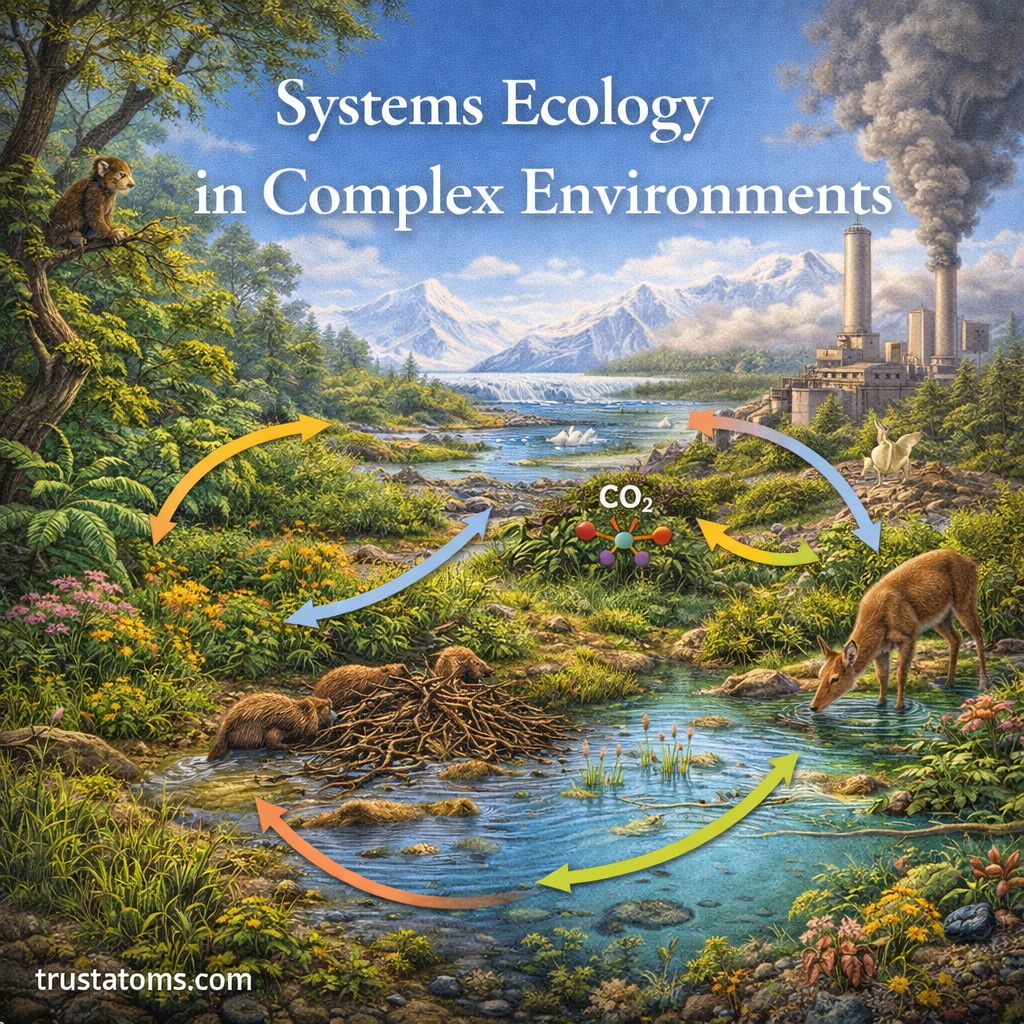
Ecosystems are made up of many interconnected parts, including living organisms, physical environments, and the energy and nutrients that move between them. Systems ecology is the scientific approach that studies ecosystems as integrated systems rather than isolated components.
By analyzing how organisms interact with each other and with their environment, systems ecology helps scientists understand how ecosystems function, adapt, and respond to environmental change. This field is especially important when studying complex environments where many biological and environmental processes occur simultaneously.
What Is Systems Ecology?
Systems ecology is a branch of ecology that examines ecosystems as interconnected systems of energy flow, nutrient cycling, and biological interactions.
Rather than focusing on individual species, systems ecology looks at the entire ecosystem and studies how its components work together.
Key features of systems ecology include:
- Studying relationships among organisms and their environment
- Analyzing energy movement through ecosystems
- Understanding nutrient cycling processes
- Modeling ecological systems using scientific data
This approach helps scientists identify patterns and predict how ecosystems respond to environmental changes.
Why Systems Ecology Is Important
Modern ecosystems are highly complex. Many environmental processes happen at the same time, making it difficult to understand ecosystems by studying only individual species.
Systems ecology helps scientists:
- Understand ecosystem stability
- Predict environmental change
- Analyze energy flow and nutrient cycles
- Study large-scale environmental processes
- Develop conservation and resource management strategies
By examining ecosystems as integrated systems, scientists can gain a more complete understanding of environmental dynamics.
Components of Ecological Systems
Systems ecology studies ecosystems by examining the major components that interact within them.
Biotic Components
Biotic components include all living organisms within an ecosystem.
Examples include:
- Plants
- Animals
- Fungi
- Bacteria
- Microorganisms
These organisms interact through feeding relationships, competition, cooperation, and reproduction.
Abiotic Components
Abiotic components refer to the non-living elements of an ecosystem.
These environmental factors influence how organisms survive and interact.
Examples include:
- Sunlight
- Temperature
- Water
- Soil nutrients
- Atmospheric gases
Changes in abiotic factors can significantly alter ecosystem dynamics.
Energy Flow in Ecological Systems
Energy is the driving force behind all ecological processes.
In most ecosystems, energy enters through solar radiation, which plants use during photosynthesis to produce organic molecules.
Energy then moves through the ecosystem via food chains and food webs.
Typical energy flow follows this sequence:
- Primary producers capture solar energy.
- Herbivores consume producers.
- Carnivores consume herbivores.
- Decomposers break down organic matter.
As energy moves through trophic levels, much of it is lost as heat through metabolic processes.
This pattern limits the number of trophic levels within ecosystems.
Nutrient Cycling in Ecosystems
In contrast to energy, which flows in one direction, nutrients are recycled within ecosystems.
Systems ecology studies how nutrients move between organisms and the environment.
Major nutrient cycles include:
- Carbon cycle
- Nitrogen cycle
- Phosphorus cycle
- Water cycle
These cycles allow ecosystems to reuse essential elements needed for life.
Decomposers play a critical role by breaking down organic matter and returning nutrients to soil and water systems.
Feedback Loops in Ecological Systems
One of the key ideas in systems ecology is the concept of feedback loops.
Feedback loops occur when outputs from a system influence the system itself.
Positive Feedback
Positive feedback amplifies changes within a system.
For example:
- Increased global temperatures may cause more ice to melt.
- Reduced ice decreases Earth’s reflectivity.
- This leads to further warming.
Negative Feedback
Negative feedback stabilizes ecosystems by counteracting change.
For example:
- Predator populations increase when prey populations grow.
- Increased predation reduces prey numbers.
- Predator populations then stabilize.
These feedback processes help maintain ecological balance.
Modeling Ecosystems
Systems ecologists often use models to study complex environmental systems.
Models help scientists simulate ecosystem processes and make predictions.
Common ecological modeling approaches include:
- Computer simulations
- Mathematical models
- Data-driven ecosystem models
- Climate and environmental models
These models allow scientists to test hypotheses and explore how ecosystems may respond to different environmental scenarios.
Complex Environments and Ecosystem Interactions
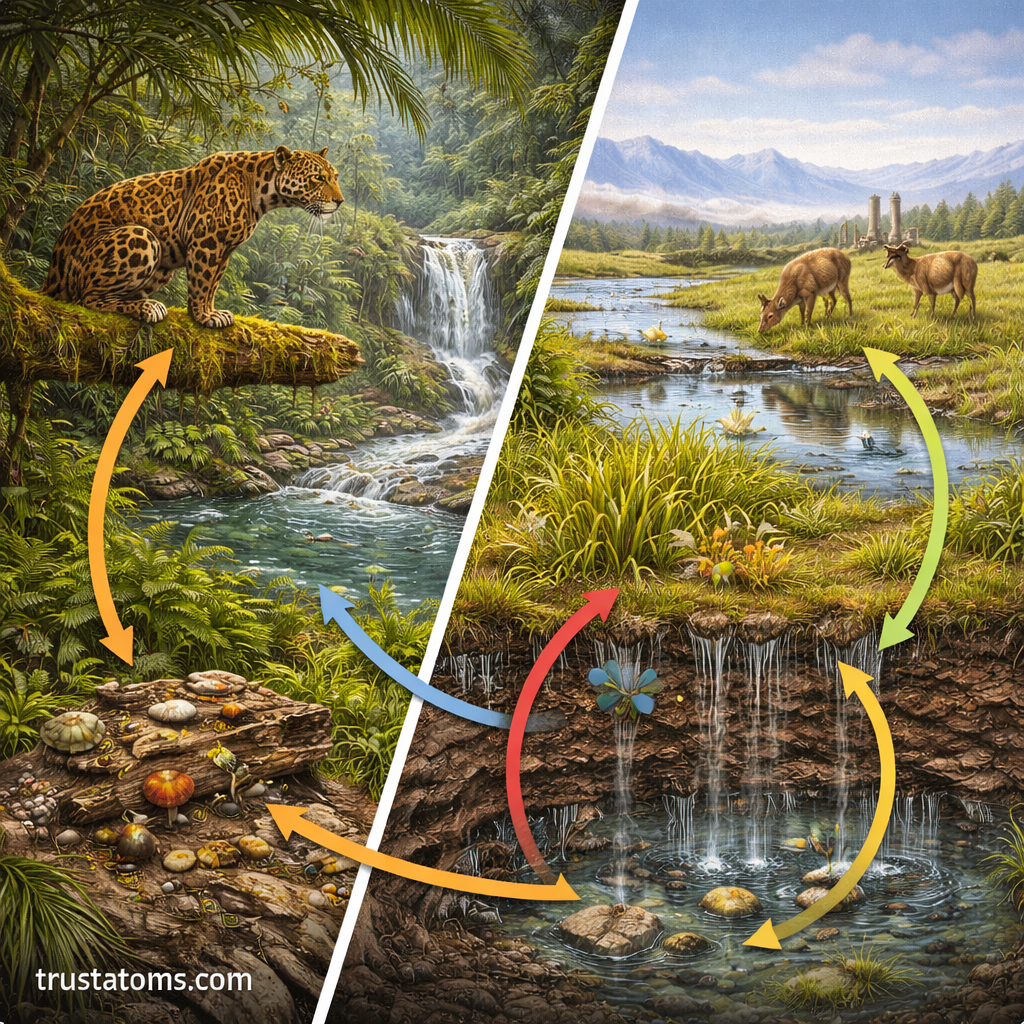
Complex environments contain many interacting species and environmental variables.
Examples include:
- Tropical rainforests
- Coral reefs
- Wetlands
- Arctic tundra
- Coastal estuaries
In these ecosystems, interactions between species, climate, and environmental conditions create highly dynamic ecological systems.
Systems ecology helps scientists understand these interactions and how they influence ecosystem structure.
Human Influence on Ecological Systems
Human activities can significantly alter ecological systems.
Major human impacts include:
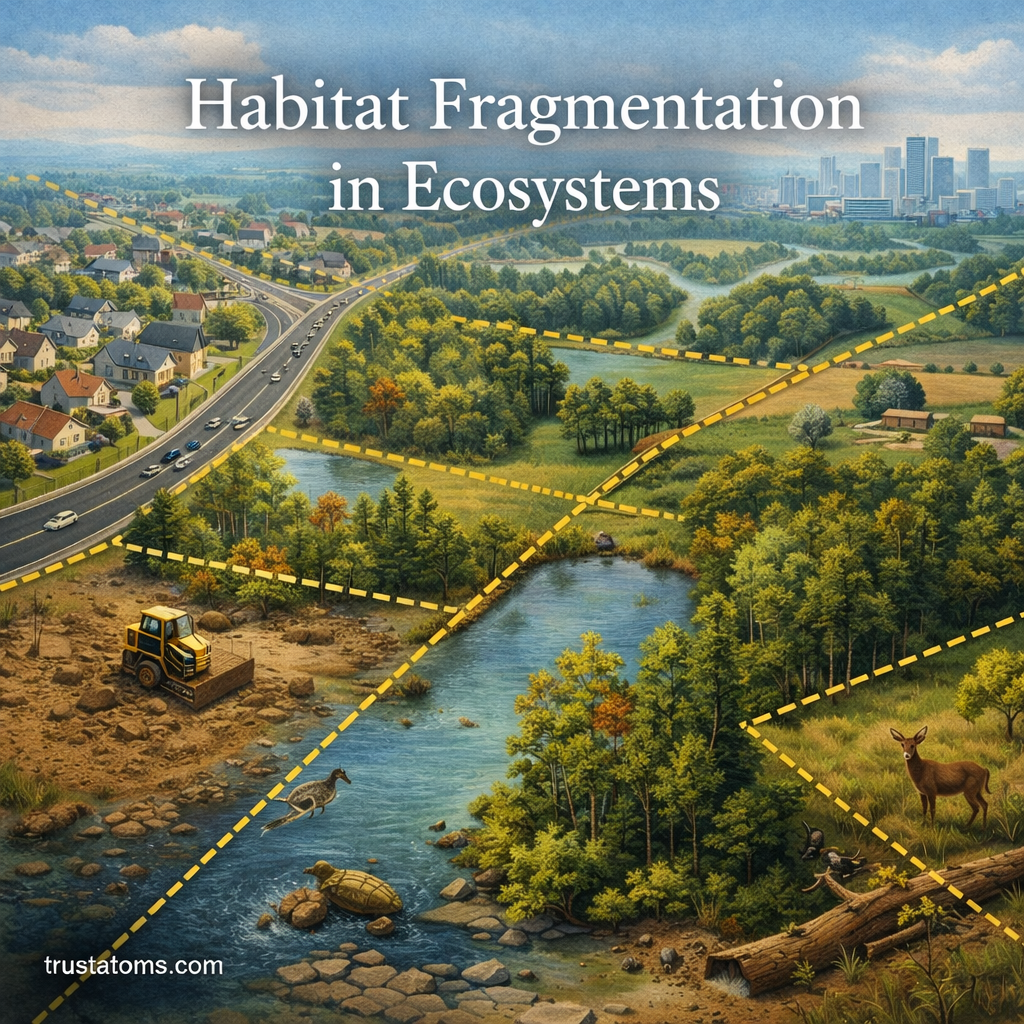
- Habitat destruction
- Climate change
- Pollution
- Overexploitation of natural resources
- Introduction of invasive species
These changes can disrupt ecological processes such as nutrient cycling and energy flow.
Systems ecology allows scientists to study these disruptions and develop strategies for sustainable environmental management.
Systems Ecology and Conservation
Systems ecology provides valuable tools for protecting ecosystems.
By understanding how ecosystems function as integrated systems, scientists can design more effective conservation strategies.
Applications of systems ecology in conservation include:
- Managing wildlife populations
- Restoring damaged ecosystems
- Predicting environmental change
- Protecting biodiversity
- Sustainable resource management
These approaches help maintain ecosystem stability and resilience.
Key Takeaways
Systems ecology examines ecosystems as interconnected networks of organisms, energy flows, and environmental processes.
Important points include:
- Ecosystems function as complex systems with many interacting components.
- Biotic and abiotic factors influence ecosystem dynamics.
- Energy flows through food webs while nutrients cycle through ecosystems.
- Feedback loops help regulate ecological stability.
- Scientific models help researchers study and predict ecosystem behavior.
- Human activities can significantly affect ecological systems.
Understanding these systems is essential for protecting the natural environment.
Final Thoughts
Systems ecology offers a powerful framework for understanding how ecosystems operate within complex environments. By studying the relationships among organisms, energy flow, and environmental factors, scientists gain deeper insight into how ecosystems function and adapt.
As environmental challenges such as climate change and habitat loss continue to grow, systems ecology plays an increasingly important role in guiding conservation efforts and sustainable resource management. Understanding ecosystems as interconnected systems helps humanity protect the natural processes that sustain life on Earth.