Parasite life cycles work through a series of stages in which parasites enter hosts, develop, reproduce, and reach new hosts. Some parasites complete their development using one host species, while others require two or more species to finish their life cycles.
Parasites survive and reproduce by living on or inside other organisms known as hosts. They obtain resources from their hosts, often causing harm in the process. Understanding their life cycles is part of the study of biology because it connects reproduction, animal physiology, disease, and relationships between species.
A parasite’s life cycle determines where it develops, how it spreads, and which organisms it can infect. Knowing these stages helps scientists identify opportunities to prevent transmission and control parasitic diseases.
What Is a Parasitic Life Cycle?
A parasitic life cycle is the sequence of developmental and reproductive stages a parasite passes through to produce another generation. Depending on the species, these stages may occur inside a host, on its body surface, or in the surrounding environment.
Many parasitic worms develop through egg, larval, and adult stages. Single-celled parasites follow different patterns, sometimes alternating between reproductive forms inside different hosts.
A complete life cycle generally involves development, reproduction, and transmission. Understanding how pathogens are transmitted helps explain how infectious parasites move between hosts.
Inside the host, parasites interact with tissues, cells, and immune responses. These relationships are examined in host–pathogen interactions in immunology.
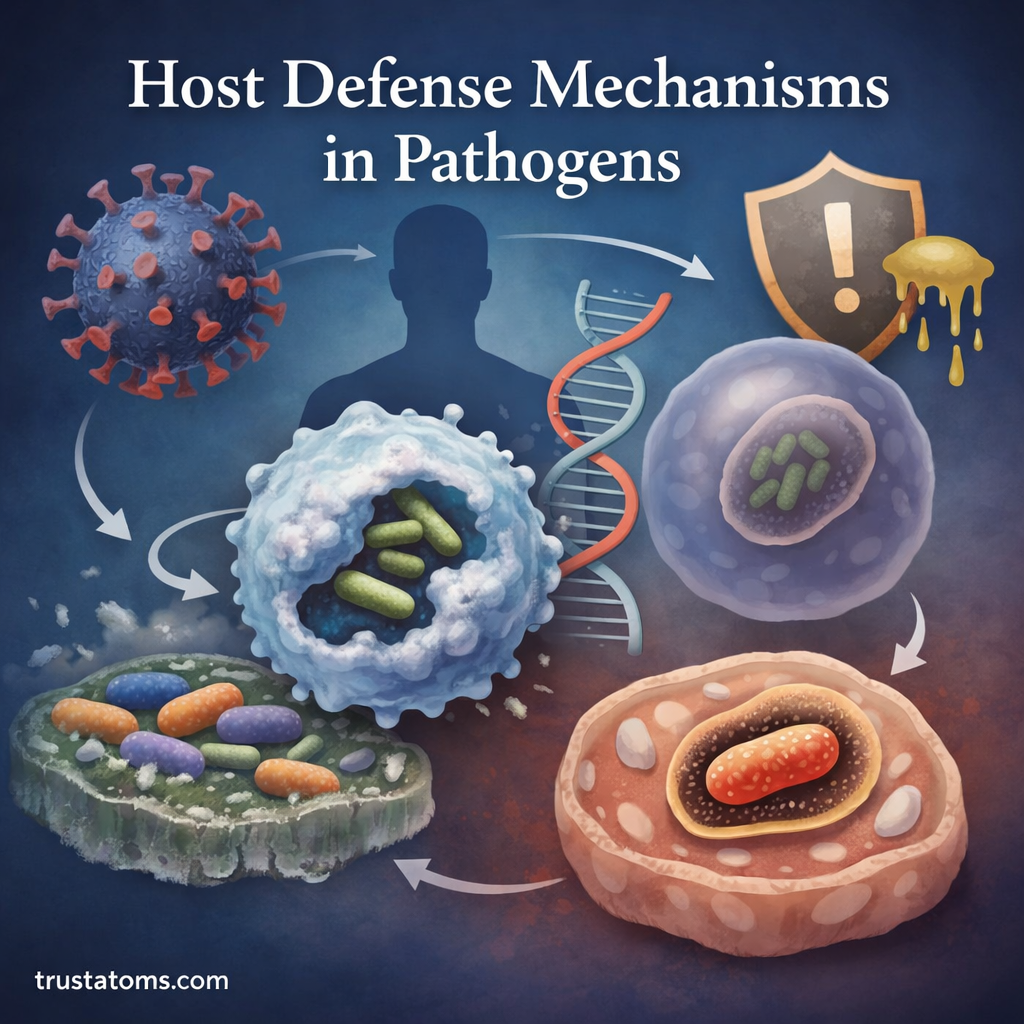
Hosts also possess defenses that can limit infection. Studying host defense mechanisms against pathogens provides context for how immune responses affect parasite survival and development.
Why Parasites Depend on Hosts
Parasites depend on other organisms for resources or conditions needed to survive. Different parasites use hosts in different ways.
- Nutrition: Some parasites absorb nutrients from host tissues or digestive contents.
- Development: Certain parasites require specific host environments to mature.
- Reproduction: Some parasites reproduce only after reaching a particular host.
- Transmission: Hosts or vectors may transport parasites to environments where new infections can occur.
These relationships can harm hosts by damaging tissues, consuming nutrients, or triggering immune responses. However, the severity of infection varies considerably among parasite species and hosts.
Direct vs. Indirect Parasitic Life Cycles
Parasitic life cycles are often divided into two broad categories based on the number of host species required for development.
| Feature | Direct Life Cycle | Indirect Life Cycle |
|---|---|---|
| Host species required | One | Two or more |
| Development | Completed using one host species | Different stages require different host species |
| Transmission | May involve contact, food, water, or environmental stages | Often involves intermediate hosts or vectors |
| Example | Human pinworm | Malaria parasite |
Direct Life Cycles: One Host Species
In a direct life cycle, a parasite can complete its development without requiring a second host species. It may still move between different individuals of the same species.
The human pinworm, Enterobius vermicularis, is an example. Adult worms live in the human intestine, and females deposit eggs around the anal region. Eggs can spread through contaminated fingers, clothing, bedding, and other surfaces.
When infective eggs are swallowed, larvae hatch and develop into adults. No intermediate host species is needed.
Indirect Life Cycles: Multiple Host Species
In an indirect life cycle, a parasite requires different host species for particular developmental or reproductive stages.
For example, malaria parasites require humans and female Anopheles mosquitoes. The parasite undergoes different forms of reproduction in each host.
Indirect cycles may involve insects, mammals, fish, snails, or other organisms. The required combination depends on the parasite species.
Definitive Hosts, Intermediate Hosts, and Vectors
Scientists use specific terms to describe the roles organisms perform in a parasite’s life cycle.
- Definitive host: The host in which a parasite undergoes sexual reproduction. For many parasitic worms, this is also where the adult stage occurs.
- Intermediate host: A host that supports larval development or asexual reproduction in parasites requiring multiple hosts.
- Vector: An organism, often an arthropod, that carries a parasite between hosts. Some vectors also support parasite development.
A vector is not automatically a definitive host. Its classification depends on what happens to the parasite inside it.
For malaria, the female Anopheles mosquito is both the vector and the definitive host because sexual reproduction occurs in the mosquito. Humans serve as intermediate hosts, where asexual multiplication takes place.
A Real-World Example: The Malaria Parasite Life Cycle
Malaria is caused by single-celled parasites belonging to the genus Plasmodium. Their life cycle demonstrates how an indirect cycle connects two different host species.
The major stages are:
- Mosquito bite: An infected female Anopheles mosquito introduces sporozoites into a human during blood feeding.
- Liver stage: Sporozoites enter liver cells, where the parasites multiply and produce forms called merozoites.
- Blood stage: Merozoites infect red blood cells and multiply. Repeated infection and rupture of these cells contribute to malaria symptoms.
- Sexual-stage formation: Some parasites develop into gametocytes, which circulate in the human bloodstream.
- Transmission to a mosquito: Another mosquito ingests gametocytes while feeding on the infected person.
- Development in the mosquito: Sexual reproduction and further development occur, eventually producing sporozoites that reach the mosquito’s salivary glands.
The cycle can continue when the mosquito bites another susceptible person. This example shows why understanding both human infection and mosquito biology is necessary for malaria prevention.
Common Developmental Stages of Parasites
Parasitic organisms do not all develop in the same way. However, many parasitic worms pass through recognizable stages.
Egg Stage
Many parasitic worms produce eggs that leave the host through feces or other routes. Depending on the species, eggs may develop in soil, water, or another suitable environment before becoming infective.
Some eggs possess protective coverings that help them withstand environmental conditions. Their survival depends on factors such as temperature and moisture.
Larval Stage
Larvae are immature developmental forms. Some remain in the intestine, while others migrate through tissues or develop inside intermediate hosts.
For certain parasites, a specific larval stage is responsible for infecting the next host. Other parasites produce larvae that must develop further before transmission becomes possible.
Adult and Reproductive Stages
Adult parasitic worms are generally capable of reproduction. Depending on the species, they may occupy the intestine, blood vessels, or other tissues.
Not all parasites have distinct egg, larval, and adult stages. Protozoan parasites such as Plasmodium follow different developmental patterns involving specialized cellular forms.
How Parasites Spread Between Hosts
Transmission occurs when a parasite reaches another suitable host or the environment needed for its next developmental stage.
Common transmission pathways include:
- Contaminated food or water: Infective eggs, cysts, or larvae enter the body through ingestion.
- Direct contact: Parasites spread through contact with infected individuals or contaminated materials.
- Vector transmission: Insects or other arthropods transfer parasites between hosts.
- Skin penetration: Certain parasitic larvae enter directly through exposed skin.
- Consumption of infected hosts: Some parasites reach their next host when an infected animal is eaten.
The transmission route determines which preventive measures are likely to be effective. For example, safe food preparation addresses different risks from those reduced by mosquito control.
Adaptations That Help Parasites Complete Their Life Cycles

Parasites encounter challenges when moving between hosts, surviving outside the body, and avoiding host defenses. Different species possess adaptations suited to their particular life cycles.
- Protective coverings: Some eggs and cysts withstand environmental exposure until they reach another host.
- Attachment structures: Hooks, suckers, or other specialized features help certain parasites remain attached to host tissues.
- High reproductive output: Producing numerous offspring can increase the chance that some reach suitable hosts.
- Immune evasion: Some parasites alter surface molecules or use other mechanisms that reduce recognition by host defenses.
- Host manipulation: Certain parasites influence host behavior in ways that may increase transmission.
Ticks and fleas are examples of external parasites, or ectoparasites, that feed on host animals. Parasitic wasps illustrate a related but distinct strategy: their developing offspring consume an insect host, typically killing it. Such wasps are more precisely described as parasitoids.
How Life Cycle Knowledge Helps Prevent Parasitic Diseases
Identifying a parasite’s developmental stages allows scientists and public health professionals to determine where transmission can be interrupted.
For intestinal parasites spread through contaminated environments, sanitation and hygiene can reduce exposure to infective stages. For vector-borne parasites, controlling contact with infected vectors may reduce transmission.
Researchers also use parasite life cycles to study ecological interactions between species. Parasites can influence host populations, food webs, and relationships among organisms.
Because different stages may respond differently to treatment, understanding parasite development can also help researchers identify suitable targets for medicines and other interventions.
Frequently Asked Questions
What are the main stages of a parasite life cycle?
Many parasitic worms develop through egg, larval, and adult stages. However, life cycles vary among species, and single-celled parasites may use different reproductive and developmental forms.
What is the difference between direct and indirect life cycles?
A direct life cycle requires only one host species, although the parasite may pass between individuals. An indirect life cycle requires two or more host species to complete development or reproduction.
Why do some parasites need more than one host?
Some parasites require different host environments for particular developmental stages or forms of reproduction. For example, malaria parasites multiply asexually in humans but undergo sexual reproduction in Anopheles mosquitoes.
Parasitic life cycles explain how parasites develop, reproduce, and spread through hosts and environments. The contrast between direct transmission in pinworms and the two-host cycle of malaria shows why identifying each developmental stage is necessary for understanding infection. By locating the points where parasites enter hosts or move between them, researchers can develop more targeted prevention and control strategies.
Sources: Centers for Disease Control and Prevention, DPDx—Laboratory Identification of Parasites of Public Health Concern; Roberts, Janovy, and Nadler, Foundations of Parasitology; World Health Organization, World Malaria Report.