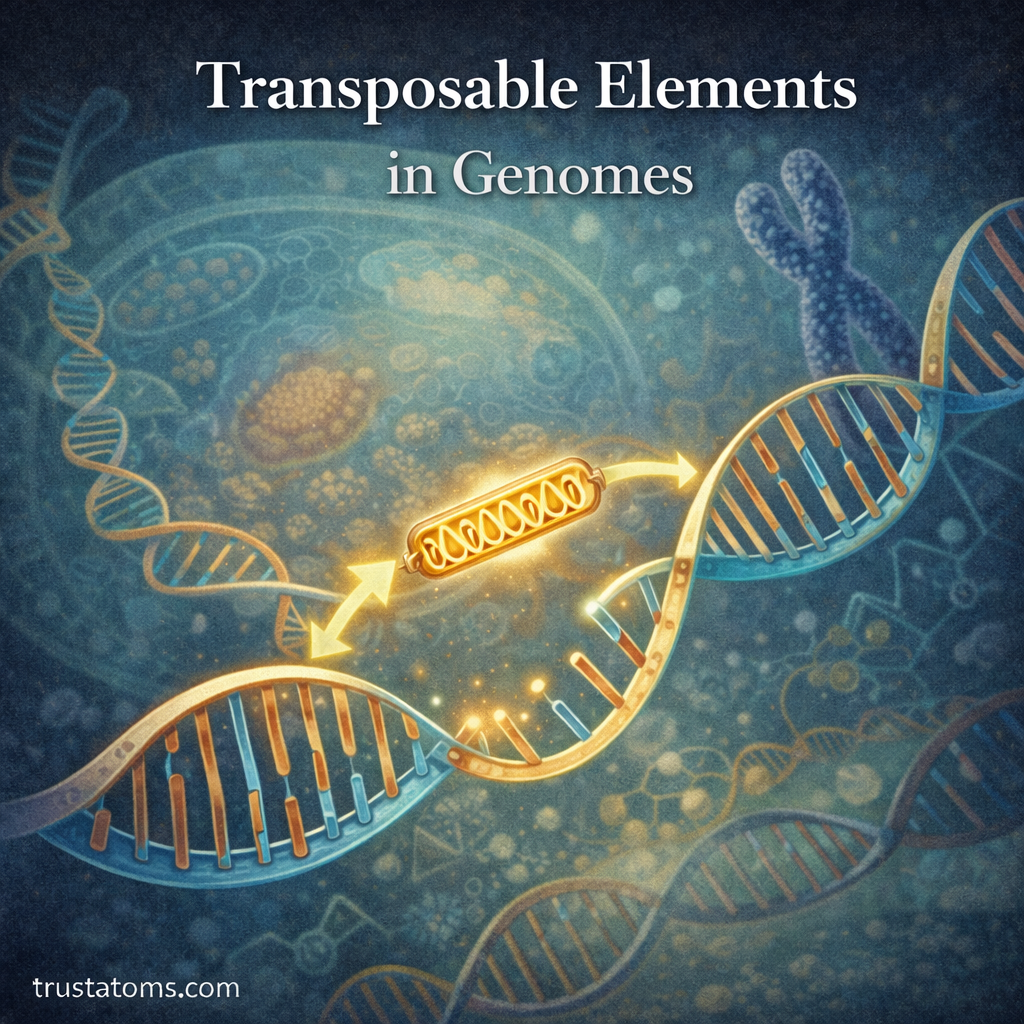
Transposable elements are DNA sequences that can move or produce copies that insert into new locations within a genome. Often called “jumping genes,” these sequences can change gene activity, disrupt DNA, and contribute to genetic diversity.
Genomes are not static collections of genes. Instead, they are dynamic systems in which mobile DNA sequences can reshape genetic organization. Found in organisms ranging from bacteria to humans, transposable elements help explain how genomes change over time, making them an important subject in modern biology.
What Are Transposable Elements?
Transposable elements, or TEs, are segments of DNA capable of changing their genomic position through a process called transposition. Some move directly as DNA, while others create new copies using RNA as an intermediate.
Geneticist Barbara McClintock discovered mobile genetic elements while studying maize in the 1940s. Her observations helped establish that DNA sequences could change position rather than remaining permanently fixed on chromosomes.
Transposition can interrupt genes, alter their regulation, or contribute to larger changes in chromosome organization. These effects connect mobile DNA to structural variation in genomes, including certain deletions, duplications, and rearrangements.
Cells also use protective mechanisms, including processes related to RNA interference, to restrict transposable element activity. In microorganisms, some mobile genetic elements can carry genes between DNA molecules, connecting transposition to the broader subject of horizontal gene transfer.
Two Main Types of Transposable Elements
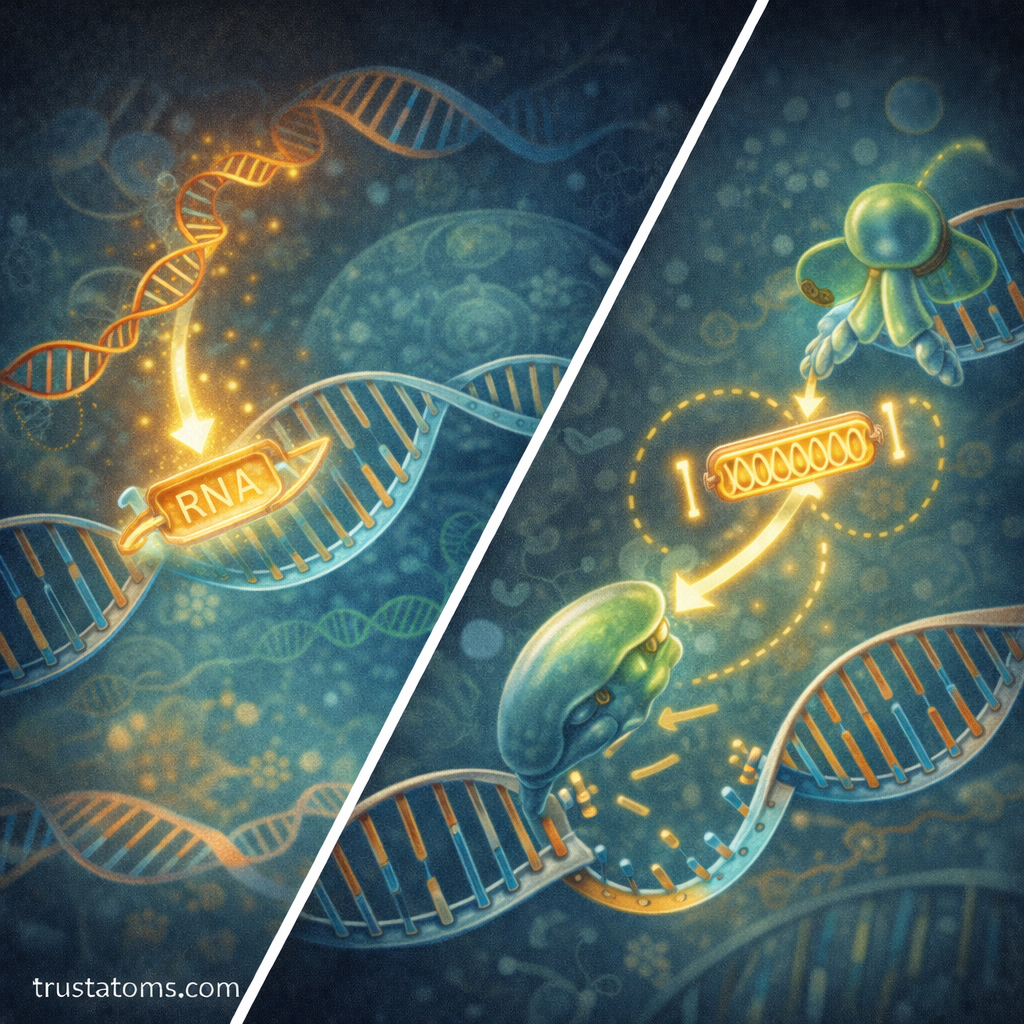
Transposable elements are commonly divided into two major classes according to their movement mechanisms: DNA transposons and retrotransposons.
DNA Transposons: Cut-and-Paste Movement
Many DNA transposons move directly from one DNA location to another. A specialized enzyme called transposase recognizes the element’s ends and helps transfer it to a new insertion site.
- Transposase recognizes specific DNA sequences at the transposon’s ends.
- The element is excised from its original position.
- The DNA sequence is inserted into another genomic location.
This is called cut-and-paste transposition. However, not every DNA transposon follows this exact mechanism; some use replicative processes that generate additional copies.
Retrotransposons: Copy-and-Paste Movement
Retrotransposons use an RNA intermediate to produce a new DNA copy. An enzyme called reverse transcriptase converts RNA back into DNA, which can then integrate into the genome.
Because the original sequence generally remains in place, successful retrotransposition can increase the number of copies in a genome.
Major retrotransposon groups include long terminal repeat (LTR) retrotransposons, long interspersed nuclear elements (LINEs), and short interspersed nuclear elements (SINEs). Some, including human Alu elements, depend on proteins supplied by other mobile elements to spread.
How Much of a Genome Contains Transposable Elements?
Transposable elements and their remnants occupy substantial portions of many genomes. Their abundance differs widely among species, partly because genomes accumulate and remove repetitive DNA at different rates.
| Organism | Approximate Genome Proportion |
|---|---|
| Humans | About 45% |
| Maize (corn) | About 80–85% |
| Fruit flies (Drosophila melanogaster) | About 20% |
These are approximate values that depend on genome assemblies and classification methods. Most transposable element sequences in the human genome are inactive remnants rather than elements currently capable of moving.
For perspective, if approximately 45% of a genome consists of transposable element-derived sequences, nearly half its DNA reflects the accumulated presence of mobile elements. That does not mean half the genome is actively jumping between locations.
How Transposable Elements Affect Genes
The consequences of transposition depend heavily on where an element inserts and whether it changes nearby DNA activity. Many insertions have little detectable effect, while others can be harmful or occasionally beneficial.
Disrupting Gene Function
An insertion within a protein-coding gene can interrupt its sequence or interfere with RNA processing. This may reduce the production of a functional protein and, in some cases, contribute to genetic disease.
For example, certain insertions of LINE-1 elements have been associated with inherited disorders, including some cases of hemophilia A. Such events demonstrate that transposition can have direct medical consequences.
Changing Gene Regulation
Some transposable elements contain DNA sequences that influence transcription. When inserted near a gene, these sequences may introduce regulatory signals or interfere with existing ones.
Depending on the insertion site, a transposable element may increase, decrease, or change the timing of gene expression. Over many generations, some element-derived regulatory sequences can become useful components of normal cellular activity.
Producing Genome Rearrangements
Repeated transposable element sequences can sometimes participate in recombination between different genomic locations. This may produce deletions, duplications, inversions, or other chromosome rearrangements.
These changes can generate genetic variation that contributes to evolutionary adaptation. However, whether a particular change spreads through a population depends on inheritance, natural selection, genetic drift, and other evolutionary processes.
Transposable Elements and Genome Evolution
According to evolutionary genetics, transposable elements contribute to genome change by introducing new insertions and rearranging existing sequences. Scientists study these changes to understand differences between species and variation within populations.
Some ancient transposable element sequences have been repurposed for biological functions. For example, the human genome contains regulatory DNA derived from mobile elements, while certain genes involved in placental development originated from ancient retroviral sequences.
These examples illustrate how sequences originally associated with mobile genetic material can eventually acquire functions unrelated to their original movement mechanisms.
How Cells Control Transposable Elements
Unrestricted transposition could damage essential genes or destabilize chromosomes. Cells therefore employ several mechanisms to limit the expression and movement of mobile DNA.
- DNA methylation: Chemical modifications can help silence transposable element sequences and reduce their transcription.
- Small RNA pathways: Specialized RNA molecules, including PIWI-interacting RNAs in many animals, help recognize and suppress mobile elements.
- Chromatin regulation: Packaging DNA into repressive chromatin can restrict access to transposable element sequences.
These defenses differ among organisms and cell types. Their effectiveness helps determine which transposable elements remain active and which become permanently silenced.
How Scientists Use Transposable Elements
Researchers have adapted transposition mechanisms into tools for studying genes and modifying DNA. Engineered systems can insert genetic sequences into cells under controlled experimental conditions.
For example, the Sleeping Beauty transposon system uses an engineered DNA transposon and transposase to deliver genetic material. Researchers have investigated such systems for gene delivery and cellular therapies.
Transposable element insertions also help researchers identify gene functions. By observing what changes when an element interrupts a particular gene, scientists can investigate that gene’s contribution to an organism’s characteristics.
Why Transposable Elements Are Difficult to Study
Many transposable elements have nearly identical sequences repeated throughout a genome. This makes it difficult to determine exactly where individual copies belong when assembling DNA sequences.
Another challenge is distinguishing active elements from inactive remnants. A sequence may resemble a functioning transposon while lacking the machinery needed for movement.
Long-read sequencing and improved computational methods are helping researchers map repetitive regions more accurately. These approaches can reveal previously unresolved insertions and structural changes.
Frequently Asked Questions
Are transposable elements the same as jumping genes?
Yes. “Jumping genes” is an informal name for transposable elements, although many are not conventional protein-coding genes. The term describes their ability to move or generate copies that insert elsewhere in DNA.
Are transposable elements harmful?
Not necessarily. Some insertions disrupt genes or cause mutations, but many have little apparent effect. Certain ancient transposable element sequences have also been incorporated into useful regulatory functions.
Can transposable elements still move in humans?
Yes. Although most human transposable element copies are inactive, some LINE-1 elements retain the ability to generate new insertions. Their activity is generally restricted by cellular defense mechanisms.
Transposable elements demonstrate that genome organization can change through the movement and copying of DNA sequences. Understanding where these elements occur, how cells control them, and what happens when they insert into new locations helps scientists investigate genetic disorders, genome structure, and evolutionary change.
Sources: Alberts et al., Molecular Biology of the Cell; Griffiths et al., Introduction to Genetic Analysis; National Human Genome Research Institute (NHGRI).