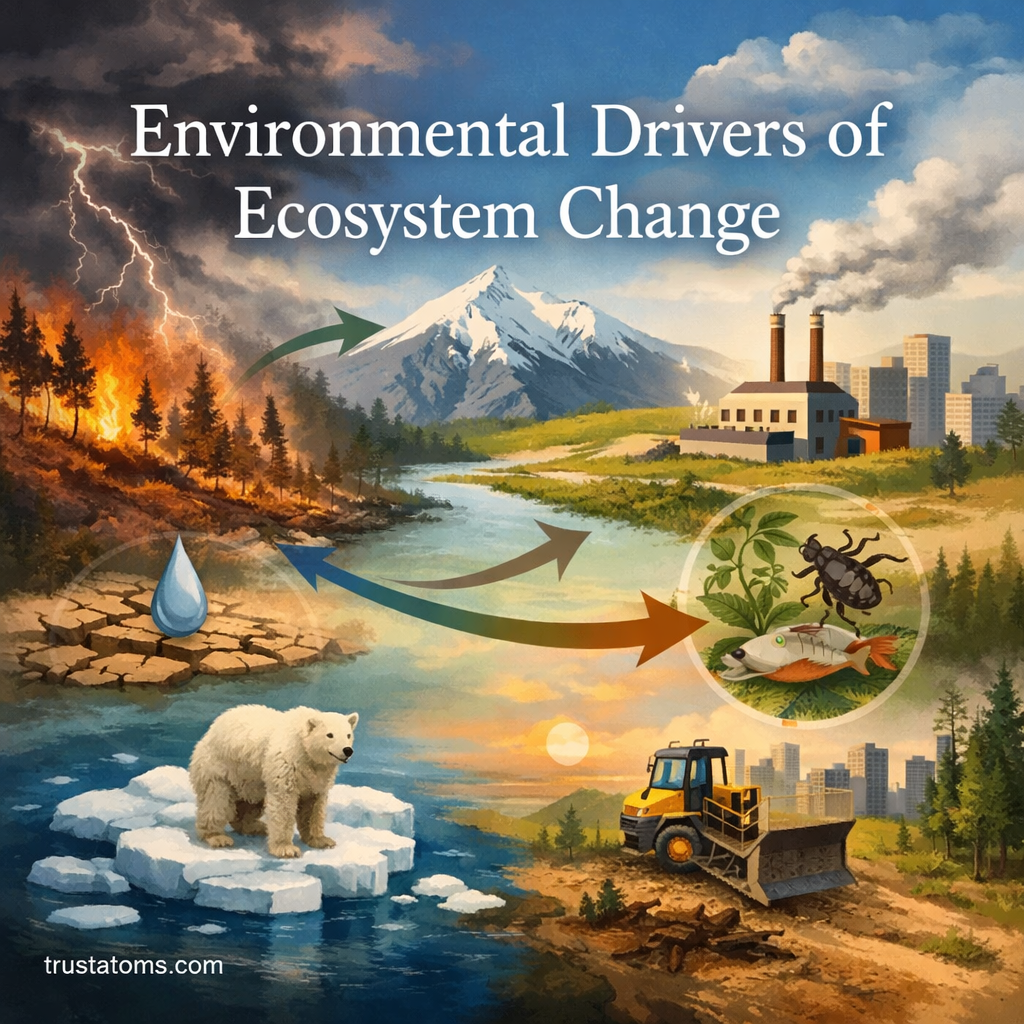
Ecosystems are dynamic systems that constantly evolve in response to environmental conditions. From forests and oceans to deserts and wetlands, ecosystems are shaped by a wide range of environmental drivers that influence species interactions, biodiversity, and ecological stability.
Environmental drivers of ecosystem change include both natural processes and human-driven influences. These forces affect factors such as temperature, water availability, nutrient cycles, and habitat structure. Understanding these drivers helps scientists predict ecological shifts, manage natural resources, and develop strategies for conservation.
This guide explores the main environmental drivers that influence ecosystem change and explains how they reshape biological communities over time.
What Are Environmental Drivers in Ecosystems?
Environmental drivers are external forces that influence how ecosystems function and evolve. These drivers affect species distribution, population dynamics, and the flow of energy and nutrients through ecological systems.
Environmental drivers can operate over different time scales:
- Short-term events such as storms or droughts
- Seasonal patterns like rainfall cycles
- Long-term changes such as climate shifts or habitat transformation
Because ecosystems are interconnected networks of organisms and physical conditions, even small environmental changes can trigger widespread ecological responses.
Major Environmental Drivers of Ecosystem Change
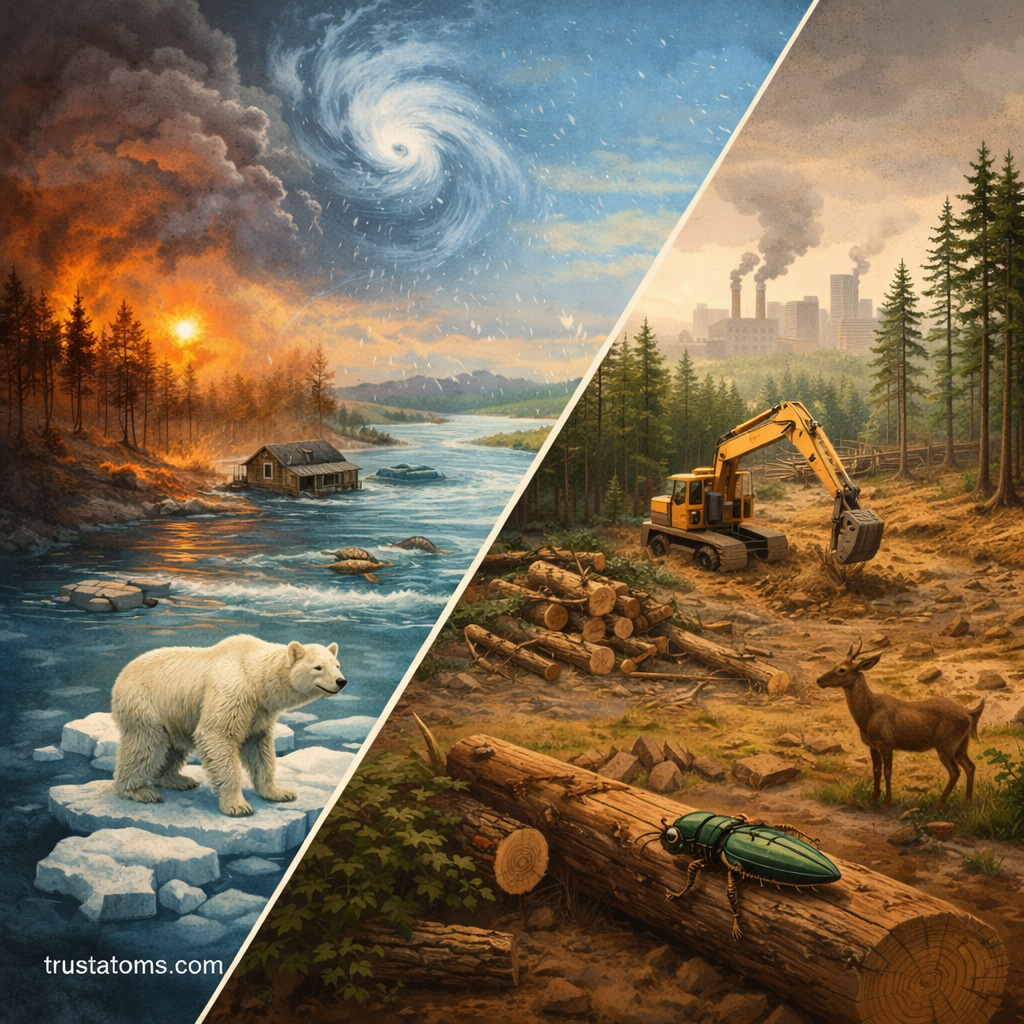
Several key environmental factors drive ecological change across the planet. These drivers often interact with one another, creating complex ecosystem responses.
Climate Change
Climate is one of the most powerful drivers of ecosystem change.
Temperature, precipitation patterns, and atmospheric conditions determine where species can survive and reproduce. When climate conditions shift, ecosystems often reorganize.
Examples of climate-driven ecosystem changes include:
- Coral reef bleaching due to rising ocean temperatures
- Forest migration toward cooler elevations or latitudes
- Changes in seasonal plant flowering times
- Altered migration patterns in animals
Climate change can also increase the frequency of extreme events such as heatwaves, hurricanes, and droughts, which accelerate ecological change.
Changes in Water Availability
Water availability strongly influences ecosystem productivity and biodiversity.
Water-driven changes occur through:
- Droughts
- Flooding events
- Altered river flows
- Groundwater depletion
- Changing rainfall patterns
Aquatic ecosystems are especially sensitive to water fluctuations. For example:
- Reduced water levels in wetlands can decrease habitat for birds and amphibians
- Increased flooding can reshape river channels and plant communities
- Changes in ocean currents can affect marine food webs
Water availability also controls plant growth, which influences the entire food chain.
Nutrient Availability and Soil Conditions
Nutrients such as nitrogen, phosphorus, and carbon are essential for plant growth and ecosystem productivity.
Changes in nutrient levels can significantly reshape ecosystems.
Common nutrient-related drivers include:
- Soil erosion
- Fertilizer runoff from agriculture
- Atmospheric nitrogen deposition
- Natural nutrient cycling processes
For example:
- Excess nutrients entering lakes can cause harmful algal blooms
- Poor soil quality can limit plant growth and reduce biodiversity
- Nutrient-rich soils may favor fast-growing plant species over others
These shifts can alter competitive relationships among species and change ecosystem composition.
Natural Disturbances
Natural disturbances play an important role in shaping ecosystems.
Disturbances are events that temporarily disrupt ecological systems but often contribute to long-term ecosystem renewal.
Common natural disturbances include:
- Wildfires
- Volcanic eruptions
- Hurricanes and storms
- Landslides
- Insect outbreaks
While disturbances may seem destructive, many ecosystems depend on them.
Examples include:
- Fire-dependent forests that rely on periodic burns to regenerate
- Floodplain ecosystems that require seasonal flooding to maintain fertility
- Grasslands that depend on grazing or fire to prevent tree encroachment
Disturbances can reset ecological succession and create new habitats.
Habitat Modification
Habitat structure is another major environmental driver of ecosystem change.
When habitats change, species that depend on them may decline or disappear.
Habitat modification can occur through:
- Natural landscape shifts
- Urban development
- Deforestation
- Agricultural expansion
- Infrastructure construction
Habitat fragmentation is especially impactful. When continuous habitats are broken into smaller pieces, species may struggle to move, reproduce, or find resources.
This often leads to reduced biodiversity and altered ecosystem functioning.
Introduction of Invasive Species
Invasive species can dramatically alter ecosystems by disrupting native species relationships.
An invasive species is an organism introduced into a new environment where it spreads rapidly and causes ecological harm.
Impacts of invasive species include:
- Outcompeting native species for resources
- Introducing new diseases
- Changing food web structures
- Altering habitat conditions
Examples include:
- Invasive plants that crowd out native vegetation
- Predatory species introduced into ecosystems without natural predators
- Marine invasive species transported through ship ballast water
These biological drivers can trigger cascading ecosystem changes.
Interactions Between Environmental Drivers
Environmental drivers rarely operate independently. Instead, they interact in complex ways.
For example:
- Climate change can intensify droughts and wildfires
- Nutrient runoff combined with warming waters can worsen algal blooms
- Habitat fragmentation can increase the impact of invasive species
These interactions often create feedback loops that amplify ecosystem change.
Scientists study these relationships to better understand ecosystem resilience and tipping points.
Ecosystem Resilience and Adaptation
Despite environmental pressures, ecosystems often possess a degree of resilience—the ability to recover after disturbance.
Resilient ecosystems typically have:
- High biodiversity
- Strong nutrient cycling
- Stable food webs
- Diverse habitat structures
When ecosystems maintain these characteristics, they are better able to adapt to environmental change.
However, if environmental drivers push ecosystems beyond critical thresholds, permanent transformations can occur.
For example:
- Forests may transition into grasslands after repeated fires
- Coral reefs may shift into algae-dominated systems
- Wetlands may convert into dry landscapes due to water loss
Understanding resilience helps guide conservation and restoration efforts.
Why Studying Ecosystem Drivers Matters
Understanding environmental drivers of ecosystem change is essential for managing natural systems in a rapidly changing world.
Scientists use ecological models and long-term monitoring to track environmental shifts and predict future ecosystem responses.
This knowledge helps support:
- Biodiversity conservation
- Sustainable resource management
- Climate adaptation strategies
- Restoration of degraded ecosystems
As environmental pressures increase globally, understanding these drivers becomes even more important for protecting the ecosystems that support life on Earth.
Final Thoughts
Ecosystems are shaped by a complex combination of environmental drivers, including climate change, water availability, nutrient cycles, disturbances, habitat modification, and invasive species.
These drivers interact in ways that influence biodiversity, species interactions, and ecosystem stability. By studying how ecosystems respond to environmental pressures, scientists can better predict ecological changes and develop strategies to preserve the natural world.
Understanding these forces not only deepens our knowledge of biology but also highlights the delicate balance that sustains Earth’s ecosystems.