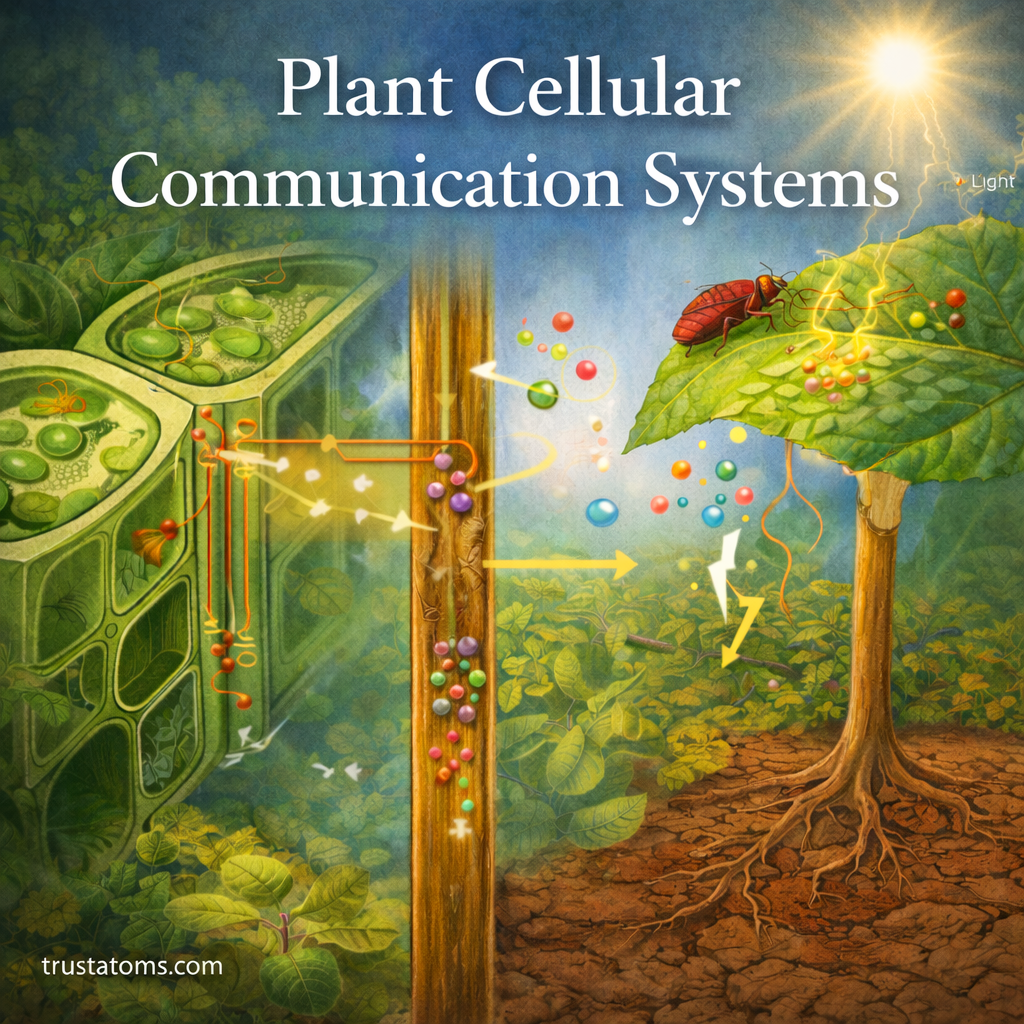
Plants may appear stationary and silent, but inside their tissues exists an active network of cellular communication systems. Plant cells constantly exchange information to coordinate growth, respond to environmental conditions, defend against threats, and regulate internal processes.
Unlike animals, plants lack a nervous system, yet they rely on complex signaling pathways that allow cells to detect stimuli and transmit signals throughout the organism. These communication systems involve chemical messengers, electrical signals, and specialized cellular connections that maintain coordination across roots, stems, leaves, and reproductive structures.
Understanding plant cellular communication systems helps scientists explain how plants adapt to changing environments and maintain healthy biological functions.
What Is Cellular Communication in Plants?
Cellular communication in plants refers to the processes that allow plant cells to send, receive, and interpret signals. These signals help coordinate biological activities across different tissues.
Plant cells communicate to regulate:
- Growth and development
- Responses to environmental changes
- Defense against pathogens and herbivores
- Nutrient transport and metabolism
- Tissue repair and regeneration
These communication pathways allow plants to function as integrated organisms even though they lack centralized control systems like animal brains.
Key Components of Plant Cellular Communication
Plant communication systems rely on several biological structures and signaling molecules that allow information to travel between cells.
Plasmodesmata
Plasmodesmata are microscopic channels that directly connect neighboring plant cells.
These channels pass through cell walls and allow molecules to move from one cell to another.
Through plasmodesmata, plant cells can exchange:
- Ions
- Hormones
- Proteins
- RNA molecules
- Small metabolites
Because of these connections, plant tissues function as coordinated networks rather than isolated cells.
Plasmodesmata are especially important during plant development, allowing cells to share regulatory signals that guide tissue formation.
Plant Hormones
Plant hormones are chemical messengers that regulate communication between cells and tissues.
Even in extremely small amounts, hormones can trigger significant biological responses.
Major plant hormones involved in cellular signaling include:
- Auxins – regulate cell elongation and directional growth
- Cytokinins – control cell division and tissue development
- Gibberellins – influence stem growth and seed germination
- Abscisic acid – regulates stress responses and water balance
- Ethylene – controls fruit ripening and plant aging
Hormones often travel through plant vascular tissues, enabling signals to spread throughout the organism.
Electrical Signaling
Plants can also transmit electrical signals between cells.
Electrical signals move through plant tissues in response to stimuli such as:
- Physical damage
- Changes in light conditions
- Temperature shifts
- Herbivore attacks
These signals can travel through specialized tissues and activate defense responses in distant parts of the plant.
For example, when a leaf is damaged by an insect, electrical signals can trigger protective chemical responses in nearby tissues.
Chemical Signaling Pathways
Chemical signaling allows plant cells to coordinate internal processes and respond to environmental changes.
These pathways typically involve three steps:
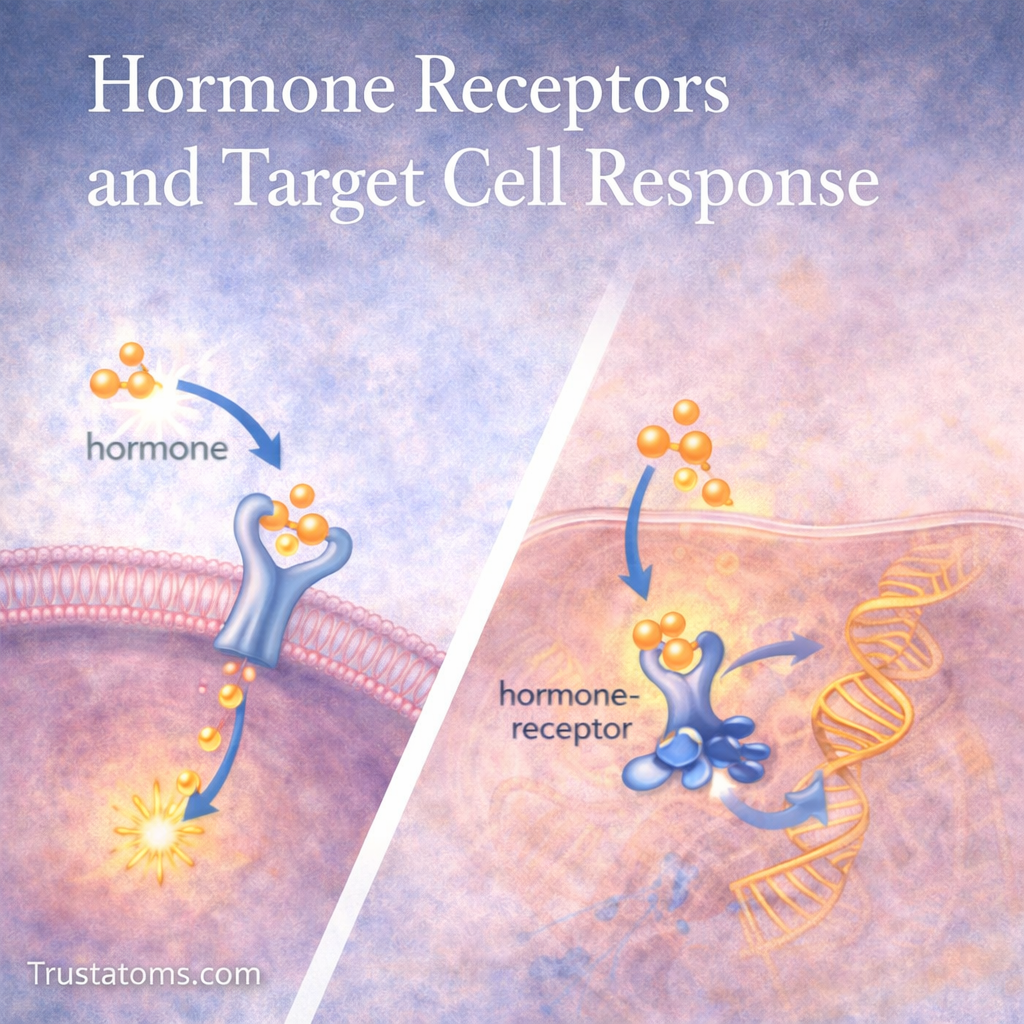
- Signal detection – receptors on the cell surface detect chemical signals.
- Signal transduction – internal molecules relay and amplify the signal.
- Cellular response – the cell adjusts gene expression or metabolic activity.
This process allows plant cells to interpret environmental information and activate appropriate responses.
For example, plants exposed to drought conditions may produce chemical signals that close stomata to reduce water loss.
Long-Distance Communication in Plants
Plant communication is not limited to nearby cells. Signals can also travel long distances through vascular tissues.
Two main transport systems support long-distance signaling.
Xylem Transport
The xylem primarily transports water and dissolved minerals from roots to leaves.
However, signaling molecules can also move through this system to coordinate responses across different parts of the plant.
For instance, drought signals generated in roots may travel through the xylem to inform leaves about water stress.
Phloem Transport
The phloem distributes sugars produced during photosynthesis to the rest of the plant.
It also carries signaling molecules such as:
- Hormones
- Proteins
- RNA molecules
- Defense signals
Through phloem transport, plants can coordinate developmental processes across distant tissues.
Plant Responses to Environmental Signals
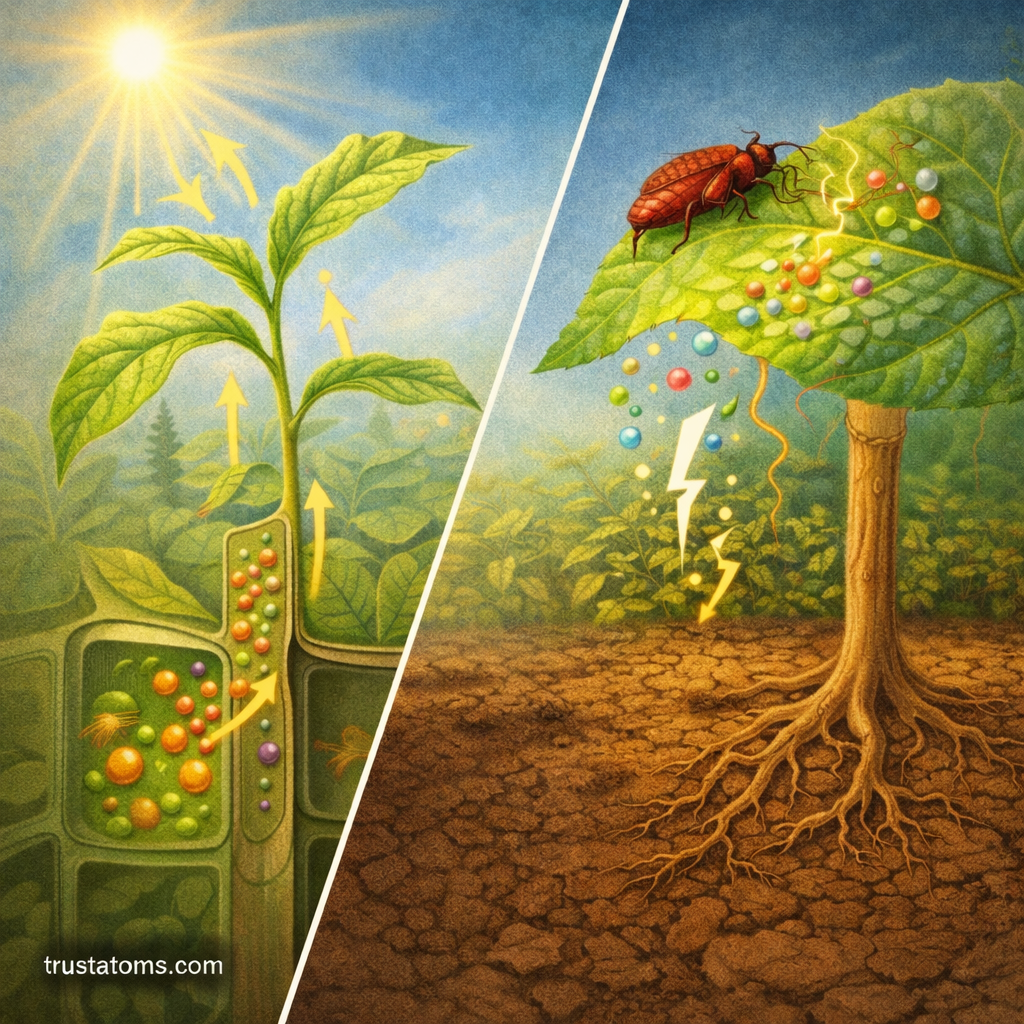
Plants rely on cellular communication to detect and respond to environmental conditions.
Examples of environmental responses include:
Light Detection
Plants detect light through specialized photoreceptor proteins.
These signals influence:
- Leaf orientation
- Stem growth direction
- Flowering timing
- Seed germination
This process, known as photomorphogenesis, allows plants to optimize energy capture.
Defense Against Herbivores
When insects feed on plant tissues, damaged cells release chemical signals that trigger defensive responses.
These responses may include:
- Production of toxic compounds
- Release of volatile chemicals that attract predators of herbivores
- Strengthening of cell walls in nearby tissues
Through cellular communication, plants can activate defenses even in areas not yet attacked.
Response to Drought Stress
Plants monitor water availability using chemical signaling pathways.
When drought conditions occur, signals can trigger several physiological responses:
- Closure of stomata to reduce water loss
- Changes in root growth patterns
- Activation of stress tolerance genes
- Adjustment of metabolic activity
These coordinated responses help plants survive challenging environmental conditions.
Communication Between Plants
Plants can also communicate beyond their own tissues through chemical signals released into the environment.
For example:
- Plants may release airborne volatile compounds when attacked by insects.
- Neighboring plants can detect these signals and activate defensive responses.
Some research also suggests that plant roots can exchange signals through soil networks involving fungi and microorganisms.
These underground connections may help plants share nutrients and warning signals across ecosystems.
Why Plant Cellular Communication Matters
Understanding plant communication systems provides valuable insights into plant biology and ecosystem dynamics.
This knowledge supports advances in:
- Agriculture and crop improvement
- Plant disease resistance research
- Climate adaptation strategies
- Sustainable ecosystem management
Scientists are increasingly studying plant signaling networks to develop crops that better tolerate environmental stress and resist pests.
Final Thoughts
Plant cellular communication systems allow plants to function as coordinated, responsive organisms despite lacking a nervous system. Through structures like plasmodesmata, chemical messengers such as hormones, and electrical signaling pathways, plant cells constantly exchange information to regulate growth, development, and environmental responses.
These communication networks enable plants to detect threats, adapt to environmental changes, and maintain internal balance across complex tissues. As research continues, scientists are uncovering new details about how plants communicate and how these systems shape ecosystems around the world.