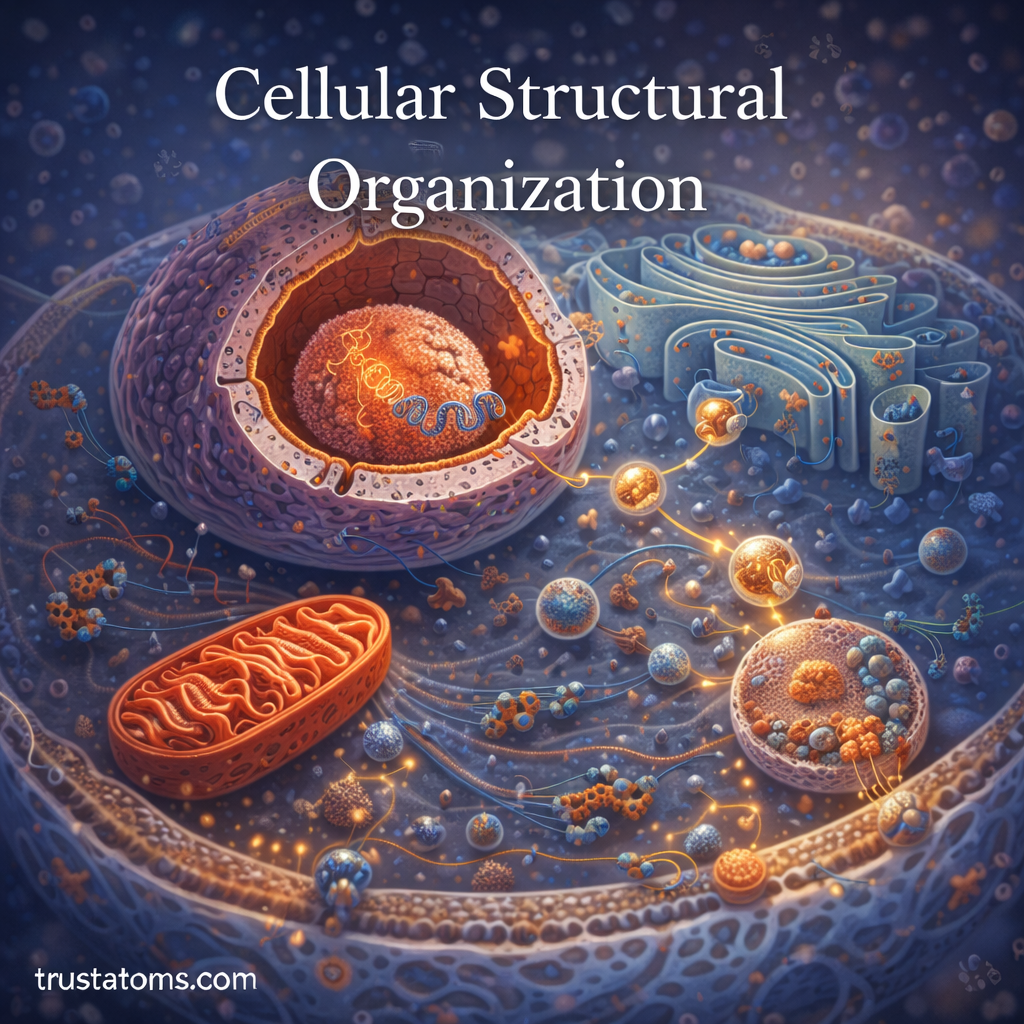
Cells are the fundamental units of life. Every living organism—from single-celled bacteria to complex multicellular organisms—depends on cells to carry out essential biological processes. Within each cell is a highly organized structure composed of specialized components that work together to maintain life.
Cellular structural organization refers to the arrangement and coordination of internal cellular components, including membranes, organelles, and the cytoskeleton. This organization ensures that biological processes such as metabolism, protein synthesis, energy production, and cell division occur efficiently.
Understanding cellular structure is a central topic in biology because it reveals how life operates at the microscopic level.
What Is Cellular Structural Organization?
Cellular structural organization describes how different parts of a cell are arranged and interact with each other.
Although cells vary widely in size, shape, and complexity, most share several structural features, including:
- A cell membrane that encloses the cell
- Cytoplasm containing cellular components
- Genetic material controlling cellular activity
- Specialized organelles performing specific functions
This organized internal structure allows cells to perform many tasks simultaneously while maintaining stability and efficiency.
Two Major Types of Cells
All cells fall into one of two primary categories based on their structural complexity.
Prokaryotic Cells
Prokaryotic cells are simpler and smaller than eukaryotic cells. They are found in organisms such as bacteria and archaea.
Key characteristics include:
- Lack of a membrane-bound nucleus
- Absence of membrane-bound organelles
- DNA located in a nucleoid region
- Small size and simple internal organization
Despite their simplicity, prokaryotic cells carry out many complex biological functions.
Eukaryotic Cells
Eukaryotic cells are larger and more structurally complex. They are found in animals, plants, fungi, and protists.
Features of eukaryotic cells include:
- A membrane-bound nucleus containing DNA
- Numerous membrane-bound organelles
- Complex internal compartmentalization
- A cytoskeleton supporting cellular shape and transport
This compartmentalized structure allows eukaryotic cells to perform specialized functions.
The Cell Membrane
The cell membrane, also known as the plasma membrane, forms the outer boundary of the cell.
It is composed primarily of a phospholipid bilayer with embedded proteins.
Functions of the cell membrane include:
- Regulating movement of substances into and out of the cell
- Protecting internal cellular components
- Facilitating communication with the external environment
- Maintaining cellular homeostasis
Selective permeability allows cells to control which molecules enter or leave the cell.
Cytoplasm and Cellular Environment
Inside the cell membrane lies the cytoplasm, a gel-like environment containing water, ions, proteins, and organelles.
The cytoplasm serves several important roles:
- Providing a medium for biochemical reactions
- Supporting cellular structures
- Allowing molecules and organelles to move within the cell
Many metabolic reactions occur within the cytoplasm, making it a highly active region of the cell.
The Nucleus: Control Center of the Cell
The nucleus is one of the most important organelles in eukaryotic cells.
It contains the cell’s genetic material in the form of DNA and controls cellular activities such as growth, metabolism, and reproduction.
Key components of the nucleus include:
- Nuclear envelope surrounding the nucleus
- Nuclear pores regulating molecular transport
- Chromatin containing DNA and proteins
- The nucleolus involved in ribosome production
The nucleus ensures that genetic information is properly stored and used to guide cellular processes.
Major Cellular Organelles
Eukaryotic cells contain several specialized organelles that perform distinct functions.
Endoplasmic Reticulum
The endoplasmic reticulum (ER) is an interconnected network of membranes involved in protein and lipid production.
There are two main types:
Rough Endoplasmic Reticulum
- Studded with ribosomes
- Responsible for synthesizing proteins destined for membranes or secretion
Smooth Endoplasmic Reticulum
- Lacks ribosomes
- Involved in lipid synthesis and detoxification processes
The ER plays a central role in cellular manufacturing and transport.
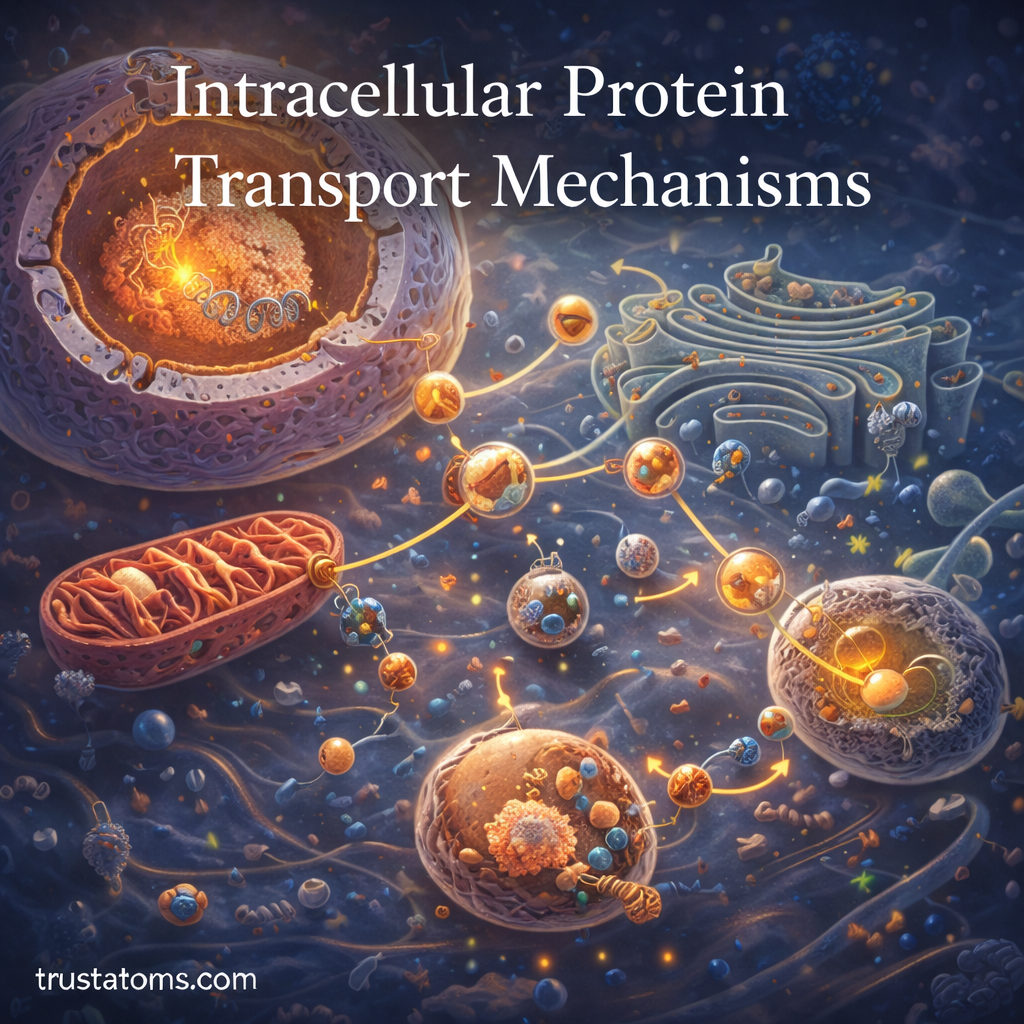
Golgi Apparatus
The Golgi apparatus acts as the cell’s processing and packaging center.
Its main functions include:
- Modifying newly synthesized proteins and lipids
- Sorting molecules for delivery to specific destinations
- Packaging cellular products into transport vesicles
The Golgi apparatus ensures that cellular products reach the correct locations.
Mitochondria
Mitochondria are known as the powerhouses of the cell because they generate energy.
They perform cellular respiration, a process that converts nutrients into usable energy in the form of ATP.
Mitochondria have several unique features:
- Double membrane structure
- Internal folds called cristae
- Their own small DNA molecules
These organelles are essential for powering cellular activities.
Lysosomes
Lysosomes contain enzymes that break down waste materials and damaged cellular components.
Their functions include:
- Recycling cellular materials
- Destroying pathogens
- Removing defective organelles
This degradation system helps maintain cellular health.
The Cytoskeleton
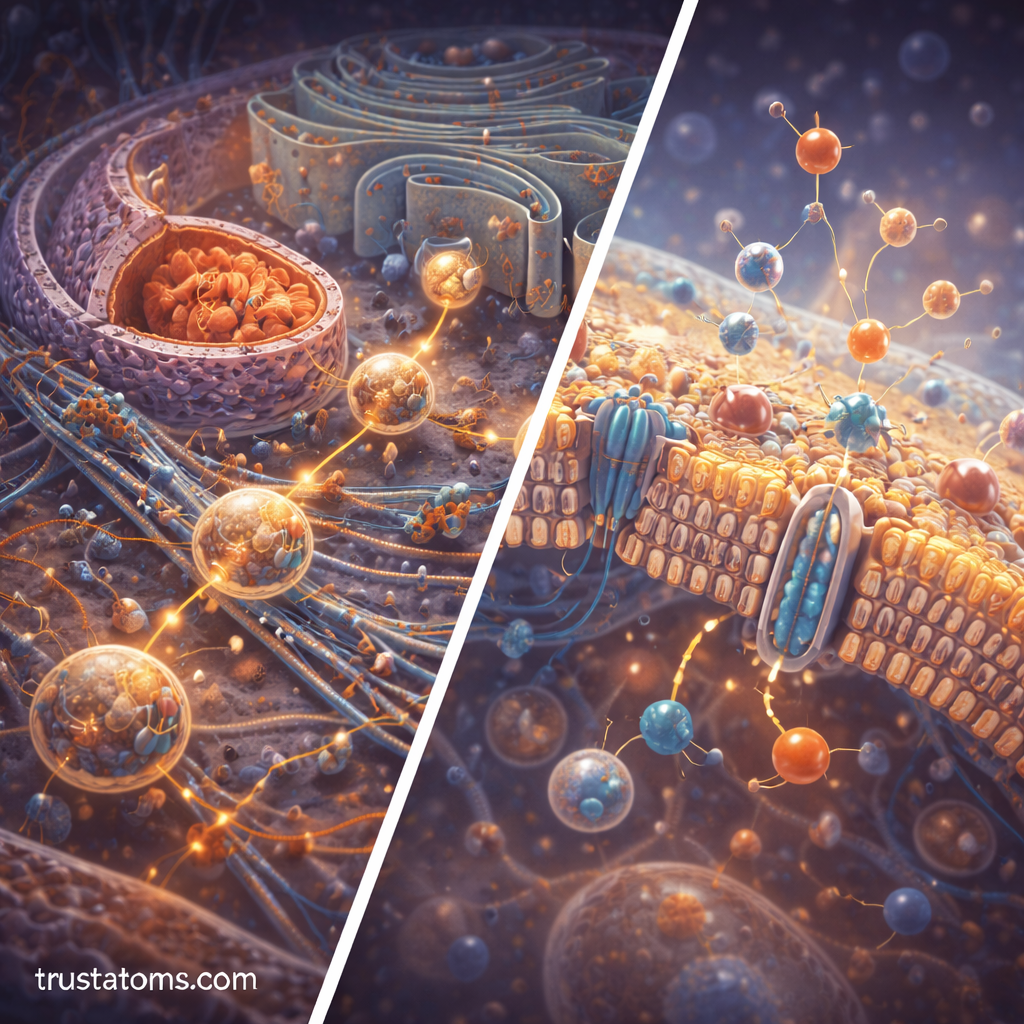
The cytoskeleton is a network of protein filaments that provides structural support and organization within the cell.
Major components include:
- Microtubules
- Microfilaments
- Intermediate filaments
The cytoskeleton helps:
- Maintain cell shape
- Enable cell movement
- Transport organelles within the cell
- Assist in cell division
This internal framework plays a crucial role in maintaining cellular structure.
Cellular Compartmentalization
One of the defining features of eukaryotic cells is compartmentalization.
Compartmentalization refers to the separation of cellular processes into distinct membrane-bound regions.
Benefits of compartmentalization include:
- Increased efficiency of biochemical reactions
- Isolation of potentially harmful processes
- Specialized environments for specific functions
This organization allows cells to carry out multiple activities simultaneously.
Communication and Coordination Within Cells
Cellular structures must coordinate their activities to maintain overall cell function.
Communication occurs through:
- Chemical signaling molecules
- Transport vesicles
- Molecular interactions between organelles
These communication systems ensure that cellular processes remain synchronized.
Advances in Understanding Cellular Structure
Technological advances have greatly improved our ability to study cellular organization.
Important tools include:
- Electron microscopy for high-resolution cellular imaging
- Fluorescent labeling techniques
- Advanced molecular biology methods
- Live-cell imaging technologies
These techniques allow scientists to observe cellular structures and interactions in remarkable detail.
Final Thoughts
Cellular structural organization is a key principle of biology that explains how cells maintain order and efficiency within their microscopic environments. Through membranes, organelles, and cytoskeletal structures, cells coordinate countless biochemical processes necessary for life.
By studying how cellular components are organized and interact, scientists gain insight into fundamental biological mechanisms that govern growth, development, and disease.
As research continues to advance, our understanding of cellular organization will deepen, revealing even more about the intricate structures that sustain life at the cellular level.