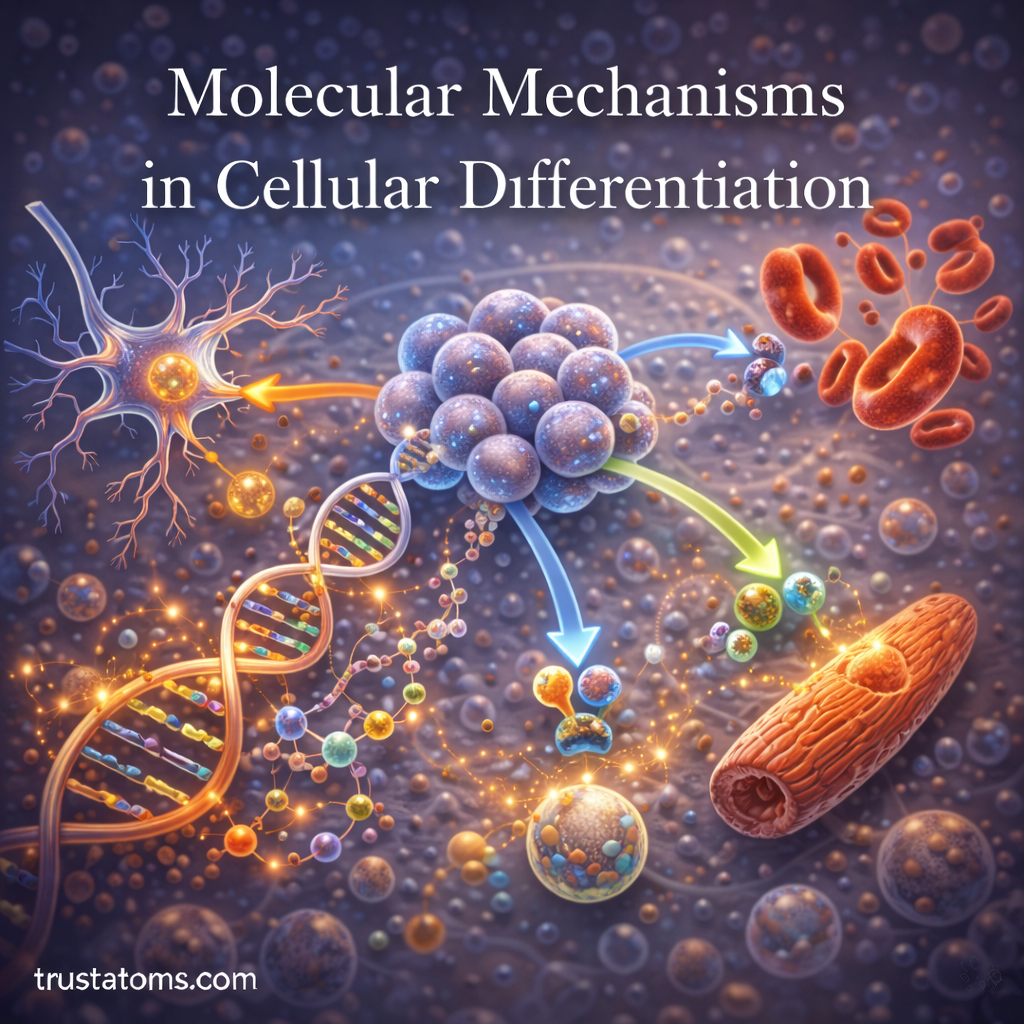
Cellular differentiation is the biological process through which unspecialized cells develop into specialized cell types with unique structures and functions. This process is fundamental to the development of multicellular organisms, allowing a single fertilized egg to give rise to the many different tissues and organs found in the body.
Although most cells contain the same genetic information, different cell types express different sets of genes. Molecular mechanisms control which genes are activated or silenced, enabling cells to adopt specialized roles such as muscle cells, neurons, or blood cells.
Understanding the molecular mechanisms behind cellular differentiation is essential for developmental biology, regenerative medicine, and disease research.
What Is Cellular Differentiation?
Cellular differentiation refers to the process by which cells become specialized in structure and function during development.
Early in development, embryonic stem cells have the ability to become many different types of cells. Through differentiation, these cells gradually commit to specific developmental pathways.
Differentiation allows organisms to develop specialized tissues such as:
- Nervous tissue
- Muscle tissue
- Blood cells
- Skin and epithelial cells
- Immune system cells
The process is carefully controlled by molecular signals that regulate gene expression and cellular behavior.
Gene Regulation in Differentiation
A key driver of cellular differentiation is selective gene expression.
Although nearly every cell contains the same DNA, only certain genes are active in each cell type. Molecular mechanisms determine which genes are turned on or off.
Gene regulation occurs through several mechanisms, including:
- Activation of transcription factors
- Changes in chromatin structure
- Regulatory DNA sequences controlling gene activity
- RNA-based regulatory systems
These processes allow cells to produce the proteins required for their specialized functions.
Role of Transcription Factors
Transcription factors are proteins that regulate gene expression by binding to specific DNA sequences.
They control whether a gene is activated or suppressed during differentiation.
Key functions of transcription factors include:
- Initiating or inhibiting transcription of specific genes
- Coordinating expression of groups of genes
- Responding to developmental signals
Certain transcription factors act as master regulators, triggering entire developmental programs that define cell identity.
Epigenetic Regulation
Epigenetic mechanisms play an important role in maintaining stable patterns of gene expression during differentiation.
Epigenetic changes alter gene activity without changing the underlying DNA sequence.
Examples of epigenetic regulation include:
- DNA methylation
- Histone modification
- Chromatin remodeling
These molecular changes influence how tightly DNA is packaged and whether genes are accessible for transcription.
Epigenetic modifications allow cells to maintain their specialized identity over time.
Signaling Pathways in Cell Fate Decisions
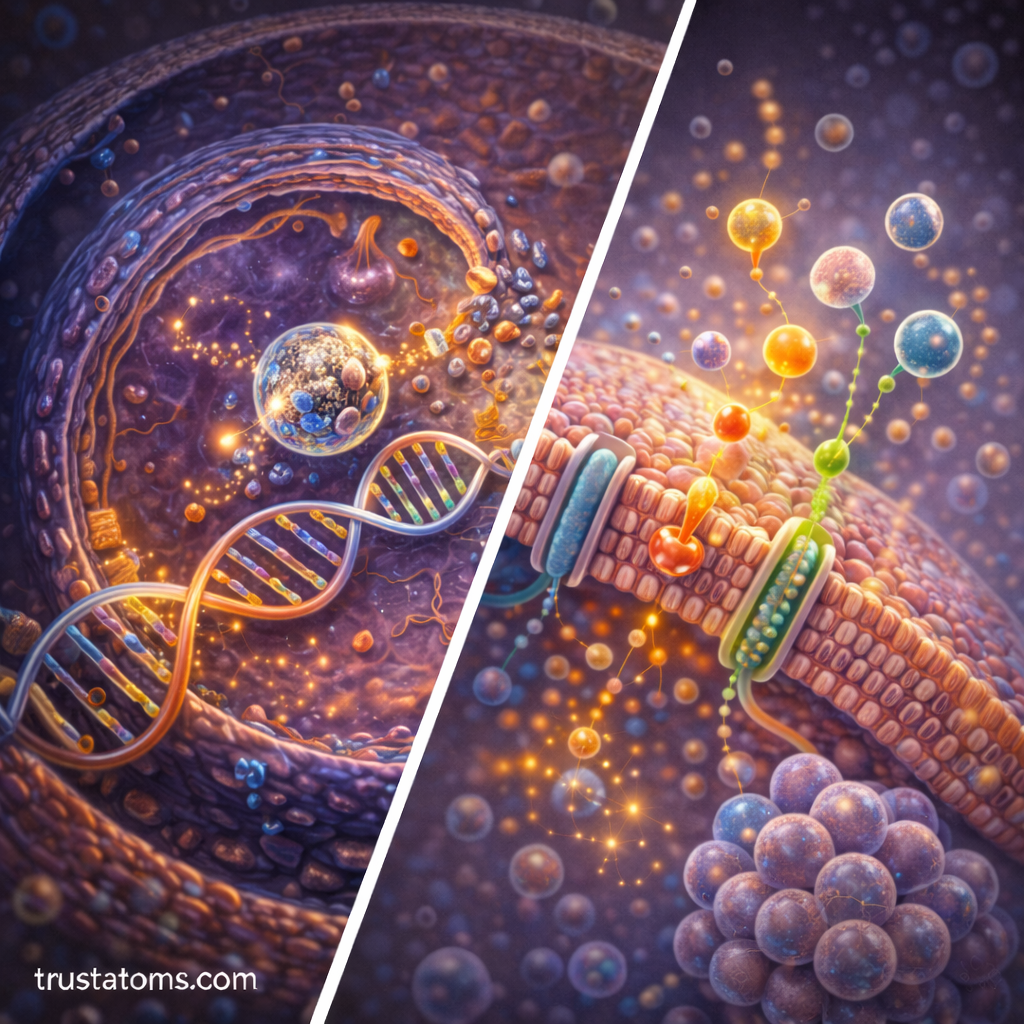
Cells often rely on external signals to determine their developmental pathways.
Signaling molecules released by nearby cells or tissues can activate intracellular pathways that influence differentiation.
Important signaling pathways involved in development include:
- Growth factor signaling
- Morphogen gradients
- Cell-to-cell communication through surface receptors
- Hormonal signals
These signals help coordinate differentiation across developing tissues and organs.
Stem Cells and Differentiation
Stem cells are central to the study of cellular differentiation because they have the ability to develop into multiple cell types.
Different categories of stem cells include:
Embryonic Stem Cells
Embryonic stem cells are pluripotent, meaning they can differentiate into nearly all cell types in the body.
They play a key role during early development.
Adult Stem Cells
Adult stem cells are found in specific tissues and help maintain and repair those tissues throughout life.
Examples include:
- Hematopoietic stem cells producing blood cells
- Skin stem cells renewing epithelial tissue
- Neural stem cells contributing to brain development
These cells retain limited differentiation potential.
Molecular Gradients and Developmental Patterning
During early development, cells receive positional information from chemical gradients known as morphogens.
Morphogens are signaling molecules that form concentration gradients across developing tissues.
Cells respond differently depending on the level of morphogen they receive.
This mechanism helps establish:
- Body axis formation
- Tissue patterning
- Organ development
Morphogen gradients allow cells to interpret their position within developing structures.
Cellular Memory and Stable Differentiation
Once cells become specialized, they must maintain their identity through many rounds of cell division.
Cellular memory mechanisms ensure that differentiated cells preserve their gene expression patterns.
This stability is maintained through:
- Epigenetic markers
- Stable transcription factor networks
- Chromatin organization
These systems ensure that a neuron remains a neuron, or a muscle cell remains a muscle cell, even as cells divide.
Molecular Errors and Developmental Disorders
Disruptions in the molecular mechanisms of differentiation can lead to developmental abnormalities and disease.
Examples include:
- Genetic mutations affecting transcription factors
- Epigenetic errors disrupting gene regulation
- Abnormal signaling pathways during development
Such disruptions can result in congenital disorders or contribute to diseases such as cancer, where cells lose their normal differentiation patterns.
Advances in Research on Cellular Differentiation
Modern biological research has significantly expanded our understanding of differentiation mechanisms.
Important technological advances include:
- Single-cell sequencing techniques
- Genome editing tools such as CRISPR
- Live-cell imaging of developing tissues
- Computational models of gene regulatory networks
These tools allow scientists to observe how individual cells change during development and identify the molecular pathways controlling differentiation.
Applications in Regenerative Medicine
Research into cellular differentiation has important applications in medicine.
Scientists are exploring ways to control cell differentiation to repair damaged tissues or treat disease.
Potential applications include:
- Stem cell therapies for degenerative diseases
- Tissue engineering and organ regeneration
- Reprogramming adult cells into pluripotent stem cells
- Personalized regenerative treatments
Understanding molecular differentiation mechanisms is critical for advancing these technologies.
Final Thoughts
Cellular differentiation is a complex process driven by coordinated molecular mechanisms that regulate gene expression, cellular signaling, and epigenetic modifications. These mechanisms allow identical genetic information to produce diverse specialized cell types.
Through transcription factors, signaling pathways, and epigenetic regulation, cells acquire and maintain their unique identities during development and throughout life.
As research continues to uncover the molecular foundations of differentiation, scientists are gaining powerful insights into development, disease, and the future of regenerative medicine.