Cells constantly face choices. They must determine when to grow, divide, repair damage, move, or initiate programmed cell death. These biological decisions are not conscious, but they arise from complex molecular signaling systems known as cellular decision-making pathways.
Inside every cell, networks of proteins, RNA molecules, signaling compounds, and receptors communicate with one another. Together, they process environmental information and convert it into specific cellular responses.
Understanding these pathways helps explain how cells adapt to changing conditions, maintain balance in tissues, and coordinate the behavior of entire organisms.
What Are Cellular Decision-Making Pathways?
Cellular decision-making pathways are biochemical signaling networks that allow cells to interpret information and choose appropriate responses.
Cells constantly receive signals from:
- Nutrient levels
- Hormones and growth factors
- Mechanical forces
- Stress conditions
- Signals from neighboring cells
These signals trigger molecular pathways that determine whether the cell should:
- Activate certain genes
- Produce specific proteins
- Change metabolism
- Divide or remain inactive
- Initiate repair or self-destruction
Rather than operating through a single switch, these pathways function as multi-step signaling cascades.
Why Cells Need Decision Systems
Living cells exist in constantly changing environments. Without reliable decision-making systems, cells could not properly regulate growth, maintain energy balance, or respond to damage.
Cellular decision pathways help regulate:
- Cell growth and division
- Immune responses
- Development and differentiation
- Metabolism and energy use
- Stress adaptation
For example, when DNA damage occurs, signaling pathways can pause the cell cycle so repair mechanisms can correct the problem before the cell divides.
How Cellular Signals Are Detected
Decision-making begins when cells detect signals through specialized proteins called receptors.
Cell Surface Receptors
Many signals originate outside the cell. These signals bind to receptors embedded in the cell membrane.
Common signaling molecules include:
- Hormones
- Growth factors
- Neurotransmitters
- Cytokines
When a signaling molecule binds to a receptor, it triggers structural changes in the receptor protein. These changes activate downstream signaling pathways inside the cell.
Intracellular Receptors
Some signals are able to pass through the cell membrane and bind to receptors located inside the cell.
These receptors often interact directly with DNA to regulate gene expression.
Examples include receptors for:
- Steroid hormones
- Thyroid hormones
- Vitamin D
Intracellular receptors often control long-term changes in cellular behavior.
Signal Transduction Cascades
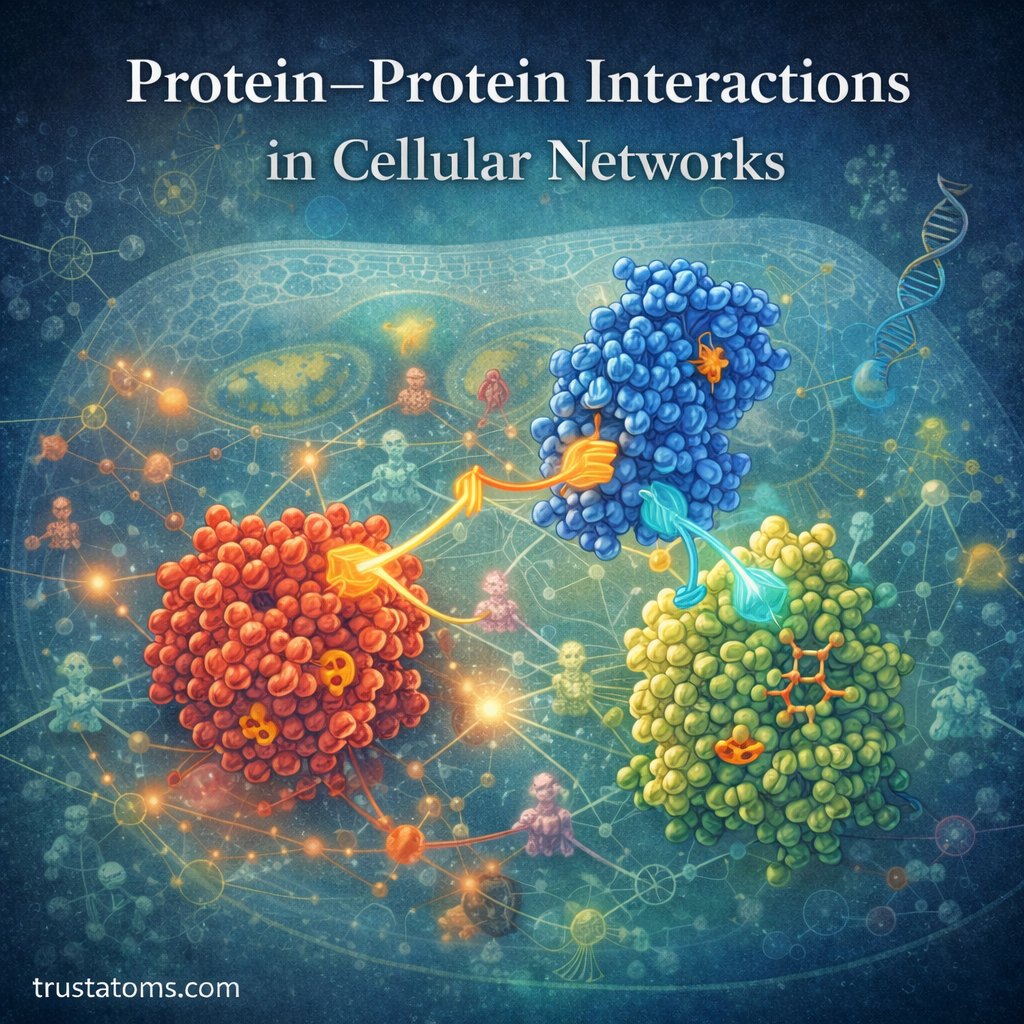
Once a receptor detects a signal, the information must travel through the cell. This process is called signal transduction.
Signal transduction typically occurs through a chain reaction of protein interactions and chemical modifications.
A simplified signaling cascade may include:
- Ligand binding to a receptor
- Activation of intracellular proteins
- Amplification of the signal
- Activation of transcription factors
- Changes in gene expression
Because signals are amplified along the pathway, even small external signals can produce strong cellular responses.
Major Cellular Decision Pathways
Several major signaling pathways control critical cellular decisions.
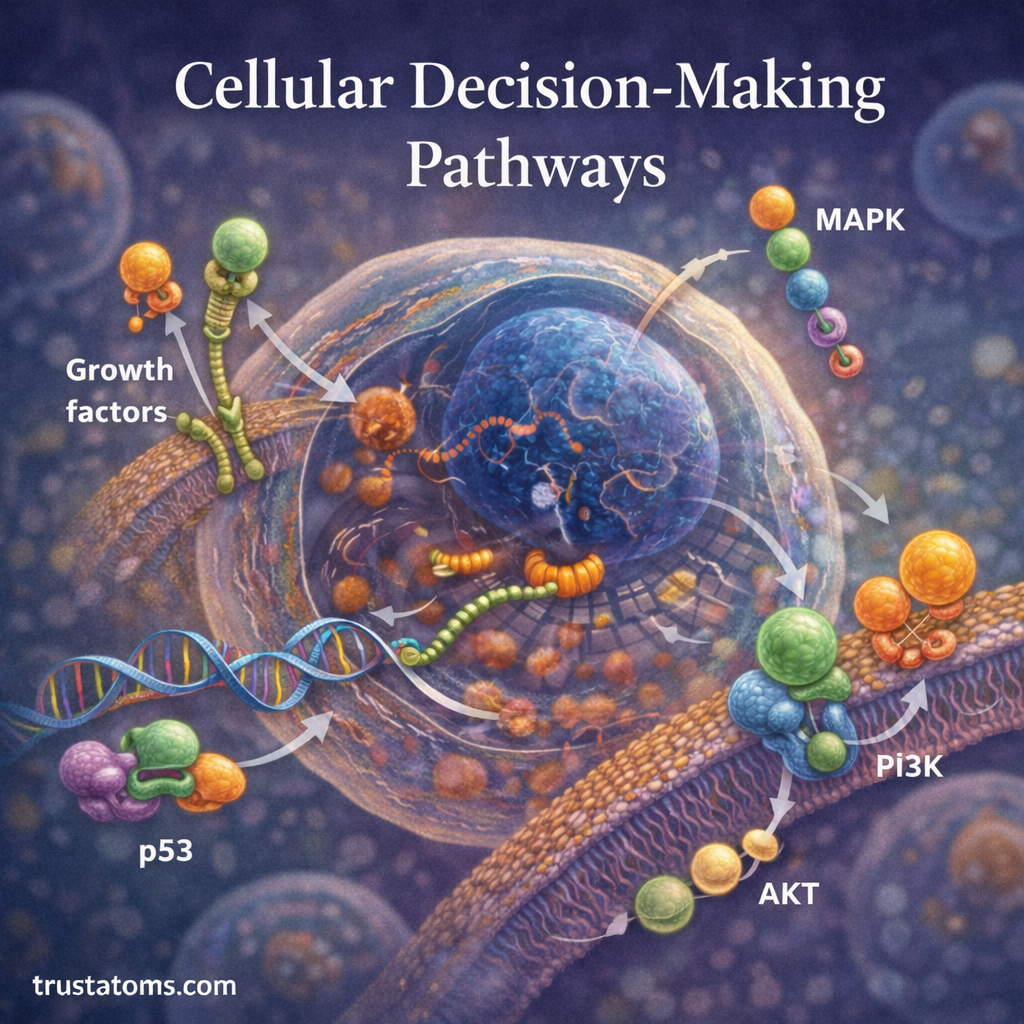
The MAPK Pathway
The Mitogen-Activated Protein Kinase (MAPK) pathway regulates cell growth, differentiation, and stress responses.
It works through a series of protein kinases that activate one another in sequence.
Typical MAPK signaling steps include:
- Activation of a receptor by a growth factor
- Activation of intracellular signaling proteins
- Sequential activation of kinase enzymes
- Activation of transcription factors in the nucleus
This pathway plays a major role in controlling when cells divide.
The PI3K–AKT Pathway
The PI3K–AKT pathway is important for cell survival and metabolism.
When activated, it promotes:
- Cell growth
- Nutrient uptake
- Protein synthesis
- Resistance to programmed cell death
Because of its powerful effects on growth, abnormal activation of this pathway is often associated with cancer.
The p53 Pathway
The p53 signaling pathway helps protect cells from genetic damage.
When DNA damage is detected, the p53 protein can trigger several responses:
- Pause the cell cycle
- Activate DNA repair enzymes
- Initiate programmed cell death if damage is severe
Because of this protective role, p53 is sometimes called the “guardian of the genome.”
Cellular Decision-Making and the Cell Cycle
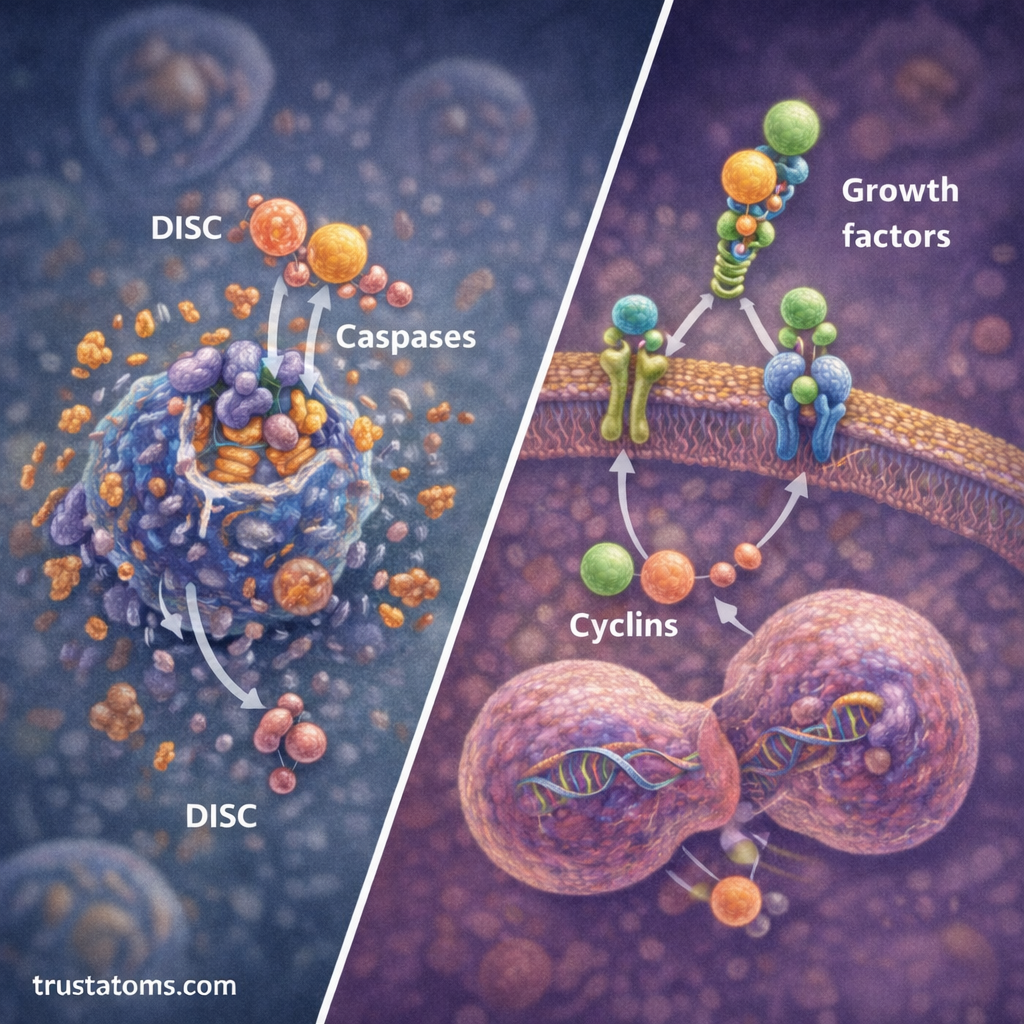
One of the most important cellular decisions is whether to divide.
Cells pass through several checkpoints during the cell cycle where signals determine if division should continue.
Key decision points include:
G1 Checkpoint
At the G1 stage, cells evaluate:
- DNA integrity
- Nutrient availability
- External growth signals
If conditions are unfavorable, the cell may enter a resting state called G0.
DNA Damage Checkpoints
If DNA damage occurs during replication, signaling pathways activate repair systems before the cell proceeds.
These checkpoints prevent mutations from spreading to daughter cells.
Mitotic Checkpoint
During mitosis, cells verify that chromosomes are correctly attached to the spindle apparatus before separating.
Failure of this checkpoint can lead to abnormal chromosome numbers.
Integration of Multiple Signals
Cells rarely respond to a single signal. Instead, they integrate information from many sources simultaneously.
A cell may receive signals related to:
- Energy levels
- Stress conditions
- Hormonal signals
- Neighboring cell activity
Decision-making pathways combine these inputs to produce a coordinated outcome.
This process resembles biological information processing, where molecular networks evaluate competing signals before selecting a response.
Feedback Loops in Cellular Decisions
Many signaling pathways contain feedback mechanisms that help regulate cellular responses.
Positive Feedback
Positive feedback amplifies signals and reinforces a decision.
For example:
- Activation of certain kinases can trigger further kinase activation
- This creates rapid and decisive cellular responses
Negative Feedback
Negative feedback prevents excessive signaling.
Examples include:
- Proteins that inhibit signaling after activation
- Enzymes that degrade signaling molecules
Negative feedback helps maintain cellular stability and prevents overreaction to signals.
Cellular Decision-Making in Development
During embryonic development, cells must choose specific identities and functions.
Decision pathways guide processes such as:
- Stem cell differentiation
- Tissue pattern formation
- Organ development
Cells interpret chemical signals and positional cues to determine which genes should be activated.
This allows genetically identical cells to develop into many different specialized cell types.
Decision Pathways and Disease
When cellular decision pathways malfunction, serious diseases can occur.
Examples include:
- Cancer caused by uncontrolled cell growth signaling
- Autoimmune disorders caused by abnormal immune signaling
- Neurodegenerative diseases linked to defective cellular stress responses
- Metabolic disorders caused by impaired signaling pathways
Because of their importance, many modern medicines target signaling proteins involved in cellular decision-making.
Modern Research and Systems Biology
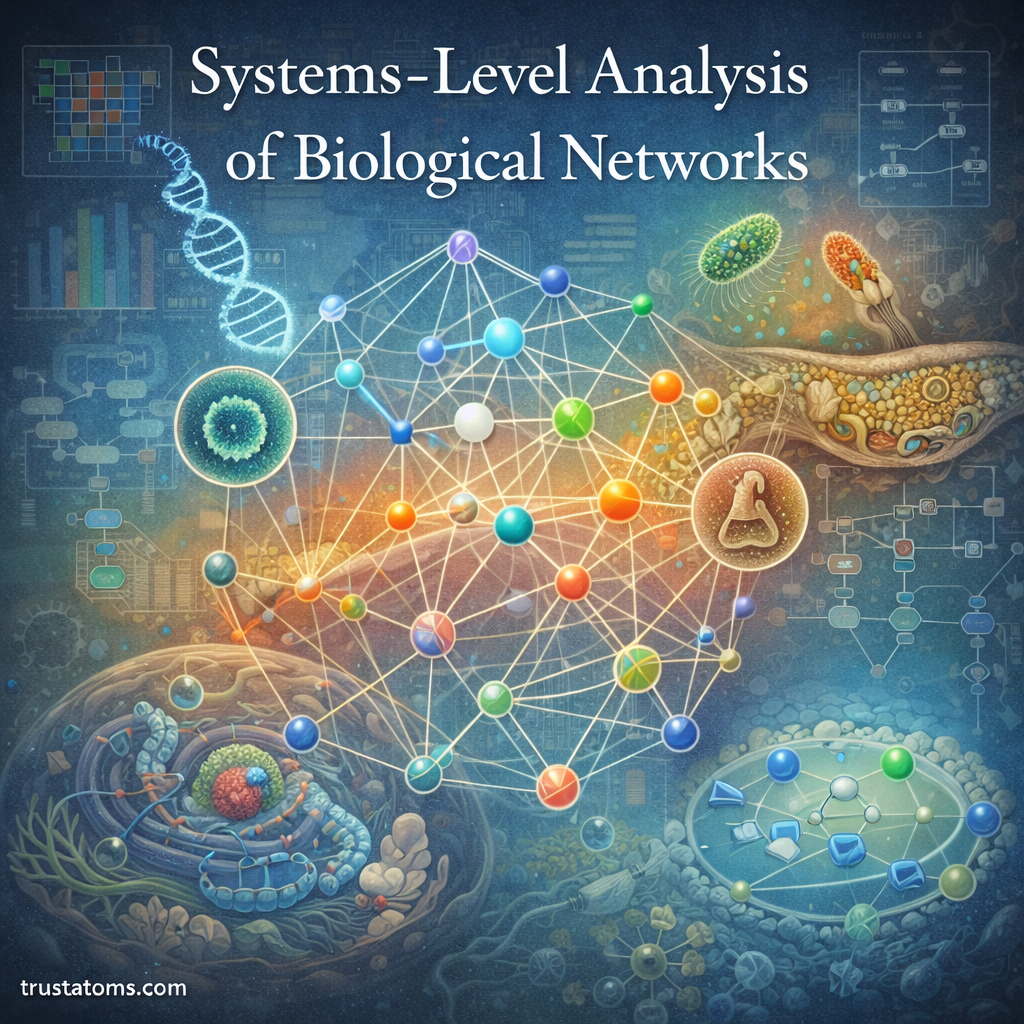
Scientists now study cellular decisions using systems biology, which analyzes entire networks of molecular interactions.
Modern techniques include:
- Genomic sequencing
- Proteomics
- Live-cell imaging
- Computational modeling
- Network analysis
These approaches help researchers understand how thousands of signaling interactions coordinate cellular decisions.
Why Cellular Decision Pathways Matter
Cellular decision-making pathways are essential for maintaining life. They allow cells to interpret complex environmental signals and respond in ways that support survival and proper function.
These pathways enable cells to:
- Maintain internal balance
- Repair damage
- Adapt to environmental changes
- Coordinate with other cells
- Support the development of complex organisms
Understanding these molecular decision systems continues to transform fields such as medicine, biotechnology, and molecular biology.
Conclusion
Cellular decision-making pathways form the foundation of how cells respond to their environment. Through intricate signaling networks involving receptors, enzymes, transcription factors, and regulatory molecules, cells evaluate incoming signals and determine appropriate actions.
From controlling cell growth to guiding development and responding to stress, these pathways ensure that cellular behavior remains coordinated and adaptable. As research progresses, scientists continue to uncover new layers of complexity within these molecular decision systems, revealing how life operates at the most fundamental level.