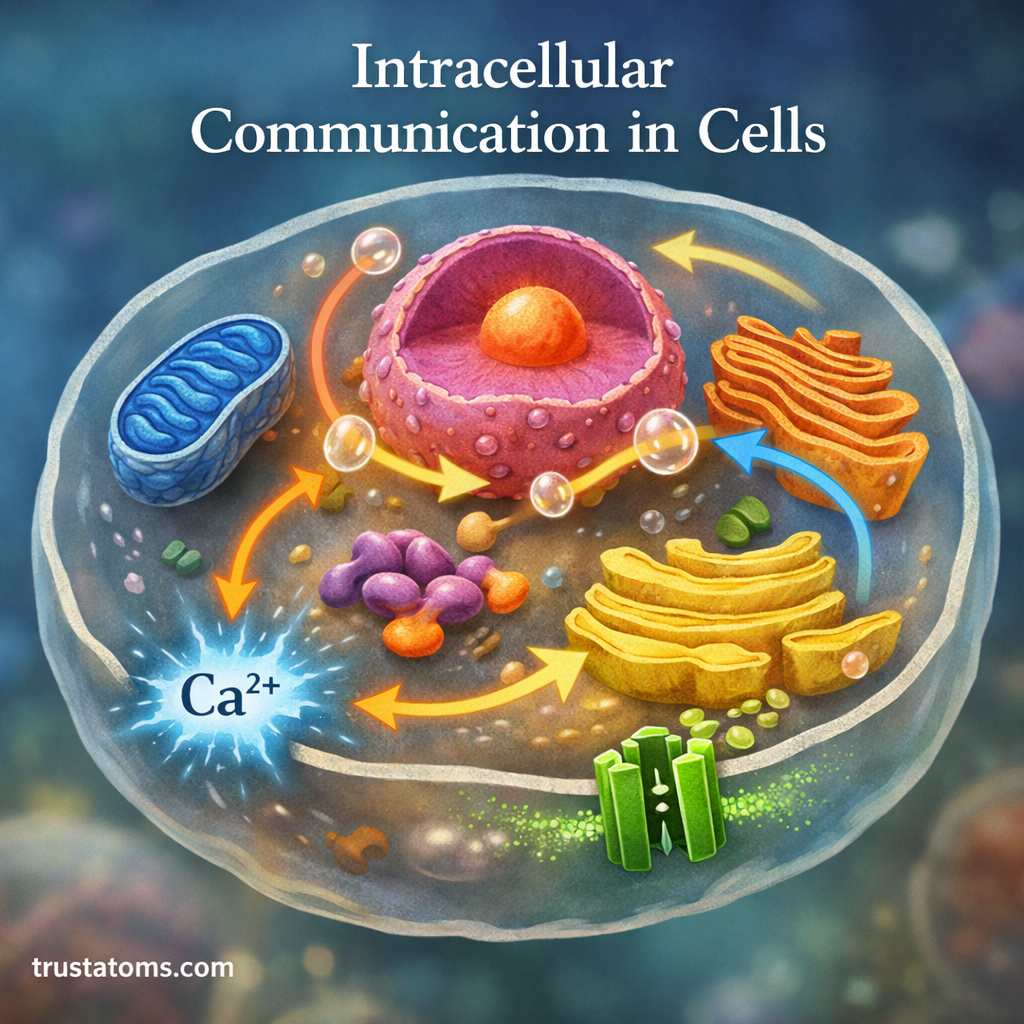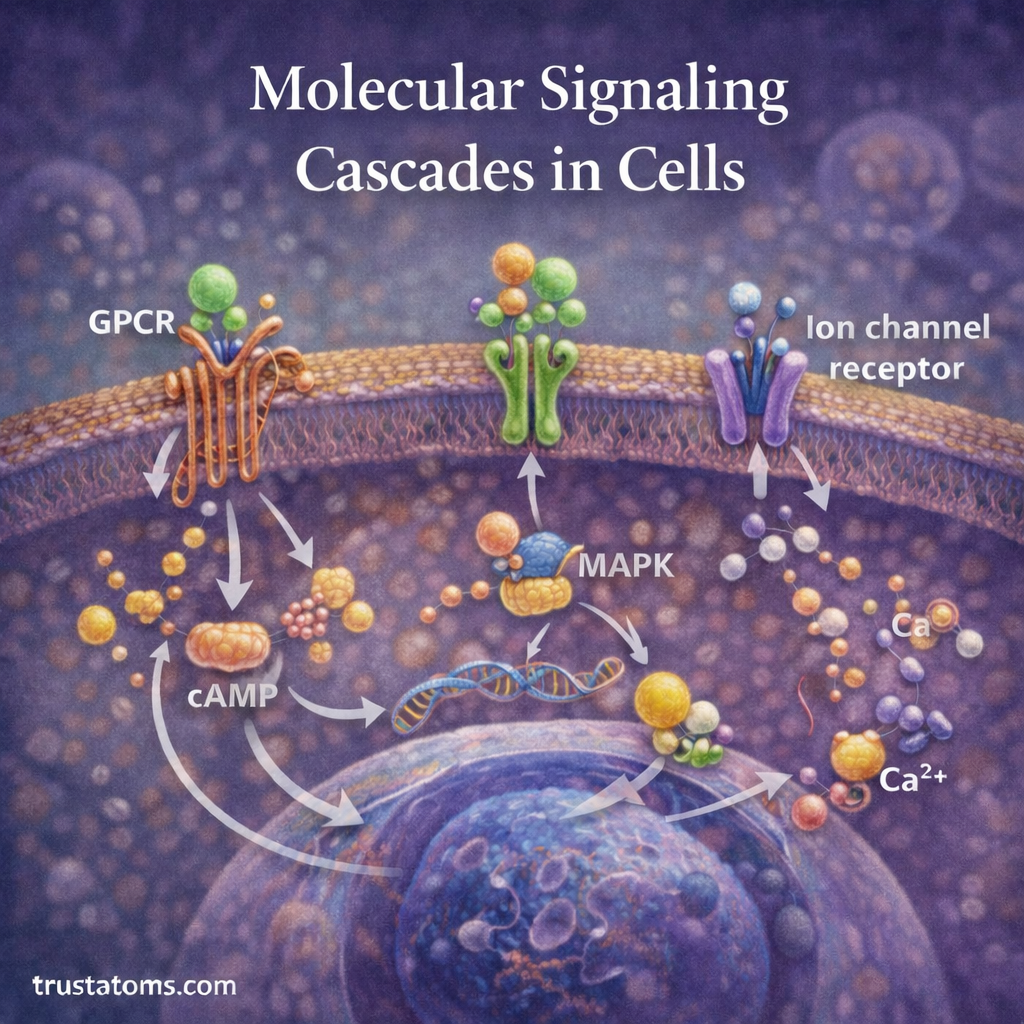
Cells must constantly respond to signals from their environment. These signals might indicate changes in nutrient levels, stress conditions, hormonal activity, or communication from neighboring cells. To process this information, cells rely on molecular signaling cascades—chains of biochemical reactions that transmit signals from the cell surface to internal targets.
Molecular signaling cascades allow cells to detect signals, amplify them, and produce coordinated biological responses. Without these pathways, cells would not be able to regulate growth, maintain internal balance, or adapt to changing conditions.
Understanding signaling cascades is a central part of modern cell biology because these systems control many critical processes including development, immune responses, and disease progression.
What Are Molecular Signaling Cascades?
A molecular signaling cascade is a series of molecular events triggered by an external or internal signal. These cascades typically involve proteins that activate one another in sequence.
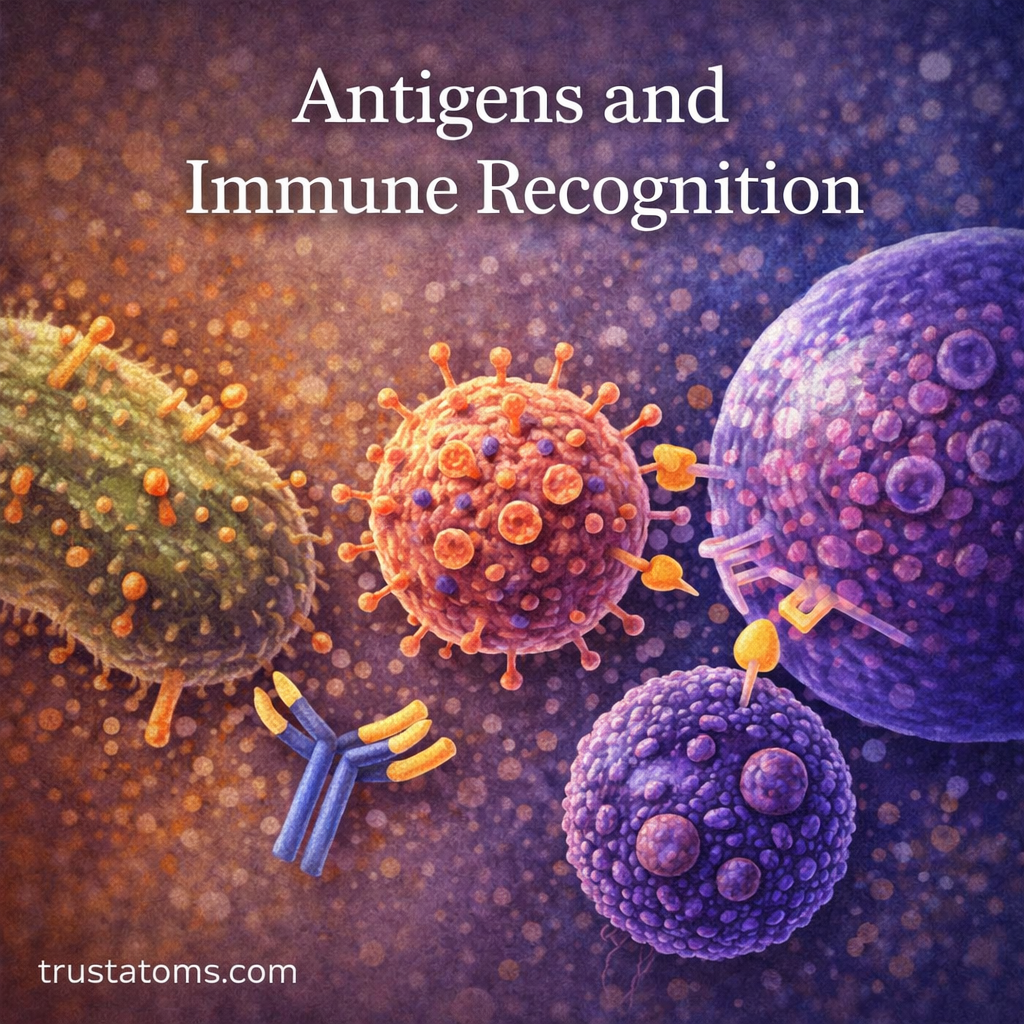
The process usually begins when a signaling molecule—often called a ligand—binds to a receptor on the cell surface or inside the cell.
This interaction triggers a chain reaction that ultimately affects cellular behavior.
A typical cascade includes:
- Signal detection by a receptor
- Activation of intracellular signaling proteins
- Amplification of the signal
- Activation of target proteins or genes
- A specific cellular response
Because each step can activate multiple downstream molecules, signaling cascades can greatly amplify even very small signals.
Why Signaling Cascades Are Important
Cells depend on signaling cascades to coordinate their activities with both internal conditions and external signals.
These pathways help cells regulate:
- Cell growth and division
- Immune responses
- Metabolism
- Gene expression
- Cellular differentiation
- Stress responses
For example, when growth factors bind to cell receptors, signaling cascades activate genes that control cell division. Similarly, immune cells rely on signaling cascades to respond quickly to pathogens.
Key Components of Signaling Cascades
Several types of molecules participate in signaling cascades. Each plays a specific role in transmitting and processing signals.
Ligands
Ligands are signaling molecules that bind to receptors to initiate a signaling cascade.
Examples include:
- Hormones
- Growth factors
- Neurotransmitters
- Cytokines
Ligands can originate from nearby cells, distant organs, or the external environment.
Receptors
Receptors are specialized proteins that detect signals.
They may be located:
- On the cell membrane
- Inside the cytoplasm
- Within the nucleus
Once a ligand binds to a receptor, the receptor undergoes a structural change that activates downstream signaling proteins.
Common receptor types include:
- G protein–coupled receptors (GPCRs)
- Receptor tyrosine kinases (RTKs)
- Ion channel receptors
Intracellular Signaling Proteins
After receptor activation, intracellular proteins relay the signal deeper into the cell.
These proteins often function through phosphorylation, a process where enzymes add phosphate groups to other proteins.
This chemical modification can:
- Activate proteins
- Deactivate proteins
- Change protein interactions
- Alter cellular location
Protein kinases are key enzymes involved in these steps.
Second Messengers
Second messengers are small molecules that spread signals within the cell.
Common second messengers include:
- Cyclic AMP (cAMP)
- Calcium ions (Ca²⁺)
- Inositol triphosphate (IP₃)
- Diacylglycerol (DAG)
These molecules allow signals to travel rapidly throughout the cell and activate multiple downstream targets.
Effector Proteins
Effector proteins produce the final response in a signaling cascade.
They may include:
- Transcription factors that regulate genes
- Metabolic enzymes
- Structural proteins
- Ion channels
Once activated, these proteins change the cell’s behavior.
Signal Amplification
One of the defining features of signaling cascades is signal amplification.
A single activated receptor can activate multiple intracellular proteins. Each of those proteins can activate additional molecules, creating a rapidly expanding chain reaction.
For example:
- One receptor activates several G proteins.
- Each G protein activates an enzyme.
- The enzyme produces many second messenger molecules.
- These molecules activate additional protein kinases.
Through this process, a very small signal can produce a powerful cellular response.
Major Types of Signaling Cascades
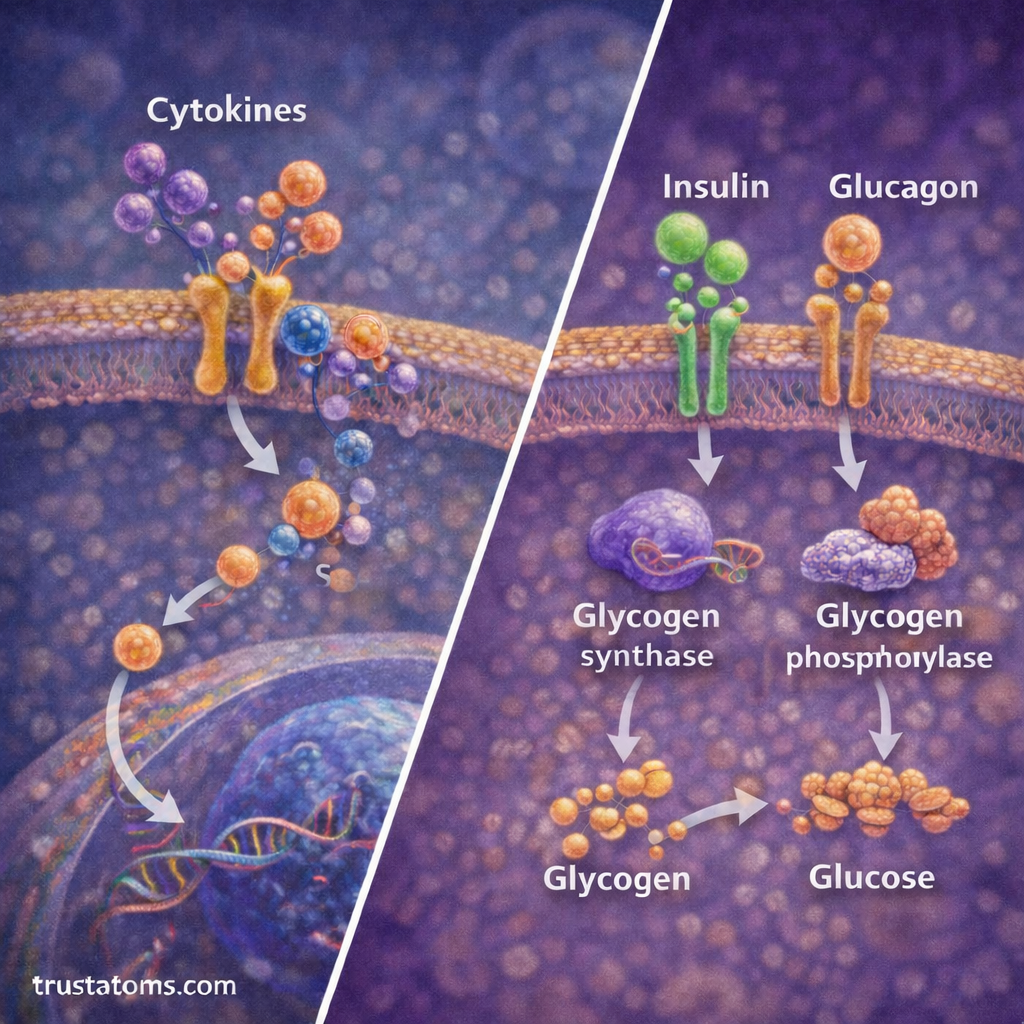
Several signaling pathways play especially important roles in cell biology.
MAPK Signaling Cascade
The Mitogen-Activated Protein Kinase (MAPK) cascade regulates cell growth, differentiation, and responses to stress.
It involves a sequence of protein kinases that activate one another.
The pathway typically includes:
- MAP kinase kinase kinase (MAPKKK)
- MAP kinase kinase (MAPKK)
- MAP kinase (MAPK)
These enzymes activate transcription factors that control gene expression.
MAPK cascades are highly conserved across many species.
cAMP Signaling Pathway
The cAMP pathway is one of the best-known signaling cascades.
This pathway begins when ligands activate receptors linked to G proteins.
The steps include:
- Activation of a G protein–coupled receptor
- Activation of adenylate cyclase
- Production of cyclic AMP (cAMP)
- Activation of protein kinase A (PKA)
PKA then phosphorylates target proteins that influence cellular processes such as metabolism and gene regulation.
Calcium Signaling
Calcium ions function as powerful intracellular messengers.
In many signaling cascades, receptor activation triggers the release of calcium from cellular storage compartments.
Calcium signals regulate processes such as:
- Muscle contraction
- Neurotransmitter release
- Enzyme activation
- Gene expression
Because calcium levels must remain tightly controlled, specialized pumps and channels regulate calcium concentrations inside cells.
Cross-Talk Between Signaling Pathways
Signaling cascades rarely operate in isolation. Instead, many pathways interact with one another in a process known as cross-talk.
Cross-talk allows cells to integrate multiple signals simultaneously.
For example:
- A growth factor signal may interact with metabolic signaling pathways.
- Stress signals may influence immune signaling.
- Hormonal signals may modify developmental pathways.
These interactions help cells make coordinated decisions based on complex environmental information.
Feedback Regulation in Signaling Cascades
To prevent uncontrolled signaling, cells rely on feedback mechanisms.
Negative Feedback
Negative feedback reduces signaling activity once a response has been achieved.
Examples include:
- Enzymes that deactivate signaling proteins
- Molecules that block receptor activity
- Proteins that degrade signaling messengers
Negative feedback helps maintain cellular stability.
Positive Feedback
Positive feedback amplifies signaling responses.
This mechanism can create rapid transitions between cellular states, such as during cell division or differentiation.
Positive feedback can also create switch-like behavior, where cells rapidly commit to a particular response.
Signaling Cascades and Cellular Decisions
Signaling cascades ultimately determine how a cell behaves.
These pathways can trigger outcomes such as:
- Cell division
- Cell differentiation
- Cell movement
- Programmed cell death (apoptosis)
- Metabolic adjustments
Cells integrate signals from many cascades to determine which response is most appropriate.
Signaling Cascades and Disease
When signaling cascades malfunction, serious diseases can result.
Common examples include:
- Cancer caused by uncontrolled growth signaling
- Autoimmune disorders linked to abnormal immune signaling
- Neurodegenerative diseases involving disrupted signaling pathways
- Metabolic diseases caused by impaired hormone signaling
Because of their importance, many modern drugs are designed to target specific signaling proteins.
Modern Research on Cellular Signaling
Advances in molecular biology have dramatically improved our understanding of signaling cascades.
Scientists now study signaling networks using techniques such as:
- Genomic sequencing
- Proteomics
- Live-cell imaging
- Computational modeling
- Systems biology approaches
These tools allow researchers to map complex signaling networks that involve thousands of interacting molecules.
Conclusion
Molecular signaling cascades are fundamental systems that allow cells to sense and respond to their environment. Through coordinated interactions among receptors, signaling proteins, second messengers, and effector molecules, cells convert external signals into specific biological responses.
These cascades regulate essential processes including growth, metabolism, immune responses, and development. As research continues, scientists are uncovering new details about how signaling networks operate and how they influence health and disease.
Understanding molecular signaling cascades provides crucial insights into the inner workings of cells and the complex systems that sustain life.