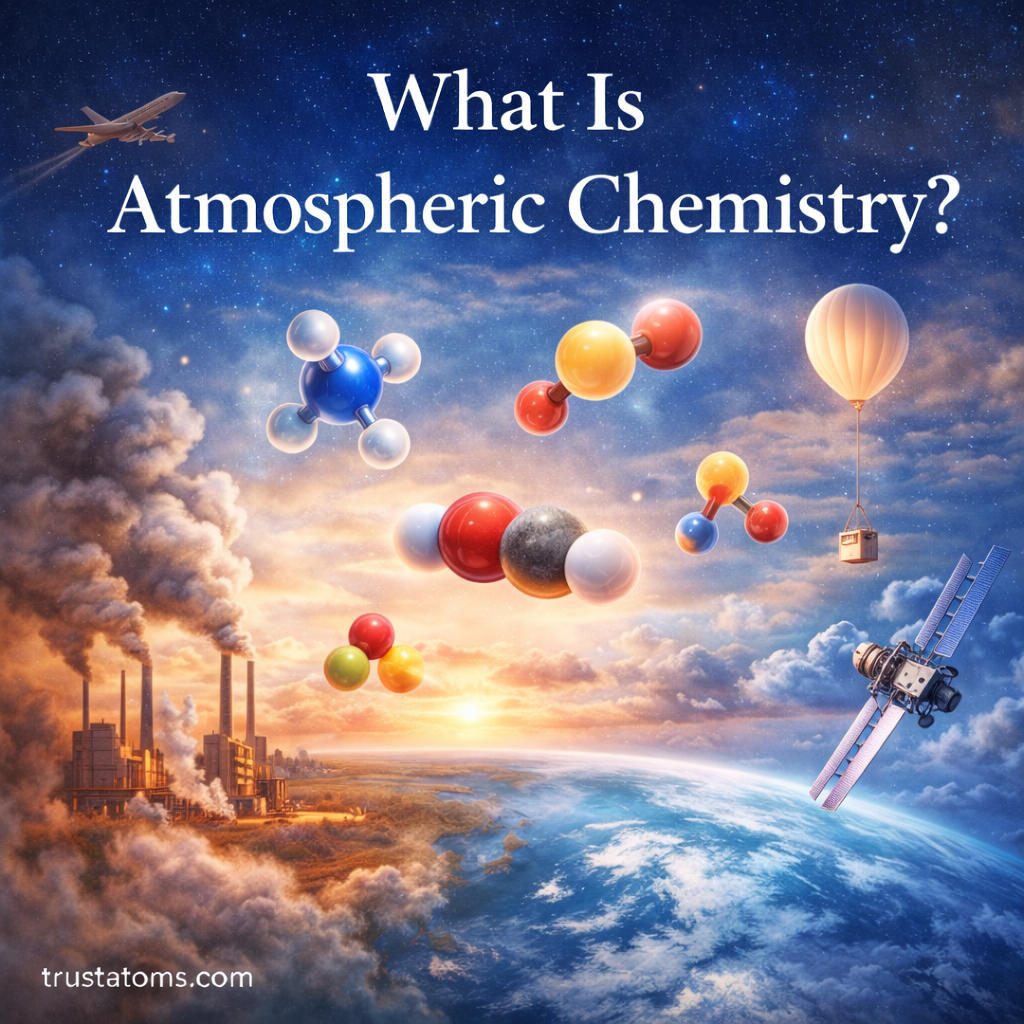
Atmospheric chemistry is the scientific study of the chemical composition of Earth’s atmosphere and the reactions that occur within it. This field examines how gases, particles, sunlight, and natural processes interact to shape the air surrounding our planet.
The atmosphere is not just a mixture of gases—it is a dynamic chemical system where countless reactions occur every second. These reactions influence weather, air quality, climate change, and the protection of life on Earth.
By studying atmospheric chemistry, scientists can better understand issues such as air pollution, ozone depletion, greenhouse gases, and climate processes.
The Composition of Earth’s Atmosphere
Earth’s atmosphere consists of several gases and tiny particles suspended in the air. While many components are stable, others constantly react with one another.
Major Atmospheric Gases
The primary gases in the atmosphere include:
- Nitrogen (N₂) – about 78%
- Oxygen (O₂) – about 21%
- Argon (Ar) – about 0.9%
- Carbon dioxide (CO₂) – about 0.04%
Although carbon dioxide exists in small amounts, it plays a major role in climate regulation and atmospheric chemistry.
Trace Gases
The atmosphere also contains smaller amounts of gases such as:
- Methane (CH₄)
- Ozone (O₃)
- Nitrous oxide (N₂O)
- Water vapor (H₂O)
These trace gases often drive important chemical reactions in the atmosphere.
Layers of the Atmosphere
Atmospheric chemistry varies depending on altitude because temperature, pressure, and radiation change as you move higher above Earth.
Troposphere
The troposphere is the lowest layer of the atmosphere and extends up to about 8–15 kilometers.
Key characteristics:
- Contains most of Earth’s weather
- Holds the majority of atmospheric water vapor
- Most air pollution occurs here
Many chemical reactions affecting air quality and human health take place in this layer.
Stratosphere
Above the troposphere lies the stratosphere, which contains the important ozone layer.
Ozone absorbs harmful ultraviolet (UV) radiation from the Sun, protecting living organisms on Earth.
Higher Layers
Additional layers include:
- Mesosphere
- Thermosphere
- Exosphere
Although these regions are thinner, they still host important chemical processes involving radiation and charged particles.
How Chemical Reactions Occur in the Atmosphere
Atmospheric chemistry is driven by energy from the Sun, which initiates many chemical reactions in the air.
Photochemical Reactions
Many atmospheric reactions occur when sunlight breaks molecules apart in a process called photodissociation.
This creates highly reactive particles known as free radicals.
Free radicals quickly react with other molecules, triggering chains of chemical reactions throughout the atmosphere.
Oxidation Reactions
Oxidation is another key process. In the atmosphere, oxidation often involves reactions with hydroxyl radicals (OH), sometimes called the “detergent of the atmosphere.”
These reactions help remove pollutants and regulate atmospheric composition.
Key Chemical Components in the Atmosphere
Several molecules play especially important roles in atmospheric chemistry.
Ozone (O₃)
Ozone exists in two major regions:
- Stratospheric ozone – protects Earth from harmful UV radiation
- Tropospheric ozone – acts as a pollutant and component of smog
Carbon Dioxide (CO₂)
Carbon dioxide is a greenhouse gas that helps trap heat in Earth’s atmosphere. Changes in its concentration influence global climate patterns.
Methane (CH₄)
Methane is another greenhouse gas that is highly effective at trapping heat, even in small amounts.
Sources include:
- Wetlands
- Agriculture
- Fossil fuel extraction
Nitrogen Oxides (NOx)
Nitrogen oxides form during high-temperature combustion processes such as vehicle engines and power plants. These gases contribute to smog and acid rain formation.
Air Pollution and Atmospheric Chemistry
One of the most important applications of atmospheric chemistry is understanding air pollution.
Pollutants released from natural and human sources can react with atmospheric gases and sunlight, forming new compounds.
Common Air Pollutants
Examples include:
- Nitrogen oxides
- Sulfur dioxide
- Volatile organic compounds (VOCs)
- Particulate matter
These pollutants can react to form ground-level ozone and photochemical smog, which can affect respiratory health and environmental quality.
The Ozone Layer and Ozone Depletion
The ozone layer in the stratosphere absorbs harmful ultraviolet radiation from the Sun.
However, certain chemicals can damage this protective layer.
Chlorofluorocarbons (CFCs)
CFCs were once widely used in:
- Refrigerants
- Aerosol sprays
- Foam production
When these compounds reach the stratosphere, ultraviolet radiation breaks them apart, releasing chlorine atoms that destroy ozone molecules.
International agreements such as the Montreal Protocol have significantly reduced CFC emissions and helped the ozone layer slowly recover.
Atmospheric Chemistry and Climate Change
Atmospheric chemistry is closely connected to climate science.
Greenhouse gases absorb heat energy from Earth’s surface and trap it in the atmosphere. This natural process, known as the greenhouse effect, helps keep the planet warm enough to support life.
However, increasing concentrations of greenhouse gases from human activities can intensify this effect, contributing to global warming and climate change.
Major greenhouse gases include:
- Carbon dioxide
- Methane
- Nitrous oxide
- Water vapor
Understanding atmospheric chemistry helps scientists model future climate conditions and develop strategies for reducing emissions.
How Scientists Study Atmospheric Chemistry
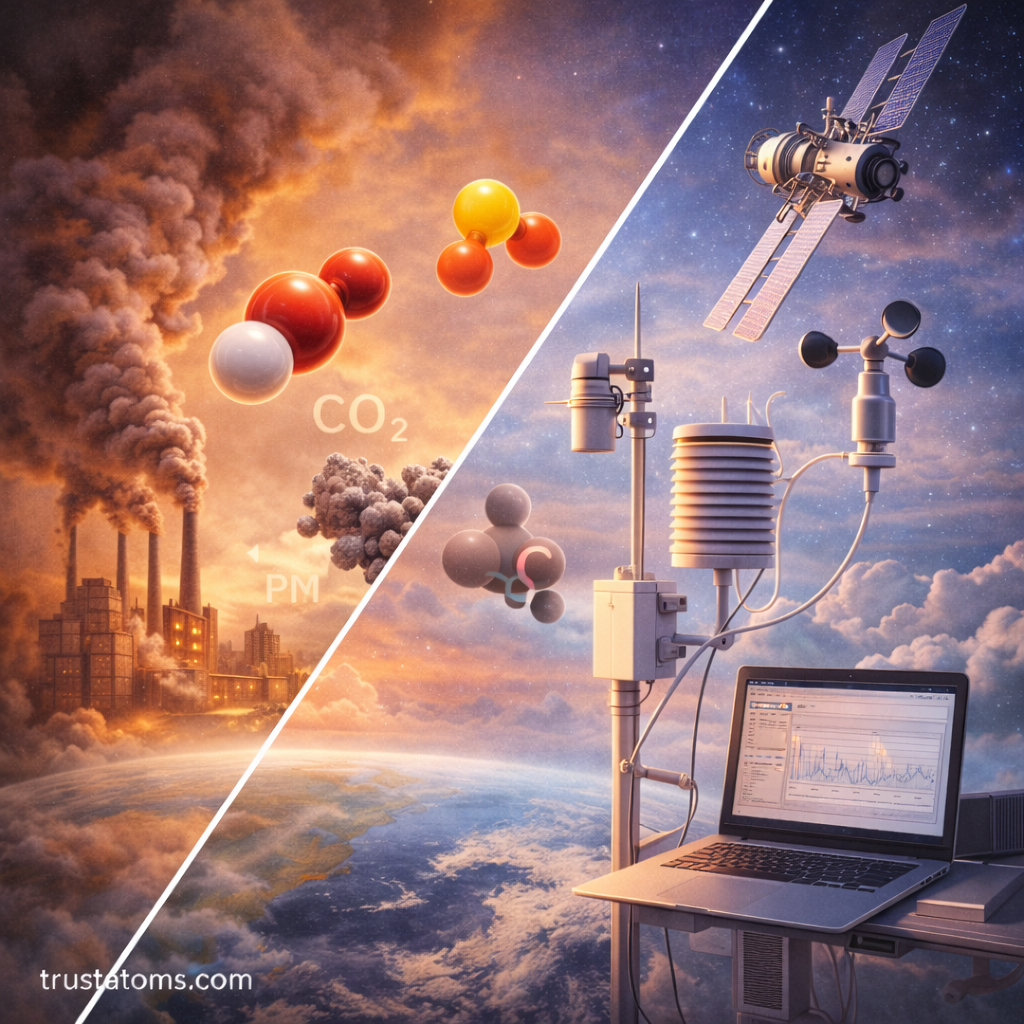
Researchers use a variety of tools and methods to study atmospheric processes.
Measurement Techniques
Scientists collect atmospheric data using:
- Weather balloons
- Satellites
- Ground monitoring stations
- Research aircraft
These instruments measure gas concentrations, temperature, radiation levels, and particle composition.
Computer Modeling
Advanced computer models simulate atmospheric reactions and predict how changes in emissions or climate may affect the atmosphere in the future.
Why Atmospheric Chemistry Matters
Atmospheric chemistry affects nearly every aspect of life on Earth.
It helps scientists understand:
- Air pollution and public health
- Climate change
- Ozone layer protection
- Weather patterns
- Environmental sustainability
Because the atmosphere connects ecosystems across the entire planet, changes in atmospheric chemistry can have global consequences.
Final Thoughts
Atmospheric chemistry is the study of the chemical processes occurring in Earth’s atmosphere. By examining how gases, particles, sunlight, and pollutants interact, scientists gain valuable insight into climate systems, air quality, and environmental change.
From the protective ozone layer to greenhouse gases and pollution reactions, atmospheric chemistry plays a critical role in shaping the planet’s environment. Understanding these processes is essential for protecting both the atmosphere and the life it supports.