Electrolysis is a chemical process that uses electric current to drive a non-spontaneous chemical reaction. In simple terms, electricity is used to force compounds to break apart or to form new substances.
This process is widely used in chemistry, industry, and manufacturing, including producing pure metals, manufacturing chemicals, and electroplating objects with protective metal coatings.
Understanding electrolysis helps explain how electricity and chemistry interact to transform materials at the molecular level.
Definition of Electrolysis
Electrolysis is the decomposition of a compound using an electric current.
The compound must either be:
- Molten (melted)
- Dissolved in water (an electrolyte solution)
In these states, ions can move freely. When electricity passes through the solution, these ions migrate toward electrodes where chemical reactions occur.
In essence:
- Electricity provides the energy
- Ions move through the solution
- Chemical reactions occur at electrodes
Key Components of Electrolysis
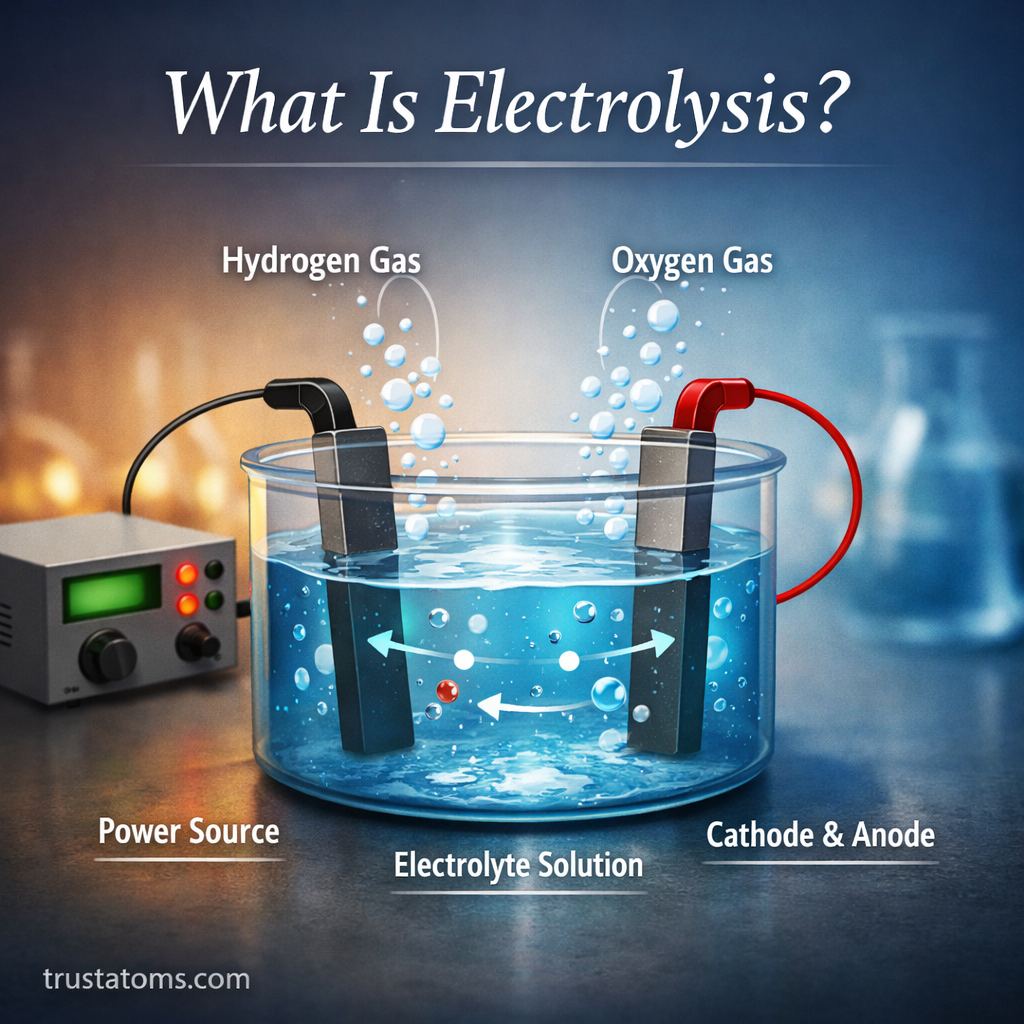
An electrolysis setup contains several important parts.
Electrolyte
The electrolyte is the substance that conducts electricity through the movement of ions.
Examples include:
- Saltwater
- Molten sodium chloride
- Copper sulfate solution
- Acidic or basic solutions
Electrolytes allow ions to move freely so that electrical current can flow.
Electrodes
Electrodes are the conductive materials that allow current to enter and leave the electrolyte.
There are two electrodes:
- Cathode – negatively charged electrode
- Anode – positively charged electrode
Different chemical reactions occur at each electrode.
Power Source
A direct current (DC) power supply is required to push electrons through the system and drive the chemical reactions.
Common power sources include:
- Batteries
- Laboratory power supplies
- Industrial electrical systems
How Electrolysis Works
Electrolysis works because electric current forces ions to move toward electrodes where chemical reactions occur.
The process typically follows these steps:
- An electrolyte contains positive and negative ions.
- A power source sends electrons through the circuit.
- Positive ions (cations) move toward the cathode.
- Negative ions (anions) move toward the anode.
- Chemical reactions occur at the electrodes, producing new substances.
At each electrode:
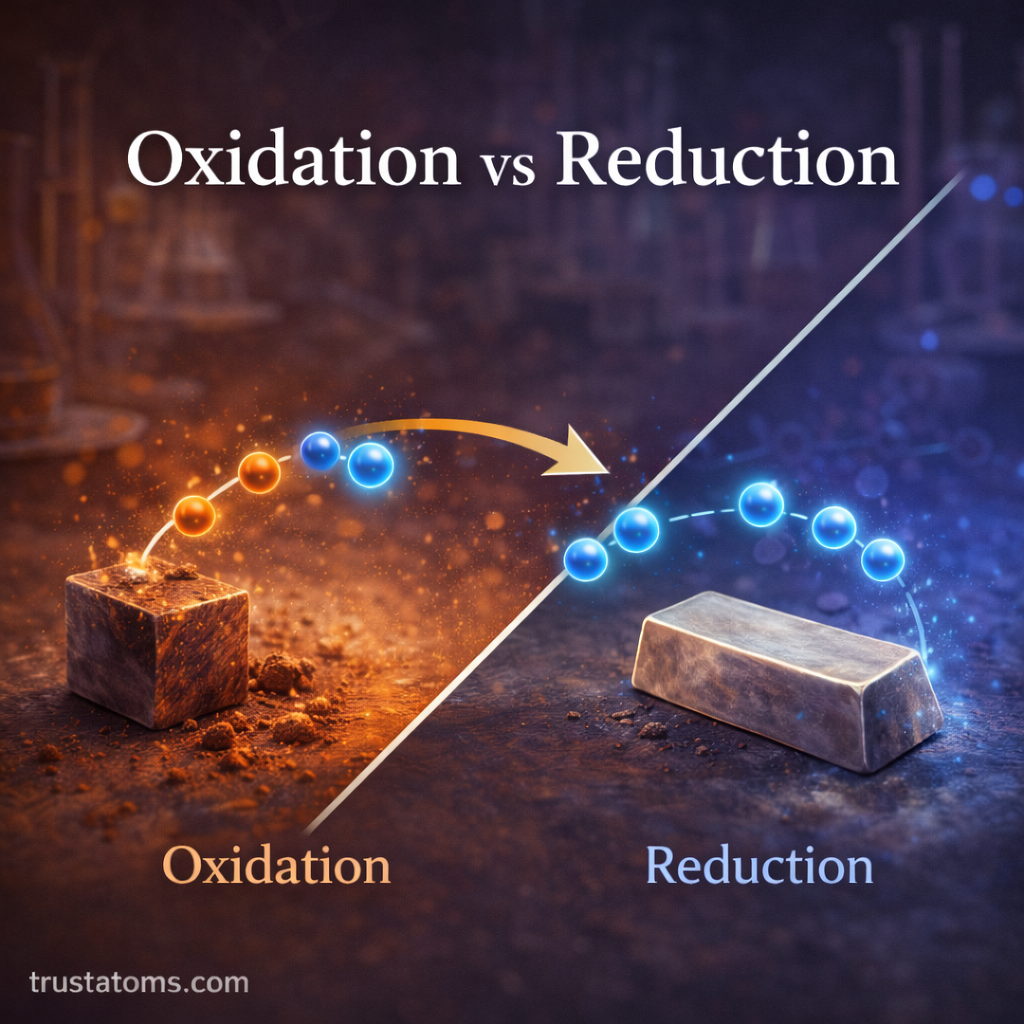
- Reduction occurs at the cathode (gaining electrons)
- Oxidation occurs at the anode (losing electrons)
This movement and reaction of ions drives the chemical transformation.
Example of Electrolysis: Water Splitting
One of the most famous examples of electrolysis is splitting water into hydrogen and oxygen gases.
Water itself does not conduct electricity well, so a small amount of electrolyte (such as sulfuric acid) is added.
During electrolysis:
At the cathode:
- Hydrogen gas forms
At the anode:
- Oxygen gas forms
The result is:
- Hydrogen gas bubbles at one electrode
- Oxygen gas bubbles at the other
This process is increasingly important for clean hydrogen fuel production.
Example: Electrolysis of Molten Sodium Chloride
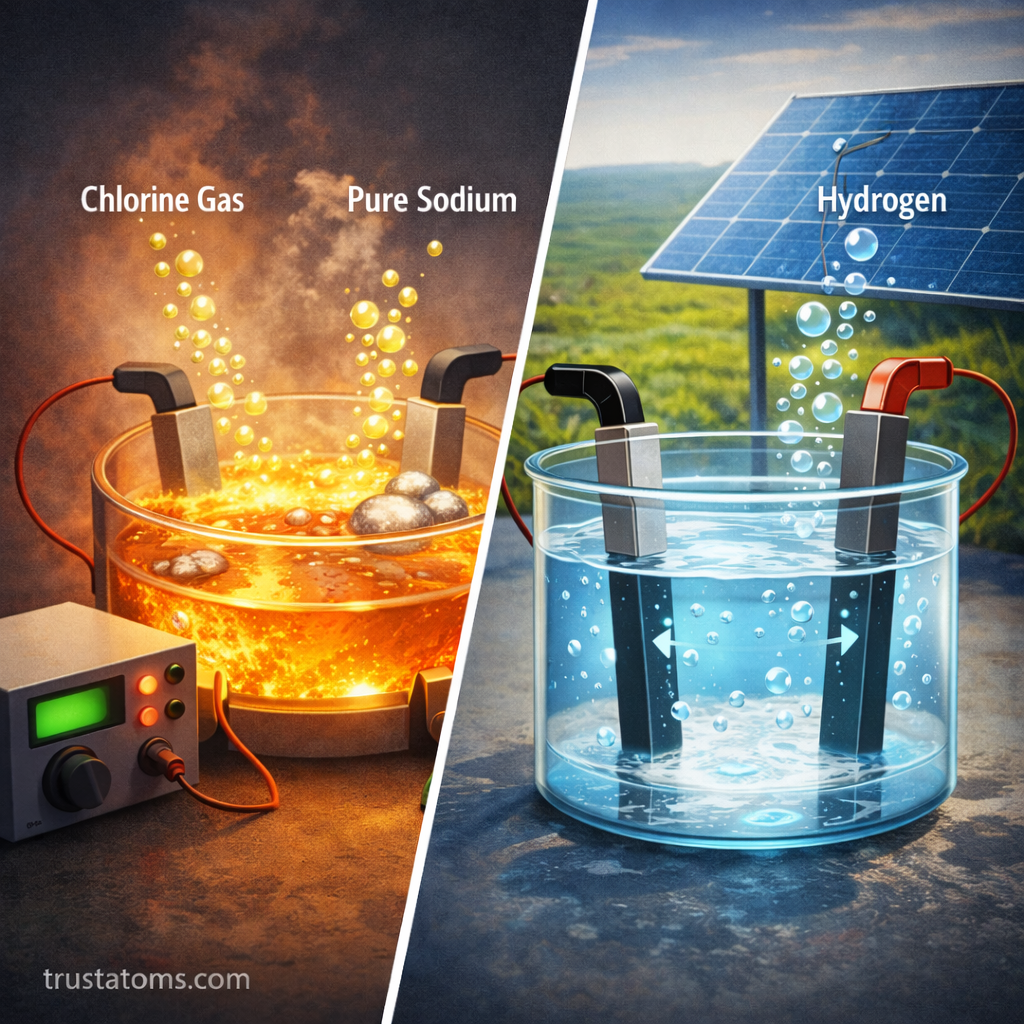
Another classic example involves molten salt.
When molten sodium chloride (NaCl) undergoes electrolysis:
At the cathode:
- Sodium ions gain electrons
- Metallic sodium forms
At the anode:
- Chloride ions lose electrons
- Chlorine gas forms
This process is used industrially to produce:
- Sodium metal
- Chlorine gas
Both chemicals are important for manufacturing and chemical production.
Industrial Applications of Electrolysis
Electrolysis plays a major role in modern industry.
Metal Extraction
Some metals are extracted from their ores using electrolysis, including:
- Aluminum
- Sodium
- Magnesium
For example, aluminum production relies heavily on electrolysis of molten aluminum oxide.
Electroplating
Electroplating coats an object with a thin layer of metal.
Common plated metals include:
- Gold
- Silver
- Nickel
- Chromium
Electroplating improves:
- Corrosion resistance
- Appearance
- Electrical conductivity
Chemical Manufacturing
Electrolysis is used to produce important chemicals such as:
- Chlorine
- Hydrogen
- Sodium hydroxide
These chemicals are widely used in:
- Plastics manufacturing
- Water treatment
- Industrial cleaning products
Hydrogen Fuel Production
Electrolysis can generate hydrogen gas from water, which can be used as a clean fuel.
When powered by renewable energy sources like wind or solar, this method becomes a low-carbon way to produce hydrogen.
Why Electrolysis Requires Electricity
Some chemical reactions occur naturally, while others require energy to proceed.
Electrolysis drives non-spontaneous reactions, meaning the reaction would not occur on its own.
Electricity provides the energy needed to:
- Break chemical bonds
- Move ions through the solution
- Force redox reactions at the electrodes
Without the external energy source, these reactions would not happen.
Factors That Affect Electrolysis
Several factors influence how efficiently electrolysis occurs.
Voltage
Higher voltage can increase the rate of electrolysis, but too much voltage may cause unwanted side reactions.
Concentration of Electrolyte
More ions in solution generally improve electrical conductivity and reaction efficiency.
Electrode Material
Electrodes may be made from materials such as:
- Graphite
- Platinum
- Copper
- Stainless steel
The material can influence reaction speed and stability.
Temperature
Higher temperatures often increase ion mobility, allowing electrolysis reactions to occur faster.
Electrolysis in Everyday Life
Although electrolysis may sound like a laboratory technique, it appears in many everyday technologies.
Examples include:
- Rechargeable batteries
- Metal finishing and jewelry plating
- Hydrogen fuel generation
- Industrial metal production
- Water purification systems
Because of its versatility, electrolysis remains one of the most important electrochemical processes used in science and engineering.
Final Thoughts
Electrolysis is the process of using electricity to drive chemical reactions that would not occur naturally. By applying electrical energy to an electrolyte, ions move toward electrodes where oxidation and reduction reactions take place.
This process makes it possible to:
- Extract metals from ores
- Produce essential industrial chemicals
- Coat objects with protective metal layers
- Generate hydrogen fuel from water
As renewable energy technologies grow, electrolysis is becoming even more important for clean energy production and sustainable chemical manufacturing.