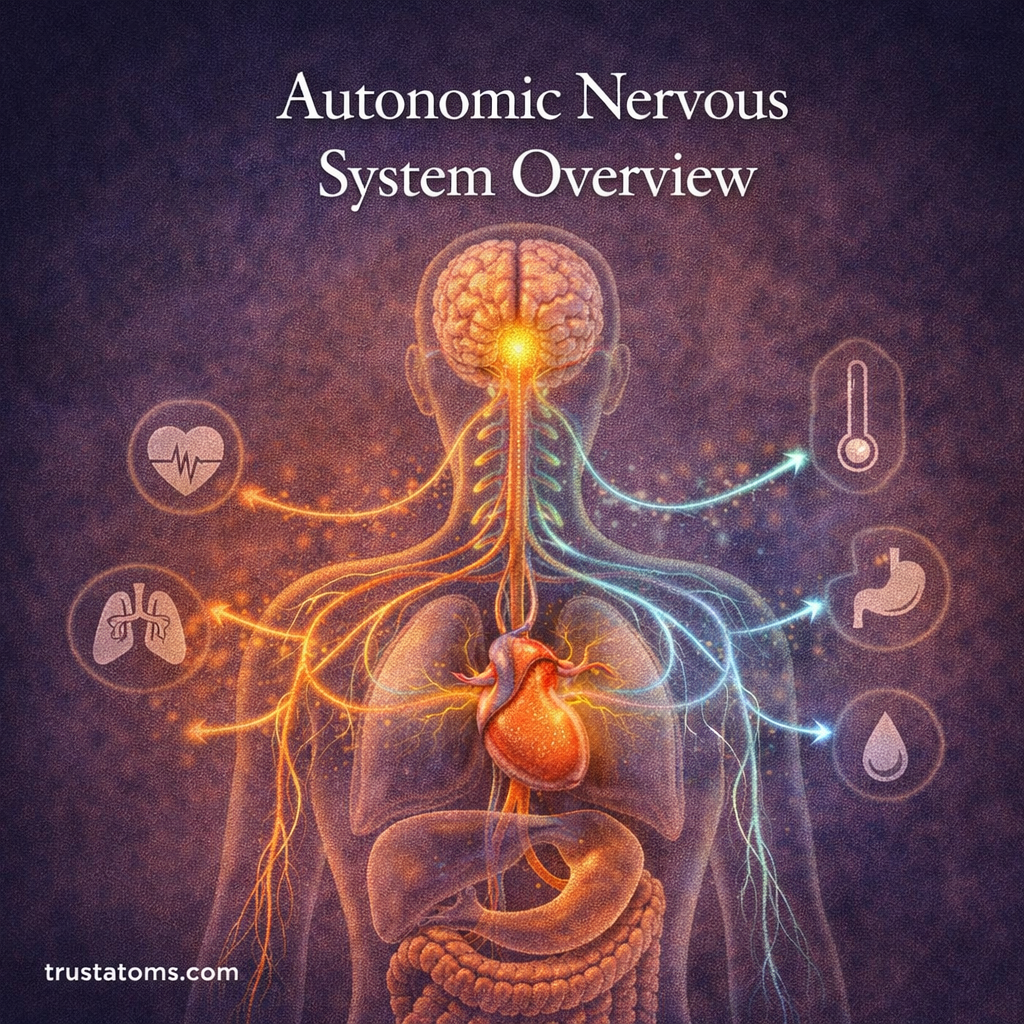
The autonomic nervous system (ANS) is responsible for regulating many of the body’s automatic processes. These functions occur without conscious effort and include activities such as heart rate, digestion, breathing, and blood pressure control.
As a division of the peripheral nervous system, the autonomic nervous system works continuously to maintain balance within the body. It monitors internal conditions and adjusts physiological processes to keep the body functioning properly.
Understanding the autonomic nervous system helps explain how the body maintains stability and responds automatically to changes in the environment.
What Is the Autonomic Nervous System?
The autonomic nervous system is a network of nerves that controls involuntary bodily functions. Unlike voluntary actions such as walking or speaking, autonomic processes operate automatically.
Key roles of the autonomic nervous system include:
- Regulating heart rate
- Controlling breathing patterns
- Managing digestion
- Adjusting blood pressure
- Controlling pupil size
- Regulating body temperature
These functions help maintain homeostasis, the body’s stable internal environment.
Where the Autonomic Nervous System Fits in the Nervous System
The nervous system is divided into two main parts:
- Central nervous system (CNS) – the brain and spinal cord
- Peripheral nervous system (PNS) – nerves that extend throughout the body
The autonomic nervous system is part of the peripheral nervous system and works closely with the brain and spinal cord to regulate internal processes.
Signals from the brain travel through autonomic nerves to organs, glands, and smooth muscles, allowing the body to adjust automatically to changing conditions.
Major Divisions of the Autonomic Nervous System
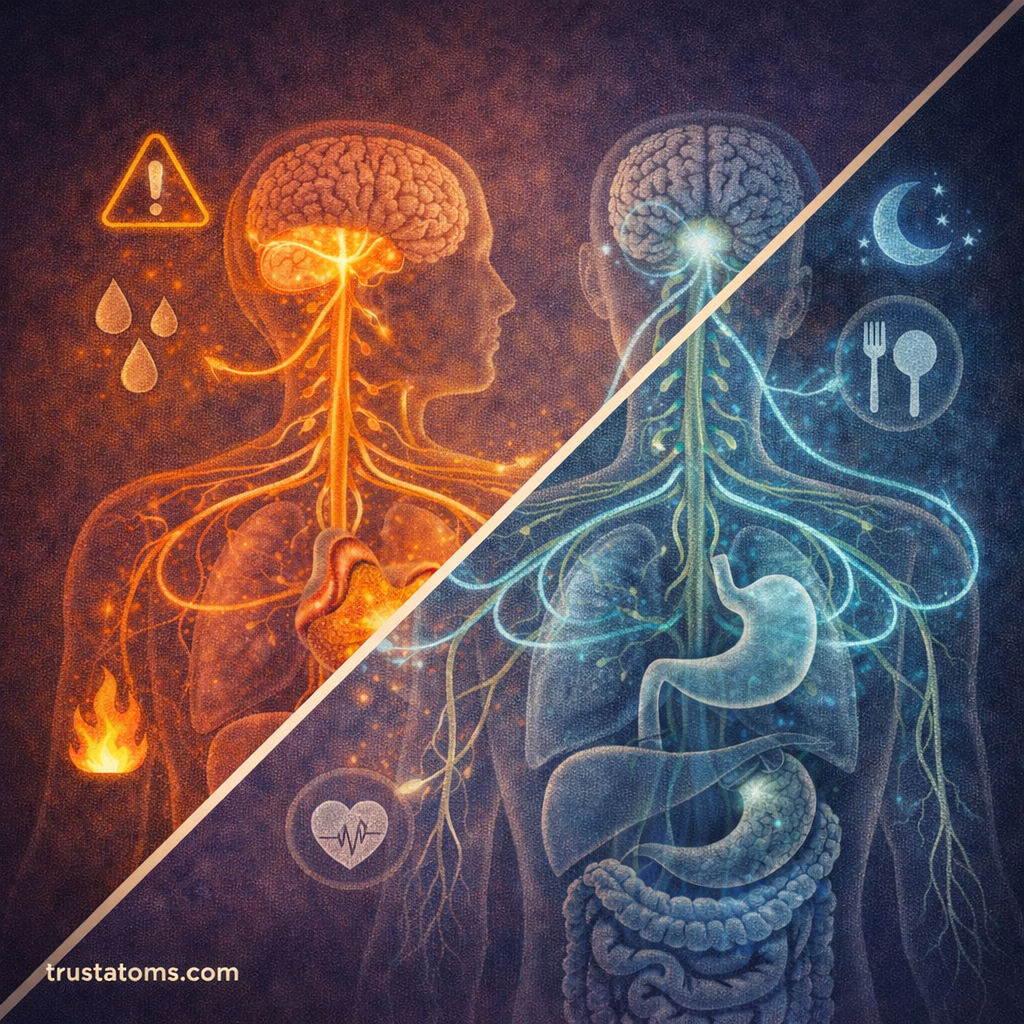
The autonomic nervous system has three main divisions that work together to regulate bodily functions.
Sympathetic Nervous System
The sympathetic nervous system prepares the body for stressful or emergency situations.
This response is commonly called the fight-or-flight response.
When activated, the sympathetic system can:
- Increase heart rate
- Dilate airways
- Increase blood flow to muscles
- Dilate pupils
- Reduce digestive activity
These changes allow the body to respond quickly to potential threats.
Parasympathetic Nervous System
The parasympathetic nervous system promotes rest and recovery.
It is often described as the rest-and-digest system.
When active, it helps the body:
- Slow the heart rate
- Stimulate digestion
- Conserve energy
- Support nutrient absorption
- Promote relaxation
This system allows the body to recover after periods of stress.
Enteric Nervous System
The enteric nervous system controls the digestive system and is sometimes referred to as the “second brain” of the gut.
It regulates functions such as:
- Movement of food through the intestines
- Digestive enzyme release
- Nutrient absorption
- Blood flow within the digestive tract
Although it works independently in many ways, the enteric system also communicates with the sympathetic and parasympathetic divisions.
How the Autonomic Nervous System Maintains Balance
The sympathetic and parasympathetic systems often work in opposite but complementary ways.
For example:
| Body Function | Sympathetic Effect | Parasympathetic Effect |
|---|---|---|
| Heart rate | Increases | Decreases |
| Digestion | Slows | Stimulates |
| Pupil size | Dilates | Constricts |
| Breathing | Speeds up | Slows |
By balancing these opposing effects, the autonomic nervous system maintains stable body conditions.
How Autonomic Signals Travel
Autonomic communication usually involves a two-neuron pathway.
Preganglionic Neuron
The first neuron originates in the brain or spinal cord and travels to a cluster of nerve cells called a ganglion.
Postganglionic Neuron
The second neuron begins at the ganglion and travels to the target organ, such as the heart, lungs, or digestive organs.
This two-step signaling system allows the nervous system to regulate organs efficiently.
Organs Controlled by the Autonomic Nervous System
The autonomic nervous system influences many organs and tissues throughout the body.
Examples include:
- Heart
- Lungs
- Blood vessels
- Digestive organs
- Sweat glands
- Salivary glands
- Pupils of the eyes
- Bladder
Through constant monitoring and adjustment, the ANS keeps these organs functioning properly.
Examples of Autonomic Regulation
Many everyday body processes rely on autonomic control.
Examples include:
Heart Rate Regulation
The sympathetic system increases heart rate during exercise or stress, while the parasympathetic system slows it during rest.
Digestive Activity
After eating, the parasympathetic system stimulates digestive organs to break down food and absorb nutrients.
Temperature Regulation
The autonomic system helps control body temperature by adjusting sweating and blood flow in the skin.
Breathing Adjustment
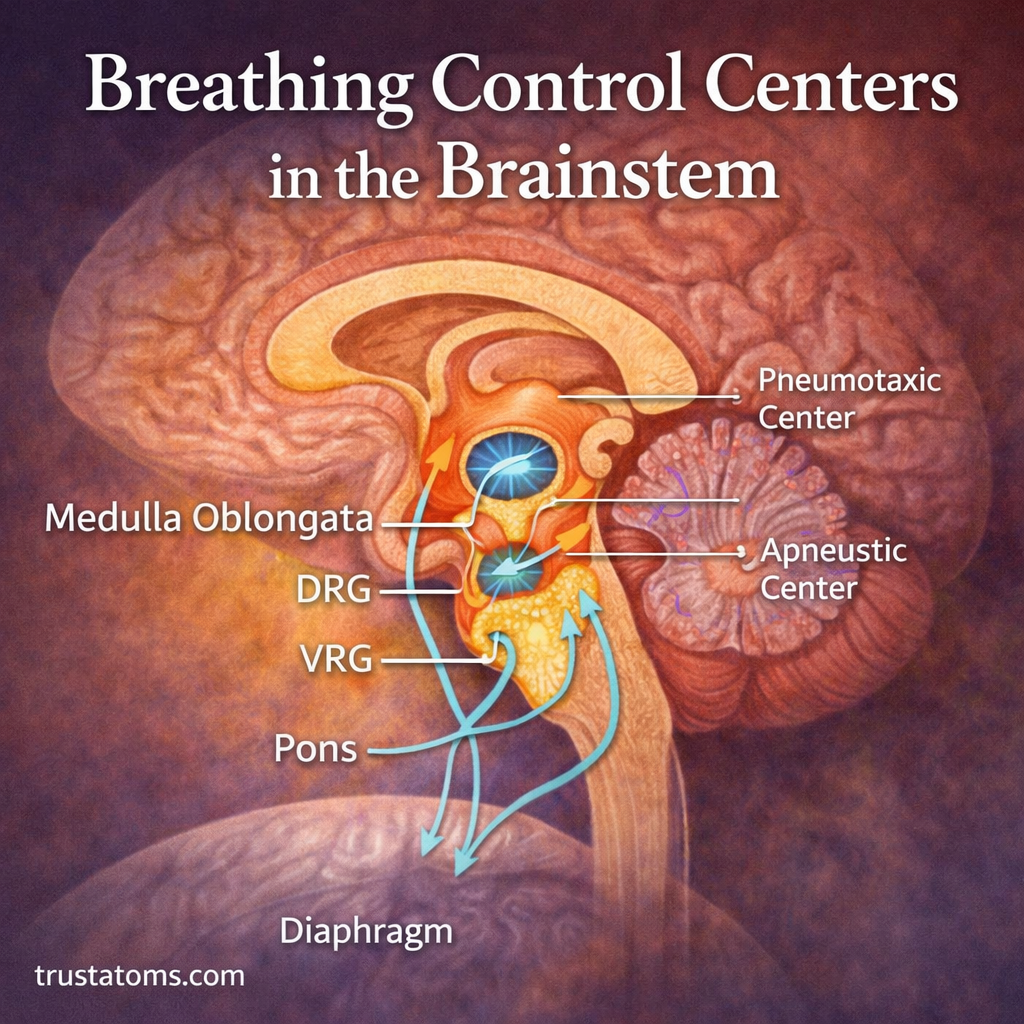
Although breathing can be consciously controlled, it is primarily regulated automatically by brainstem centers through autonomic pathways.
Communication Between the Brain and Autonomic System
Several brain regions help regulate autonomic functions.
Important control centers include:
- Hypothalamus – coordinates autonomic and hormonal responses
- Brainstem – regulates breathing, heart rate, and blood pressure
- Limbic system – links emotions to autonomic responses
For example, emotional stress can trigger sympathetic responses such as increased heart rate or sweating.
Disorders Affecting the Autonomic Nervous System
Problems with autonomic regulation can disrupt many bodily functions.
Conditions affecting the autonomic nervous system include:
- Autonomic neuropathy – damage to autonomic nerves
- Postural orthostatic tachycardia syndrome (POTS) – abnormal heart rate changes when standing
- Multiple system atrophy – a degenerative neurological disorder
- Diabetic autonomic neuropathy – nerve damage caused by long-term diabetes
Symptoms may include dizziness, abnormal heart rate, digestive issues, or difficulty regulating body temperature.
Why the Autonomic Nervous System Is Important
The autonomic nervous system ensures that vital processes occur continuously without conscious control.
It allows the body to:
- Maintain stable internal conditions
- Respond to stress and danger
- Recover during rest
- Regulate organ activity
- Coordinate internal physiological responses
Without this system, the body would require constant conscious effort to maintain basic life functions.
Final Thoughts
The autonomic nervous system is a critical component of human physiology, responsible for regulating essential automatic processes. By coordinating the sympathetic, parasympathetic, and enteric divisions, it allows the body to respond to changing conditions while maintaining internal balance.
Through its influence on organs, glands, and smooth muscles, the autonomic nervous system supports vital activities such as breathing, circulation, digestion, and temperature regulation. Its continuous operation ensures that the body remains stable and capable of adapting to both internal and external challenges.