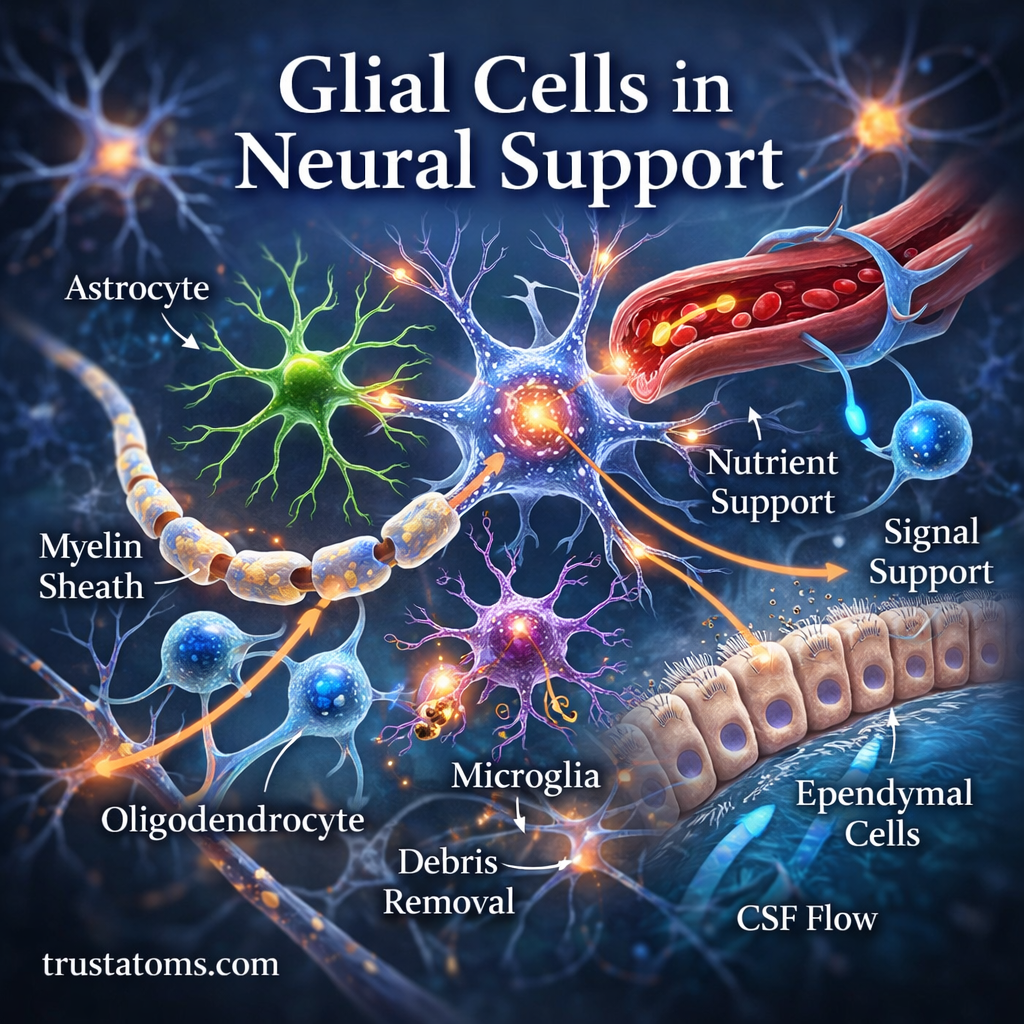
When people think about the nervous system, they often focus on neurons—the cells responsible for sending electrical signals throughout the brain and body. However, neurons do not function alone. The nervous system also relies on a large population of supportive cells known as glial cells.
Glial cells play essential roles in maintaining the health, structure, and efficiency of neural networks. They protect neurons, regulate the surrounding environment, provide nutrients, and assist in signal transmission.
Understanding glial cells reveals how the nervous system operates as a cooperative system rather than a collection of isolated neurons.
What Are Glial Cells?
Glial cells, sometimes called neuroglia, are non-neuronal cells that support and maintain the nervous system.
Unlike neurons, glial cells do not transmit electrical signals over long distances. Instead, they help create the conditions that allow neurons to function properly.
Key roles of glial cells include:
- Supporting neuron structure
- Supplying nutrients and oxygen
- Removing cellular waste
- Maintaining chemical balance around neurons
- Protecting neural tissue
- Assisting with myelin formation
In fact, glial cells outnumber neurons in the brain, making them a major component of neural tissue.
Major Types of Glial Cells
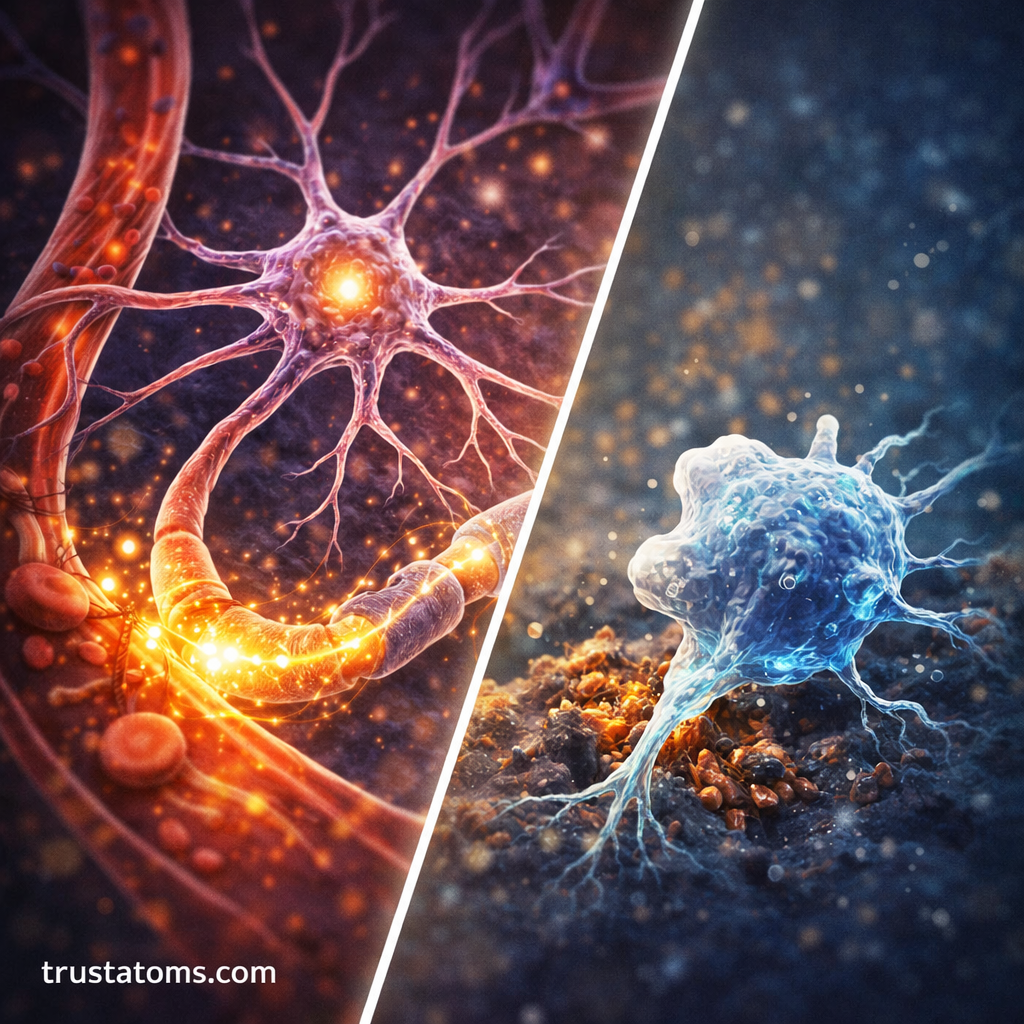
Several types of glial cells exist, each performing specialized functions within the nervous system.
These cells are found in both the central nervous system (CNS) and the peripheral nervous system (PNS).
Astrocytes
Astrocytes are star-shaped glial cells located in the brain and spinal cord.
They perform many essential functions, including:
- Maintaining the chemical environment around neurons
- Regulating neurotransmitter levels
- Supporting the blood–brain barrier
- Providing nutrients to neurons
Astrocytes also help repair damaged neural tissue and maintain communication between neurons and blood vessels.
Oligodendrocytes
Oligodendrocytes are responsible for producing myelin in the central nervous system.
Myelin is the fatty insulating layer that surrounds axons and increases the speed of nerve signal transmission.
Key characteristics of oligodendrocytes include:
- Formation of myelin sheaths around axons
- Increased neural conduction speed
- Support for multiple neurons at once
A single oligodendrocyte can extend processes that wrap around several axons, helping multiple neurons transmit signals more efficiently.
Microglia
Microglia act as the immune defense cells of the central nervous system.
They constantly monitor the brain environment and respond to injury or infection.
Functions of microglia include:
- Detecting harmful pathogens
- Removing damaged cells and debris
- Supporting inflammatory responses when necessary
- Helping repair neural tissue
Because the brain has limited access to the body’s immune system, microglia provide critical protective functions.
Ependymal Cells
Ependymal cells line the cavities of the brain and the central canal of the spinal cord.
These cells help regulate the production and circulation of cerebrospinal fluid (CSF).
Cerebrospinal fluid serves several important roles:
- Cushioning the brain and spinal cord
- Removing metabolic waste
- Delivering nutrients to neural tissue
Ependymal cells contribute to maintaining the stability of the brain’s internal environment.
Schwann Cells
In the peripheral nervous system, Schwann cells perform a function similar to oligodendrocytes.
Their primary role is to produce myelin around peripheral nerve fibers.
Key functions include:
- Insulating peripheral axons
- Supporting signal conduction
- Assisting nerve regeneration after injury
Unlike oligodendrocytes, each Schwann cell typically myelinates only one section of a single axon.
How Glial Cells Support Neurons
Neurons depend heavily on glial cells for survival and efficient communication.
Glial cells assist neurons in several ways.
Structural Support
Glial cells provide a framework that holds neural networks in place, helping maintain the organization of brain tissue.
Nutrient Delivery
They transport nutrients and oxygen from blood vessels to neurons, ensuring that highly active brain cells receive the energy they require.
Chemical Regulation
Glial cells regulate the levels of ions and neurotransmitters surrounding neurons, which is critical for proper signal transmission.
Waste Removal
Metabolic waste products are cleared by glial cells to prevent toxic buildup in neural tissue.
Glial Cells and Brain Communication
Although glial cells do not send long electrical signals like neurons, they still influence neural communication.
Research has shown that glial cells can:
- Release signaling molecules
- Regulate synaptic activity
- Influence learning and memory processes
Astrocytes, in particular, can interact with synapses and modify how neurons communicate.
This interaction highlights the complex partnership between neurons and glial cells.
Glial Cells and Nervous System Health
Healthy glial cell function is essential for maintaining the stability of the nervous system.
When glial cells become damaged or dysfunctional, neurological problems may occur.
Some conditions associated with glial dysfunction include:
- Multiple sclerosis – damage to myelin-producing cells
- Neuroinflammation – excessive immune activity by microglia
- Neurodegenerative diseases such as Alzheimer’s disease
These conditions demonstrate that glial cells are just as important as neurons in maintaining brain health.
The Importance of Glial Cells in Neuroscience
For many years, glial cells were thought to serve only a passive supporting role. Modern neuroscience has revealed that they are far more active and complex.
Researchers now recognize that glial cells contribute to:
- Brain development
- Neural network stability
- Learning and memory processes
- Recovery after injury
As scientific understanding grows, glial cells are becoming a major focus in neurological research.
Final Thoughts
Glial cells are essential partners in the nervous system, providing the structural support, protection, and environmental regulation that neurons require to function.
From forming myelin and delivering nutrients to defending the brain against infection, these cells perform a wide range of tasks that keep neural networks healthy and efficient.
Although neurons carry electrical signals, it is the cooperative work of glial cells that allows the brain and nervous system to operate reliably. Continued research into glial cell function is expanding our understanding of how the brain maintains stability, adapts to change, and recovers from injury.