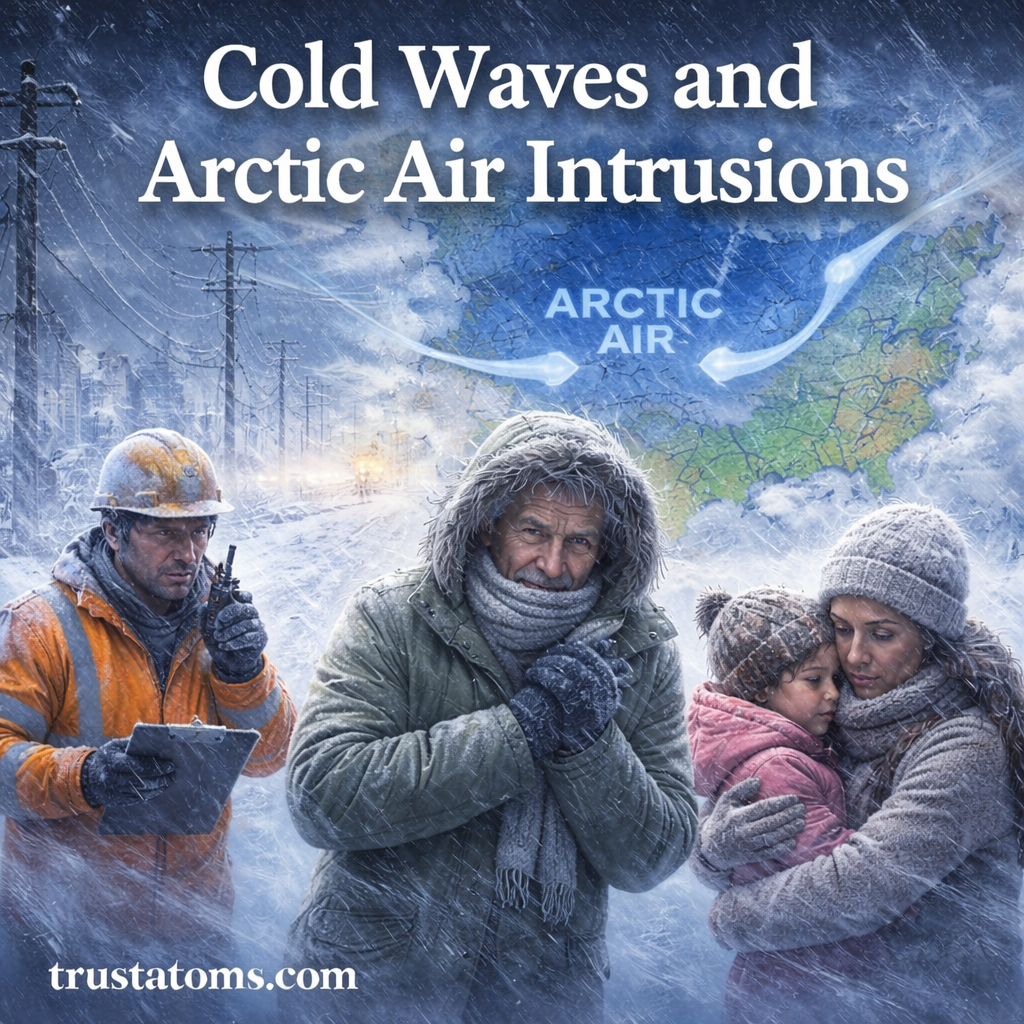
While much attention is given to extreme heat, cold waves can be just as dangerous—sometimes even more so. Sudden drops in temperature, driven by Arctic air intrusions, can disrupt daily life, damage infrastructure, and pose serious health risks.
Understanding how these events form and how they affect people and the environment is essential for preparedness and safety.
What Is a Cold Wave?
A cold wave is a rapid and significant drop in temperature over a short period, often lasting several days or longer.
Key Characteristics
- Temperatures fall well below seasonal averages
- Often accompanied by strong winds
- Can lead to dangerous wind chill conditions
- May impact large geographic areas
Cold waves are typically more severe when they occur in regions unaccustomed to extreme cold.
What Are Arctic Air Intrusions?
Arctic air intrusions occur when extremely cold air from polar regions moves southward into lower latitudes.
How They Happen
- Cold air builds up in the Arctic region
- Atmospheric patterns shift, allowing this air to move south
- Jet stream patterns weaken or dip
- Cold air spreads across continents
These intrusions can bring freezing conditions far beyond typical cold zones.
The Role of the Jet Stream
The jet stream plays a critical role in controlling weather patterns.
What Is the Jet Stream?
- A fast-moving band of air in the upper atmosphere
- Separates cold Arctic air from warmer air to the south
How It Influences Cold Waves
- A strong jet stream keeps cold air contained
- A weakened or wavy jet stream allows cold air to escape southward
- Large dips (called troughs) bring Arctic air into populated regions
Changes in the jet stream are a key driver of extreme winter weather.
Weather Conditions During Cold Waves
Cold waves often bring more than just low temperatures.
Common Associated Conditions
- Snowstorms and blizzards
- Ice storms and freezing rain
- High winds
- Reduced visibility
- Frost and freezing fog
These conditions can make travel dangerous and increase the risk of accidents.
Wind Chill and Its Impact
Wind chill describes how cold it feels when wind is factored in with temperature.
Why Wind Chill Matters
- Wind removes heat from the body faster
- Increases risk of frostbite and hypothermia
- Makes already cold temperatures feel significantly colder
For example, a temperature of 10°F with strong winds can feel like below zero.
Effects on Human Health
Extreme cold can have serious health consequences.
Common Cold-Related Health Risks
Hypothermia
- Occurs when body temperature drops below normal
- Causes confusion, fatigue, and slowed breathing
Frostbite
- Freezing of skin and underlying tissues
- Commonly affects fingers, toes, ears, and nose
Respiratory Issues
- Cold air can irritate lungs
- Increases risk for people with asthma or heart conditions
Impact on Infrastructure and Daily Life
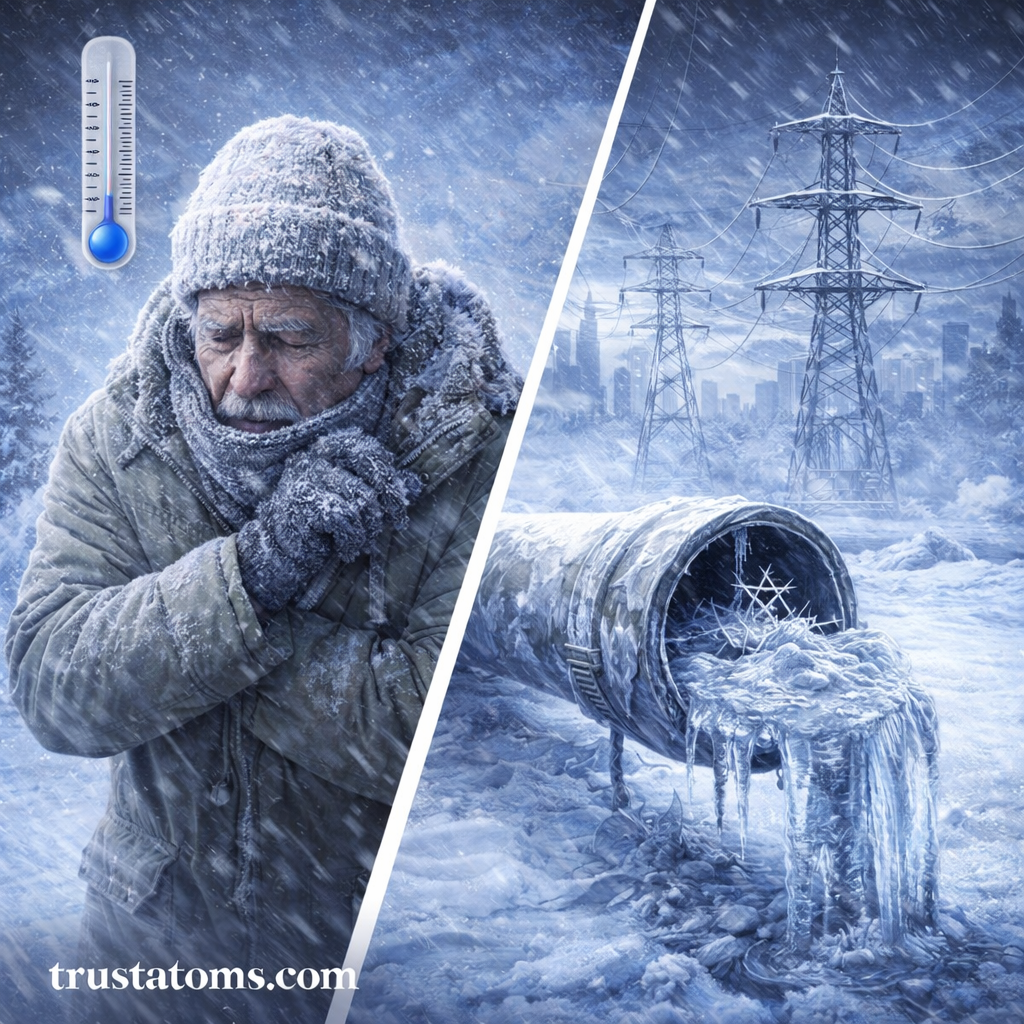
Cold waves can disrupt essential systems and services.
Infrastructure Challenges
- Frozen pipes and water systems
- Power outages due to increased demand
- Transportation delays and road closures
- Damage to crops and agriculture
Economic Impacts
- Increased heating costs
- Supply chain disruptions
- Business closures
Preparation can reduce these impacts significantly.
Environmental Effects
Cold waves also affect ecosystems and wildlife.
Key Environmental Impacts
- Stress on plants and vegetation
- Disruption of animal migration patterns
- Freezing of lakes and rivers
- Impacts on fisheries and aquatic life
While some species adapt, extreme events can still cause widespread damage.
How to Prepare for Cold Waves
Preparation is essential to reduce risk during extreme cold events.
Personal Safety Tips
- Dress in layers to retain body heat
- Cover exposed skin
- Limit time outdoors
- Stay dry and avoid sweating in cold conditions
- Monitor weather forecasts regularly
Home Preparation Tips
- Insulate pipes to prevent freezing
- Seal drafts around windows and doors
- Maintain heating systems
- Stock emergency supplies
Vehicle Preparedness
- Keep fuel tanks at least half full
- Carry emergency kits (blankets, food, water)
- Check tire pressure and battery condition
Role of Forecasting and Early Warnings
Modern meteorology allows for advanced warning of cold waves.
How Forecasting Helps
- Provides time to prepare homes and infrastructure
- Enables emergency response planning
- Reduces health risks through public alerts
Accurate forecasts are critical for minimizing the impact of extreme cold.
Climate Change and Cold Extremes
While global temperatures are rising, cold waves still occur.
Key Insights
- Climate change can influence jet stream patterns
- Increased variability may lead to more extreme weather swings
- Some regions may experience both warming trends and severe cold events
Understanding these dynamics is important for long-term planning.
Common Mistakes to Avoid
- Underestimating wind chill effects
- Not dressing appropriately for conditions
- Ignoring weather warnings
- Using unsafe heating sources indoors
- Failing to prepare vehicles for winter conditions
Avoiding these mistakes can prevent serious injuries and accidents.
Final Thoughts
Cold waves and Arctic air intrusions are powerful weather events that can impact millions of people. By understanding how they form and preparing effectively, individuals and communities can reduce risks and stay safe.
Extreme cold is not just uncomfortable—it can be life-threatening. Awareness, preparation, and timely action are key to navigating these events successfully.