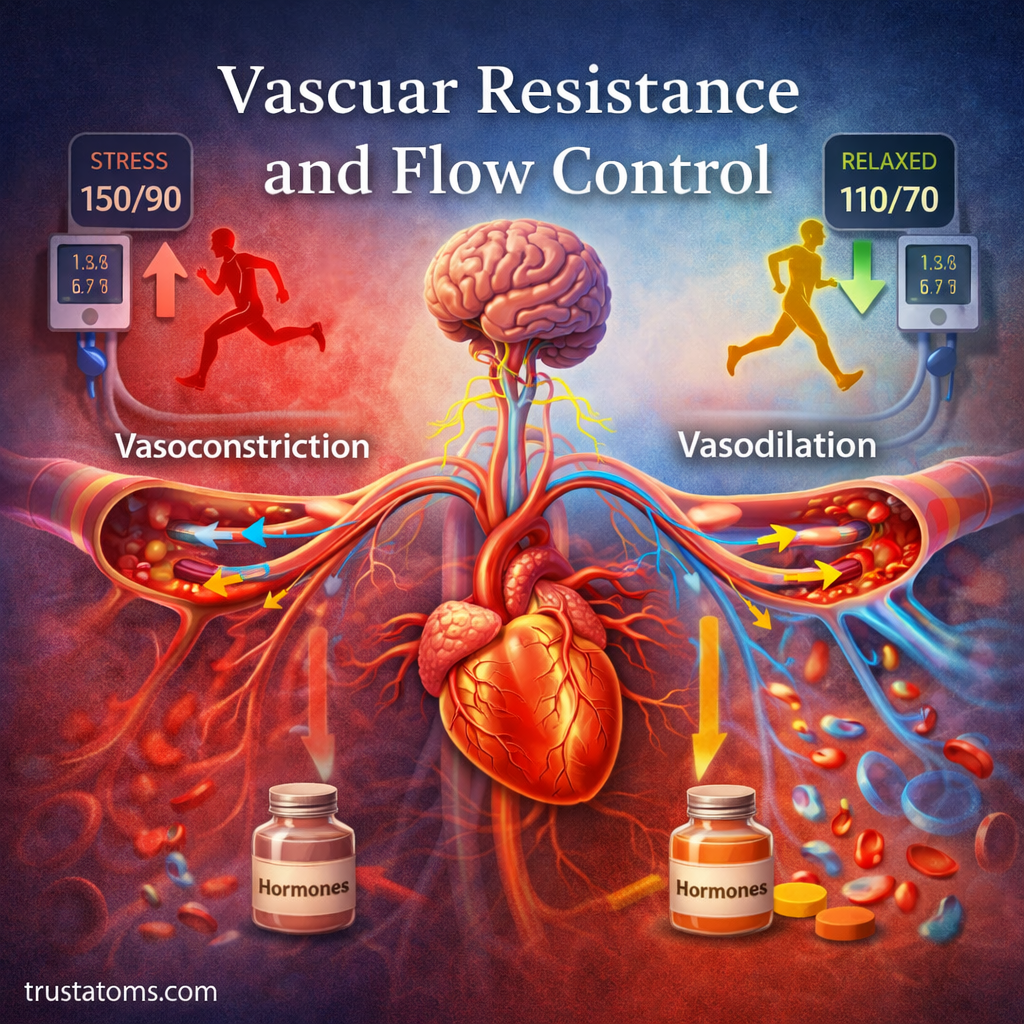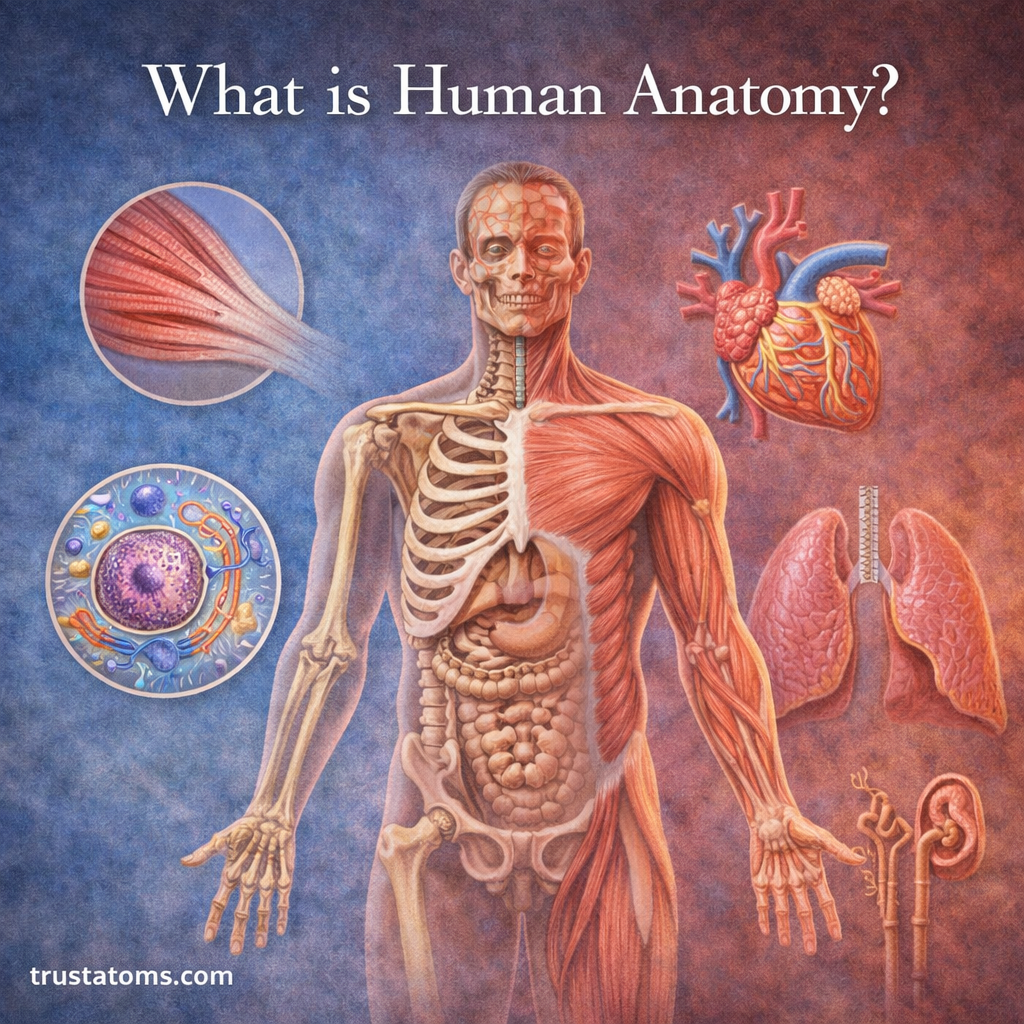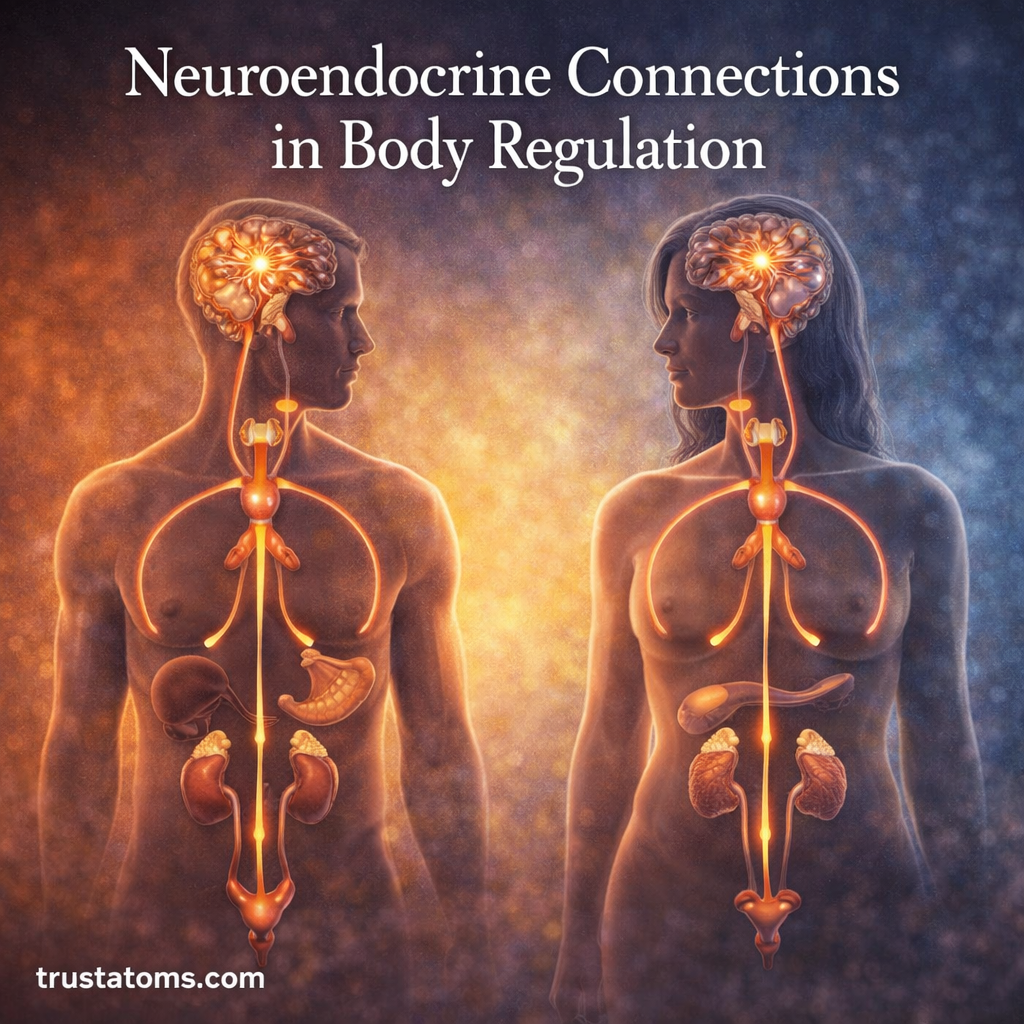
The human body maintains balance through constant communication between its systems. One of the most important partnerships is between the nervous system and the endocrine system—together known as the neuroendocrine system.
This connection allows the body to respond quickly to changes while also regulating long-term processes like growth, metabolism, stress, and reproduction.
What Are Neuroendocrine Connections?
Neuroendocrine connections refer to the interaction between:
- The nervous system (fast electrical signals)
- The endocrine system (slower hormonal signals)
These systems work together to:
- Maintain internal balance (homeostasis)
- Coordinate responses to stress
- Regulate body functions over time
The nervous system provides rapid responses, while the endocrine system delivers longer-lasting effects through hormones.
Key Structures in the Neuroendocrine System
Several important structures link neural signals to hormonal responses.
Hypothalamus
The hypothalamus is the central control hub.
- Receives input from the brain and body
- Converts neural signals into hormonal signals
- Maintains homeostasis (temperature, hunger, thirst)
Pituitary Gland
Often called the “master gland,” the pituitary:
- Releases hormones that control other glands
- Works closely with the hypothalamus
- Regulates growth, reproduction, and metabolism
Endocrine Glands
These glands respond to signals from the pituitary:
- Thyroid (metabolism)
- Adrenal glands (stress response)
- Gonads (reproductive hormones)
- Pancreas (blood sugar regulation)
How Neuroendocrine Communication Works
Neuroendocrine communication follows a coordinated sequence.
Step-by-Step Process
- The brain detects a change (e.g., stress, temperature)
- The hypothalamus processes the information
- Hormones are released to signal the pituitary gland
- The pituitary activates other endocrine glands
- Target organs respond to the hormonal signals
This system ensures the body reacts appropriately and maintains stability.
The Hypothalamic-Pituitary Axis
One of the most important neuroendocrine pathways is the hypothalamic-pituitary axis (HPA axis).
What It Does
- Links the brain to the endocrine system
- Regulates stress responses
- Controls hormone release throughout the body
Example: Stress Response
When you experience stress:
- The hypothalamus releases signaling hormones
- The pituitary activates the adrenal glands
- The adrenal glands release cortisol
Cortisol helps the body:
- Increase energy availability
- Heighten alertness
- Prepare for “fight or flight”
Feedback Loops and Regulation
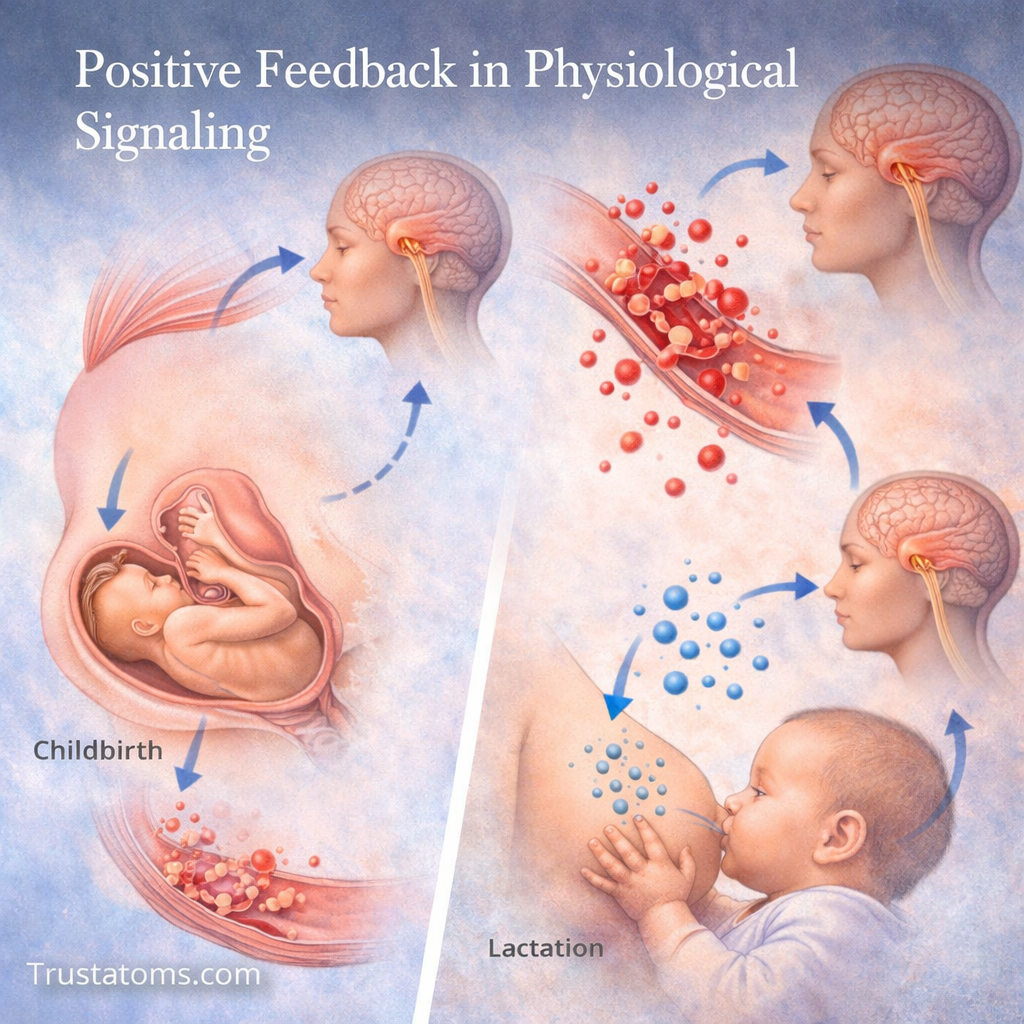
Neuroendocrine systems rely heavily on feedback mechanisms to maintain balance.
Negative Feedback
Most hormone systems use negative feedback:
- High hormone levels signal the brain to reduce production
- Prevents overactivation and imbalance
Example
- If thyroid hormone levels rise
- The hypothalamus reduces stimulation
- Hormone production decreases
This keeps the system stable and efficient.
Role in Homeostasis
Homeostasis is the body’s ability to maintain a stable internal environment.
Neuroendocrine connections regulate:
- Body temperature
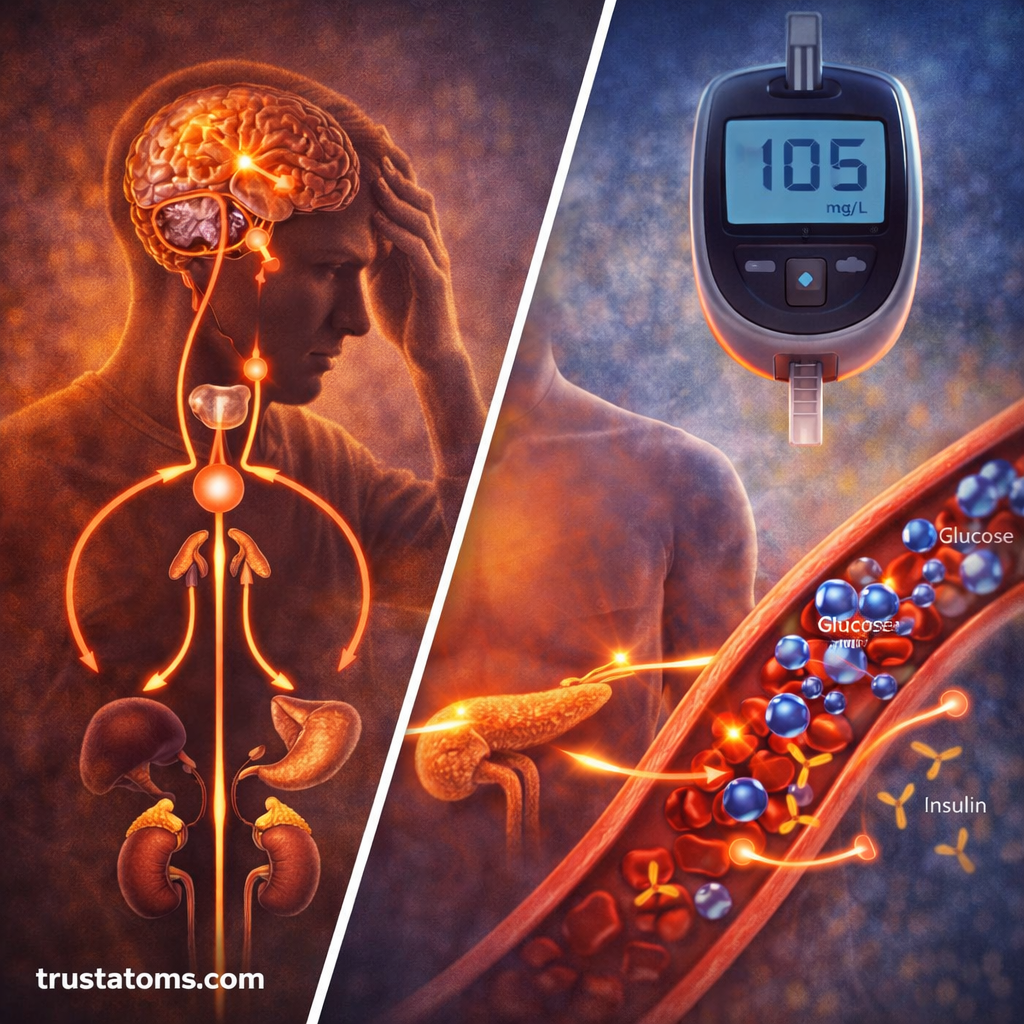
- Blood glucose levels
- Fluid balance
- Blood pressure
- Energy metabolism
These processes operate continuously, often without conscious awareness.
Neuroendocrine Control of Key Functions
Stress and Adaptation
- Regulates short-term and long-term stress responses
- Coordinates nervous and hormonal reactions
Growth and Development
- Controls growth hormone release
- Influences puberty and physical development
Metabolism
- Regulates how the body uses energy
- Controls thyroid hormone activity
Reproduction
- Coordinates reproductive hormones
- Regulates menstrual cycles and fertility
Interaction Between Speed and Duration
One of the defining features of neuroendocrine regulation is how it balances speed and duration.
Nervous System
- Fast responses (milliseconds)
- Short-lived effects
- Direct control of muscles and glands
Endocrine System
- Slower responses (seconds to hours)
- Long-lasting effects
- Widespread influence through bloodstream
Together, they provide both immediate and sustained regulation.
Clinical Significance
Disruptions in neuroendocrine connections can lead to various health conditions.
Hormonal Imbalances
- Thyroid disorders
- Adrenal dysfunction
- Growth abnormalities
Stress-Related Disorders
- Chronic stress can dysregulate cortisol
- Linked to anxiety, fatigue, and immune issues
Metabolic Disorders
- Diabetes (impaired glucose regulation)
- Obesity (hormonal and neural imbalance)
Reproductive Issues
- Infertility
- Irregular hormone cycles
Understanding these connections helps guide treatment and prevention strategies.
Factors That Influence Neuroendocrine Function
Several internal and external factors affect this system.
Biological Factors
- Genetics
- Age
- Overall health
Environmental and Lifestyle Factors
- Stress levels
- Sleep quality
- Diet and nutrition
- Physical activity
Healthy habits support balanced neuroendocrine function.
Key Takeaways
- Neuroendocrine connections link the nervous and endocrine systems
- The hypothalamus and pituitary gland play central roles
- Hormonal signaling regulates long-term body functions
- Feedback loops maintain balance and prevent overactivity
- These systems control stress, metabolism, growth, and reproduction
- Disruptions can lead to significant health conditions
Final Thoughts
The neuroendocrine system is a powerful example of how the body integrates fast and slow communication systems to maintain stability. By combining rapid neural signals with long-lasting hormonal effects, the body can respond efficiently to both immediate challenges and long-term needs.
Understanding these connections provides insight into how the body stays balanced—and what happens when that balance is disrupted.