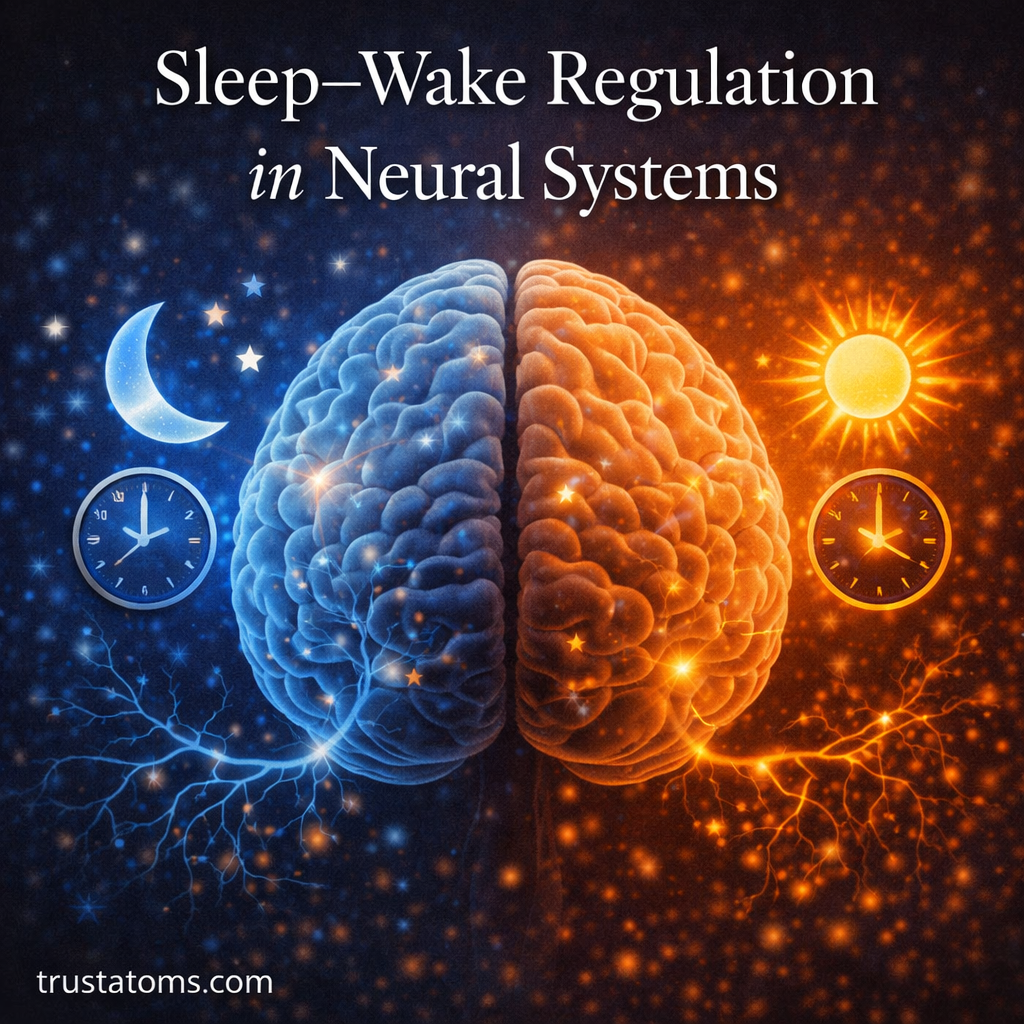
Sleep is not simply a passive state of rest—it is an active, highly regulated process controlled by complex neural systems. The brain continuously balances signals that promote wakefulness with those that trigger sleep, creating a dynamic cycle known as the sleep–wake cycle.
In this article, we’ll explore how neural systems regulate sleep and wakefulness, the key brain regions involved, and why this balance is essential for overall health and cognitive function.
What Is Sleep–Wake Regulation?
Sleep–wake regulation refers to the processes that control when we feel awake and when we feel sleepy.
This system is governed by two primary mechanisms:
- Circadian rhythms – the internal biological clock that follows a roughly 24-hour cycle
- Sleep homeostasis – the buildup of sleep pressure the longer you stay awake
Together, these systems ensure that sleep occurs at the right time and for the right duration.
The Role of the Circadian Rhythm
The circadian rhythm is your body’s internal clock, influencing sleep, alertness, and many physiological processes.
Key characteristics:
- Runs on a ~24-hour cycle
- Influenced by environmental cues, especially light
- Regulates hormone release and body temperature
The Suprachiasmatic Nucleus (SCN)
The SCN, located in the hypothalamus, acts as the master clock.
- Receives light signals from the eyes
- Adjusts timing based on day–night cycles
- Coordinates rhythms across the body
Light exposure in the morning helps reset the clock, promoting wakefulness.
Sleep Homeostasis: The Sleep Pressure System
Sleep homeostasis tracks how long you’ve been awake and builds pressure to sleep.
How it works:
- The longer you stay awake → the stronger the urge to sleep
- Sleep reduces this pressure
- Adenosine, a chemical that accumulates during wakefulness, plays a key role
This is why you feel increasingly tired throughout the day.
Key Brain Regions Involved
Multiple brain areas work together to regulate sleep and wakefulness.
Hypothalamus
- Controls both sleep-promoting and wake-promoting systems
- Contains the SCN and other sleep-regulating nuclei
Brainstem
- Maintains wakefulness through arousal systems
- Regulates transitions between sleep stages
Thalamus
- Relays sensory information
- Becomes less active during sleep, reducing external awareness
Pineal Gland
- Produces melatonin, a hormone that promotes sleep
- Released in response to darkness
Neurotransmitters and Sleep Regulation
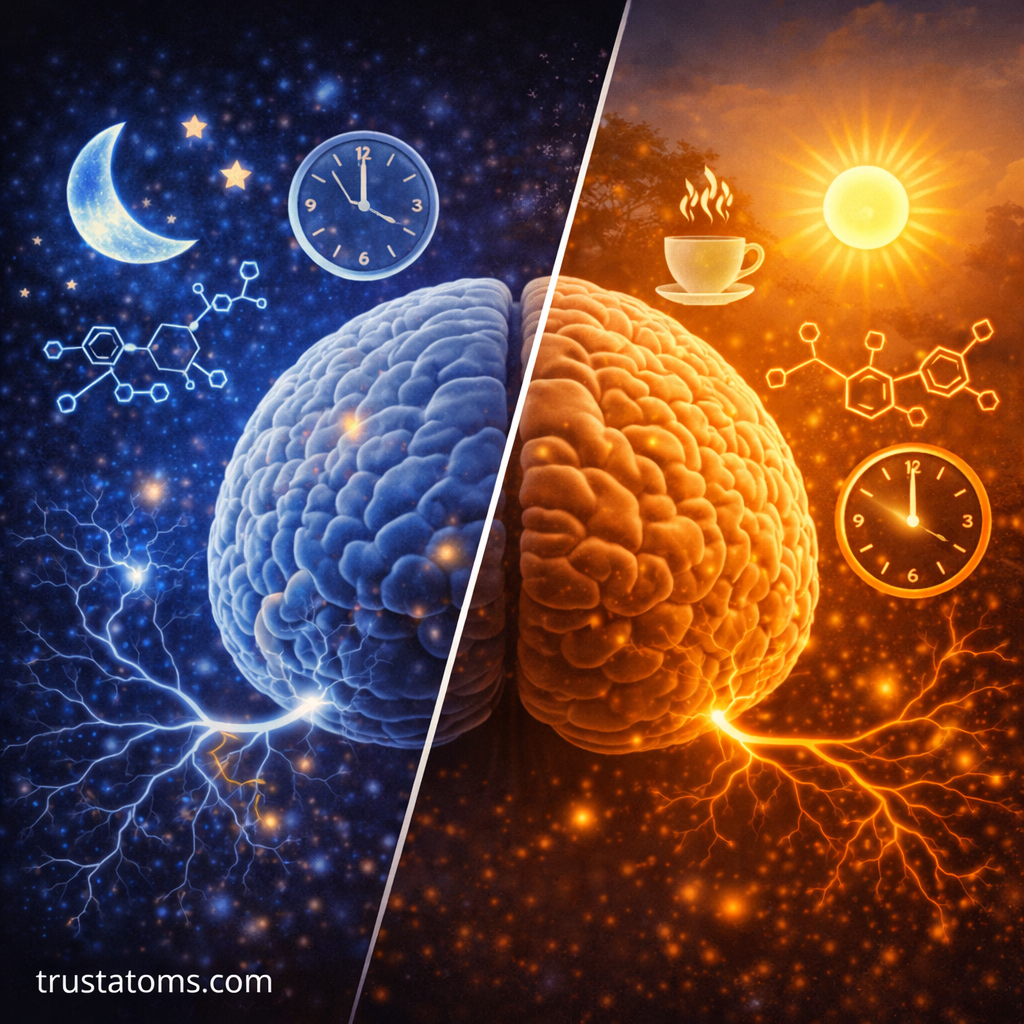
Chemical messengers in the brain play a crucial role in switching between sleep and wake states.
Wake-Promoting Neurotransmitters:
- Dopamine
- Norepinephrine
- Histamine
- Acetylcholine
Sleep-Promoting Signals:
- GABA (inhibitory neurotransmitter)
- Adenosine (builds sleep pressure)
- Melatonin (regulates circadian timing)
These systems interact like a switch, ensuring stability between states.
The Sleep–Wake “Flip-Flop” Switch
The brain uses a mechanism often described as a “flip-flop” switch to regulate sleep and wakefulness.
How it works:
- Wake-promoting neurons inhibit sleep-promoting neurons
- Sleep-promoting neurons inhibit wake-promoting neurons
This mutual inhibition creates:
- Rapid transitions between sleep and wake
- Stability (avoiding mixed or unstable states)
Stages of Sleep and Neural Activity
Sleep is not uniform—it consists of different stages with distinct neural patterns.
Non-REM Sleep (NREM)
- Includes light sleep and deep sleep
- Slower brain activity
- Important for physical restoration
REM Sleep
- Rapid eye movement stage
- Brain activity resembles wakefulness
- Associated with dreaming and memory processing
The brain cycles through these stages multiple times each night.
Environmental and Behavioral Influences
Sleep–wake regulation is influenced by both internal and external factors.
External Factors:
- Light exposure
- Temperature
- Noise
Behavioral Factors:
- Sleep schedule consistency
- Screen use before bed
- Caffeine and stimulant intake
Maintaining regular habits helps support healthy sleep patterns.
Disorders of Sleep–Wake Regulation
Disruptions in neural regulation can lead to sleep disorders.
Common examples:
- Insomnia: Difficulty falling or staying asleep
- Narcolepsy: Sudden sleep episodes during the day
- Sleep apnea: Interrupted breathing during sleep
- Circadian rhythm disorders: Misalignment of internal clock
These conditions often involve imbalances in neural signaling or timing.
Why Sleep–Wake Regulation Matters
Proper sleep–wake regulation is essential for:
- Cognitive performance and memory
- Emotional regulation
- Immune system function
- Physical recovery and energy balance
Chronic disruption can negatively impact both mental and physical health.
Tips for Supporting Healthy Sleep Regulation
Improving sleep habits can help align neural systems more effectively.
Practical strategies:
- Maintain a consistent sleep schedule
- Limit exposure to bright screens at night
- Get natural light exposure during the day
- Avoid caffeine late in the day
- Create a comfortable sleep environment
These habits support both circadian rhythm and sleep homeostasis.
Common Misconceptions About Sleep
Myth 1: You Can “Catch Up” on Sleep Easily
- Sleep debt can accumulate and is not always fully reversible
Myth 2: More Sleep Is Always Better
- Both too little and too much sleep can be harmful
Myth 3: Sleep Is Passive
- Sleep is an active, regulated neurological process
Final Thoughts
Sleep–wake regulation in neural systems is a finely tuned balance between biological rhythms, brain activity, and environmental influences. Through coordinated signals across multiple brain regions, the body ensures that sleep occurs at the right time and supports essential functions.
Understanding how these systems work can help you make better decisions about sleep habits and overall health, reinforcing the importance of consistent, high-quality rest.