Movement may feel automatic—walking, typing, reaching—but behind every action is a complex coordination system within the brain. One of the most important contributors to this process is the basal ganglia, a group of deep brain structures responsible for initiating, regulating, and refining movement.
Rather than directly causing muscles to move, the basal ganglia help plan, select, and control movements, ensuring they are smooth, purposeful, and efficient.
What Are the Basal Ganglia?
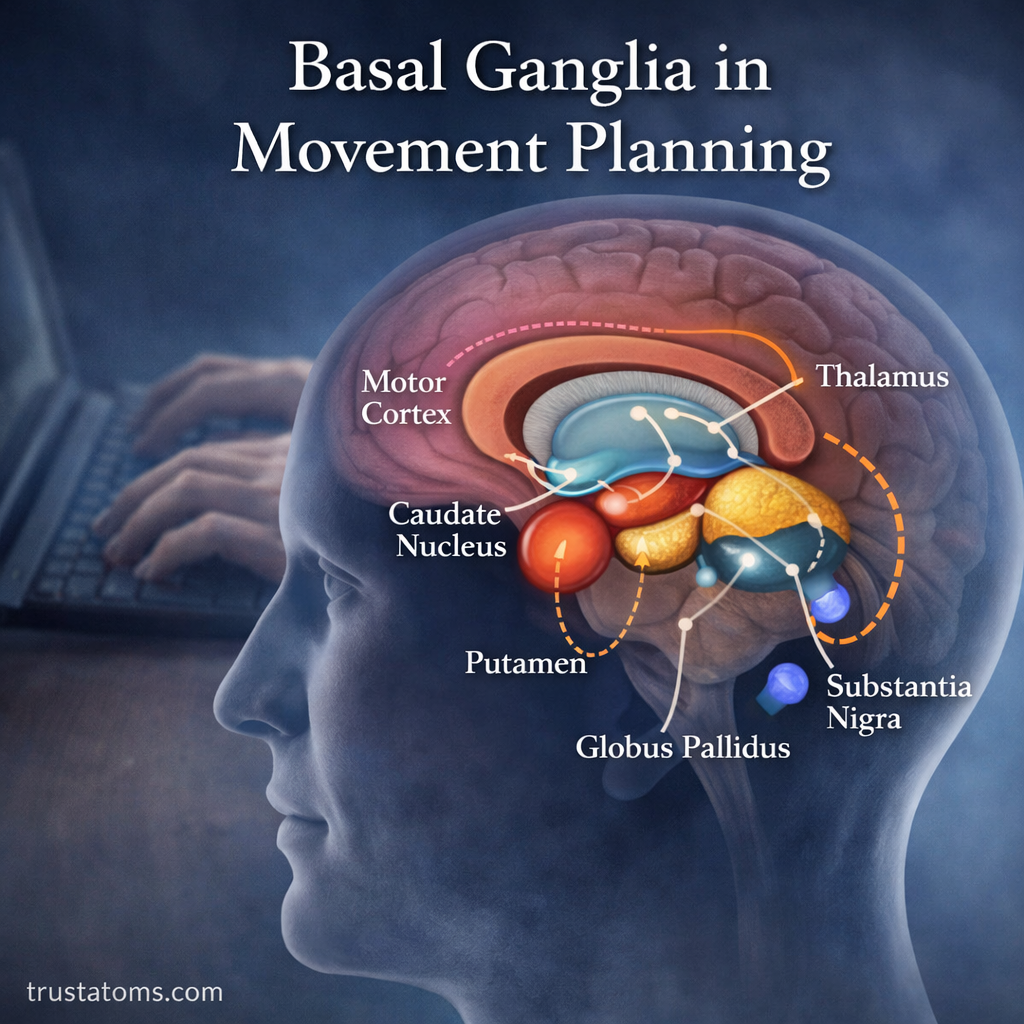
The basal ganglia are a collection of interconnected nuclei located deep within the cerebral hemispheres. They work closely with the motor cortex, thalamus, and cerebellum to coordinate voluntary movement.
Key components include:
- Caudate nucleus
- Putamen
- Globus pallidus
- Substantia nigra
- Subthalamic nucleus
Together, these structures form circuits that influence how movements are started, executed, and stopped.
Primary Role in Movement Planning
The basal ganglia are essential for deciding which movements to perform and which to suppress.
They help:
- Initiate desired movements
- Inhibit unwanted or competing movements
- Regulate movement intensity and speed
- Automate learned motor patterns
Without this system, movements would be uncoordinated, excessive, or difficult to initiate.
Direct and Indirect Pathways
Movement control within the basal ganglia relies on two major pathways that work in balance.
Direct Pathway: Facilitating Movement
The direct pathway promotes movement by reducing inhibitory signals.
Functions include:
- Allowing intended movements to proceed
- Enhancing motor activity
- Supporting smooth execution
In simple terms, it acts like a “go” signal for movement.
Indirect Pathway: Inhibiting Movement
The indirect pathway suppresses unnecessary or competing movements.
Functions include:
- Preventing unwanted muscle activity
- Refining motor control
- Maintaining precision
This pathway acts as a “stop” or “brake” system.
Balance Between Pathways
Efficient movement depends on the balance between these two pathways.
- Too much facilitation → excessive or uncontrolled movement
- Too much inhibition → slowed or reduced movement
This balance allows for controlled, purposeful actions.
Role of Dopamine in Movement Control
Dopamine is a key neurotransmitter that regulates basal ganglia activity, particularly through the substantia nigra.
It has a dual effect:
- Enhances the direct pathway (promotes movement)
- Inhibits the indirect pathway (reduces suppression)
This combined effect supports smooth and coordinated motion.
When dopamine levels are disrupted, movement control can be significantly affected.
How the Basal Ganglia Plan Movement
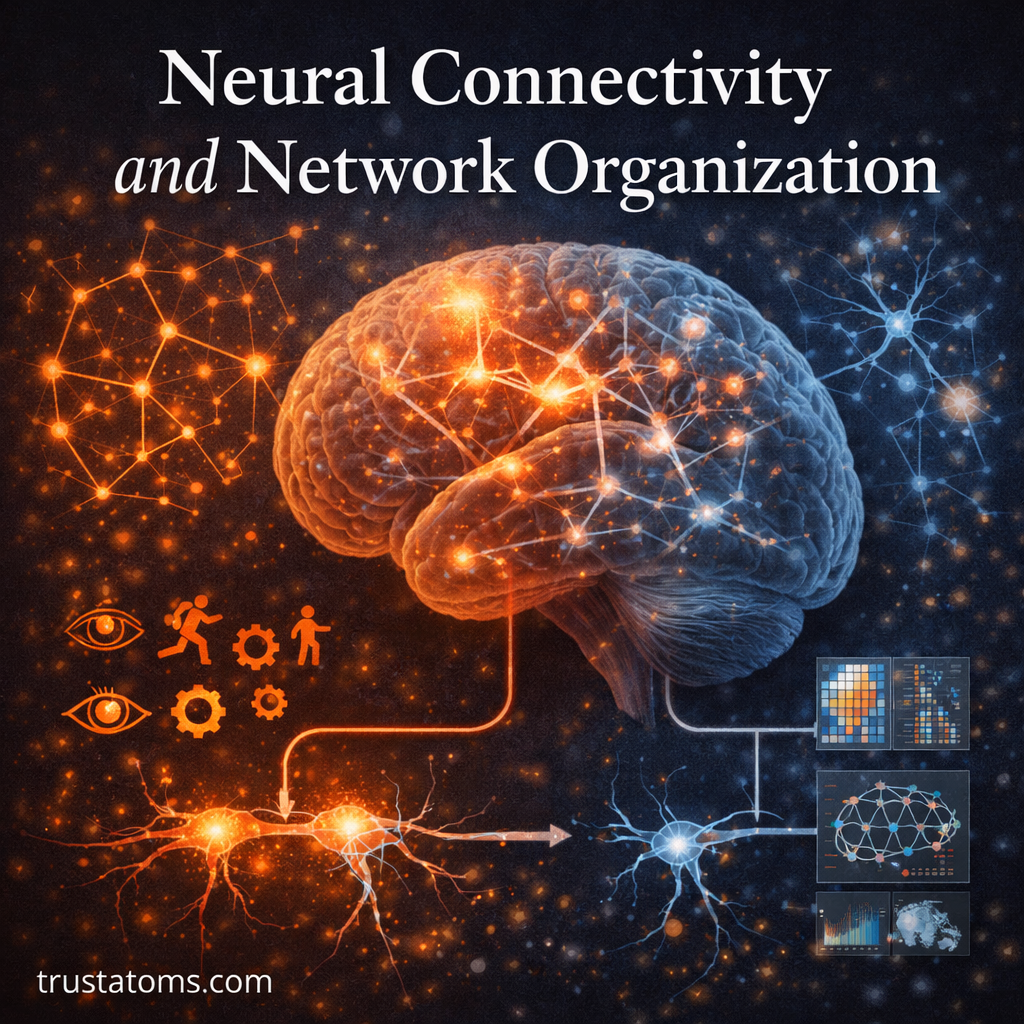
The basal ganglia do not act alone—they are part of a loop involving the cortex and thalamus.
Step-by-Step Process
- The motor cortex sends a movement plan
- The basal ganglia evaluate and refine the plan
- Signals are adjusted via direct and indirect pathways
- The thalamus relays the refined signal back to the cortex
- The cortex sends final commands to muscles
This loop ensures movements are appropriate, efficient, and well-timed.
Movement Automation and Habit Formation
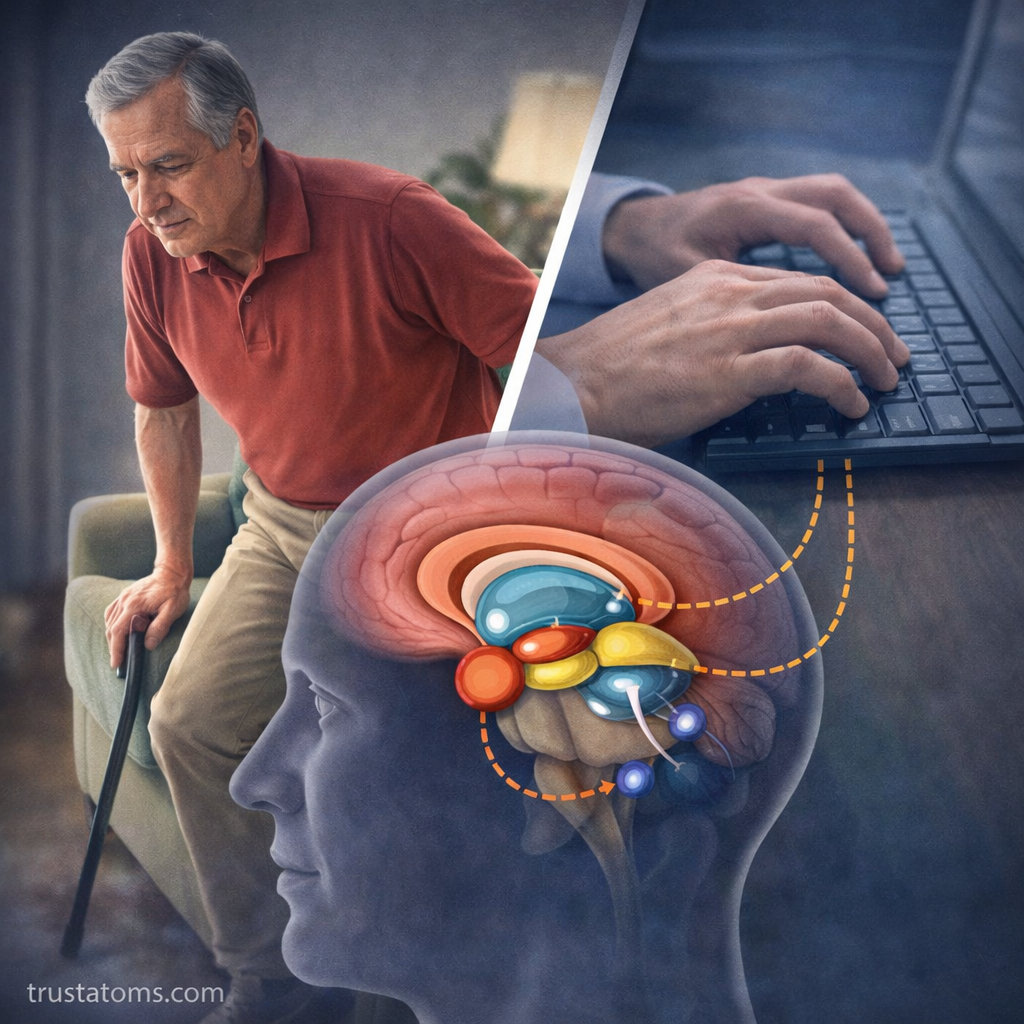
One of the most important functions of the basal ganglia is helping movements become automatic.
Examples include:
- Typing without looking at the keyboard
- Driving familiar routes
- Performing repetitive tasks
As skills are practiced:
- The basal ganglia take over routine control
- Less conscious effort is required
- Movements become faster and more precise
This frees up the brain to focus on other tasks.
Basal Ganglia and Motor Learning
The basal ganglia play a major role in learning new motor skills.
They help:
- Reinforce successful movement patterns
- Adjust actions based on feedback
- Improve coordination over time
This process is closely linked to reward systems, where dopamine signals reinforce effective behaviors.
Interaction With Other Brain Regions
Motor Cortex
- Plans and initiates voluntary movement
- Sends instructions to the basal ganglia
Thalamus
- Acts as a relay center
- Sends processed signals back to the cortex
Cerebellum
- Fine-tunes movement accuracy and timing
- Works alongside basal ganglia for smooth coordination
Together, these regions form a highly integrated movement system.
Basal Ganglia Disorders
Disruptions in the basal ganglia can lead to movement disorders, often due to imbalances in pathways or neurotransmitters.
Parkinson’s Disease
- Caused by dopamine loss in the substantia nigra
- Symptoms include slow movement (bradykinesia), rigidity, and tremors
- Reduced activity in the direct pathway
Huntington’s Disease
- Genetic condition affecting basal ganglia neurons
- Leads to excessive, uncontrolled movements (chorea)
- Reduced inhibition from the indirect pathway
Other Movement Disorders
- Dystonia (involuntary muscle contractions)
- Tourette syndrome (repetitive movements or sounds)
These conditions highlight the importance of balanced basal ganglia function.
Basal Ganglia and Everyday Movement
Even simple actions rely on the basal ganglia:
- Standing up from a chair
- Walking with coordinated steps
- Adjusting posture automatically
- Switching between movements smoothly
Without this system, even basic tasks would require significant conscious effort.
Key Takeaways
- The basal ganglia are essential for planning and controlling movement
- They help select desired actions and suppress unwanted ones
- Direct and indirect pathways work together to balance movement
- Dopamine plays a critical role in regulating these pathways
- The system supports motor learning, habit formation, and smooth execution
Final Thoughts
The basal ganglia are central to how we move through the world. By refining motor plans, balancing activity, and automating learned behaviors, they allow movements to feel natural and effortless.
Understanding their role in movement planning not only explains how everyday actions occur but also provides insight into neurological conditions that affect mobility. From simple gestures to complex skills, the basal ganglia are a vital part of human function.