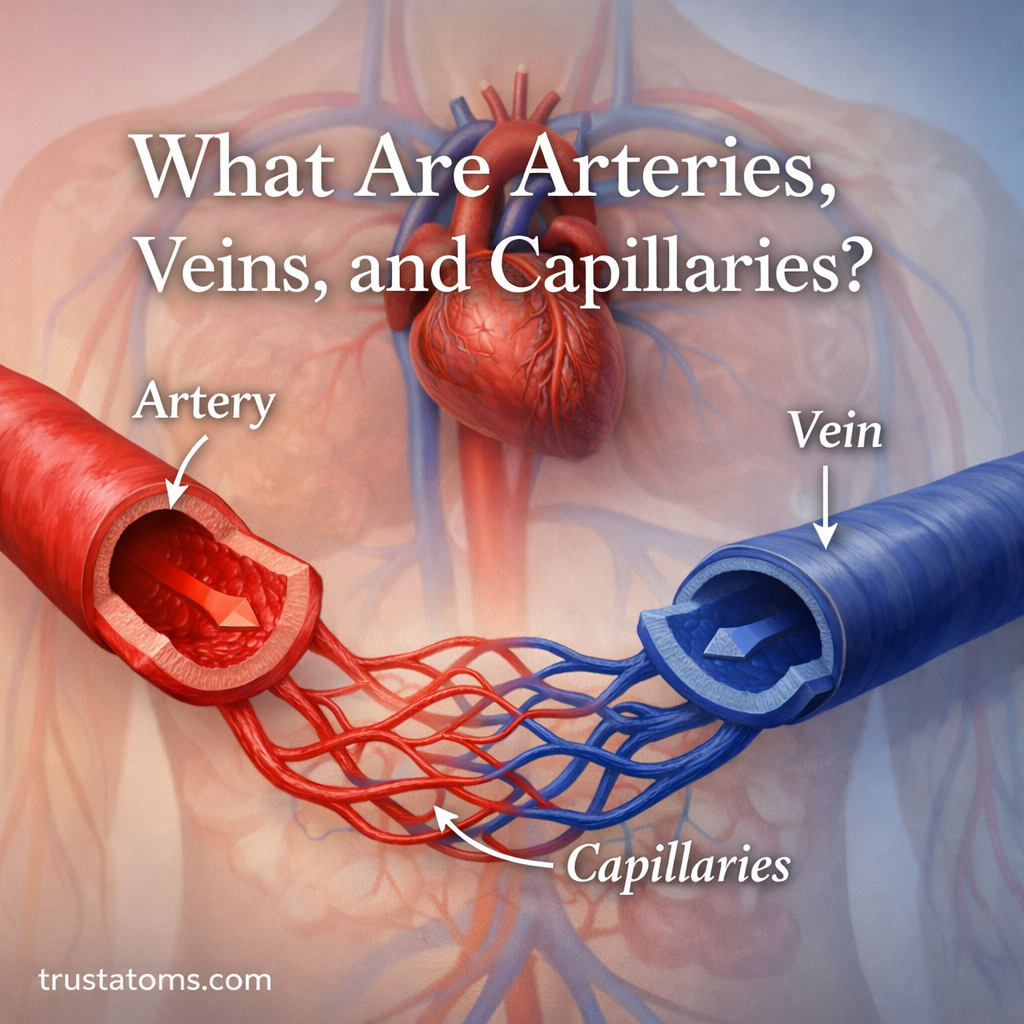
The human circulatory system is a vast and efficient network responsible for transporting blood, oxygen, nutrients, and waste products throughout the body. At the core of this system are three main types of blood vessels: arteries, veins, and capillaries.
Each plays a unique role in keeping your body functioning properly. Understanding how they work together helps explain how oxygen reaches your cells and how waste is removed.
Overview of Blood Vessels
Blood vessels form a closed-loop system connected to the heart. They ensure continuous circulation, allowing the body to maintain balance and support vital processes.
There are three primary types:
- Arteries – carry blood away from the heart
- Veins – carry blood back to the heart
- Capillaries – connect arteries and veins, enabling exchange at the cellular level
What Are Arteries?
Arteries are strong, elastic blood vessels that transport blood away from the heart to the rest of the body.
Key Characteristics of Arteries
- Thick, muscular walls to handle high pressure
- Elastic structure that helps maintain blood flow
- Typically carry oxygen-rich blood (except pulmonary arteries)
How Arteries Function
When the heart pumps, it sends oxygenated blood into the arteries. These vessels expand and contract with each heartbeat, helping push blood forward efficiently.
Major Arteries in the Body
- Aorta – the largest artery, carrying blood from the heart to the body
- Coronary arteries – supply blood to the heart muscle
- Carotid arteries – deliver blood to the brain
What Are Veins?
Veins are blood vessels that return blood back to the heart after it has delivered oxygen and nutrients to tissues.
Key Characteristics of Veins
- Thinner walls compared to arteries
- Lower pressure blood flow
- Contain valves to prevent backflow
How Veins Function
Veins rely on muscle movement and valves to push blood back toward the heart. This is especially important in the legs, where blood must travel upward against gravity.
Types of Veins
- Superficial veins – located near the skin
- Deep veins – found within muscles
- Pulmonary veins – carry oxygenated blood from the lungs to the heart
What Are Capillaries?
Capillaries are the smallest and most numerous blood vessels in the body. They serve as the connection point between arteries and veins.
Key Characteristics of Capillaries
- Extremely thin walls (only one cell thick)
- Allow direct exchange between blood and tissues
- Form dense networks throughout the body
How Capillaries Function
Capillaries enable the transfer of:
- Oxygen and nutrients from blood to cells
- Carbon dioxide and waste products from cells to blood
This exchange is essential for cellular survival and overall health.
How Arteries, Veins, and Capillaries Work Together
These three types of blood vessels form a continuous pathway:
- The heart pumps oxygen-rich blood into arteries
- Arteries branch into smaller vessels called arterioles
- Arterioles lead to capillaries, where exchange occurs
- Capillaries connect to venules (small veins)
- Venules merge into veins, returning blood to the heart
This cycle repeats constantly, ensuring that every cell in the body receives what it needs.
Key Differences Between Arteries, Veins, and Capillaries
Structure
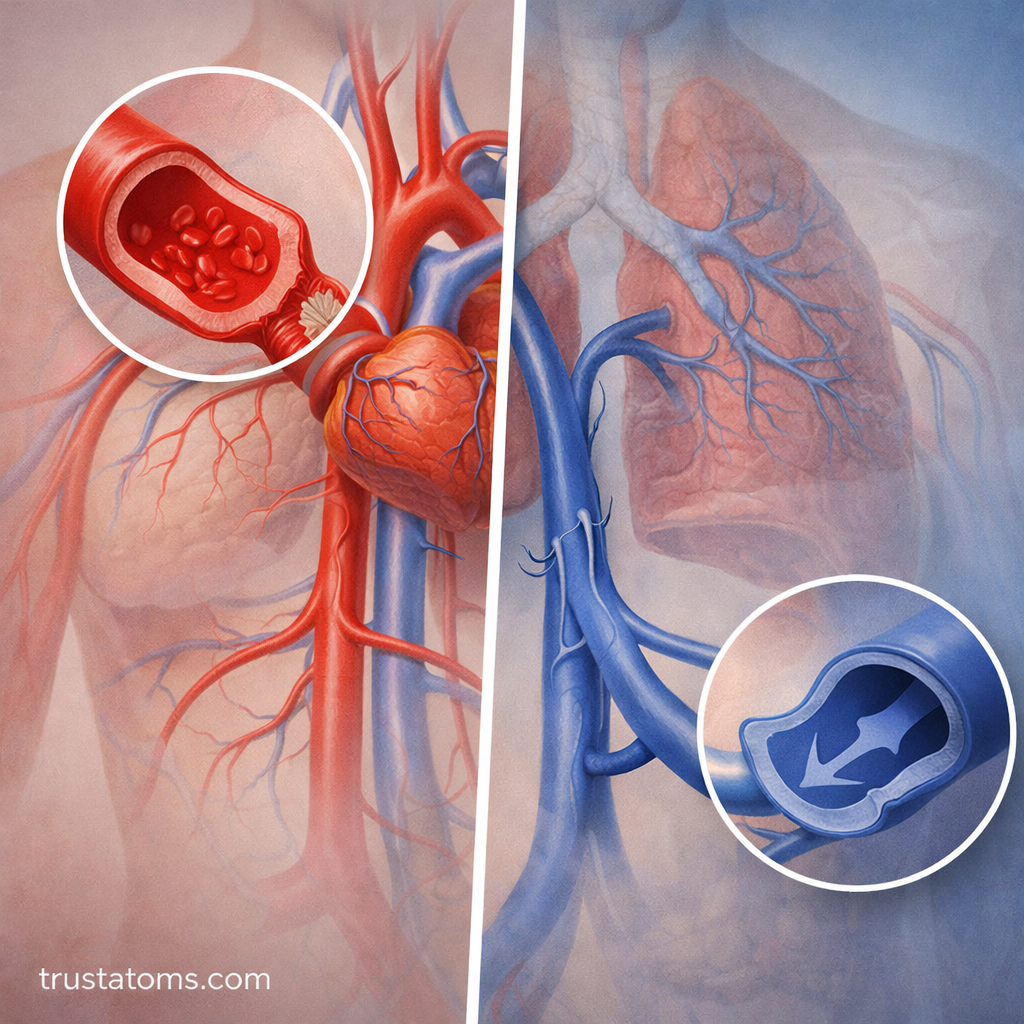
- Arteries: thick, elastic walls
- Veins: thinner walls with valves
- Capillaries: extremely thin, single-cell walls
Function
- Arteries: carry blood away from the heart
- Veins: return blood to the heart
- Capillaries: allow exchange of gases and nutrients
Blood Pressure
- Arteries: high pressure
- Veins: low pressure
- Capillaries: very low pressure
Why Blood Vessels Matter for Health
Healthy blood vessels are essential for maintaining proper circulation. When they become damaged or blocked, it can lead to serious conditions such as:
- High blood pressure (hypertension)
- Atherosclerosis (plaque buildup in arteries)
- Varicose veins
- Poor circulation
Maintaining a healthy lifestyle—through exercise, balanced nutrition, and avoiding smoking—helps keep your blood vessels functioning efficiently.
Final Thoughts
Arteries, veins, and capillaries each play a vital role in the circulatory system. Together, they create a seamless network that delivers oxygen and nutrients while removing waste.
By understanding how these vessels function, you gain a clearer picture of how your body sustains life at every moment.