Blood is a specialized fluid that circulates throughout the body, delivering oxygen, nutrients, hormones, and removing waste products. While it may look like a simple red liquid, blood is actually made up of different components that each play a critical role in maintaining life.
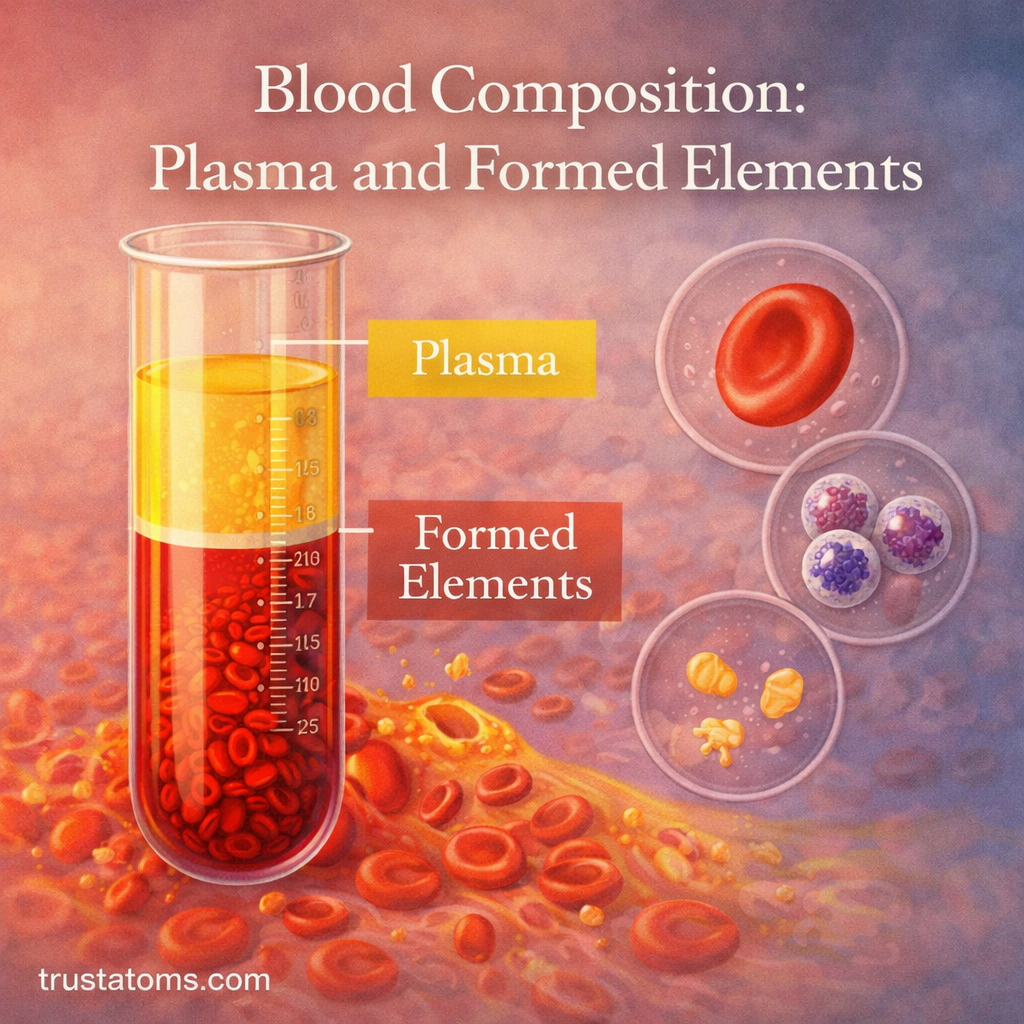
These components are broadly divided into two categories: plasma and formed elements.
Overview of Blood Composition
Blood consists of:
- Plasma (the liquid portion)
- Formed elements (cells and cell fragments)
General Breakdown
- Plasma: about 55% of total blood volume
- Formed elements: about 45% of total blood volume
Together, these components allow blood to perform transport, protection, and regulation functions.
What Is Plasma?
Plasma is the pale yellow liquid that makes up more than half of blood’s volume. It serves as the medium that carries cells and dissolved substances throughout the body.
Key Components of Plasma
Plasma is mostly water, but it also contains important substances:
- Water (about 90%)
- Proteins (albumin, globulins, fibrinogen)
- Electrolytes (sodium, potassium, calcium)
- Nutrients (glucose, amino acids)
- Hormones
- Waste products (urea, carbon dioxide)
Functions of Plasma
Plasma plays several essential roles:
- Transports nutrients, hormones, and waste
- Maintains blood volume and pressure
- Helps regulate body temperature
- Supports immune function through proteins
- Aids in blood clotting (via clotting factors)
Without plasma, blood cells would not be able to move efficiently through the body.
What Are Formed Elements?
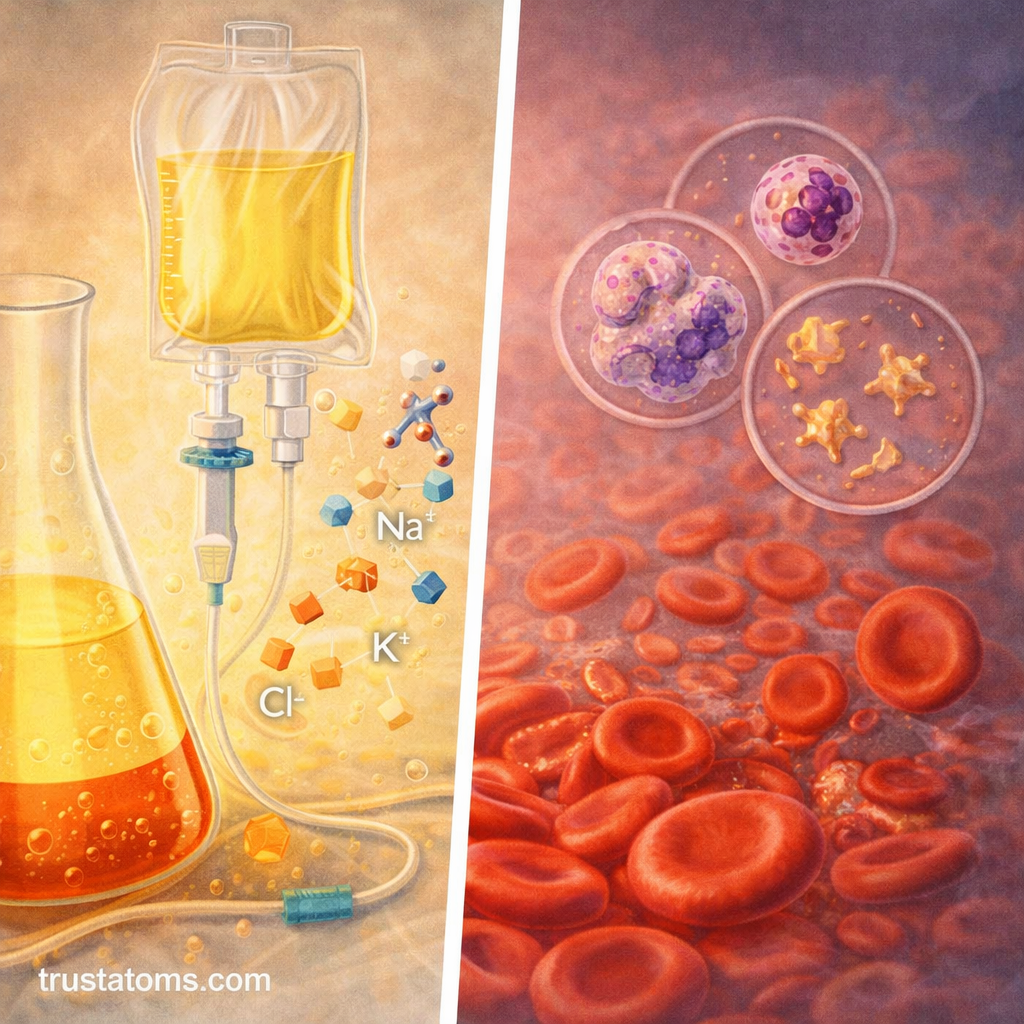
Formed elements are the cellular components of blood. They include red blood cells, white blood cells, and platelets.
Red Blood Cells (Erythrocytes)
Red blood cells are the most abundant type of blood cell and are responsible for transporting oxygen.
Key Features
- Contain hemoglobin, a protein that binds oxygen
- Disc-shaped and flexible
- Lack a nucleus (in humans)
Main Functions
- Carry oxygen from the lungs to tissues
- Transport carbon dioxide back to the lungs
Their unique shape increases surface area, making gas exchange more efficient.
White Blood Cells (Leukocytes)
White blood cells are part of the immune system and help protect the body from infection and disease.
Key Features
- Fewer in number compared to red blood cells
- Have a nucleus
- Can move in and out of blood vessels
Types of White Blood Cells
- Neutrophils – fight bacterial infections
- Lymphocytes – support immune responses (B and T cells)
- Monocytes – become macrophages that engulf pathogens
- Eosinophils – respond to parasites and allergies
- Basophils – release chemicals involved in inflammation
Main Functions
- Defend against pathogens
- Remove damaged cells
- Coordinate immune responses
Platelets (Thrombocytes)
Platelets are small cell fragments that play a crucial role in blood clotting.
Key Features
- Not full cells (cell fragments)
- Produced in the bone marrow
- Short lifespan
Main Functions
- Form clots to stop bleeding
- Work with clotting proteins in plasma
- Help repair damaged blood vessels
Platelets are essential for preventing excessive blood loss after injury.
How Plasma and Formed Elements Work Together
Blood functions effectively because plasma and formed elements interact continuously.
Example of Coordination
- Plasma carries red blood cells through vessels
- Red blood cells deliver oxygen to tissues
- White blood cells monitor for infections
- Platelets respond to injury and initiate clotting
- Plasma proteins assist in clot formation and healing
This coordination ensures that the body maintains balance and responds quickly to changes.
Why Blood Composition Matters
Changes in blood composition can indicate or lead to health problems.
Common Issues
- Low red blood cells → anemia
- High white blood cells → infection or inflammation
- Low platelets → increased bleeding risk
- Imbalanced plasma proteins → fluid or immune disorders
Doctors often analyze blood composition through tests to assess overall health.
Key Takeaways
- Blood is made up of plasma and formed elements
- Plasma is the liquid portion that transports substances
- Formed elements include red blood cells, white blood cells, and platelets
- Each component has a specific and essential function
- Proper balance is crucial for overall health
Final Thoughts
Blood is more than just a transport fluid—it is a complex and dynamic system made up of multiple components working together. Plasma provides the foundation for movement, while formed elements carry out specialized tasks like oxygen delivery, immune defense, and clotting.
Understanding blood composition helps reveal how the body maintains stability and responds to both everyday needs and medical challenges.