Introduction
Blood doesn’t just move randomly through your body—it flows through a highly regulated system of vessels that adjust constantly to meet your body’s needs. Whether you’re exercising, resting, or responding to stress, your circulatory system fine-tunes blood flow using a concept known as vascular resistance.
Vascular resistance plays a critical role in controlling blood pressure, directing oxygen delivery, and maintaining overall cardiovascular stability. Understanding how it works helps explain how your body adapts to changing conditions in real time.
What Is Vascular Resistance?
Vascular resistance refers to the force that opposes blood flow through blood vessels. It mainly depends on how narrow or wide the vessels are.
In simple terms:
- Narrow vessels → higher resistance → less blood flow
- Wide vessels → lower resistance → more blood flow
This resistance is a key factor in determining how easily blood moves through the circulatory system.
The Relationship Between Flow, Pressure, and Resistance
Blood flow is influenced by three main factors:
- Pressure (the force pushing blood forward)
- Resistance (the opposition to flow)
- Vessel diameter (the size of the blood vessel)
Key Principle
- Increased resistance reduces blood flow
- Decreased resistance increases blood flow
This relationship allows the body to regulate where and how much blood is delivered to specific tissues.
Role of Blood Vessel Diameter
The diameter of blood vessels—especially small arteries and arterioles—is the most important factor affecting vascular resistance.
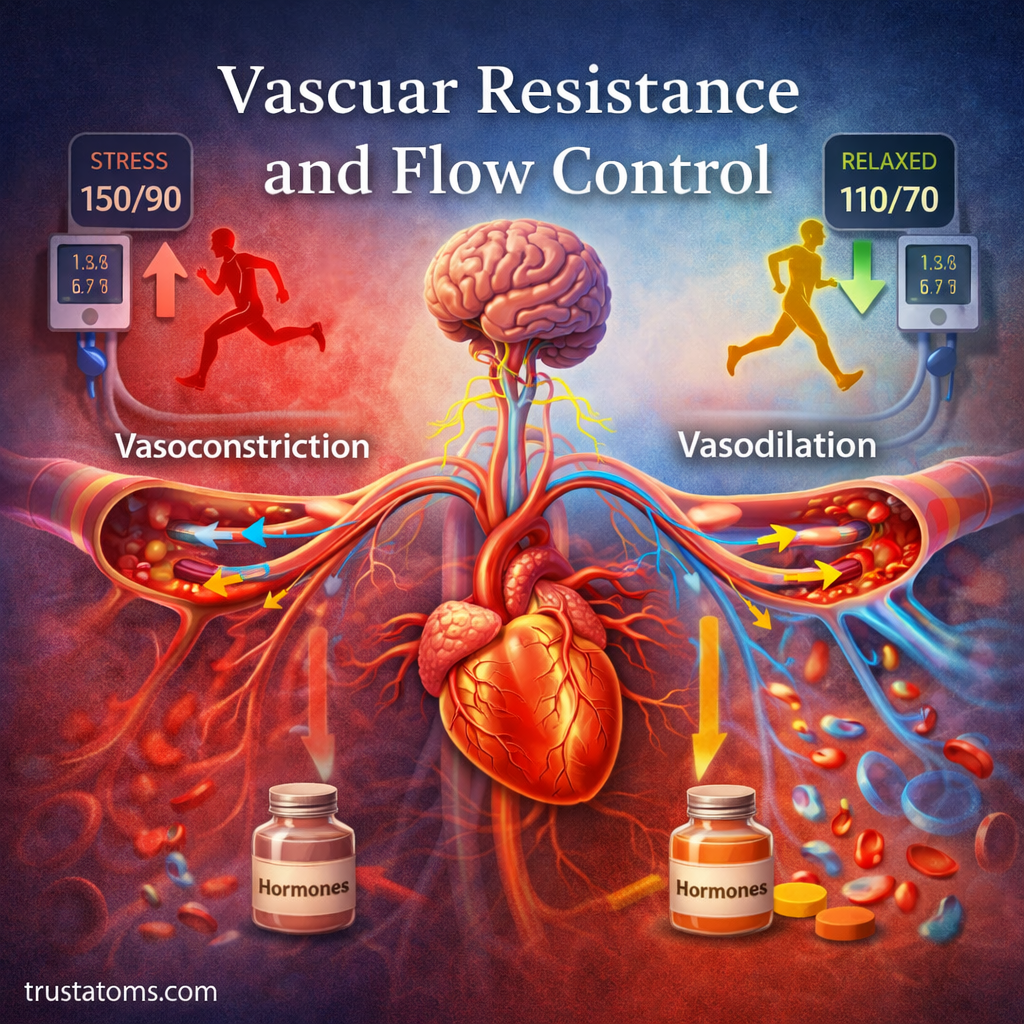
Vasoconstriction
Vasoconstriction is the narrowing of blood vessels.
Effects:
- Increases resistance
- Reduces blood flow
- Raises blood pressure
Vasodilation
Vasodilation is the widening of blood vessels.
Effects:
- Decreases resistance
- Increases blood flow
- Lowers blood pressure
Even small changes in vessel diameter can lead to significant changes in resistance and flow.
The Role of Arterioles in Flow Control
Arterioles are small blood vessels that act as control points for blood distribution.
Functions of arterioles:
- Regulate blood flow to tissues
- Adjust resistance rapidly
- Maintain stable blood pressure
Because they can constrict or dilate quickly, arterioles are often called the “resistance vessels” of the circulatory system.
Autonomic Regulation of Vascular Resistance
The autonomic nervous system (ANS) plays a major role in controlling vessel diameter.
Sympathetic Nervous System
- Causes vasoconstriction in most vessels
- Increases resistance and blood pressure
- Redirects blood to essential organs during stress
Parasympathetic Nervous System
- Has a more limited direct effect on most blood vessels
- Indirectly promotes relaxation and reduced resistance
This system ensures that blood flow is adjusted automatically based on your body’s needs.
Local Control of Blood Flow
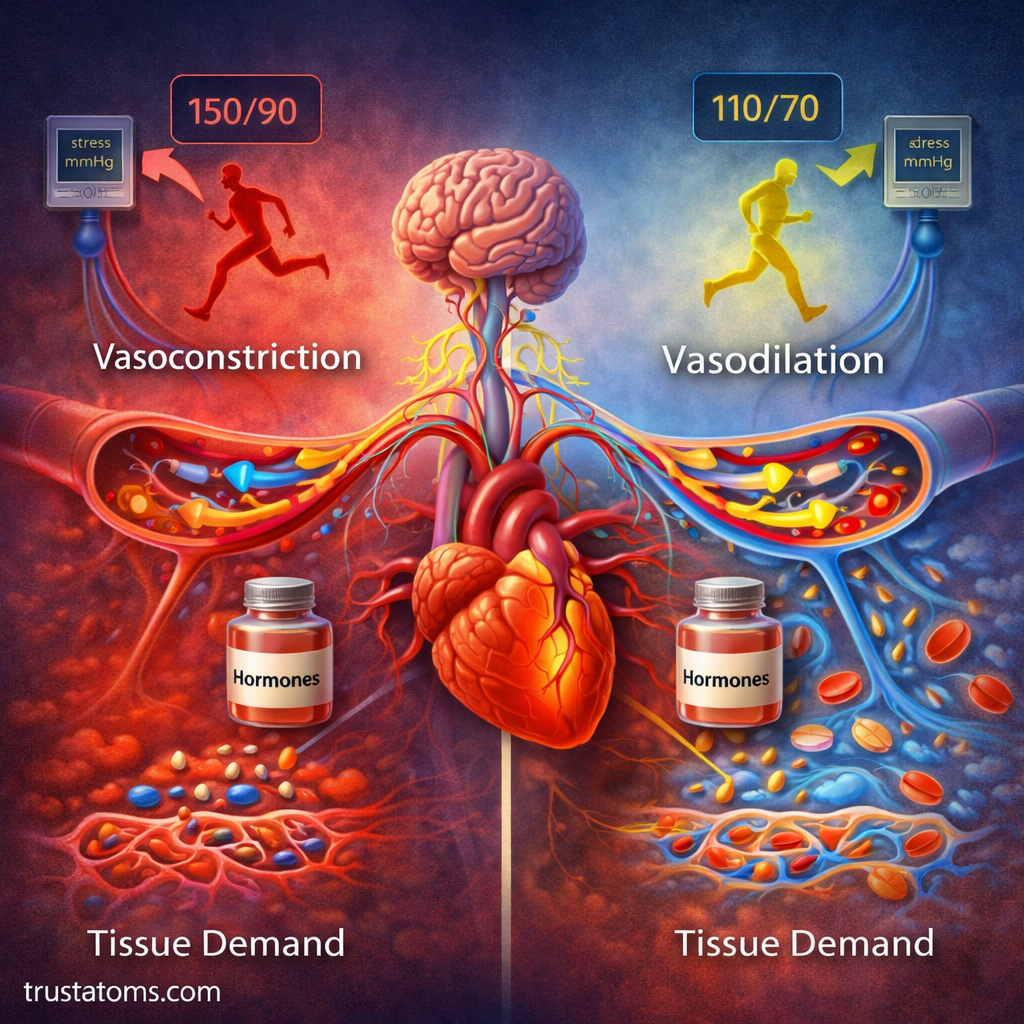
In addition to nervous system control, tissues can regulate their own blood supply.
Key Local Factors
- Oxygen levels
- Carbon dioxide levels
- pH (acidity)
- Temperature
Example
- Low oxygen in muscles → vasodilation → increased blood flow
- High carbon dioxide → signals need for more oxygen → increased flow
This process is called local autoregulation and is essential for matching blood supply with demand.
Hormonal Influence on Vascular Resistance
Hormones also affect how blood vessels behave.
Important Hormones
- Epinephrine (adrenaline)
- Norepinephrine
- Angiotensin II
Effects
- Can cause vasoconstriction or vasodilation depending on the situation
- Help regulate blood pressure during stress, exercise, or fluid imbalance
For example:
- Angiotensin II strongly increases resistance to raise blood pressure
- Epinephrine can either constrict or dilate vessels depending on the target tissue
Blood Viscosity and Resistance
Resistance is also affected by the thickness (viscosity) of blood.
Factors That Increase Viscosity
- Dehydration
- High red blood cell count
- Certain medical conditions
Effects
- Thicker blood → more resistance → reduced flow
- Thinner blood → less resistance → easier circulation
Why Vascular Resistance Matters
Proper control of vascular resistance is essential for:
- Maintaining healthy blood pressure
- Delivering oxygen and nutrients efficiently
- Supporting organ function
- Adapting to exercise and stress
If resistance is too high or too low, it can disrupt circulation and lead to health issues.
Common Problems Related to Vascular Resistance
Imbalances in vascular resistance can contribute to several conditions:
High Resistance
- Hypertension (high blood pressure)
- Increased strain on the heart
- Reduced tissue perfusion
Low Resistance
- Hypotension (low blood pressure)
- Dizziness or fainting
- Poor circulation
Other Issues
- Atherosclerosis (narrowed arteries)
- Shock (severe drop in blood pressure and flow)
Final Thoughts
Vascular resistance is a fundamental part of how your circulatory system controls blood flow and maintains balance in the body. Through a combination of vessel diameter changes, nervous system input, local tissue signals, and hormonal regulation, your body can precisely direct blood where it’s needed most.
This constant adjustment ensures that every organ receives the oxygen and nutrients it requires—whether you’re at rest or in motion.