The human body constantly monitors and adjusts blood pressure to ensure stable circulation. One of the most important mechanisms involved in this process is the baroreceptor reflex—a rapid feedback system that helps maintain cardiovascular stability.
Baroreceptors act as pressure sensors, detecting changes in blood pressure and triggering immediate responses to keep it within a healthy range.
What Are Baroreceptors?
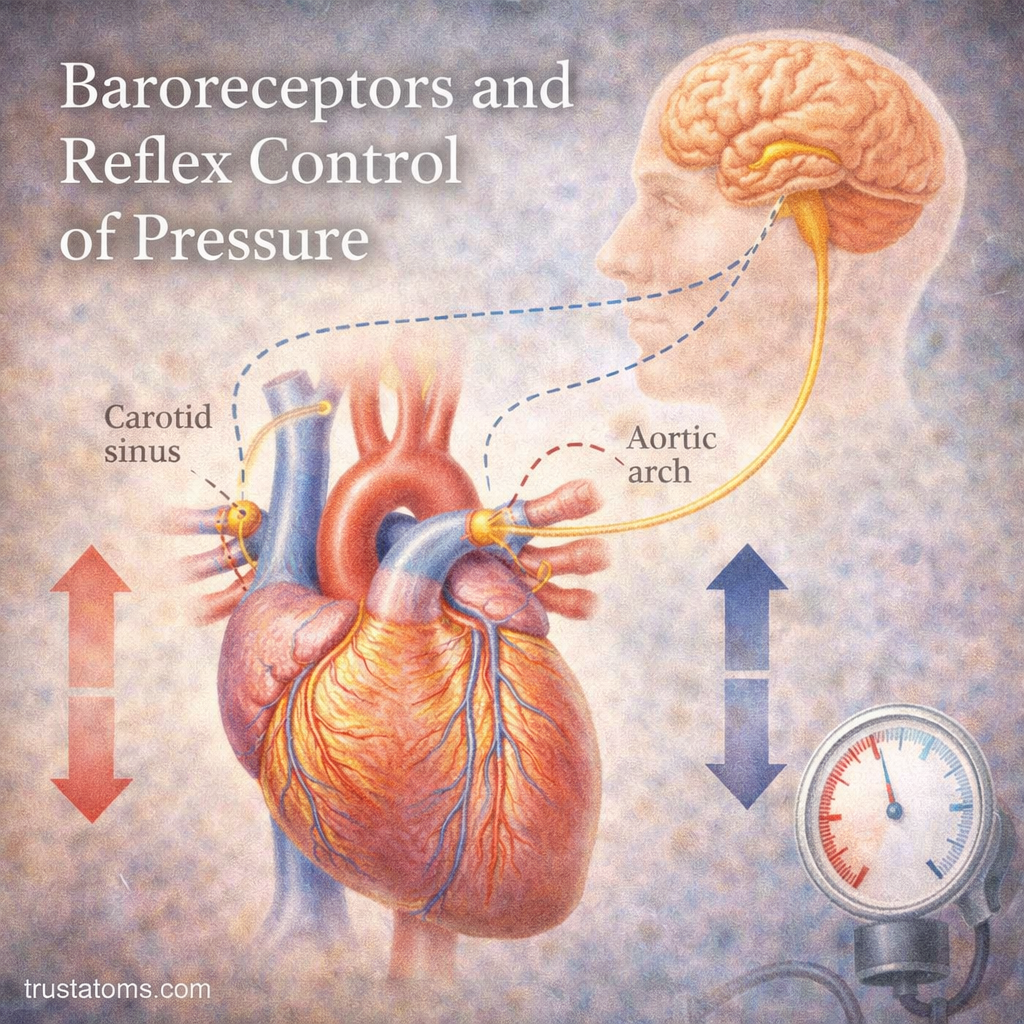
Baroreceptors are specialized sensory receptors located in the walls of certain blood vessels. They detect changes in pressure by sensing the stretch of the vessel walls.
Primary Locations of Baroreceptors
- Carotid sinus (in the neck)
- Aortic arch (near the heart)
These locations allow baroreceptors to monitor blood pressure close to the brain and major arteries.
How Baroreceptors Work
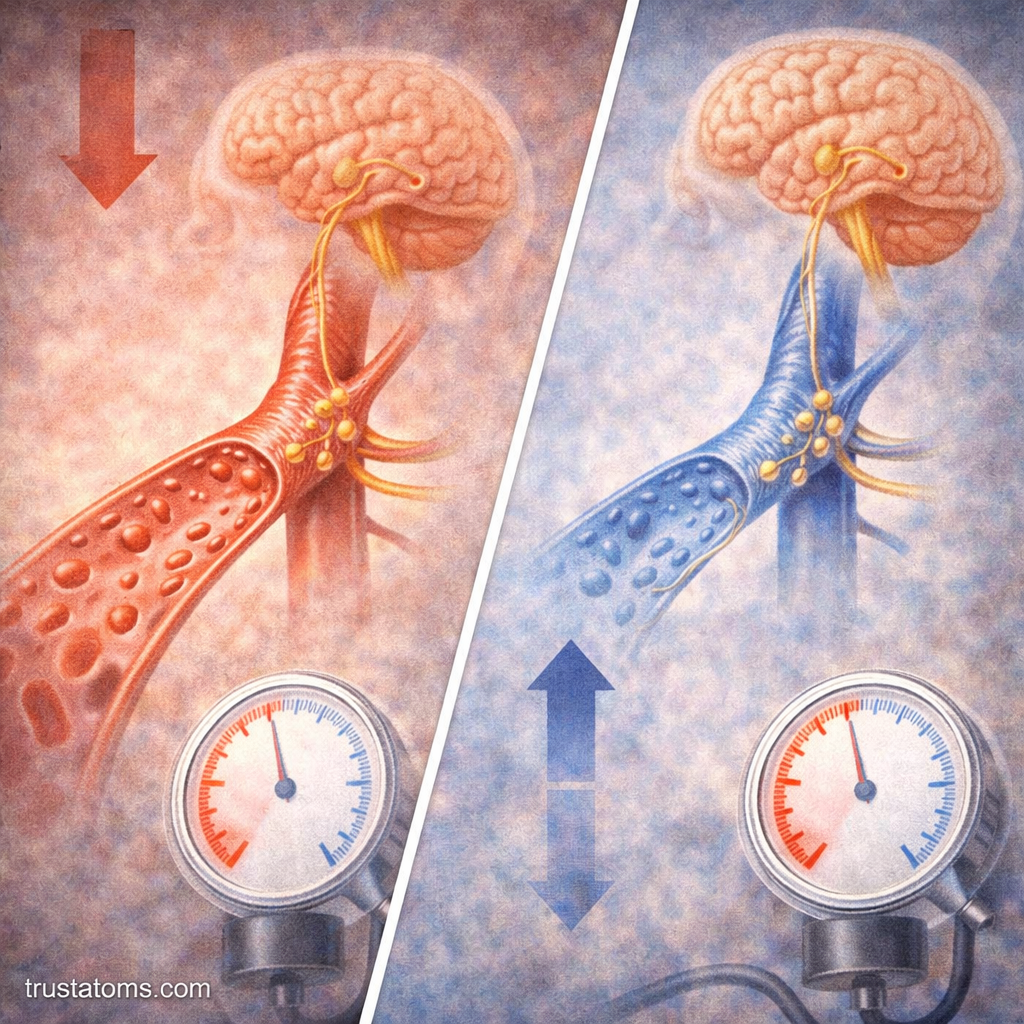
Baroreceptors respond to changes in arterial pressure by altering their firing rate (signals sent to the brain).
Increased Blood Pressure
When blood pressure rises:
- Blood vessels stretch more
- Baroreceptors increase their firing rate
- Signals are sent to the brainstem
Decreased Blood Pressure
When blood pressure drops:
- Vessel stretch decreases
- Baroreceptors reduce their firing rate
- Fewer signals are sent to the brain
This information allows the body to respond quickly to maintain balance.
The Baroreceptor Reflex
The baroreceptor reflex is a negative feedback system that helps stabilize blood pressure within seconds.
Step-by-Step Process
- Change in blood pressure is detected by baroreceptors
- Signals are sent to the medulla oblongata in the brainstem
- The autonomic nervous system is activated
- Heart rate and vessel diameter are adjusted
- Blood pressure returns toward normal
This reflex is essential for short-term regulation.
Role of the Nervous System
The autonomic nervous system controls the response to baroreceptor signals.
Sympathetic Response
Activated when blood pressure is low:
- Increases heart rate
- Strengthens heart contractions
- Causes vasoconstriction (narrowing of blood vessels)
Parasympathetic Response
Activated when blood pressure is high:
- Decreases heart rate
- Promotes vasodilation (widening of blood vessels)
These opposing actions help fine-tune blood pressure.
Effects on the Cardiovascular System
Baroreceptor activity directly influences the heart and blood vessels.
Heart Rate Regulation
- Increased pressure → slower heart rate
- Decreased pressure → faster heart rate
Vascular Resistance
- Vasoconstriction raises blood pressure
- Vasodilation lowers blood pressure
Together, these adjustments help maintain stable circulation.
Importance in Daily Life
The baroreceptor reflex operates continuously, especially during everyday activities.
Postural Changes
When you stand up quickly:
- Blood pools in the lower body
- Blood pressure temporarily drops
- Baroreceptors trigger a rapid response
This prevents dizziness or fainting.
Physical Activity
During exercise:
- Blood pressure increases
- Baroreceptors adjust responses to maintain balance
Stress and Emotions
Emotional stress can influence:
- Heart rate
- Blood pressure
Baroreceptors help moderate these changes.
Short-Term vs Long-Term Regulation
Baroreceptors are primarily responsible for short-term blood pressure control.
Short-Term Control
- Rapid adjustments (seconds to minutes)
- Responds to immediate changes
Long-Term Control
Handled mainly by:
- Kidneys (fluid balance)
- Hormonal systems (e.g., RAAS)
Baroreceptors may adapt over time and become less sensitive in chronic conditions.
Clinical Significance
Baroreceptor function is critical for maintaining cardiovascular health.
Orthostatic Hypotension
- Occurs when baroreceptor response is insufficient
- Causes dizziness upon standing
Hypertension
- Chronic high blood pressure can reset baroreceptor sensitivity
- Reduces effectiveness of the reflex
Aging Effects
- Baroreceptor sensitivity may decline with age
- Slower response to pressure changes
Factors That Influence Baroreceptor Function
Several factors can affect how well baroreceptors work.
Positive Influences
- Regular physical activity
- Healthy cardiovascular system
- Proper hydration
Negative Influences
- Chronic high blood pressure
- Aging
- Nerve damage
- Certain medications
How the Body Maintains Pressure Stability
Baroreceptors work alongside other systems to maintain stable blood pressure.
Coordinated Systems
- Nervous system (rapid response)
- Endocrine system (hormonal regulation)
- Renal system (fluid balance)
This integration ensures both immediate and long-term stability.
Final Thoughts
Baroreceptors play a vital role in maintaining blood pressure through rapid reflex control. By constantly monitoring changes in arterial pressure and triggering adjustments in heart rate and vessel diameter, they help keep the cardiovascular system stable.
Although often unnoticed, this system works continuously to prevent sudden drops or spikes in blood pressure, supporting overall health and daily function.