The human body maintains a stable internal temperature despite changes in the external environment. One of the most important mechanisms behind this balance is thermoregulation via skin blood flow.
By adjusting how much blood flows to the skin, the body can either release heat or conserve it—helping maintain optimal conditions for cellular function.
What Is Thermoregulation?
Thermoregulation is the process by which the body maintains its core temperature, typically around 37°C (98.6°F).
This balance is essential because:
- Enzymes function best within a narrow temperature range
- Extreme temperatures can damage tissues
- Vital processes depend on stable internal conditions
The body uses multiple systems to regulate temperature, including sweating, shivering, and changes in blood flow.
Role of the Skin in Temperature Control
The skin acts as a key interface between the body and the environment.
Why the Skin Is Important
- It contains a dense network of blood vessels
- It allows heat exchange with the surrounding air
- It works alongside sweat glands to regulate temperature
By controlling blood flow in the skin, the body can adjust how much heat is lost or retained.
How Skin Blood Flow Regulates Temperature
Skin blood flow changes through two primary mechanisms:
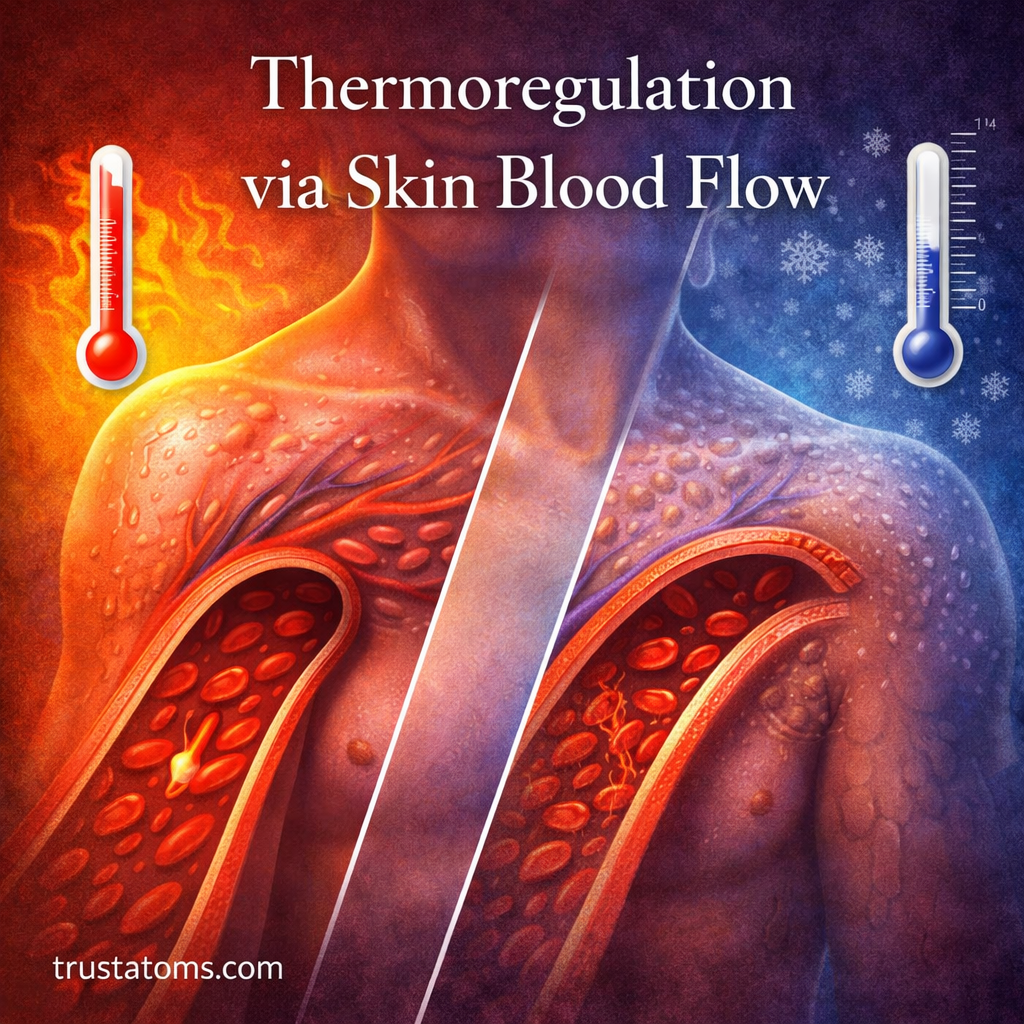
Vasodilation (Heat Loss)
- Blood vessels in the skin widen
- More warm blood reaches the surface
- Heat is released into the environment
Vasoconstriction (Heat Conservation)
- Blood vessels narrow
- Less blood reaches the skin
- Heat is retained in the core
These adjustments happen continuously based on internal and external conditions.
Heat Loss Through Vasodilation
When the body becomes too warm, it activates cooling mechanisms.
What Happens During Vasodilation
- Increased blood flow to the skin
- Skin appears flushed or red
- Heat dissipates through radiation and convection
When It Occurs
- During exercise
- In hot environments
- During fever
This process helps prevent overheating and maintains safe body temperature.
Heat Conservation Through Vasoconstriction
In cold conditions, the body works to preserve heat.
What Happens During Vasoconstriction
- Blood flow to the skin decreases
- Skin may appear pale or cool
- Heat is retained in vital organs
When It Occurs
- Exposure to cold weather
- Sudden drops in temperature
- During rest in cool environments
This response reduces heat loss and protects core body functions.
The Role of the Nervous System
Thermoregulation is controlled by the hypothalamus, a region in the brain that acts as the body’s temperature control center.
How It Works
- Temperature receptors in the skin and body detect changes
- Signals are sent to the hypothalamus
- The hypothalamus triggers appropriate responses
Nervous System Actions
- Activates vasodilation or vasoconstriction
- Stimulates sweating or shivering
- Adjusts heart rate and circulation
This system allows rapid and automatic temperature adjustments.
Interaction with Sweating
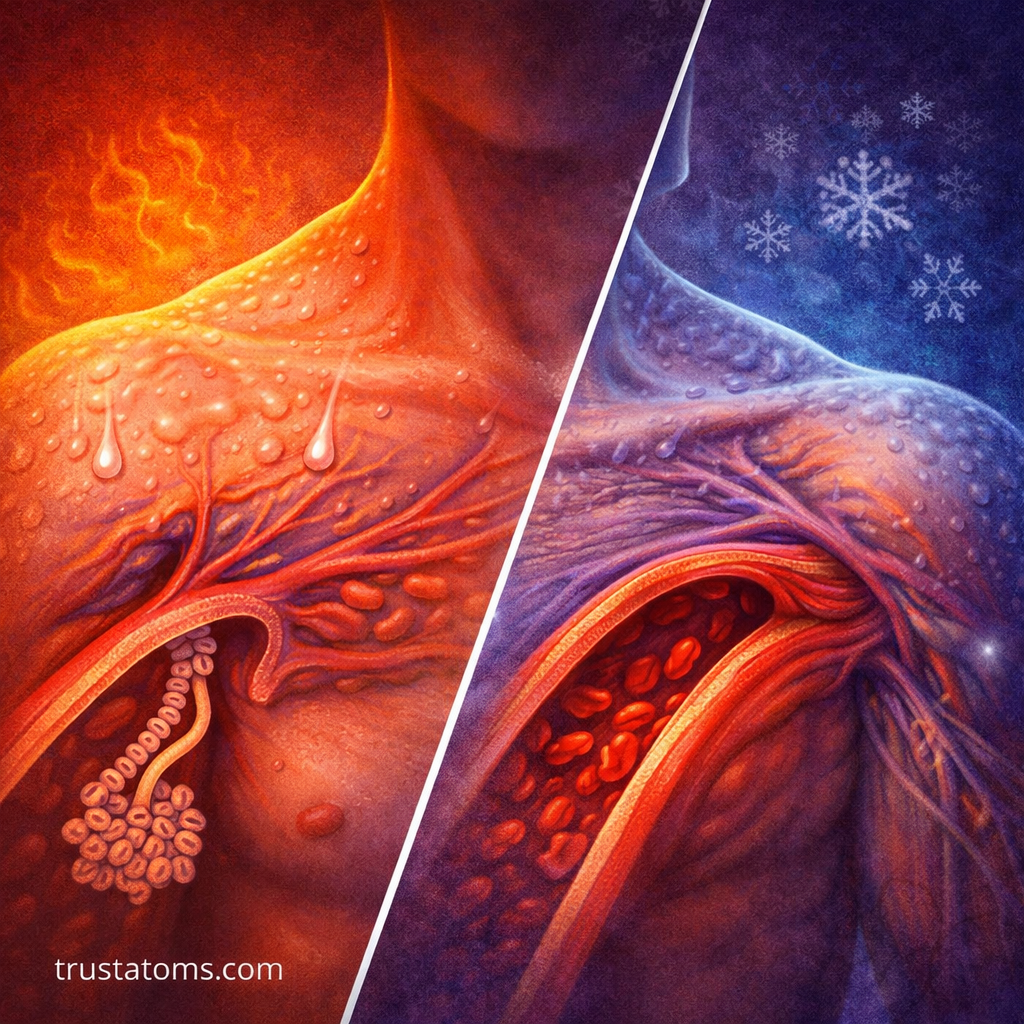
Skin blood flow works closely with sweating to regulate temperature.
How They Work Together
- Vasodilation brings heat to the skin
- Sweat glands release moisture
- Evaporation of sweat cools the body
This combination is especially important during intense physical activity or high temperatures.
Factors That Affect Skin Blood Flow
Several internal and external factors influence how blood flows through the skin.
Internal Factors
- Body temperature
- Hormonal signals
- Hydration levels
- Overall cardiovascular health
External Factors
- Ambient temperature
- Humidity
- Wind exposure
- Clothing
These factors determine how effectively the body can regulate temperature.
Clinical Significance
Disruptions in thermoregulation can lead to serious health conditions.
Heat-Related Conditions
- Heat exhaustion
- Heat stroke
These occur when the body cannot release heat effectively.
Cold-Related Conditions
- Hypothermia
- Frostbite
These occur when the body loses heat faster than it can produce it.
Circulatory Disorders
- Poor blood flow can impair temperature regulation
- Conditions like Raynaud’s phenomenon affect skin circulation
Understanding skin blood flow helps in diagnosing and managing these conditions.
Everyday Examples of Thermoregulation
You experience thermoregulation constantly in daily life.
Common Situations
- Flushed skin during exercise
- Pale skin in cold weather
- Sweating on a hot day
- Goosebumps in response to cold
These visible changes reflect underlying adjustments in blood flow.
How to Support Healthy Thermoregulation
Maintaining proper circulation supports effective temperature control.
Helpful Practices
- Stay hydrated
- Exercise regularly
- Wear appropriate clothing for the weather
- Avoid extreme temperature exposure
Lifestyle Considerations
- Maintain cardiovascular health
- Avoid smoking
- Manage stress levels
These habits help the body regulate temperature more efficiently.
Final Thoughts
Thermoregulation via skin blood flow is a vital process that keeps the body functioning within a safe temperature range. Through vasodilation and vasoconstriction, the body can quickly adapt to environmental changes and internal demands.
This dynamic system works continuously, often without conscious awareness, to protect vital organs and maintain overall health.