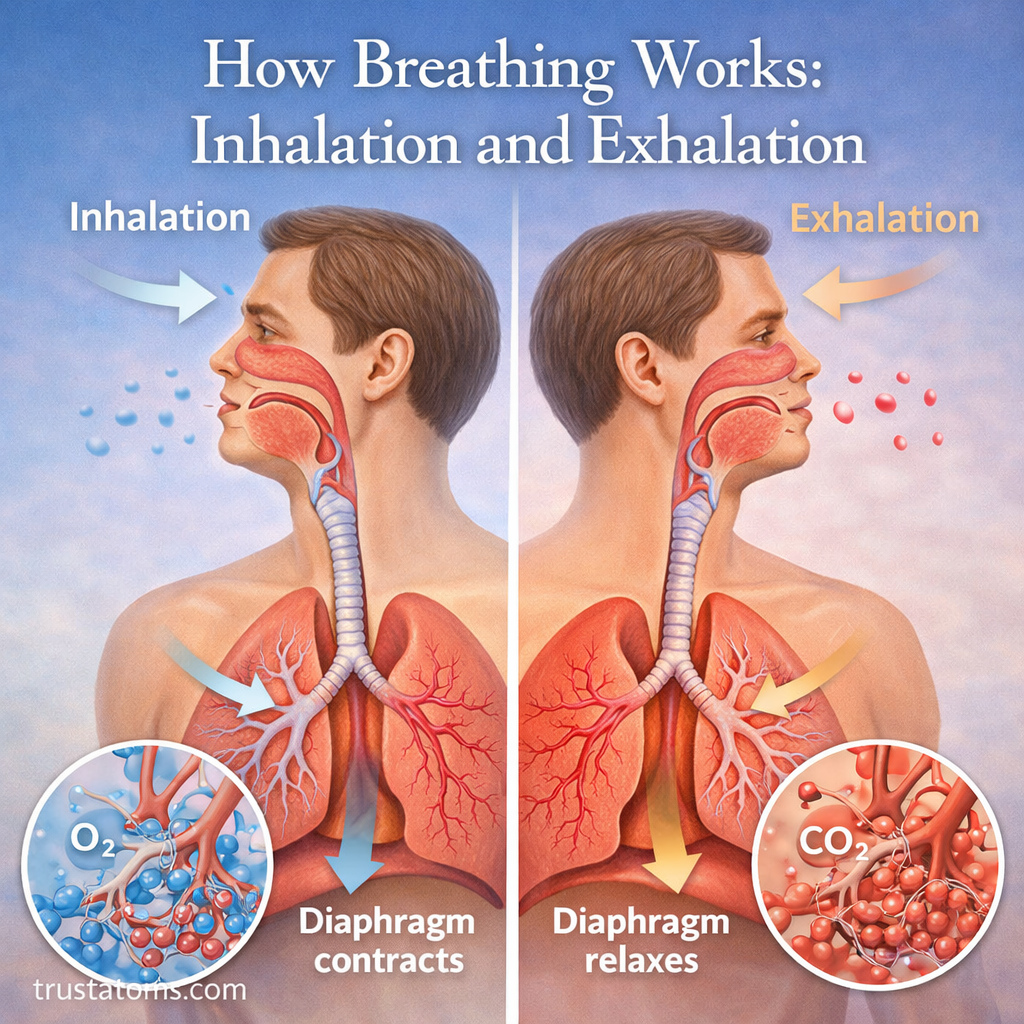
Breathing is a continuous process that keeps your body supplied with oxygen and removes carbon dioxide. It happens automatically, controlled by the brain and supported by the lungs, diaphragm, and chest muscles.
This process has two main phases: inhalation (breathing in) and exhalation (breathing out). Together, they allow the body to exchange gases and maintain life.
Overview of the Breathing Process
Every breath you take follows a simple but highly coordinated cycle:
- Air enters the lungs (inhalation)
- Oxygen moves into the bloodstream
- Carbon dioxide moves from the blood into the lungs
- Air leaves the body (exhalation)
This cycle repeats thousands of times each day without conscious effort.
What Happens During Inhalation
Inhalation is the process of drawing air into the lungs. It requires energy and muscle activity.
Key Steps of Inhalation
- The diaphragm contracts and moves downward
- The rib cage expands outward with the help of intercostal muscles
- The chest cavity increases in volume
- Air pressure inside the lungs decreases
- Air flows into the lungs through the nose or mouth
As air enters, it travels through the airways and reaches the alveoli, where oxygen is ready to be absorbed into the bloodstream.
What Happens During Exhalation
Exhalation is the process of pushing air out of the lungs. Unlike inhalation, it is usually passive.
Key Steps of Exhalation
- The diaphragm relaxes and moves upward
- The rib cage returns to its resting position
- The chest cavity decreases in volume
- Air pressure inside the lungs increases
- Air is pushed out of the lungs
Carbon dioxide, a waste gas produced by cells, is removed from the body during this phase.
The Role of the Diaphragm
The diaphragm is the primary muscle responsible for breathing.
How It Works
- Contracts during inhalation to create space for the lungs
- Relaxes during exhalation to push air out
- Works continuously without conscious control
Without the diaphragm, normal breathing would not be possible.
Gas Exchange in the Lungs
Breathing is not just about moving air—it’s about exchanging gases.
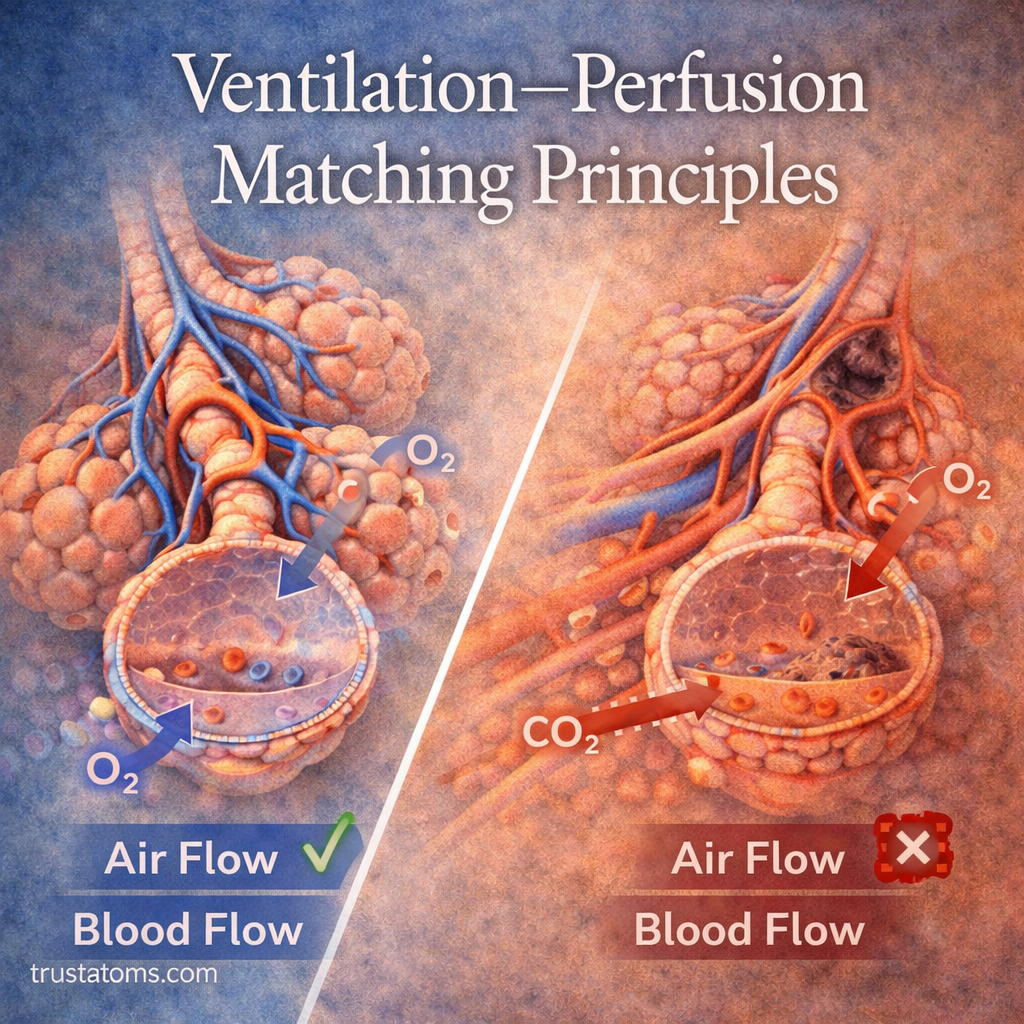
Inside the lungs, tiny air sacs called alveoli are surrounded by capillaries. This is where gas exchange occurs.
How Gas Exchange Works
- Oxygen passes from the alveoli into the bloodstream
- Carbon dioxide moves from the blood into the alveoli
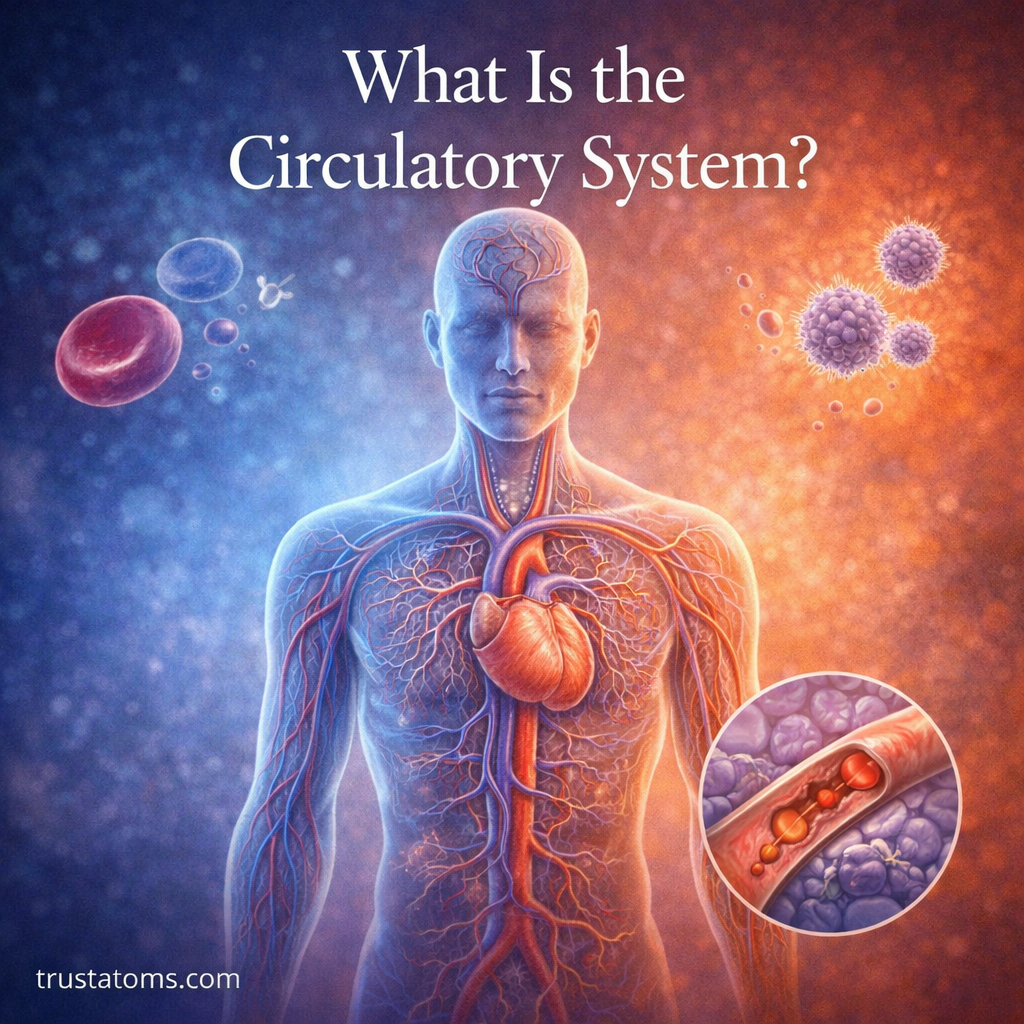
- The circulatory system carries oxygen to cells throughout the body
This process ensures that every cell receives the oxygen it needs for energy.
How Breathing Is Controlled
Breathing is regulated automatically by the brain, specifically the brainstem.
Control Mechanisms
- Sensors detect carbon dioxide levels in the blood
- Higher carbon dioxide levels trigger faster breathing
- Lower levels slow the breathing rate
This automatic control allows your body to adjust breathing during:
- Exercise
- Sleep
- Stress or relaxation
You can also temporarily control your breathing, but the body will take over if needed.
Factors That Affect Breathing
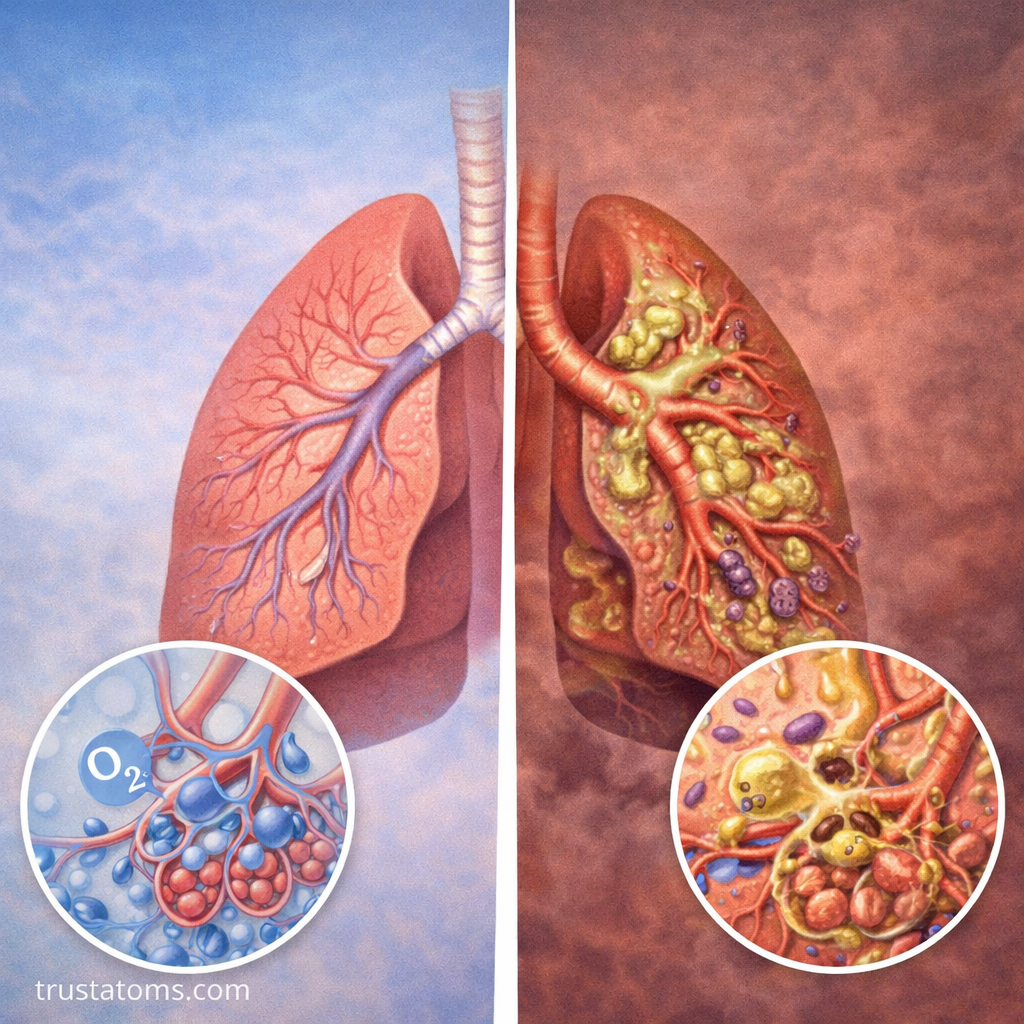
Several factors can influence how you breathe.
Physical Factors
- Exercise increases breathing rate
- Body position can affect lung expansion
- Lung capacity varies by individual
Environmental Factors
- Air quality and pollution
- Altitude (lower oxygen at higher elevations)
- Temperature and humidity
Health Factors
- Respiratory conditions like asthma or COPD
- Infections such as pneumonia or bronchitis
- Smoking or exposure to irritants
Understanding these factors can help you recognize changes in breathing patterns.
Why Breathing Is Essential
Breathing supports many critical functions in the body:
- Supplies oxygen for cellular energy production
- Removes carbon dioxide to prevent buildup
- Helps maintain stable blood pH levels
- Supports brain and organ function
Even short interruptions in breathing can have serious effects, which highlights its importance.
Tips for Healthy Breathing
Simple habits can help improve and maintain efficient breathing:
- Practice deep breathing exercises
- Stay physically active
- Avoid smoking and pollutants
- Maintain good posture
- Keep indoor air clean
These habits support lung function and overall health.
Final Thoughts
Breathing is a vital, automatic process that keeps your body functioning every second of the day. Through inhalation and exhalation, your body maintains a steady balance of oxygen and carbon dioxide.
By understanding how breathing works, you gain insight into one of the most essential systems that sustain life.