The diaphragm is the primary muscle responsible for breathing. It plays a central role in ventilation—the process of moving air into and out of the lungs. Every time you inhale or exhale, the diaphragm works automatically to regulate airflow and maintain proper oxygen and carbon dioxide levels in the body.
Understanding how the diaphragm functions helps explain how breathing occurs and why this muscle is essential for life.
What Is the Diaphragm?
The diaphragm is a dome-shaped muscle located beneath the lungs and above the abdominal organs. It separates the chest cavity (thoracic cavity) from the abdominal cavity.
Key Characteristics
- Thin, flexible muscle
- Shaped like a dome when relaxed
- Moves rhythmically during breathing
- Controlled both automatically and voluntarily
It works continuously without conscious effort, adjusting to the body’s needs.
What Is Ventilation?
Ventilation refers to the mechanical process of breathing—moving air into (inhalation) and out of (exhalation) the lungs.
Two Phases of Ventilation
- Inhalation – Air enters the lungs
- Exhalation – Air leaves the lungs
The diaphragm is the main driver behind both phases.
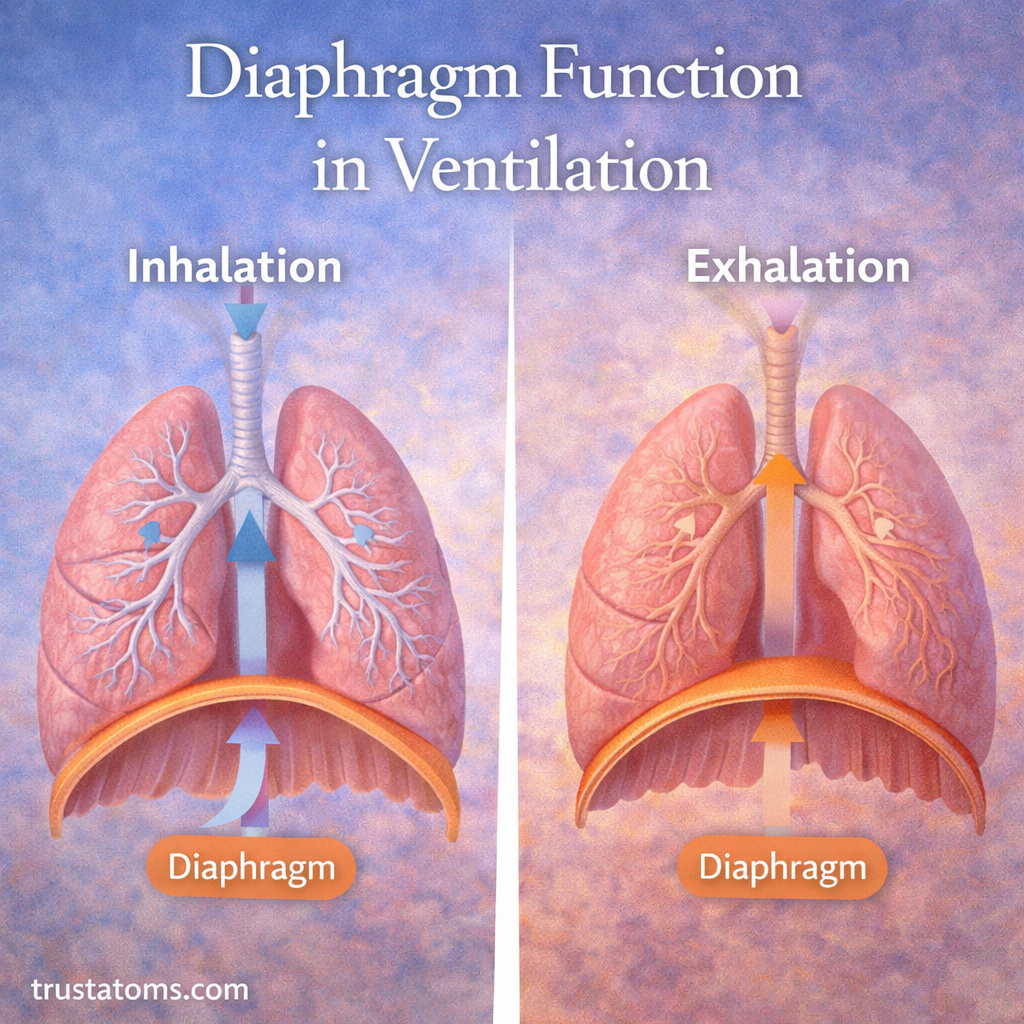
How the Diaphragm Works During Inhalation
During inhalation, the diaphragm actively contracts to allow air into the lungs.
Step-by-Step Process
- The diaphragm contracts and flattens
- The chest cavity expands downward
- Lung volume increases
- Air pressure inside the lungs decreases
- Air flows into the lungs
This process draws oxygen-rich air into the respiratory system.
How the Diaphragm Works During Exhalation
During exhalation, the diaphragm relaxes and returns to its dome shape.
Step-by-Step Process
- The diaphragm relaxes and rises upward
- The chest cavity decreases in size
- Lung volume decreases
- Air pressure inside the lungs increases
- Air is pushed out of the lungs
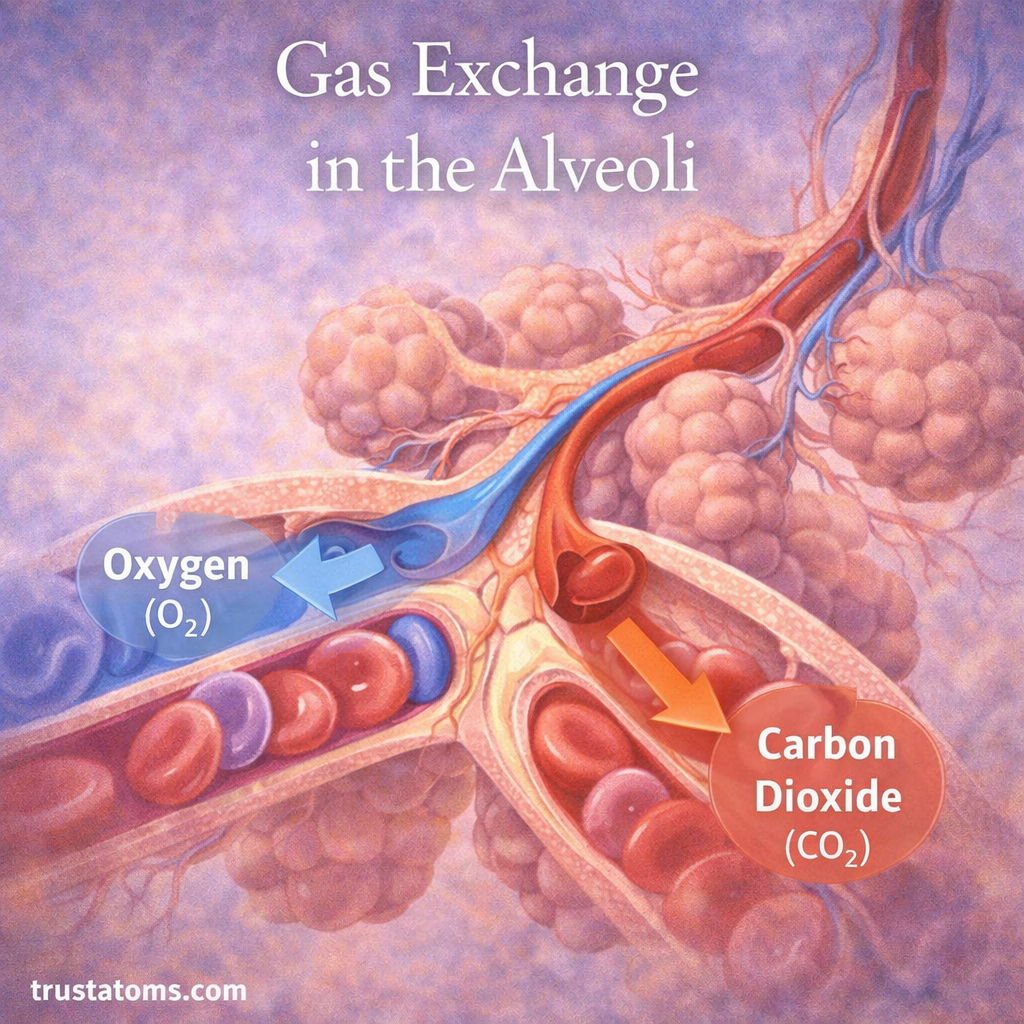
This allows carbon dioxide to be expelled from the body.
The Diaphragm and Pressure Changes
Breathing depends on pressure differences between the lungs and the outside environment.
Key Concepts
- Lower pressure inside the lungs draws air in
- Higher pressure inside the lungs pushes air out
- The diaphragm controls these pressure changes by altering chest volume
This relationship between pressure and volume is essential for effective ventilation.
Role of the Diaphragm in Deep and Forced Breathing
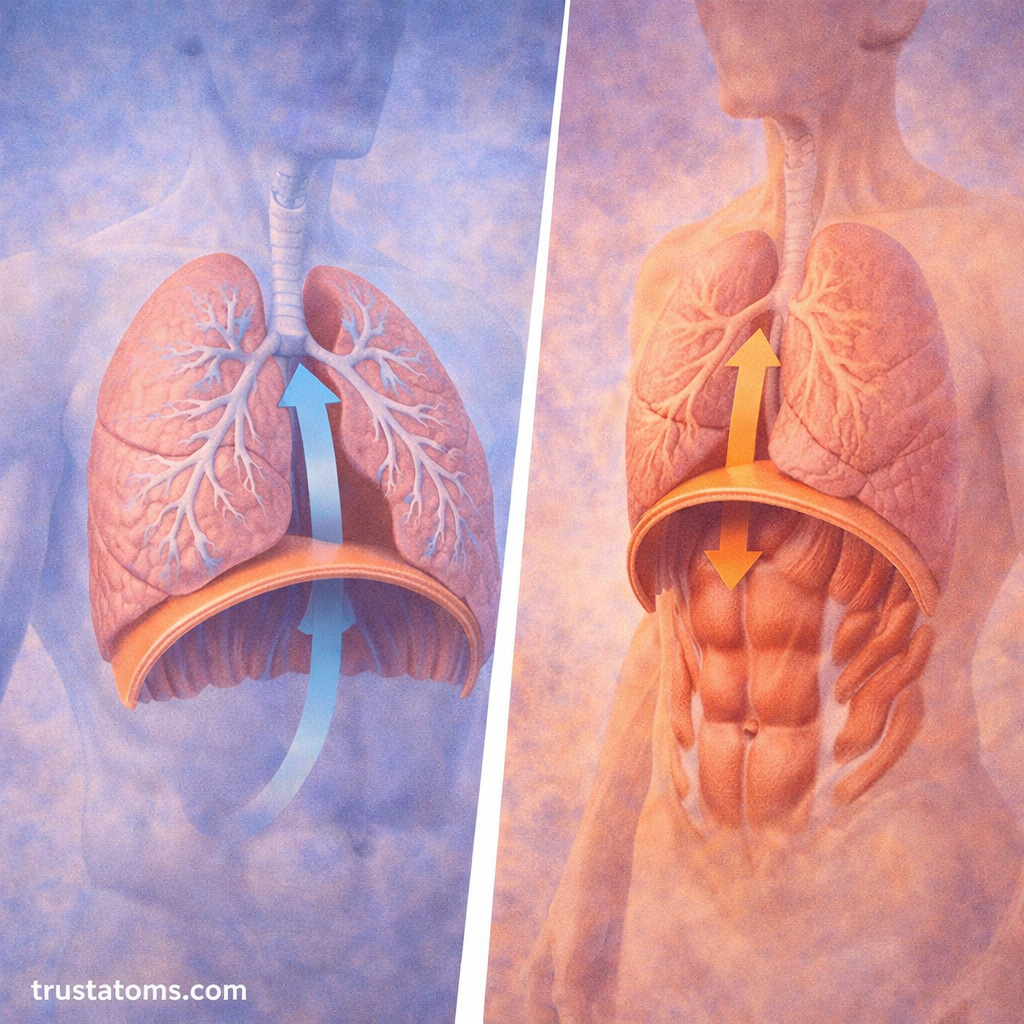
While normal breathing is automatic, the diaphragm can also support deeper or more forceful breathing when needed.
During Deep Breathing
- The diaphragm contracts more strongly
- The lungs expand further
- More oxygen enters the body
During Forced Exhalation
- Abdominal muscles assist the diaphragm
- Air is expelled more quickly
- Used during activities like exercise or coughing
This flexibility allows the body to adapt to increased oxygen demands.
Interaction with Other Muscles
Although the diaphragm is the primary breathing muscle, it works with other muscles to support ventilation.
Supporting Muscles
- Intercostal muscles – Expand and contract the rib cage
- Abdominal muscles – Assist in forced exhalation
- Neck muscles – Help during heavy breathing
These muscles enhance the efficiency of breathing, especially during physical activity.
Nervous System Control of the Diaphragm
The diaphragm is controlled by the nervous system, particularly the phrenic nerve.
Key Points
- The brainstem automatically regulates breathing
- The phrenic nerve sends signals to the diaphragm
- Breathing rate adjusts based on carbon dioxide levels
You can also consciously control breathing for short periods, such as when speaking or holding your breath.
Why the Diaphragm Is Essential
The diaphragm is vital for maintaining life and supporting overall health.
Key Functions
- Drives the movement of air in and out of the lungs
- Helps regulate oxygen and carbon dioxide levels
- Supports efficient gas exchange
- Assists in activities like speaking, coughing, and sneezing
Without proper diaphragm function, breathing becomes difficult or impossible.
Common Issues Affecting the Diaphragm
Problems with the diaphragm can impact breathing and ventilation.
Examples
- Diaphragm paralysis – Loss of muscle function
- Hernia – Weakness allowing organs to move into the chest cavity
- Nerve damage – Disrupts diaphragm control
- Muscle fatigue – Reduces breathing efficiency
Recognizing these issues highlights the importance of diaphragm health.
Tips for Supporting Diaphragm Function
You can strengthen and support diaphragm function through simple practices:
- Practice diaphragmatic (deep) breathing
- Maintain good posture
- Stay physically active
- Avoid smoking
- Manage stress levels
These habits can improve breathing efficiency and lung capacity.
Final Thoughts
The diaphragm is the key muscle behind ventilation, controlling the movement of air into and out of the lungs. Through its rhythmic contractions and relaxations, it enables breathing to occur effortlessly.
By understanding how the diaphragm functions, you gain insight into one of the most important processes in the human body—breathing.