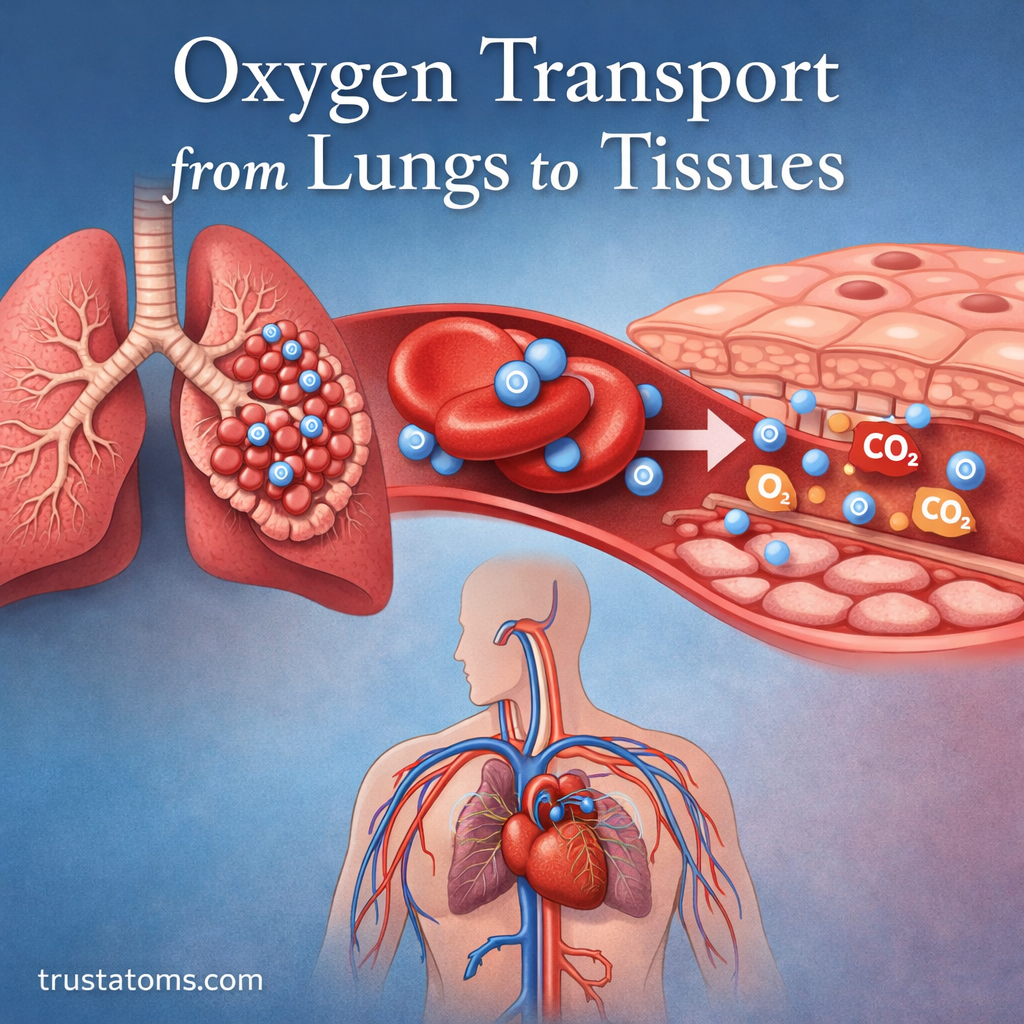
Oxygen transport is a vital process that keeps every cell in your body functioning. From the moment you inhale, oxygen begins a carefully coordinated journey—from the lungs, into the bloodstream, and ultimately to tissues that depend on it for energy production.
Understanding how oxygen moves through the body helps explain everything from exercise performance to how diseases affect breathing and circulation.
Overview of Oxygen Transport
Oxygen transport involves three main stages:
- Gas exchange in the lungs
- Transport through the bloodstream
- Delivery to body tissues
Each step relies on specialized structures and precise physiological mechanisms to ensure oxygen reaches where it’s needed most.
Step 1: Oxygen Enters the Blood in the Lungs
When you inhale, oxygen travels through the airways and reaches tiny air sacs in the lungs called alveoli.
Inside the alveoli:
- Oxygen concentration is higher than in the blood
- Oxygen diffuses across thin alveolar walls
- It enters surrounding capillaries
This process is driven by a pressure gradient—oxygen naturally moves from areas of high concentration (alveoli) to low concentration (blood).
Key Features of Efficient Gas Exchange
- Thin alveolar walls for rapid diffusion
- Large surface area (millions of alveoli)
- Rich capillary network
Step 2: Oxygen Binds to Hemoglobin
Once oxygen enters the bloodstream, it doesn’t just float freely—it binds to a protein in red blood cells called hemoglobin.
Why Hemoglobin Is Important
- Each hemoglobin molecule can carry up to four oxygen molecules
- It increases the blood’s oxygen-carrying capacity dramatically
- It allows efficient transport over long distances
Oxygen Transport in Blood
- ~98% of oxygen is carried bound to hemoglobin
- ~2% is dissolved directly in plasma
This binding is reversible, which is critical for releasing oxygen where it’s needed.
Step 3: Circulation Through the Body
Oxygen-rich blood is transported from the lungs to the heart via the pulmonary veins. The heart then pumps it out to the rest of the body through systemic circulation.
Pathway of Oxygenated Blood
- Lungs → Pulmonary veins
- Left atrium of the heart
- Left ventricle
- Aorta
- Arteries → Arterioles → Capillaries
This system ensures oxygen reaches even the smallest tissues.
Step 4: Oxygen Is Delivered to Tissues
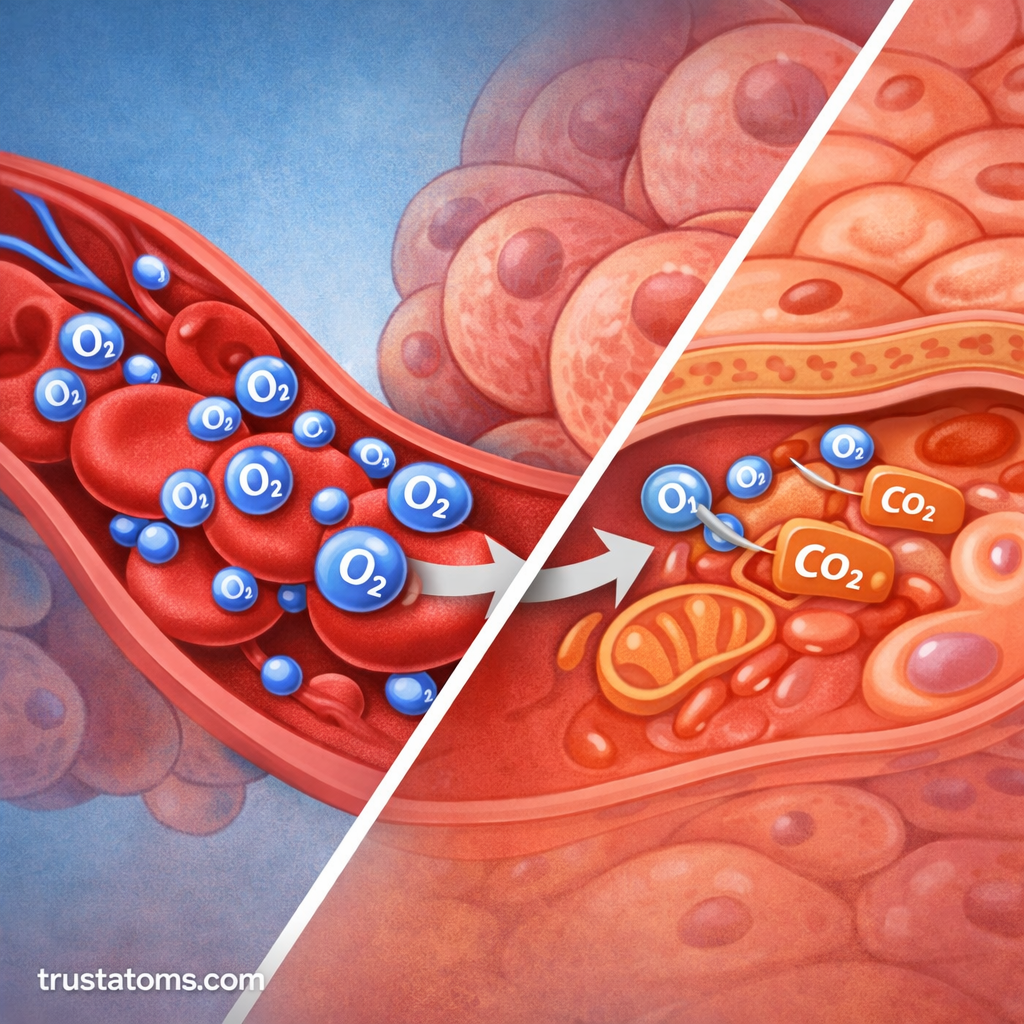
When blood reaches body tissues, oxygen is released from hemoglobin and diffuses into cells.
Why Oxygen Is Released
Tissues have:
- Lower oxygen concentration than blood
- Higher carbon dioxide levels
- Increased acidity (especially during activity)
These conditions reduce hemoglobin’s affinity for oxygen, causing it to release oxygen more easily—a concept known as the Bohr effect.
Step 5: Oxygen Is Used for Cellular Respiration
Inside cells, oxygen is used in mitochondria to produce energy (ATP) through cellular respiration.
Importance of Oxygen in Cells
- Enables efficient energy production
- Supports muscle contraction
- Maintains organ function
Without oxygen, cells quickly lose the ability to function and survive.
Factors That Affect Oxygen Transport
Several factors can influence how effectively oxygen moves through the body:
1. Lung Function
- Healthy alveoli improve gas exchange
- Conditions like asthma or pneumonia reduce efficiency
2. Hemoglobin Levels
- Low hemoglobin (anemia) reduces oxygen-carrying capacity
- High levels improve delivery but may increase blood viscosity
3. Blood Flow
- Strong circulation ensures oxygen reaches tissues quickly
- Poor circulation limits delivery
4. Altitude
- Lower oxygen levels in high altitudes reduce oxygen intake
- The body adapts by producing more red blood cells
Common Disorders Affecting Oxygen Transport
Disruptions in oxygen transport can have serious consequences.
Examples Include:
- Anemia: Reduced hemoglobin levels
- Chronic obstructive pulmonary disease (COPD): Impaired gas exchange
- Carbon monoxide poisoning: Prevents oxygen binding to hemoglobin
- Heart disease: Reduces effective circulation
Each condition interferes with one or more steps in the oxygen transport process.
Why Oxygen Transport Matters
Efficient oxygen transport is essential for:
- Brain function and alertness
- Physical performance and endurance
- Organ health and survival
Even small disruptions can lead to fatigue, shortness of breath, or more serious complications.
Final Thoughts
Oxygen transport from the lungs to tissues is a continuous, life-sustaining process involving the respiratory system, cardiovascular system, and cellular metabolism.
From diffusion in the alveoli to delivery at the cellular level, every step is finely tuned to keep your body functioning efficiently. Understanding this process not only deepens your knowledge of human anatomy but also highlights the importance of maintaining lung and heart health.