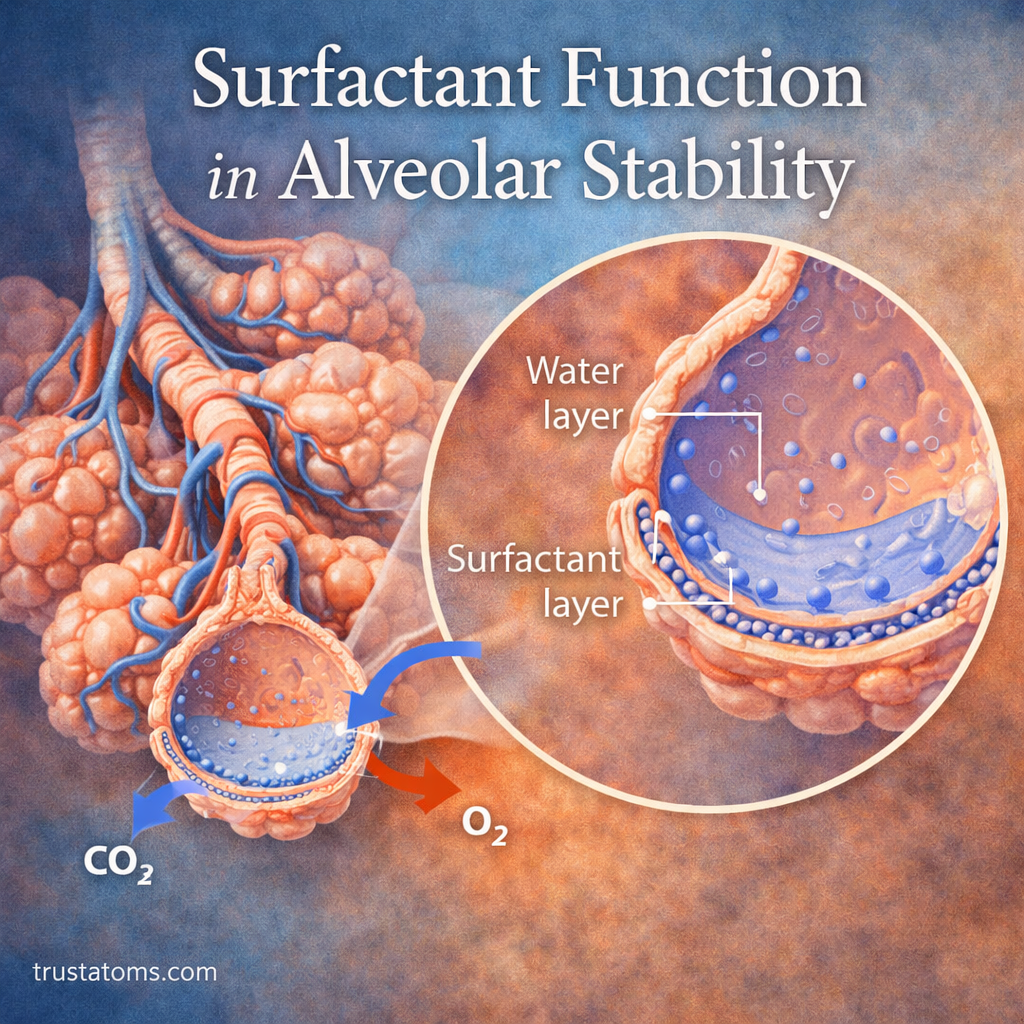
Surfactant is a specialized substance in the lungs that plays a critical role in keeping the alveoli stable and functional. Without it, breathing would require significantly more effort, and the tiny air sacs responsible for gas exchange could collapse.
Understanding how surfactant works provides key insight into respiratory efficiency, lung development, and conditions that affect breathing.
What Is Surfactant?
Surfactant is a thin, fluid-like substance that lines the الداخل surface of the alveoli. It is primarily composed of:
- Phospholipids (especially dipalmitoylphosphatidylcholine)
- Proteins that help spread and stabilize the surfactant layer
Surfactant is produced by specialized lung cells called Type II alveolar cells.
Its main function is to reduce surface tension within the alveoli.
Why Surface Tension Matters
Alveoli are lined with a thin layer of fluid. This fluid naturally creates surface tension, which tends to:
- Pull the walls of the alveoli inward
- Promote collapse, especially during exhalation
Without a mechanism to counteract this force, alveoli would be unstable and difficult to reopen with each breath.
How Surfactant Reduces Surface Tension
Surfactant molecules position themselves between water molecules on the alveolar surface.
This action:
- Reduces the attractive forces between water molecules
- Lowers surface tension
- Prevents alveolar collapse
As a result:
- Less effort is required to inflate the lungs
- Alveoli remain open even at low lung volumes
Role of Surfactant in Alveolar Stability
Surfactant is essential for maintaining consistent alveolar size and preventing collapse.
Key Functions:
- Stabilizes alveoli of different sizes
- Prevents smaller alveoli from collapsing into larger ones
- Maintains uniform air distribution
This stability ensures efficient gas exchange across the entire lung.
Surfactant and the Work of Breathing
By reducing surface tension, surfactant significantly decreases the energy required to breathe.
Benefits include:
- Easier lung expansion during inhalation
- Reduced muscle effort
- Improved breathing efficiency
Without surfactant, the lungs would be stiff and much harder to inflate.
Surfactant Production and Regulation
Surfactant production begins before birth and continues throughout life.
Key Points:
- Produced by Type II alveolar cells
- Stored and released as needed
- Stimulated by breathing activity
In fetal development, adequate surfactant production is crucial for survival after birth.
Surfactant Deficiency and Respiratory Disorders
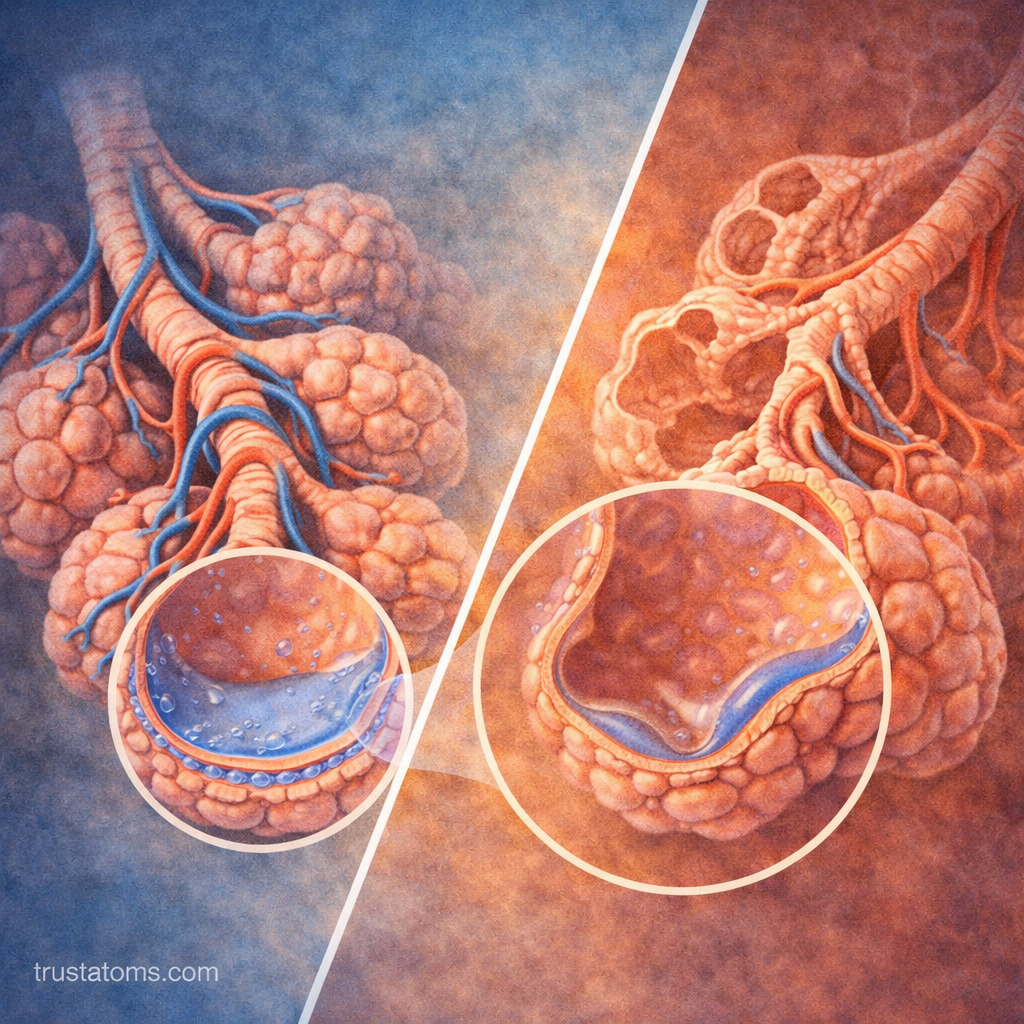
A lack or dysfunction of surfactant can lead to serious breathing problems.
1. Neonatal Respiratory Distress Syndrome (NRDS)
- Occurs in premature infants
- Insufficient surfactant production
- Leads to alveolar collapse and labored breathing
2. Acute Respiratory Distress Syndrome (ARDS)
- Surfactant becomes damaged or diluted
- Alveoli become unstable
- Gas exchange is impaired
3. Pulmonary Edema
- Fluid buildup interferes with surfactant function
- Increases surface tension
- Reduces alveolar stability
Surfactant and Alveolar Size Balance
Surfactant helps maintain balance between alveoli of different sizes.
Without surfactant:
- Smaller alveoli would collapse
- Air would shift into larger alveoli
- Gas exchange would become uneven
With surfactant:
- Surface tension adjusts dynamically
- Smaller alveoli remain open
- Lung function stays balanced
Why Surfactant Is Essential for Life
Surfactant is one of the most important components of the respiratory system because it:
- Prevents alveolar collapse
- Maintains lung flexibility
- Supports efficient gas exchange
- Reduces breathing effort
Even slight disruptions in surfactant function can significantly impact oxygen delivery throughout the body.
Final Thoughts
Surfactant plays a vital role in keeping the lungs stable and efficient. By reducing surface tension within the alveoli, it ensures that breathing remains smooth and energy-efficient while preventing the collapse of these tiny air sacs.
From newborns taking their first breath to adults maintaining steady respiration, surfactant is essential for healthy lung function and overall survival.