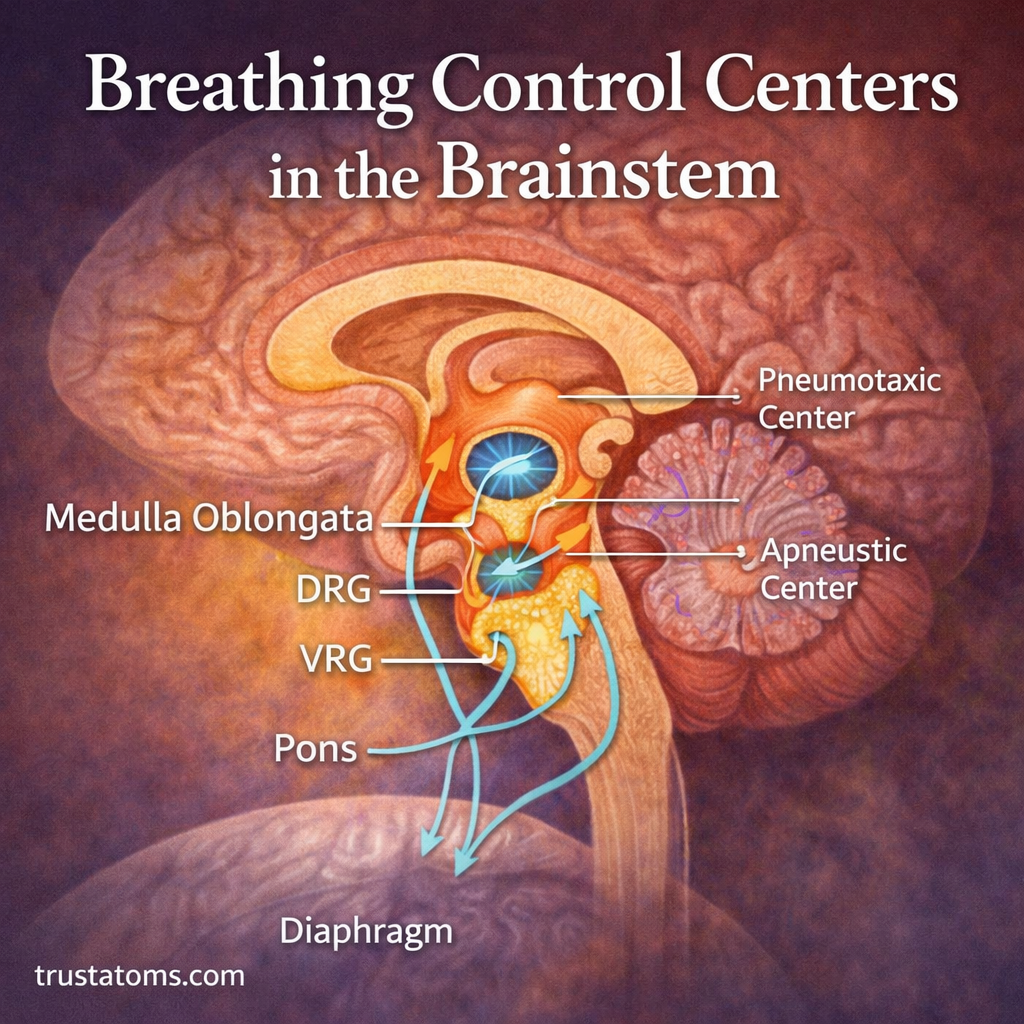
Breathing is something most people rarely think about, yet it happens continuously—day and night—without conscious effort. This automatic process is controlled by specialized regions in the brain known as the breathing control centers, located in the brainstem.
These centers regulate the rhythm, depth, and rate of breathing, ensuring that the body receives enough oxygen and removes carbon dioxide efficiently.
Where Are the Breathing Control Centers Located?
The breathing control system is primarily found in two parts of the brainstem:
- Medulla oblongata
- Pons
Together, these structures coordinate the basic rhythm of breathing and adjust it based on the body’s needs.
The Role of the Medulla Oblongata
The medulla oblongata is the main control center for breathing. It generates the basic rhythm of inhalation and exhalation.
Key Functions
- Initiates automatic breathing
- Controls the contraction of respiratory muscles
- Regulates breathing rate and depth
Important Groups in the Medulla
- Dorsal respiratory group (DRG)
- Controls inhalation
- Sends signals to the diaphragm
- Ventral respiratory group (VRG)
- Active during forced breathing
- Controls both inhalation and exhalation
The medulla ensures that breathing continues even during sleep or unconscious states.
The Role of the Pons
The pons fine-tunes the breathing pattern established by the medulla.
Key Functions
- Smooths the transition between inhalation and exhalation
- Regulates breathing rhythm
- Prevents over-inflation of the lungs
Key Centers in the Pons
- Pneumotaxic center
- Limits inhalation duration
- Helps control breathing rate
- Apneustic center
- Promotes inhalation
- Extends breathing when needed
The pons acts as a regulator, ensuring breathing is smooth and efficient rather than erratic.
How Breathing Is Automatically Controlled
Breathing is largely automatic, controlled without conscious input.
The Basic Process
- The medulla generates rhythmic nerve signals
- Signals are sent to respiratory muscles (like the diaphragm)
- The lungs expand and contract
- The pons adjusts the rhythm for smooth breathing
This cycle repeats continuously throughout life.
The Role of Chemoreceptors
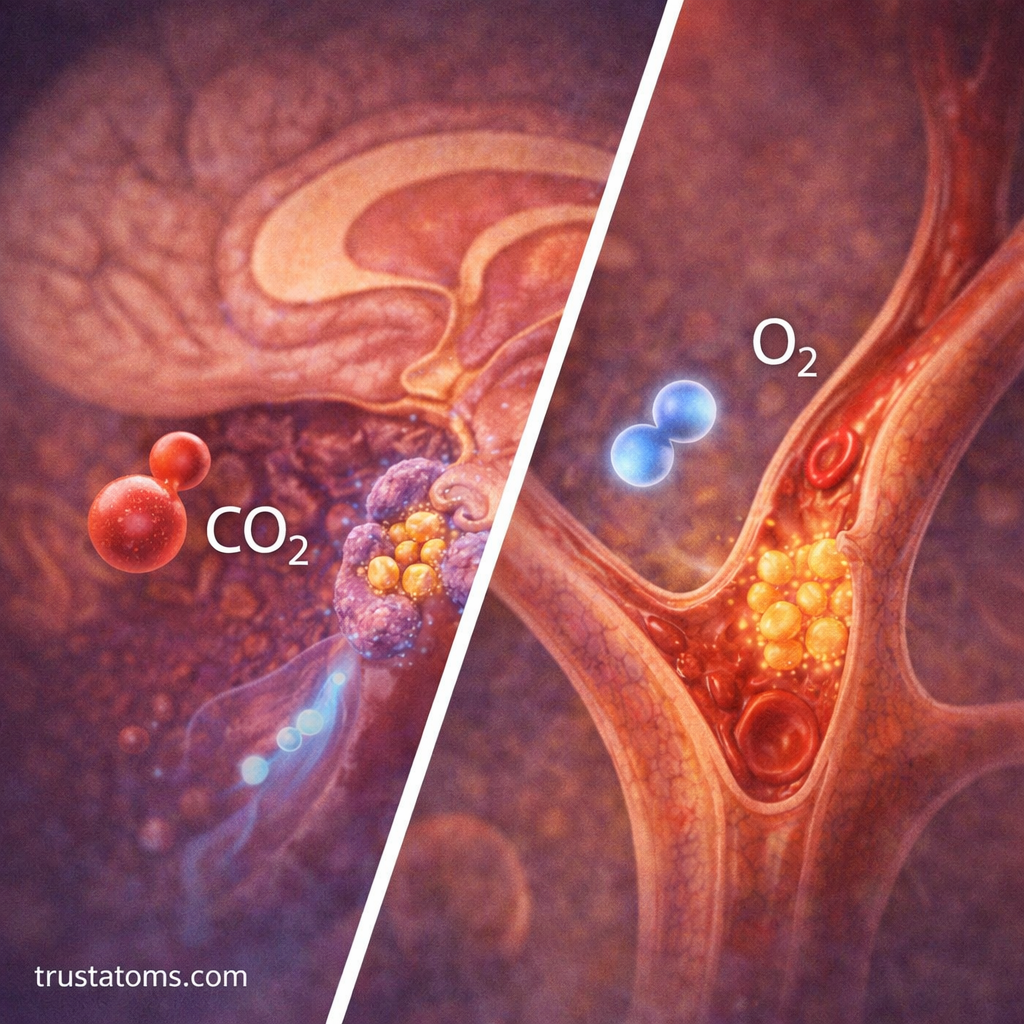
Breathing control centers rely on feedback from the body to adjust breathing as needed.
What Chemoreceptors Detect
- Carbon dioxide (CO₂) levels
- Oxygen (O₂) levels
- Blood pH
Types of Chemoreceptors
- Central chemoreceptors
- Located in the brain
- Sensitive to CO₂ and pH changes
- Peripheral chemoreceptors
- Located in arteries (carotid and aortic bodies)
- Detect oxygen levels
Why Carbon Dioxide Is So Important
Carbon dioxide levels are the primary driver of breathing.
How It Works
- Increased CO₂ → signals brainstem to increase breathing rate
- Decreased CO₂ → slows breathing
This ensures that the body maintains proper gas balance and prevents dangerous imbalances.
Voluntary vs. Automatic Breathing
Although breathing is automatic, it can also be controlled consciously for short periods.
Voluntary Control
- Talking
- Singing
- Holding your breath
Automatic Override
Even if you try to hold your breath, rising CO₂ levels will eventually force breathing to resume. This highlights the dominance of brainstem control.
What Happens When These Centers Are Disrupted?
Damage or dysfunction in the brainstem can significantly affect breathing.
Possible Causes
- Stroke
- Brain injury
- Neurological disorders
- Drug overdose (especially opioids)
Potential Effects
- Irregular breathing patterns
- Slow or stopped breathing
- Life-threatening respiratory failure
The Importance of Brainstem Breathing Control
The breathing control centers are essential for survival. Without them, the body would not be able to maintain continuous respiration.
Key Benefits
- Maintains oxygen supply to tissues
- Removes carbon dioxide efficiently
- Adjusts breathing during exercise or rest
- Supports overall homeostasis
Final Thoughts
The brainstem’s breathing control centers operate silently and continuously, managing one of the body’s most vital functions. Through the combined efforts of the medulla oblongata and pons, breathing remains steady, adaptable, and responsive to the body’s needs.
Understanding these control systems reveals how the body maintains balance automatically, allowing you to breathe effortlessly every moment of your life.