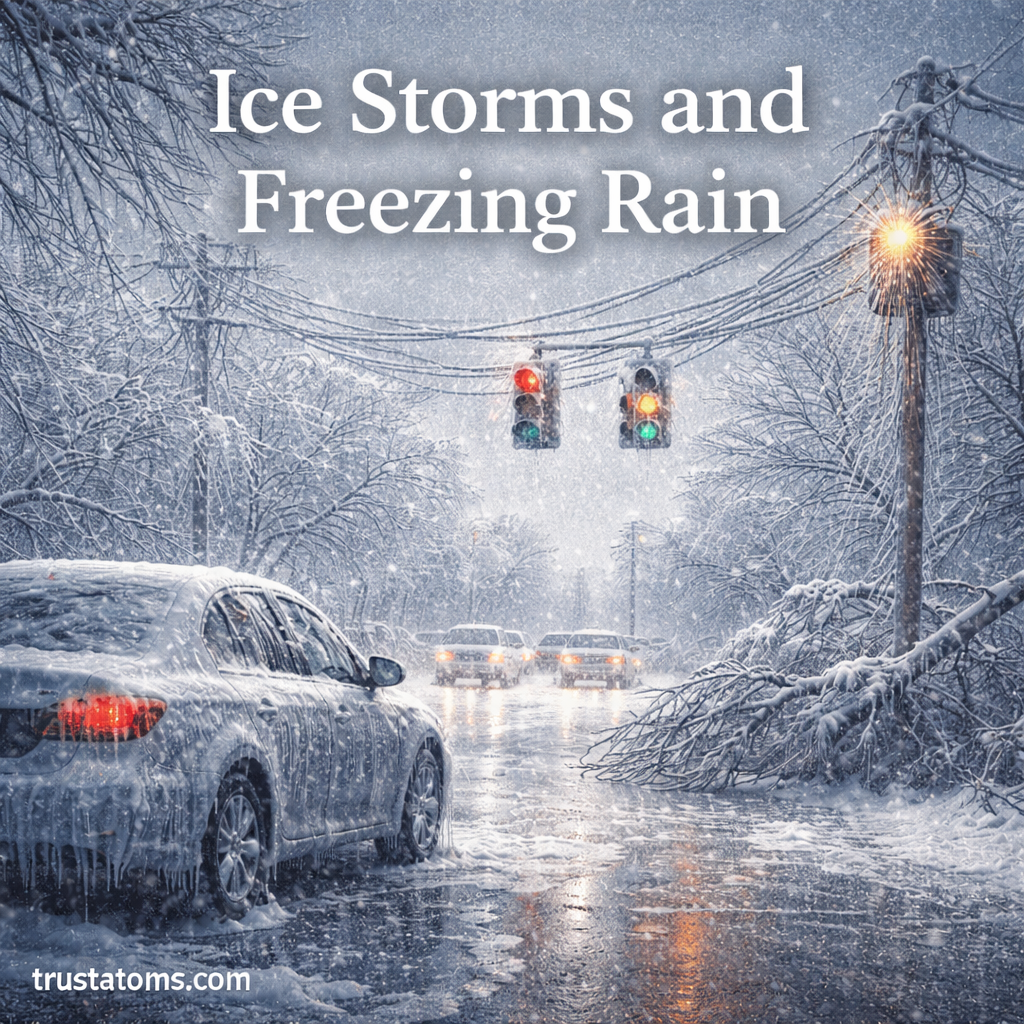
Ice storms are among the most hazardous winter weather events, often causing widespread damage and dangerous conditions. Unlike snowstorms, ice storms involve freezing rain that coats surfaces with a layer of ice, creating slippery roads, downed power lines, and structural damage.
Understanding how freezing rain forms and why ice storms are so dangerous can help improve preparedness and safety.
What Is Freezing Rain?
Freezing rain occurs when liquid raindrops freeze upon contact with cold surfaces, forming a thin layer of ice.
Key Characteristics
- Falls as liquid rain
- Freezes instantly on contact with surfaces below 32°F (0°C)
- Creates a smooth, transparent ice layer known as glaze ice
This process can quickly turn roads, trees, and power lines into hazardous, ice-covered surfaces.
How Ice Storms Form
Ice storms develop under very specific atmospheric conditions involving layers of air at different temperatures.
The Process
- Snow Forms in Cold Air
Precipitation begins as snow in the upper atmosphere. - Snow Melts into Rain
As it falls through a warmer layer of air, the snow melts into liquid rain. - Rain Falls into Cold Surface Air
Near the ground, a shallow layer of cold air causes the rain to become supercooled (below freezing but still liquid). - Instant Freezing on Contact
When the droplets hit cold surfaces, they freeze immediately, forming ice.
This layered temperature structure is what makes freezing rain different from snow or sleet.
Freezing Rain vs. Sleet vs. Snow
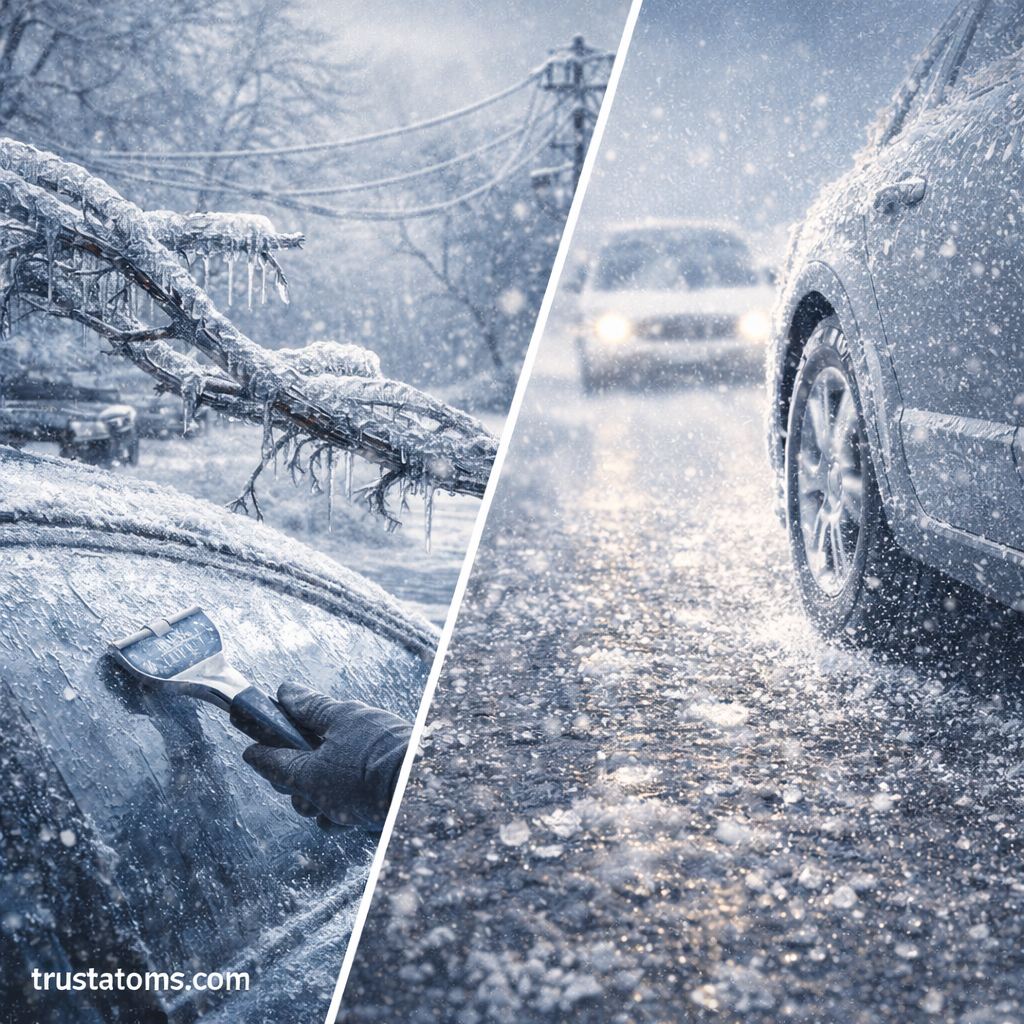
It’s easy to confuse different types of winter precipitation, but they form differently.
Freezing Rain
- Liquid in the air, freezes on contact
- Creates smooth ice coating
Sleet
- Refreezes into ice pellets before hitting the ground
- Bounces on impact
Snow
- Remains frozen throughout its fall
- Forms flakes
Why Ice Storms Are So Dangerous
Ice storms can be more destructive than heavy snowfall due to the weight and slipperiness of ice.
Infrastructure Damage
- Ice accumulation can weigh down power lines and trees
- Branches may snap and fall
- Widespread power outages are common
Transportation Hazards
- Roads become extremely slippery (black ice)
- Increased risk of vehicle accidents
- Flights and public transit disruptions
Structural Stress
- Roofs and structures may collapse under heavy ice loads
- Communication systems can fail
Impacts of Ice Storms
Ice storms affect multiple aspects of daily life and the environment.
Environmental Impacts
- Tree damage and loss of vegetation
- Disruption to wildlife habitats
Economic Impacts
- Costly repairs to infrastructure
- Business closures and lost productivity
Human Impacts
- Increased injuries from falls and accidents
- Extended power outages affecting heating
- Limited access to essential services
How to Stay Safe During an Ice Storm
Preparation and caution are essential during freezing rain events.
Before an Ice Storm
- Monitor weather forecasts and warnings
- Stock up on essentials (food, water, batteries)
- Prepare for potential power outages
During an Ice Storm
- Avoid unnecessary travel
- Stay indoors whenever possible
- Use alternative heating sources safely
After an Ice Storm
- Watch for falling branches or ice
- Avoid downed power lines
- Check for structural damage before entering buildings
Preventing and Reducing Ice Storm Damage
While ice storms cannot be prevented, their impact can be minimized.
Infrastructure Improvements
- Strengthening power lines and poles
- Trimming trees near utility lines
- Using de-icing materials on roads
Emergency Preparedness
- Backup power systems (generators)
- Community response plans
- Public safety alerts
Ice Storms and Climate Patterns
Changing climate conditions may influence winter weather events, including freezing rain.
- Warmer winters can increase the likelihood of mixed precipitation
- More frequent temperature fluctuations can create ideal conditions for freezing rain
- Some regions may see fewer snowstorms but more ice events
Final Thoughts
Ice storms and freezing rain are powerful winter hazards that can cause significant damage in a short period. Their unique formation process makes them especially dangerous compared to other types of precipitation.
By understanding how ice storms develop and taking proactive safety measures, individuals and communities can better prepare for and respond to these challenging weather events.