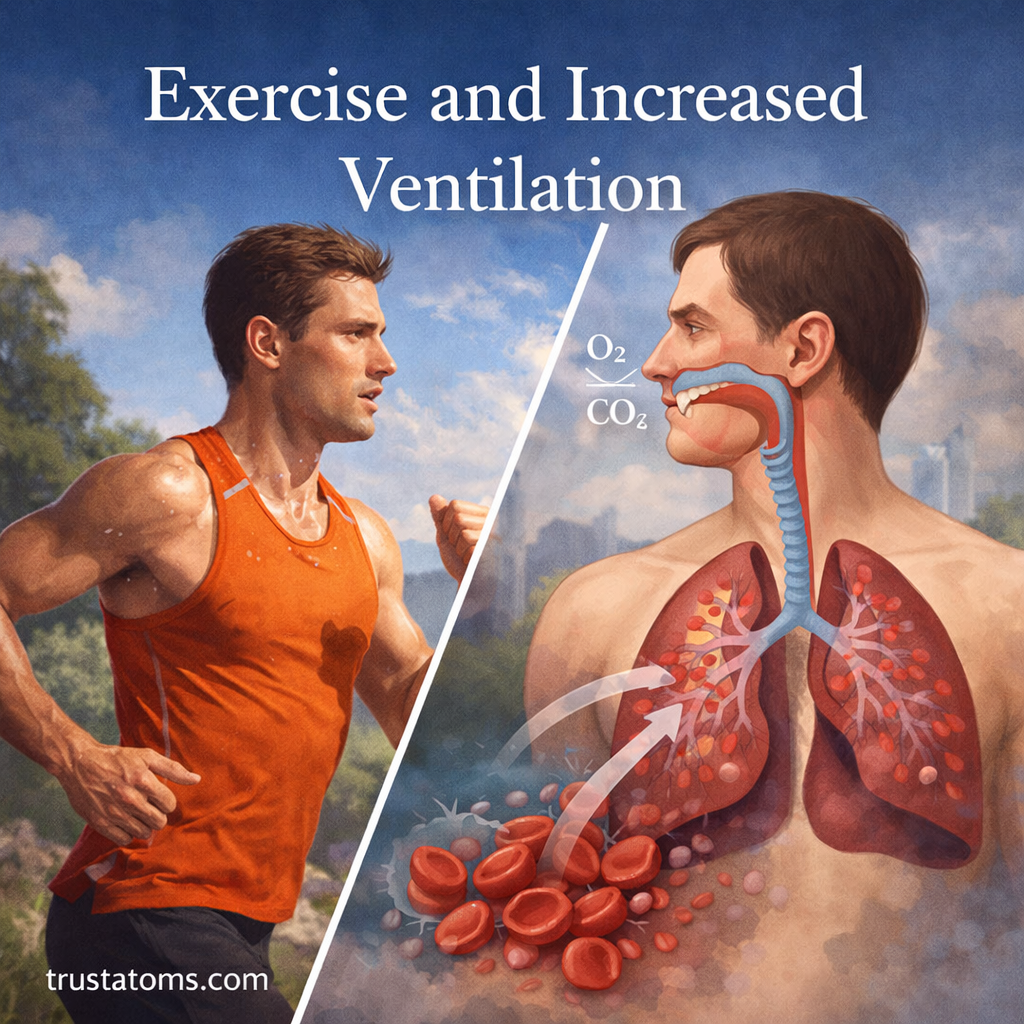
When you exercise, your body demands more energy—and that energy requires oxygen. To meet this demand, your respiratory system rapidly adjusts by increasing ventilation, or the movement of air in and out of the lungs.
This process is essential for delivering oxygen to working muscles and removing carbon dioxide, a waste product of metabolism. In this article, we’ll explore how and why ventilation increases during exercise, and what it means for overall performance and health.
What Is Ventilation?
Ventilation refers to the process of breathing—specifically:
- Inhalation (bringing oxygen into the lungs)
- Exhalation (removing carbon dioxide from the body)
It is typically measured as minute ventilation, which is the total volume of air breathed per minute.
Minute ventilation depends on two key factors:
- Breathing rate (respiratory rate)
- Tidal volume (amount of air per breath)
Why Ventilation Increases During Exercise
During physical activity, muscles require more oxygen to produce energy (ATP). At the same time, they produce more carbon dioxide.
To maintain balance, the body must:
- Increase oxygen intake
- Remove excess carbon dioxide
- Maintain stable blood pH levels
This leads to a significant increase in ventilation.
Immediate Respiratory Response to Exercise
The body responds almost instantly when exercise begins—even before oxygen levels drop significantly.
Neural Control
The brain plays a key role in initiating increased ventilation:
- Signals from the motor cortex stimulate breathing centers
- Anticipatory response prepares the body for activity
Rapid Increase in Breathing
Within seconds of starting exercise:
- Breathing rate increases
- Tidal volume rises
- Airflow becomes deeper and faster
This ensures oxygen delivery keeps pace with demand.
Changes in Breathing Patterns
As exercise intensity increases, breathing patterns change in distinct ways.
Increased Tidal Volume
At low to moderate intensity:
- The depth of each breath increases
- More air reaches the alveoli (gas exchange sites)
Increased Breathing Rate
At higher intensity:
- Breathing becomes faster
- The body prioritizes rapid gas exchange
Combined Effect
Both factors together dramatically increase minute ventilation.
For example:
- Resting ventilation: ~6 liters per minute
- Intense exercise: 100+ liters per minute (in trained individuals)
Gas Exchange Efficiency During Exercise
The lungs become more efficient during exercise, not just more active.
Improved Oxygen Diffusion
- More alveoli are recruited
- Blood flow through lung capillaries increases
- Oxygen transfer becomes more effective
Enhanced Carbon Dioxide Removal
- Faster breathing helps eliminate CO₂ quickly
- Prevents buildup that could disrupt pH balance
Role of Chemoreceptors
Specialized sensors in the body help regulate ventilation during exercise.
Central Chemoreceptors
Located in the brain, they respond to:
- Changes in CO₂ levels
- Changes in blood pH
Peripheral Chemoreceptors
Located in the carotid and aortic bodies, they detect:
- Oxygen levels
- Carbon dioxide levels
- Blood acidity
These receptors send signals to adjust breathing rate and depth as needed.
Ventilatory Threshold
As exercise intensity rises, there is a point where ventilation increases disproportionately to oxygen consumption.
This is known as the ventilatory threshold.
What Happens at This Point?
- Lactate begins to accumulate in muscles
- CO₂ production increases due to buffering of acids
- Breathing rate rises sharply
This threshold is often used to assess aerobic fitness and endurance capacity.
Long-Term Adaptations to Exercise
With regular training, the respiratory system becomes more efficient.
Improved Breathing Efficiency
- Lower breathing rate at rest and during submaximal exercise
- Greater tidal volume
Stronger Respiratory Muscles
- Diaphragm and intercostal muscles become more powerful
- Reduced fatigue during prolonged activity
Increased Lung Capacity (to a limited extent)
While lung size doesn’t dramatically change in adults, efficiency improves.
Factors That Influence Ventilation During Exercise
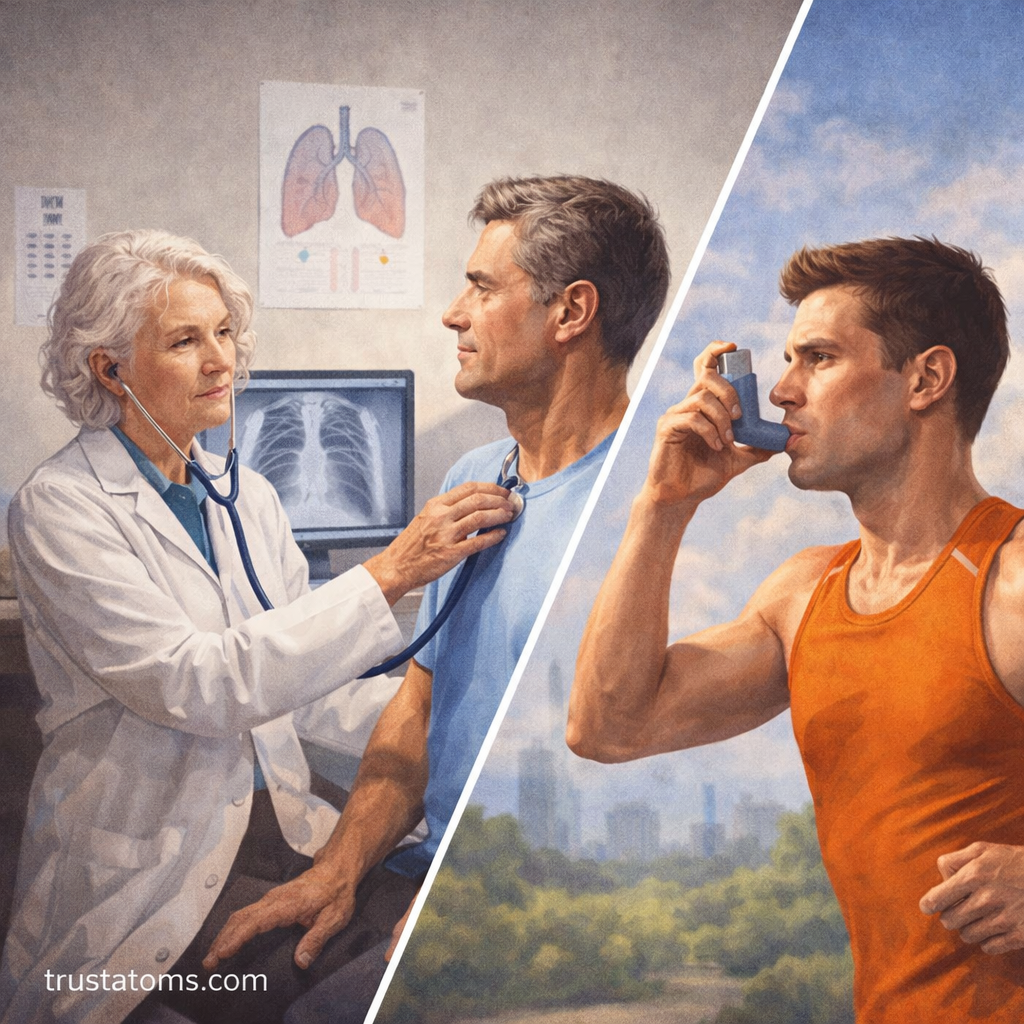
Several variables affect how much ventilation increases:
- Exercise intensity
- Fitness level
- Altitude
- Age
- Health conditions (e.g., asthma, COPD)
Trained individuals often achieve higher ventilation with less effort.
Common Misconceptions
“Breathing Hard Means You’re Out of Shape”
Not necessarily. Heavy breathing is a normal response to increased demand.
“You Can Increase Lung Size Significantly”
In adults, lung size is mostly fixed. Improvements come from efficiency, not size.
Why Increased Ventilation Matters
Understanding ventilation during exercise helps:
- Optimize athletic performance
- Improve endurance training strategies
- Monitor respiratory health
- Identify abnormal breathing patterns
It’s a key component of how the body supports physical activity.
Final Thoughts
Exercise places significant demands on the body, and increased ventilation is one of the most immediate and essential responses. By adjusting breathing rate and depth, the respiratory system ensures that muscles receive the oxygen they need while maintaining internal balance.
Whether you’re walking, running, or training intensely, your lungs are constantly adapting—keeping you moving, energized, and performing at your best.