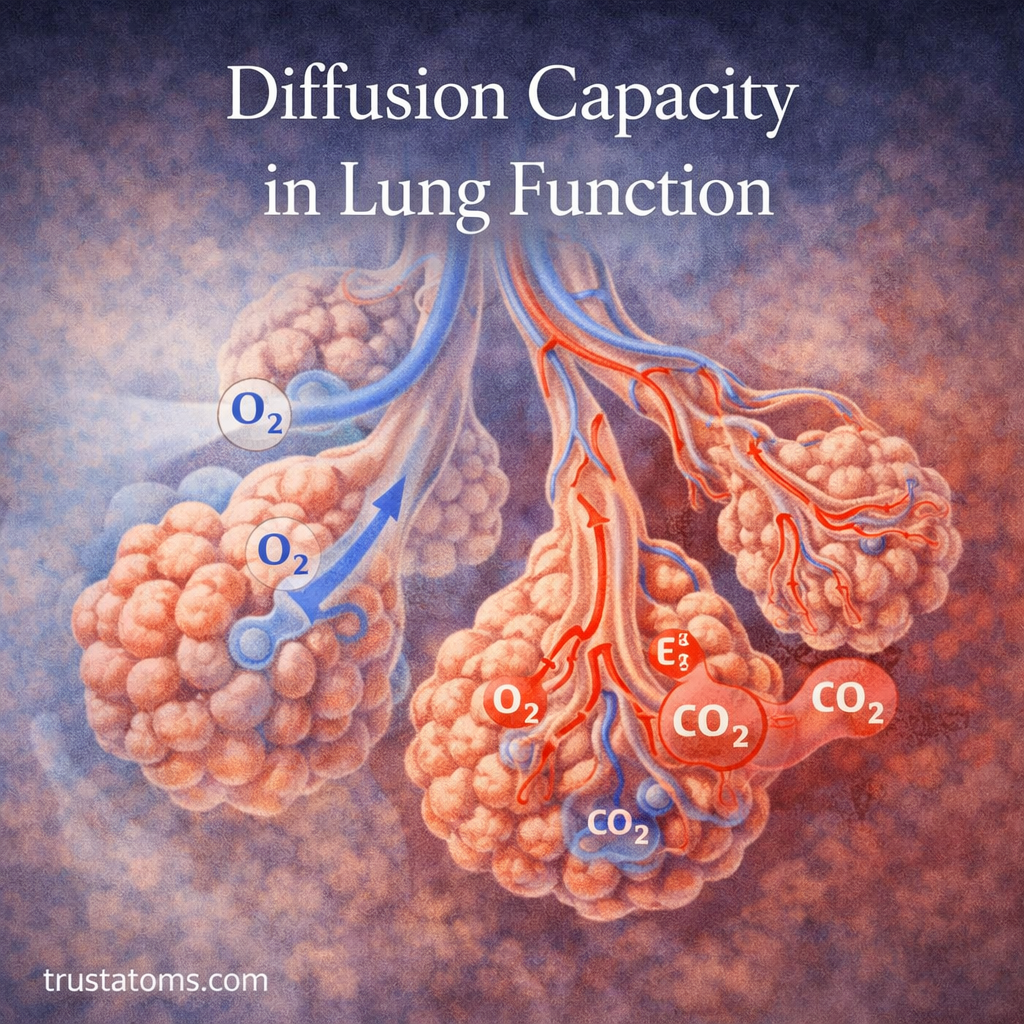
Every breath you take brings oxygen into your lungs—but getting oxygen into the bloodstream is only part of the process. For the body to function properly, oxygen must diffuse across the thin membrane of the alveoli into the blood, while carbon dioxide diffuses out.
This ability is known as diffusion capacity, and it plays a critical role in overall lung function and respiratory health.
What Is Diffusion Capacity?
Diffusion capacity refers to how effectively gases (primarily oxygen and carbon dioxide) move between the lungs and the bloodstream.
This process occurs in the alveoli, tiny air sacs surrounded by capillaries.
Key Idea
- Oxygen moves from the alveoli into the blood
- Carbon dioxide moves from the blood into the alveoli
- This exchange happens through a thin membrane
The efficiency of this process determines how well your body is oxygenated.
How Gas Diffusion Works
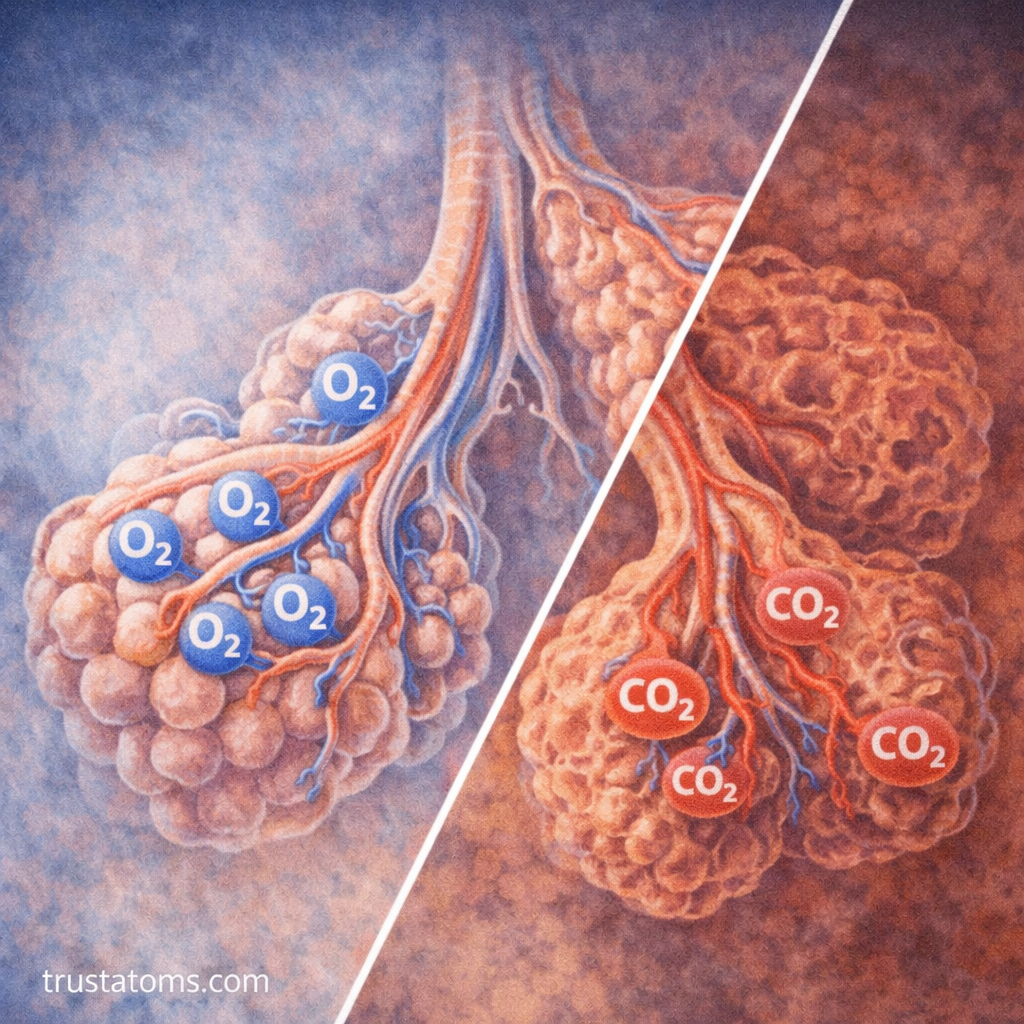
Gas exchange follows a principle called diffusion, where gases move from areas of higher concentration to lower concentration.
Oxygen Diffusion
- High oxygen concentration in alveoli
- Lower oxygen concentration in blood
- Oxygen moves into the bloodstream
Carbon Dioxide Diffusion
- High CO₂ concentration in blood
- Lower CO₂ concentration in alveoli
- CO₂ moves out of the bloodstream
This exchange is continuous and happens with every breath.
Factors That Affect Diffusion Capacity
Several physiological factors influence how well gases diffuse across the lung membrane.
1. Surface Area of the Alveoli
- Larger surface area allows more gas exchange
- Healthy lungs have millions of alveoli
Conditions like emphysema reduce surface area, lowering diffusion capacity.
2. Thickness of the Alveolar Membrane
- Thinner membranes allow faster diffusion
- Thickened membranes slow gas exchange
Diseases such as pulmonary fibrosis increase membrane thickness.
3. Partial Pressure Gradient
- Greater difference in gas concentration improves diffusion
- Reduced gradients decrease efficiency
At high altitude, lower oxygen pressure reduces diffusion effectiveness.
4. Blood Flow (Perfusion)
- Adequate blood flow is necessary to carry gases away
- Poor circulation reduces diffusion capacity
5. Hemoglobin Levels
- Hemoglobin binds oxygen in red blood cells
- Low hemoglobin reduces oxygen transport capacity
Measuring Diffusion Capacity
Doctors use a test called the DLCO (Diffusing Capacity of the Lung for Carbon Monoxide) to assess lung function.
Why Carbon Monoxide?
- Binds strongly to hemoglobin
- Allows precise measurement of gas transfer efficiency
What the Test Shows
- How well gases move from lungs to blood
- Early signs of lung disease
- Severity of respiratory conditions
Diffusion Capacity During Exercise
Exercise increases the body’s demand for oxygen, which affects diffusion capacity.
What Changes During Exercise?
- Increased blood flow through lung capillaries
- More alveoli are recruited for gas exchange
- Diffusion efficiency improves
Result
- Greater oxygen uptake
- Faster removal of carbon dioxide
- Enhanced performance
In healthy individuals, diffusion capacity can increase significantly during exercise.
Conditions That Affect Diffusion Capacity
Several diseases and conditions can impair gas exchange.
Reduced Diffusion Capacity
- Emphysema (loss of alveolar surface area)
- Pulmonary fibrosis (thickened membranes)
- Anemia (low hemoglobin levels)
Increased or Altered Diffusion Capacity
- Exercise (temporary increase)
- High altitude acclimatization (adaptive changes)
Diffusion Capacity and Oxygen Delivery
Diffusion capacity directly impacts how much oxygen reaches tissues.
Efficient Diffusion Means:
- Better oxygen supply to muscles and organs
- Improved endurance and physical performance
- Reduced fatigue
Poor Diffusion Means:
- Shortness of breath
- Reduced exercise tolerance
- Lower energy levels
Adaptations That Improve Diffusion
The body can adapt to improve diffusion efficiency under certain conditions.
Short-Term Adaptations
- Increased breathing rate
- Improved blood flow
Long-Term Adaptations
- Increased capillary density
- Enhanced oxygen utilization at the cellular level
These changes are especially important for athletes and individuals living at high altitude.
Why Diffusion Capacity Matters
Understanding diffusion capacity is essential for:
- Evaluating lung health
- Diagnosing respiratory diseases
- Monitoring treatment effectiveness
- Understanding exercise physiology
It connects the structure of the lungs with their function in delivering oxygen to the body.
Final Thoughts
Diffusion capacity is a key measure of how well your lungs perform their most important job—gas exchange. While breathing brings air into the lungs, it’s diffusion that ensures oxygen reaches the bloodstream and carbon dioxide is removed.
From everyday breathing to intense exercise, this process is vital for survival and performance, highlighting the incredible efficiency of the human respiratory system.