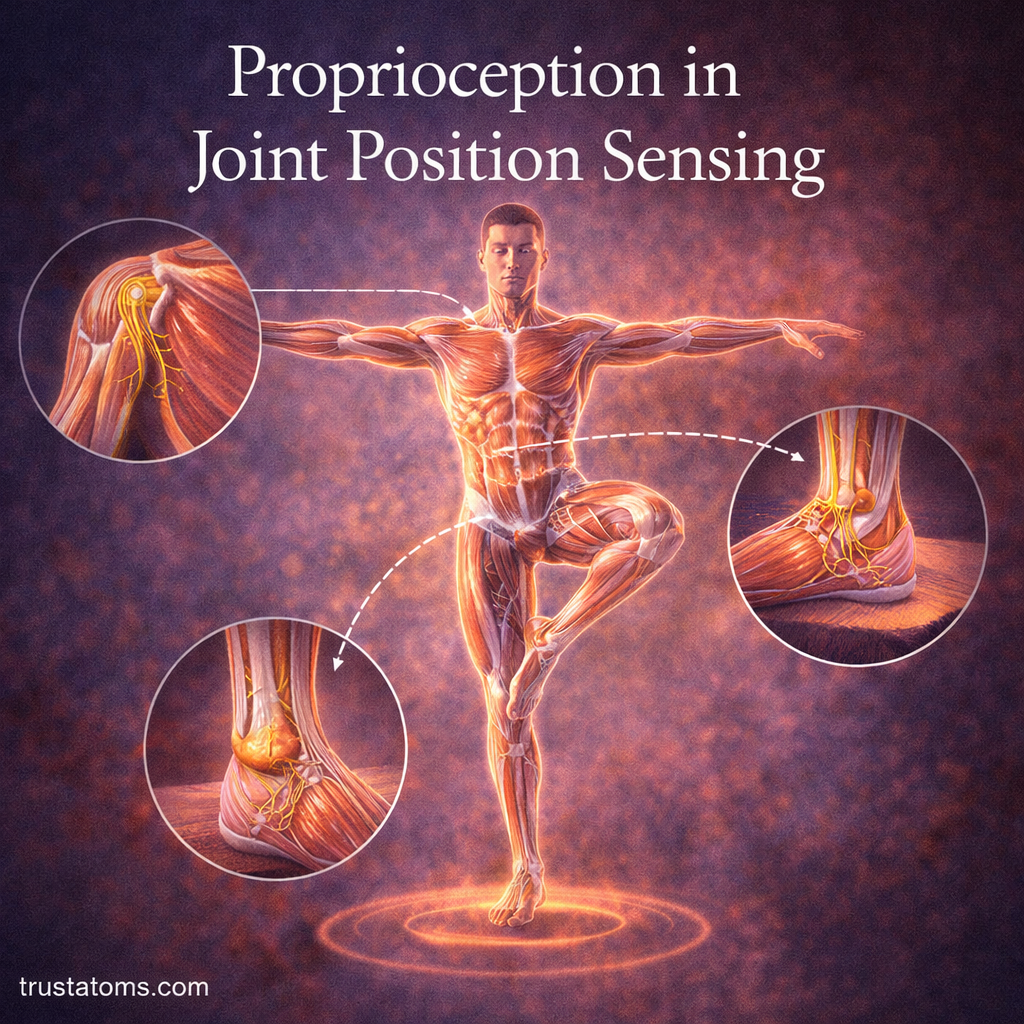
Proprioception in joint position sensing is the body’s ability to recognize where its joints and limbs are positioned without relying on vision. Specialized sensory receptors in muscles, tendons, and joint tissues send information to the nervous system, allowing it to estimate joint angles and guide controlled movement.
Have you ever touched your nose with your eyes closed or walked without constantly looking at your feet? These actions are possible because of proprioception—your body’s ability to sense its position, movement, and orientation in space. Understanding this ability connects human anatomy with sensory processing, muscle coordination, and joint function.
What Is Proprioception?
Proprioception is an internal sensory system that provides information about body position, movement, muscle length, and muscular tension. It operates continuously, including during activities that require little conscious attention.
Proprioceptive information supports the coordination between muscles and joints by helping the nervous system adjust muscle activity as joint positions change.
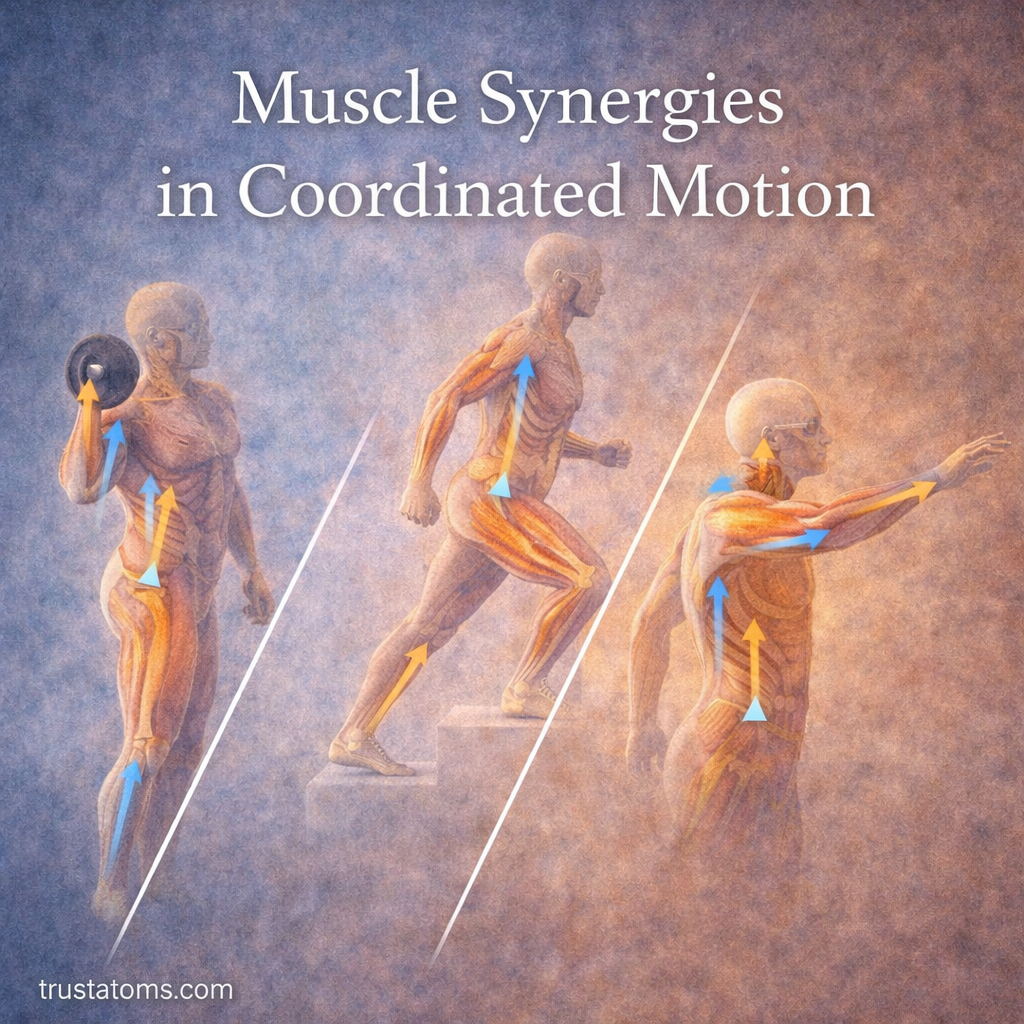
These adjustments often involve several muscles working together. The concept of muscle synergies in coordinated motion explains how the nervous system organizes groups of muscles to perform complex actions.
Proprioception also interacts with information from the skin. Understanding touch receptors and somatosensation helps explain how pressure and skin stretching provide additional clues about limb position and contact with surrounding surfaces.
What Is Joint Position Sensing?
Joint position sensing, also called joint position sense, is the aspect of proprioception that allows a person to estimate the position or angle of a joint. It differs from kinesthesia, which refers specifically to the sensation of movement.
For example, you can bend your elbow and estimate its position without looking at your arm. You may also reproduce a similar elbow angle with your opposite arm, although the accuracy of this matching ability varies.
Joint position sensing depends on sensory information from several tissues, especially muscles. The nervous system combines these signals with knowledge of its own motor commands to estimate how the body is arranged.
How Sensory Receptors Detect Joint Position
Different mechanoreceptors detect physical changes associated with muscle activity and joint movement. Their signals provide complementary information rather than each receptor independently measuring an exact joint angle.
Muscle Spindles Detect Muscle Length
Muscle spindles are specialized receptors located within skeletal muscles. They detect muscle length and the rate at which a muscle stretches.
Because muscle length changes as many joints move, spindle activity provides important information for estimating joint position. Muscle spindles also participate in stretch reflexes, allowing rapid adjustments to unexpected stretching.
Golgi Tendon Organs Monitor Tension
Golgi tendon organs are sensory receptors found near muscle-tendon junctions. They respond to tension produced in the muscle-tendon unit, particularly during muscular contraction.
Their signals help regulate force production and contribute to movement coordination. They do not directly measure joint angle, and their function extends beyond simply preventing excessive muscle tension.
Joint Receptors Provide Additional Information
Mechanoreceptors in joint capsules and ligaments respond to deformation, movement, and mechanical loading. Many become especially informative near the limits of a joint’s range of motion.
Although joint receptors contribute to proprioception, muscle spindles are generally considered a major source of joint position information across much of the normal movement range.
How the Nervous System Processes Joint Position
Proprioceptive signals travel through sensory nerve fibers to the spinal cord and brain. Different neural pathways use this information for reflexes, conscious position awareness, and automatic movement coordination.
- Detection: Sensory receptors respond to muscle stretching, tension, or joint tissue deformation.
- Transmission: Sensory neurons carry electrical signals toward the central nervous system.
- Processing: The spinal cord and brain integrate proprioceptive information with other sensory signals.
- Response: Motor pathways adjust muscle activity to support the intended movement or posture.
The somatosensory cortex contributes to conscious awareness of joint position. The cerebellum uses proprioceptive information to refine movement timing and accuracy, while spinal circuits support rapid reflex responses.
Proprioception and Movement Control
Joint position sensing allows the nervous system to compare intended movements with information about actual body position. This comparison supports movement corrections when the body encounters unexpected resistance or changes in position.
These processes are closely related to neural feedback loops in motor control, through which sensory information influences ongoing and subsequent muscle activation.
Proprioception works alongside anticipatory motor commands. The nervous system can prepare muscles before movement begins and then use sensory feedback to refine the action as it unfolds.
Everyday Examples of Joint Position Sensing
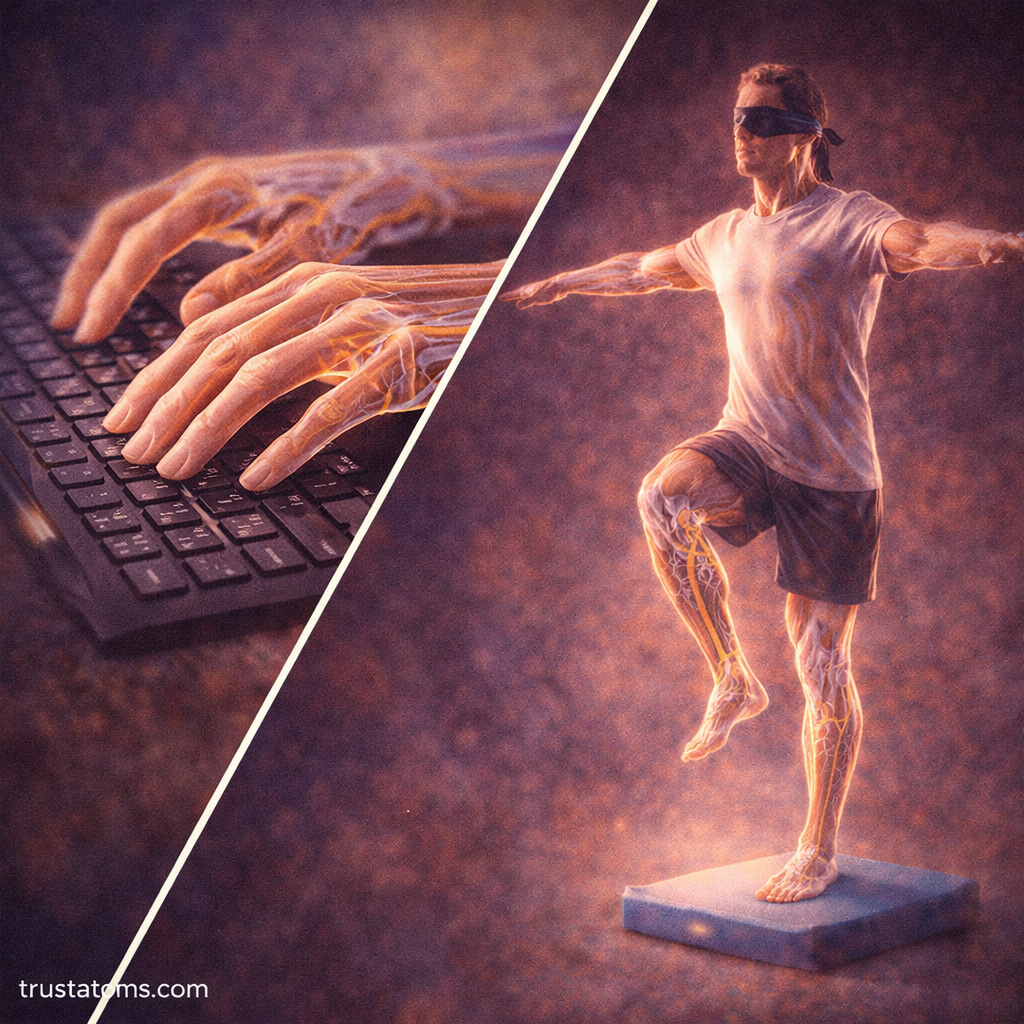
Joint position sensing contributes to activities ranging from precise finger movements to whole-body balance.
- Typing: Position information from the fingers and wrists helps guide movements between keys.
- Walking upstairs: Sensory feedback helps coordinate hip, knee, and ankle positions during each step.
- Carrying groceries: The nervous system adjusts muscle activity as the arms change position under load.
- Standing on one leg: Position information from the lower limbs contributes to continuous balance corrections.
A Concrete Example: Matching Elbow Angles
Imagine bending your right elbow to approximately 90 degrees while looking at it. Next, close your eyes and attempt to position your left elbow at the same angle.
Without visual guidance, your nervous system relies partly on proprioceptive information to estimate and match the two positions. The angles may not match perfectly because joint position sensing has normal measurement variability, and the accuracy of matching differs among individuals.
Researchers and clinicians use related joint position reproduction tasks to examine aspects of proprioceptive accuracy. Such tests require standardized procedures and cannot independently diagnose a neurological disorder.
Proprioception, Balance, and Athletic Movement
Balance depends on proprioceptive signals working together with vision and the vestibular system of the inner ear. Proprioception provides information about limb position, while the other systems help establish orientation relative to the environment and gravity.
During running, jumping, or changing direction, joint position information helps the nervous system coordinate muscle activation and respond to changing loads. Athletes use this information alongside learned movement patterns and visual cues.
Good proprioceptive function can support controlled movement, but it does not guarantee injury prevention. Strength, fatigue, movement demands, previous injuries, and environmental conditions also influence injury risk.
What Can Impair Joint Position Sensing?
Joint position sensing may be affected when sensory receptors, peripheral nerves, spinal pathways, or brain regions involved in sensory processing are disrupted.
- Joint injuries: Ligament damage and swelling may alter sensory input and movement control.
- Peripheral neuropathy: Damage to sensory nerves can reduce awareness of limb position.
- Neurological disorders: Conditions affecting sensory pathways may interfere with proprioceptive processing.
- Aging: Changes in sensory and neuromuscular function may reduce position-sensing accuracy.
- Fatigue: Physical exhaustion can temporarily affect movement precision and sensorimotor performance.
Impairment may cause inaccurate limb placement, difficulty moving without visual guidance, or unsteady walking. These symptoms are not specific to proprioceptive loss, so persistent or unexplained changes require professional assessment.
How Training Can Improve Joint Position Control
Sensorimotor training can improve balance, coordination, and performance on certain joint position tasks. Exercises challenge the nervous system to use sensory feedback while controlling movement.
- Single-leg standing: Challenges lower-limb position control and balance.
- Controlled squats: Encourage coordinated hip, knee, and ankle movement.
- Step-ups: Practice joint positioning during weight transfer.
- Balance-board exercises: Require adjustments to changing support conditions.
- Position-matching exercises: Practice reproducing joint positions with reduced visual guidance.
Training should progress according to individual ability. Exercises performed with closed eyes or on unstable surfaces increase balance demands and may be inappropriate without support, especially for people with sensory loss or a history of falls.
Frequently Asked Questions
Is joint position sensing the same as proprioception?
No. Joint position sensing is one component of proprioception. Proprioception also includes awareness of movement and information related to muscular force and tension.
Can you sense joint angles with your eyes closed?
Yes. Sensory information from muscles, tendons, and other tissues allows the nervous system to estimate joint positions without vision, although the estimates are not perfectly precise.
Can proprioceptive training prevent joint injuries?
Balance and neuromuscular training can reduce certain injury risks, including some ankle sprains, particularly in appropriate training or rehabilitation programs. However, no exercise eliminates injury risk, and outcomes depend on the activity and individual circumstances.
Joint position sensing allows the nervous system to estimate limb positions by combining information from muscles, tendons, and other sensory structures. This feedback supports precise movements, balance adjustments, and coordinated responses to changing loads. Understanding how it works also helps explain why sensory injuries and neurological conditions can interfere with otherwise familiar movements.
This article is for general education and is not medical advice. Talk to a qualified health professional about any medical concern.
Sources: Guyton and Hall Textbook of Medical Physiology; Principles of Neural Science by Kandel and colleagues; Neuroscience by Purves and colleagues.