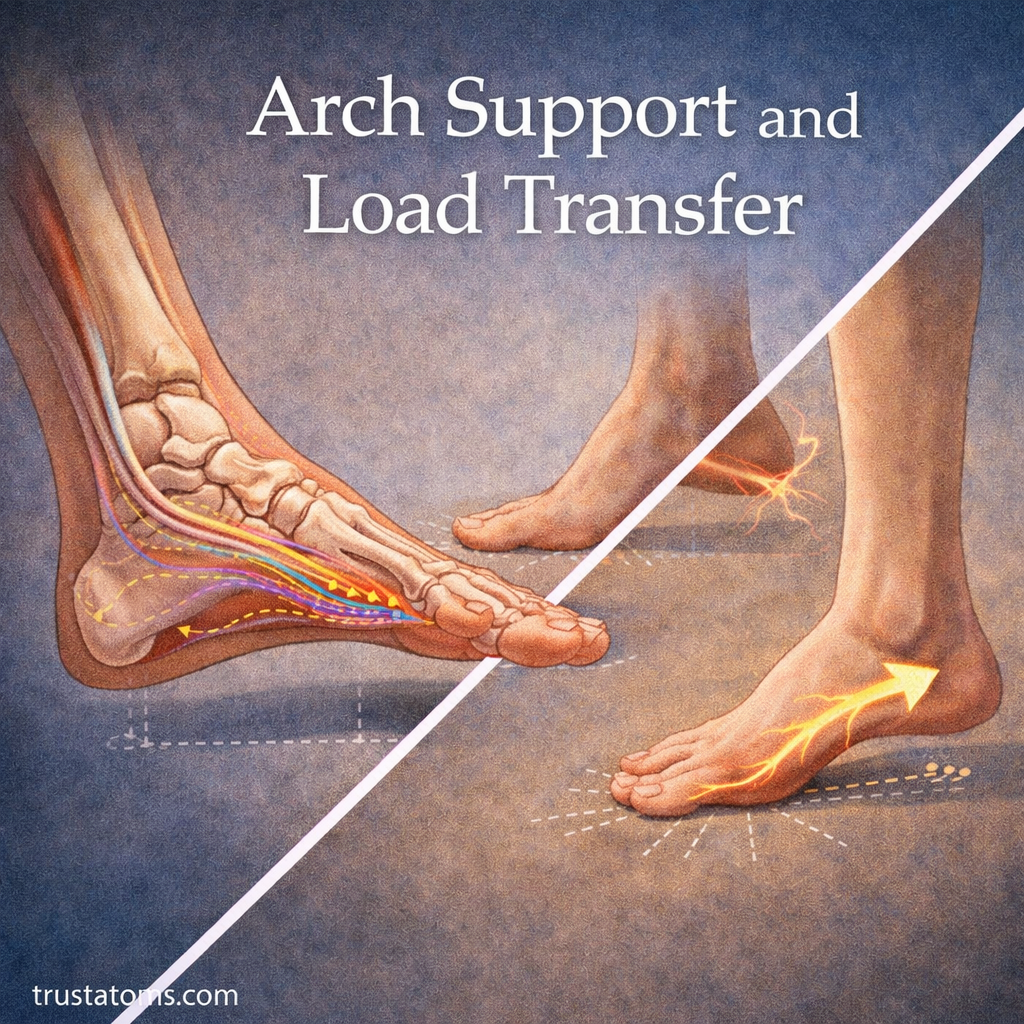
The human foot is designed to support body weight, absorb impact, and transfer forces efficiently during movement. A key component of this system is the arch, which acts as a natural shock absorber and load distributor.
Arch support and load transfer are essential for maintaining balance, reducing stress on joints, and enabling smooth, efficient movement in activities like standing, walking, and running.
Understanding Foot Arches
The arches of the foot form a curved structure that helps manage forces applied to the body.
Types of Arches
There are three main arches:
- Medial longitudinal arch: the most prominent arch on the inside of the foot
- Lateral longitudinal arch: along the outer edge of the foot
- Transverse arch: runs across the midfoot
Functions of the Arches
- Distribute body weight across the foot
- Absorb shock during impact
- Store and release energy
- Provide stability and balance
What Is Load Transfer?
Load transfer refers to how forces move through the foot and into the rest of the body during weight-bearing activities.
When you stand or move:
- Force enters through the heel
- Travels through the arches
- Exits through the forefoot during push-off
Efficient load transfer reduces stress on individual structures and improves overall movement.
The Role of Arch Support
Arch support helps maintain the structure of the foot and ensures proper load distribution.
Natural Support
The body provides its own arch support through:
- Ligaments that hold bones together
- Muscles that stabilize the arch
- Tendons that maintain tension
External Support
External support can enhance function:
- Supportive footwear
- Orthotic inserts
- Athletic shoes designed for specific activities
Load Transfer During Movement
Load transfer changes depending on the activity.
Standing
- Weight is evenly distributed
- Arches maintain structural integrity
- Minimal dynamic force
Walking
- Heel absorbs initial contact
- Arches compress to absorb shock
- Forefoot pushes off to propel movement
Running
- Forces increase significantly
- Arches store and release energy
- Load transfer becomes faster and more dynamic
The Windlass Mechanism
A key concept in arch function is the windlass mechanism.
How It Works
- As the toes extend during push-off
- The plantar fascia tightens
- The arch rises and becomes more rigid
Why It Matters
- Improves efficiency in movement
- Converts the foot into a stable lever
- Enhances propulsion
Muscles and Tissues Involved
Several structures contribute to arch support and load transfer.
Plantar Fascia
- Thick band of connective tissue
- Supports the arch
- Stores elastic energy
Intrinsic Foot Muscles
- Located within the foot
- Help stabilize the arch
- Assist with fine adjustments
Extrinsic Muscles
- Located in the lower leg
- Control larger movements
- Provide strength and support
Factors That Affect Arch Support
Not all feet function the same way. Several factors influence arch performance.
Structural Variations
- High arches (cavus foot)
- Normal arches
- Flat feet (pes planus)
External Influences
- Footwear quality
- Surface type
- Activity level
Biomechanical Factors
- Gait pattern
- Muscle strength
- Flexibility
Common Problems Related to Poor Load Transfer
When arch support is compromised, load transfer becomes inefficient.
Common Conditions
- Plantar fasciitis
- Overpronation or underpronation
- Heel pain
- Stress injuries
Effects on the Body
- Increased strain on joints
- Reduced shock absorption
- Higher risk of injury
Improving Arch Support and Load Transfer
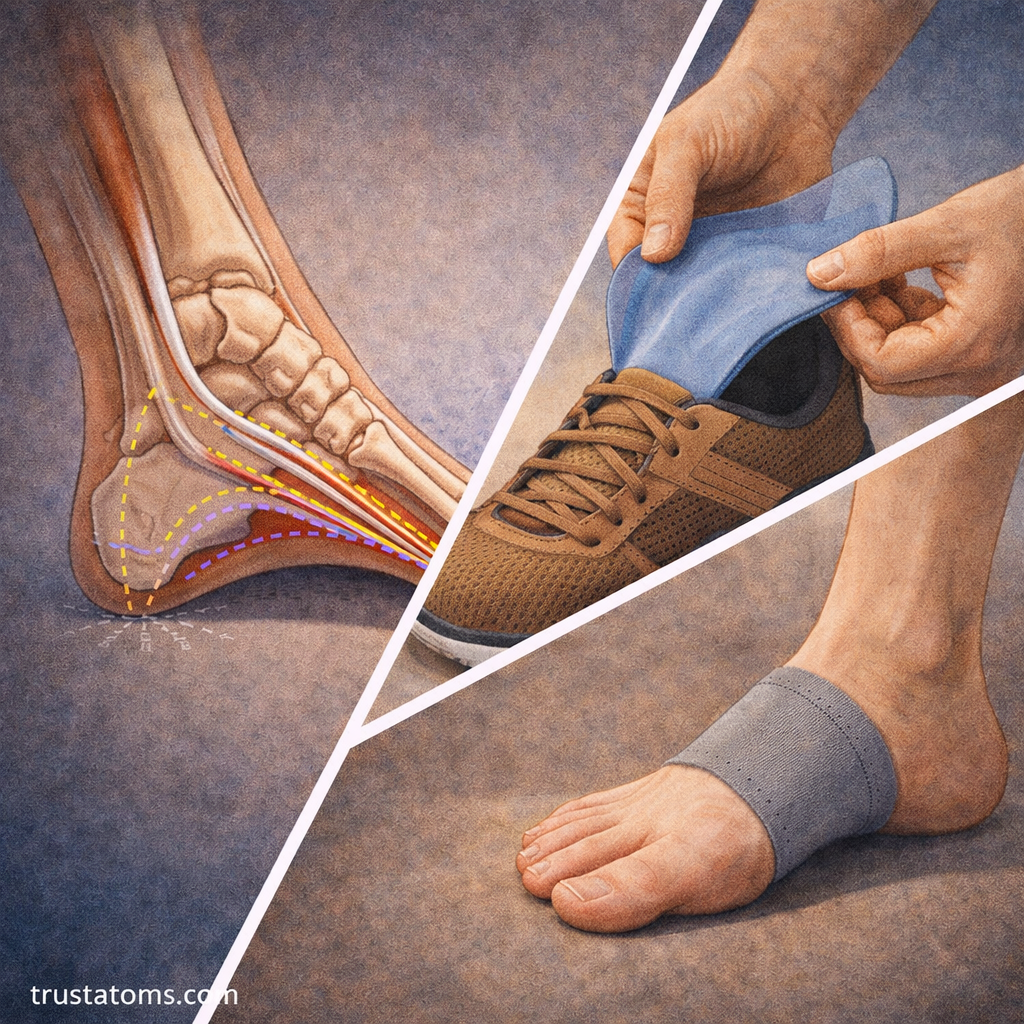
Maintaining proper arch function can improve overall movement and reduce discomfort.
Practical Strategies
- Wear supportive, well-fitted footwear
- Use orthotics if needed
- Avoid excessive strain on the feet
Exercises
- Toe strengthening exercises
- Arch lifts and foot doming
- Calf and Achilles stretching
Movement Awareness
- Improve walking and running technique
- Avoid overstriding
- Maintain proper posture
Why Arch Support Matters
The arches of the foot are essential for distributing forces and maintaining efficient movement. Proper arch support ensures that load is transferred smoothly through the body, reducing stress and improving stability.
Healthy arch function contributes to:
- Better balance and posture
- Reduced injury risk
- Improved athletic performance
- Greater comfort during daily activities
Final Thoughts
Arch support and load transfer are central to how the body handles weight and movement. The foot’s arch system allows for both flexibility and strength, adapting to different surfaces and activities.
By understanding and supporting this system, individuals can improve mobility, prevent injury, and maintain long-term foot health.