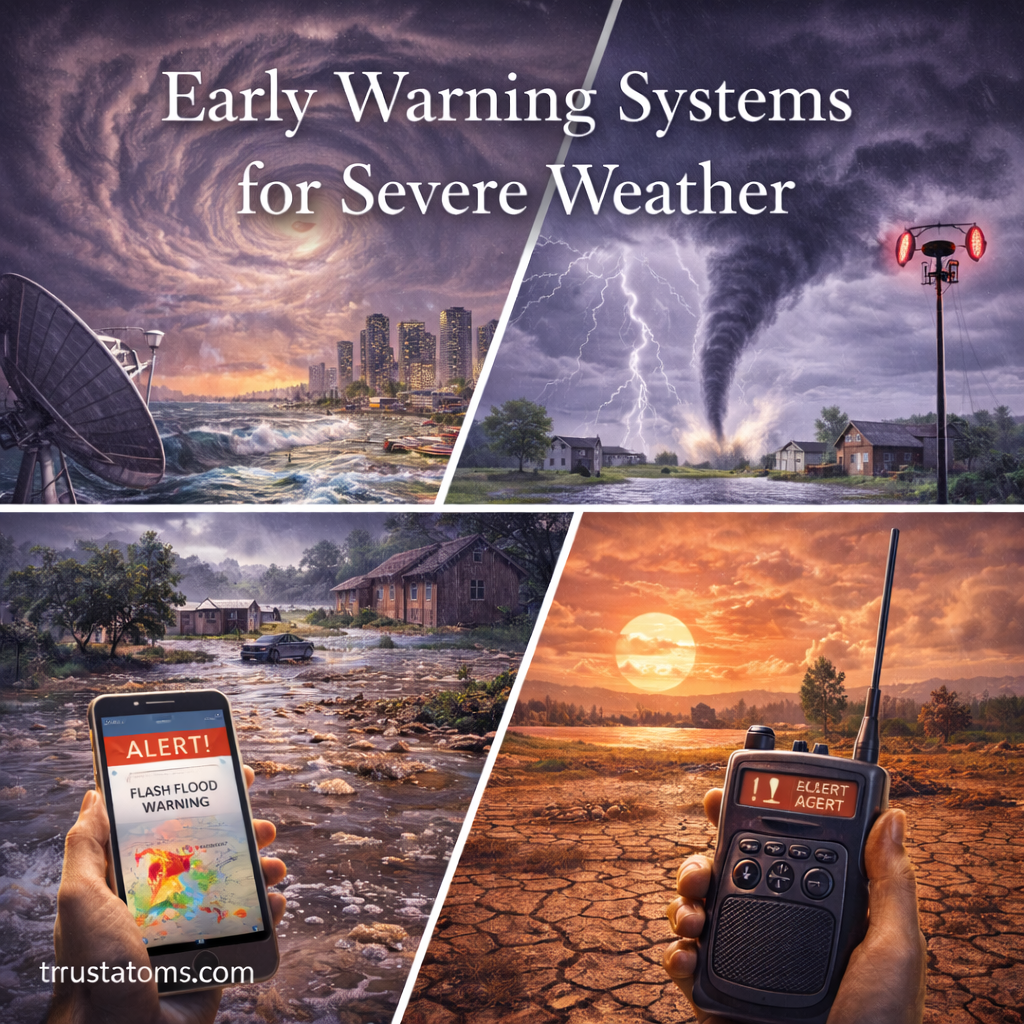
Early warning systems for severe weather are critical tools that help protect lives, property, and infrastructure. By detecting hazards before they strike and delivering timely alerts, these systems give individuals and communities valuable time to prepare and respond.
From hurricanes and tornadoes to floods and heatwaves, early warning systems play a vital role in reducing the impact of extreme weather events.
What Are Early Warning Systems?
Early warning systems are integrated processes that monitor weather conditions, predict hazards, and communicate alerts to the public.
They are designed to answer three essential questions:
- What is happening?
- What will happen next?
- What actions should be taken?
An effective system ensures that warnings are accurate, timely, and understandable.
The Four Key Components of Early Warning Systems
Early warning systems are built on four interconnected elements.
1. Risk Knowledge
- Understanding local weather hazards
- Identifying vulnerable populations and areas
- Using historical data and climate trends
2. Monitoring and Detection
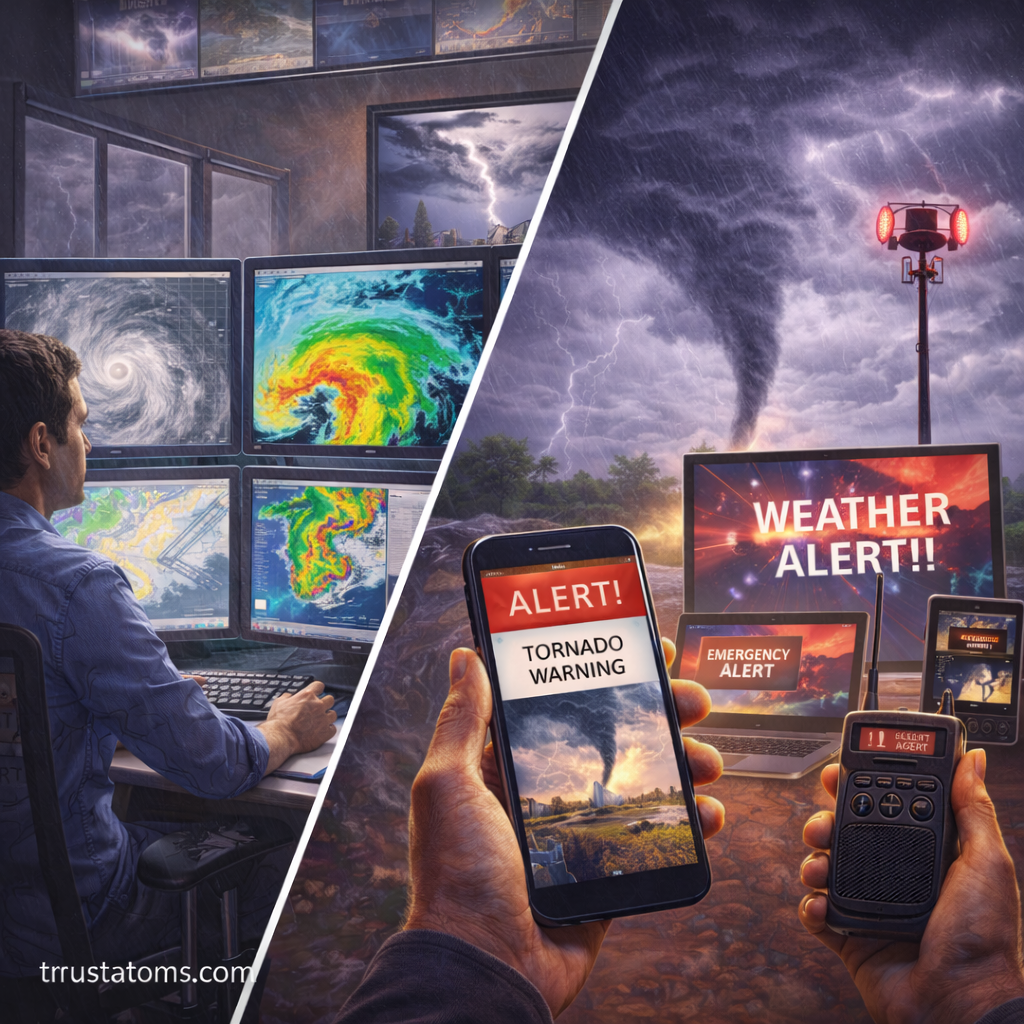
- Observing weather conditions in real time
- Using instruments like radar, satellites, and sensors
- Tracking storm development and movement
3. Forecasting and Warning
- Predicting the timing, location, and severity of events
- Issuing watches, warnings, and advisories
- Continuously updating information as conditions change
4. Communication and Response
- Delivering alerts through multiple channels
- Ensuring messages reach the public quickly
- Encouraging appropriate action (evacuation, sheltering)
All four components must work together for a system to be effective.
Types of Severe Weather Monitored
Early warning systems cover a wide range of extreme weather hazards.
Storm-Related Events
- Hurricanes and tropical storms
- Tornadoes and severe thunderstorms
- Derechos and windstorms
Water-Related Events
- River flooding
- Flash flooding
- Storm surge
Temperature Extremes
- Heatwaves
- Cold waves
Other Hazards
- Drought conditions
- Wildfires influenced by weather
Each hazard requires specific monitoring techniques and alert thresholds.
Technologies Behind Early Warning Systems
Modern systems rely on advanced technology to detect and predict severe weather.
Weather Satellites
- Monitor cloud patterns and large-scale systems
- Provide continuous global coverage
Weather Radar
- Detect precipitation, storm structure, and movement
- Identify rotation and potential tornado formation
Weather Stations and Sensors
- Measure temperature, humidity, wind speed, and pressure
- Provide real-time local data
Computer Models
- Simulate atmospheric conditions
- Predict future weather patterns and risks
These technologies allow meteorologists to issue more accurate and timely warnings.
How Alerts Are Delivered
Getting information to the public quickly is just as important as detecting the hazard.
Common Alert Channels
- Mobile phone alerts (Wireless Emergency Alerts)
- Television and radio broadcasts
- Weather apps and online platforms
- Sirens and public warning systems
Alert Types
- Watch: Conditions are favorable for severe weather
- Warning: Severe weather is occurring or imminent
- Advisory: Less severe but still potentially hazardous conditions
Clear communication helps people understand the urgency and take action.
The Importance of Lead Time
Lead time refers to how much advance notice people receive before a weather event.
- Longer lead times allow better preparation
- Short lead times require rapid response
- Some events (like tornadoes) offer only minutes of warning
Improving lead time is a major goal of modern forecasting systems.
Challenges in Early Warning Systems
Despite advancements, several challenges remain.
Communication Gaps
- Alerts may not reach all populations
- Language barriers can limit understanding
False Alarms
- Over-warning can reduce public trust
- People may ignore future alerts
Technological Limitations
- Limited coverage in remote areas
- Equipment maintenance and costs
Rapid-Onset Events
- Some hazards develop too quickly for long warnings
- Requires fast detection and immediate alerts
Addressing these challenges is essential for improving system effectiveness.
Real-World Impact of Early Warning Systems
Early warning systems have significantly reduced disaster-related losses.
Key Benefits
- Save lives by enabling early evacuation
- Reduce property damage through preparedness
- Improve emergency response coordination
- Support long-term planning and resilience
Countries with strong early warning systems experience fewer casualties during extreme events.
How Individuals Can Use Early Warnings Effectively
Receiving an alert is only useful if people know how to respond.
Best Practices
- Stay informed through reliable weather sources
- Enable emergency alerts on mobile devices
- Understand local evacuation routes
- Prepare emergency kits in advance
During an Alert
- Read or listen to the message carefully
- Follow instructions from authorities
- Take immediate action if required
Being prepared ensures that warnings translate into effective action.
The Future of Early Warning Systems
Advancements in science and technology are improving early warning capabilities.
Emerging Trends
- Artificial intelligence for better forecasting
- Improved satellite resolution and coverage
- More personalized and location-based alerts
- Integration with smart devices and infrastructure
These innovations aim to make warnings faster, more accurate, and more accessible.
Why Early Warning Systems Matter
Early warning systems are essential because they:
- Provide critical time to prepare and respond
- Reduce loss of life and economic damage
- Strengthen community resilience
- Support disaster risk reduction efforts
They are one of the most effective tools for managing extreme weather risks.
Final Thoughts
Early warning systems for severe weather represent a powerful combination of science, technology, and communication. By detecting hazards early and delivering clear, actionable alerts, these systems help protect lives and reduce the devastating impacts of extreme weather.
As climate patterns continue to change, investing in stronger and more inclusive early warning systems will be essential for building safer and more resilient communities.